Warehouse Lighting Solutions
Warehouse Lighting Solutions involve designing, supplying, and installing lighting systems specifically for industrial storage environments. The service includes layout planning, fixture selection, lux level calculation, wiring execution, and final commissioning. It is delivered through a structured EPC model covering engineering design, procurement of materials, and on-site installation.
What This Service Includes
Warehouse Lighting Solutions cover the full lifecycle of lighting system execution inside industrial storage spaces. This includes layout planning, lux level calculations, fixture selection, electrical design, procurement, installation, and final commissioning under real working conditions.
VS Wilson operates as a UAE-based execution partner handling warehouse lighting projects across the Middle East, USA, and Europe. The team manages complete project delivery from concept planning to final commissioning, including material sourcing and site deployment. This ensures consistency between design intent and actual lighting performance on the warehouse floor.
What This Service Includes
Lighting layout planning based on rack configurations
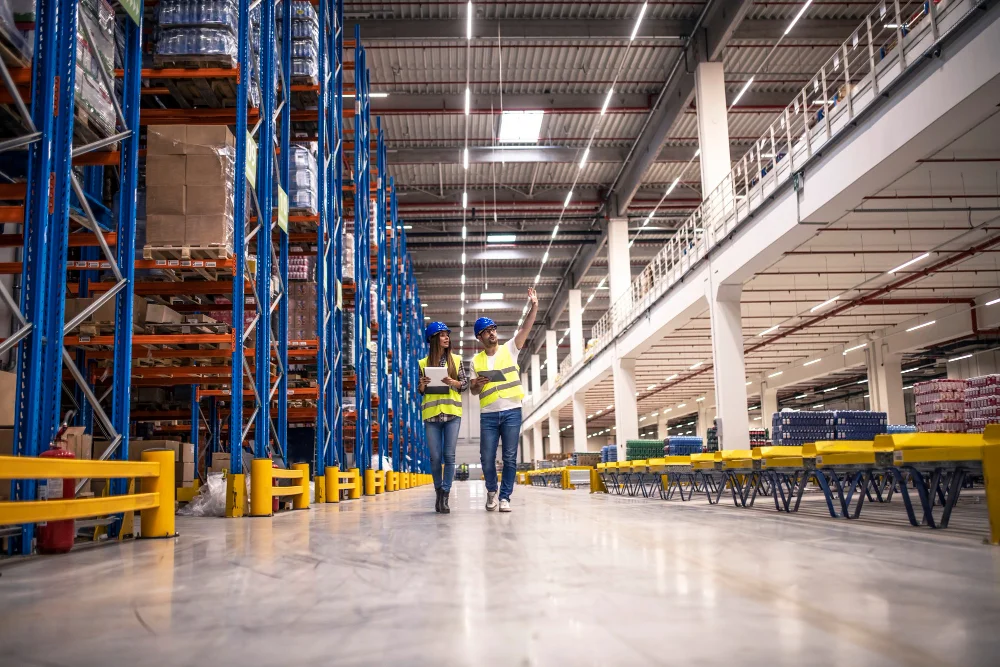
Design considers aisle width, stacking height, and forklift movement patterns
Fixture selection aligned with ceiling height and usage
Different zones require different beam angles and mounting positions
Electrical infrastructure integration and load balancing
Wiring routes and load distribution are planned before installation begins
On-site installation and commissioning under real conditions
Fixtures are tested in operational environments, not just theoretical setups
Warehouse Lighting Solutions cover the full lifecycle of lighting system execution inside industrial storage spaces. This includes layout planning, lux level calculations, fixture selection, electrical design, procurement, installation, and final commissioning under real working conditions.
From an execution point of view, the complexity usually comes from uneven rack heights, varying aisle widths, and operational movement zones. The service is not limited to placing lights overhead. It involves aligning lighting output with storage density, ensuring visibility across vertical stacking levels, and maintaining uniformity without over-lighting unused zones.
Warehouse Lighting Design & Installation
This keyword reflects users searching for both planning and execution together rather than isolated design work. In practice, warehouse lighting design without installation often leads to mismatches between planned layouts and real site conditions. That is why both stages are handled together under one execution model.
Design begins with mapping storage layouts, forklift routes, and operational zones. Installation follows with precise mounting heights, beam direction adjustments, and electrical coordination. In actual projects, even small misalignment during installation can create dark aisles or glare zones, which is why both design and execution are handled as one integrated workflow.
Industrial Warehouse Lighting Systems
Users searching this term are typically looking for complete system-level solutions rather than individual fixtures. This aligns directly with Warehouse Lighting Solutions, where lighting is treated as an integrated system including fixtures, controls, wiring, and automation.
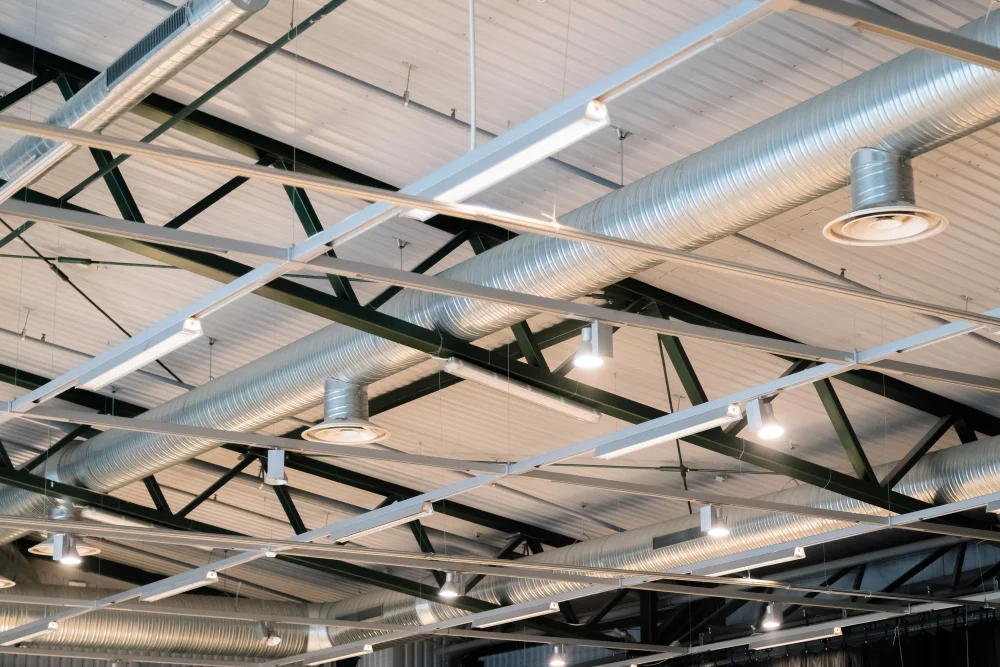
Industrial warehouse lighting systems are built around durability, heat management, and consistent output over long operating hours. From an execution standpoint, system planning includes driver placement, control integration, and maintenance access. This avoids future disruptions where replacing a single component requires shutting down entire warehouse sections.
Industrial Warehouse LED Lighting
This variation highlights the preference for LED-based systems in warehouses due to energy consumption and lifespan considerations. It still falls under the same service scope, as LED selection is part of the overall lighting system execution.
LED lighting in warehouses is not just about energy saving. In real installations, beam control and lumen output consistency matter more. Incorrect LED selection often results in bright spots and dark zones across aisles. Proper execution involves selecting optics that match rack spacing and mounting height, not just wattage ratings.
High Bay Warehouse Lighting Systems
This keyword targets warehouses with high ceilings, where standard lighting approaches fail to deliver proper illumination. It is a specific application within the broader Warehouse Lighting Solutions service.
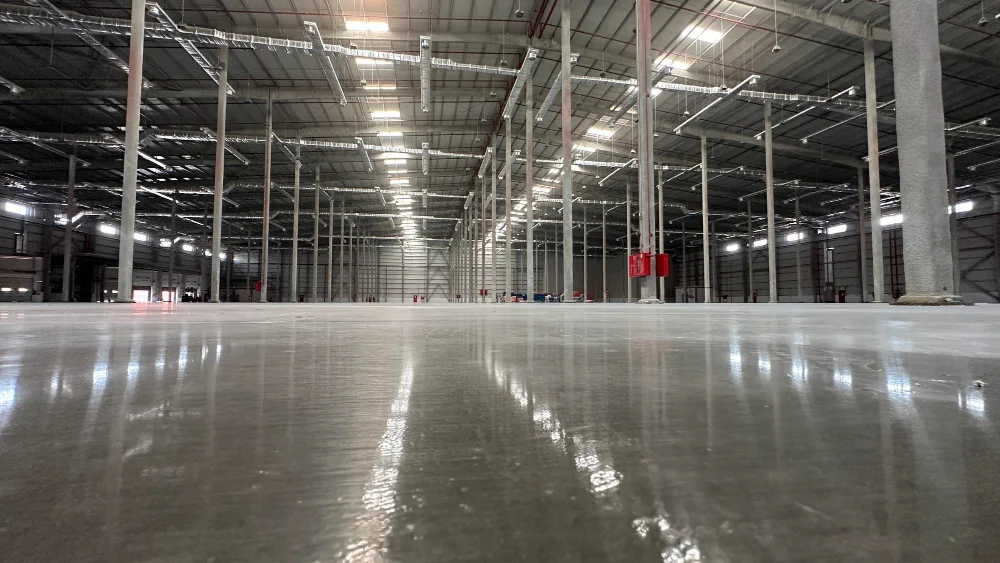
High bay systems require careful calculation of mounting height, beam angle, and spacing. In actual projects, the challenge is avoiding light loss before it reaches the floor. Improper spacing often leads to uneven visibility across aisles, especially in tall storage environments. Execution involves precise alignment and testing after installation.
Warehouse Lighting Installation Services
This variation reflects users specifically searching for execution support. However, installation without design alignment often leads to rework, which is why it is handled as part of the full EPC model.
Installation involves mounting fixtures, routing cables, integrating control systems, and testing performance under operational conditions. From an execution perspective, coordination with warehouse operations is critical. Installation is often done in phases to avoid disruption to ongoing logistics activities.
Energy Efficient Warehouse Lighting Solutions
This keyword reflects cost-conscious decision-makers looking to reduce operational expenses. It is part of the same service, as energy planning is integrated into system design.
Energy efficiency is achieved through fixture selection, layout optimization, and control systems such as motion sensors and dimming. In real projects, energy savings come more from layout efficiency than just switching to LED. Over-lighting unused areas is a common issue that increases long-term costs unnecessarily.
Warehouse Lighting Standards & Lux Levels
Users searching this term are often evaluating compliance and performance benchmarks. It remains part of the same service because lighting design must meet operational and safety requirements.
Lux levels vary depending on storage type, picking accuracy, and safety requirements. From an execution standpoint, achieving uniform lux distribution is more complex than hitting average values. Poor distribution leads to worker fatigue and operational errors, even if average lux appears compliant.
Types of Lighting Solutions Offered
LED High Bay Lighting Systems
Used in tall warehouses where light needs to travel long distances efficiently
Linear Aisle Lighting Systems
Designed for narrow aisles to maintain consistent illumination along storage rows
Sensor-Based Warehouse Lighting
Adjusts lighting based on movement, reducing energy consumption in low-activity zones
Zoned Lighting Control Systems
Divides warehouse into sections for better control and energy management
Real-World Applications & Use Cases
Warehouse Lighting Solutions are applied in logistics hubs, cold storage facilities, manufacturing warehouses, and distribution centers. Each environment presents different challenges.
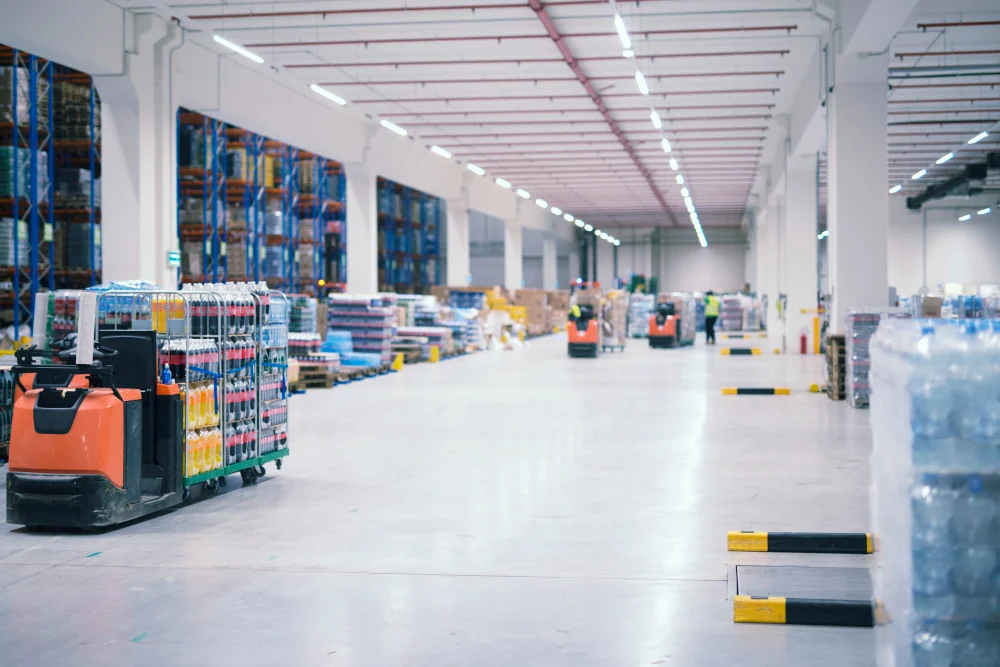
Cold storage requires fixtures that perform under low temperatures without flickering. High-density storage facilities need focused aisle lighting rather than wide flood illumination. In fast-moving logistics hubs, lighting must support quick visual recognition without causing glare for forklift operators.
These variations are not theoretical. In actual projects, the difference in application directly impacts fixture selection, spacing, and control systems.
Project Execution Process
Warehouse Lighting Solutions are executed through a structured process covering design planning, procurement, installation, and final commissioning. Each stage is aligned to ensure that the final output matches operational requirements on-site.
The process starts with site assessment and layout mapping. This is followed by lighting design and lux level calculation. Once approved, materials are procured based on project specifications. Installation is carried out in phases, often coordinated with warehouse operations. Final testing includes lux measurement, alignment correction, and system calibration.
From experience, most issues arise when design and installation are handled separately. This integrated approach avoids such gaps.
Technical & Safety Considerations
Warehouse environments demand stable lighting output under continuous operation. Electrical load distribution, heat dissipation, and fixture durability play a major role.
Safety considerations include avoiding glare, maintaining visibility in emergency conditions, and ensuring proper illumination in loading zones. Poor lighting design often leads to operational errors and increased accident risk.
Common Problems & Risks in Lighting Installation
One common issue is uneven lighting due to incorrect fixture spacing. This usually happens when design is not aligned with actual rack layouts.
Another risk is selecting fixtures based only on wattage without considering beam angle. This results in wasted energy and poor visibility.
In some cases, installation is done without considering maintenance access. This creates long-term operational disruptions when fixtures need replacement.
How to Choose the Right Lighting Setup
Warehouse Lighting Solutions should be selected based on ceiling height, storage layout, and operational movement patterns. A correct setup balances visibility, energy consumption, and maintenance accessibility.
From a decision standpoint, relying only on product specifications can be misleading. The same fixture performs differently depending on mounting height and spacing. A properly executed system considers layout geometry, not just fixture output.
Choosing a contractor who handles both design and execution reduces the risk of mismatched outcomes.
Pricing Factors
Warehouse lighting costs depend on layout complexity, ceiling height, fixture type, and installation conditions. Projects with higher ceilings or complex rack layouts require more precise planning and often higher fixture output.
A common mistake is selecting low-cost fixtures without considering long-term energy consumption and maintenance. This often leads to higher operational costs over time.
Execution cost also varies based on installation difficulty. Warehouses operating 24/7 require phased installation, which affects project timelines and cost structure.
Why Choose This Service
Warehouse lighting is not just about placing fixtures overhead. It requires coordination between design, electrical planning, and on-site execution.
VS Wilson handles complete project execution, ensuring alignment between planning and real-world installation. You can review execution capability and approach on the About page.
This approach reduces rework, ensures consistent lighting performance, and supports long-term operational efficiency.
Service Coverage
VS Wilson operates from the UAE and executes Warehouse Lighting Solutions across the Middle East, USA, and Europe.
Projects are delivered through on-site deployment, where teams travel to the project location for installation and execution. This ensures that design intent is properly translated into actual site conditions.
The company does not operate as a remote consultant. It functions as a project execution partner handling full lifecycle delivery.
Common Buyer Concerns Before Hiring
Many buyers hesitate due to uncertainty around cost versus performance. In reality, poorly designed lighting leads to higher operational costs over time.
Another concern is whether installation will disrupt warehouse operations. This is addressed through phased execution planning.
Vendor selection confusion is also common. Choosing a provider who only designs or only installs often leads to coordination gaps. A unified execution model avoids these issues.
FAQs
1. What is included in Warehouse Lighting Solutions?
It includes design planning, fixture selection, procurement, installation, and final commissioning. The service is executed as a complete project rather than separate tasks.
2. How are lux levels determined for warehouses?
Lux levels depend on storage type and operational needs. Picking areas require higher illumination than storage zones, and uniformity is critical for visibility.
3. Can projects be executed outside the UAE?
Yes, teams are deployed internationally for on-site execution across the Middle East, USA, and Europe depending on project requirements.
4. How long does warehouse lighting installation take?
Timeline depends on warehouse size and operational constraints. Active warehouses usually require phased installation to avoid disruption.
5. What type of lighting is used in high ceiling warehouses?
High bay lighting systems are used, designed to deliver sufficient illumination from elevated mounting heights.
6. Is LED lighting always the best option for warehouses?
LED is commonly used, but selection depends on layout and usage. Incorrect LED choice can still lead to poor lighting outcomes.
Discuss Your Project
If your warehouse requires structured lighting planning or a complete system upgrade, it helps to evaluate layout conditions and operational needs before execution begins. Projects are handled through on-site deployment across the UAE, Middle East, USA, and Europe, ensuring proper alignment between design and real installation.
You can discuss project requirements, site conditions, or execution planning through the Contact page to explore the right approach for your facility.
Image Gallery
Related Services