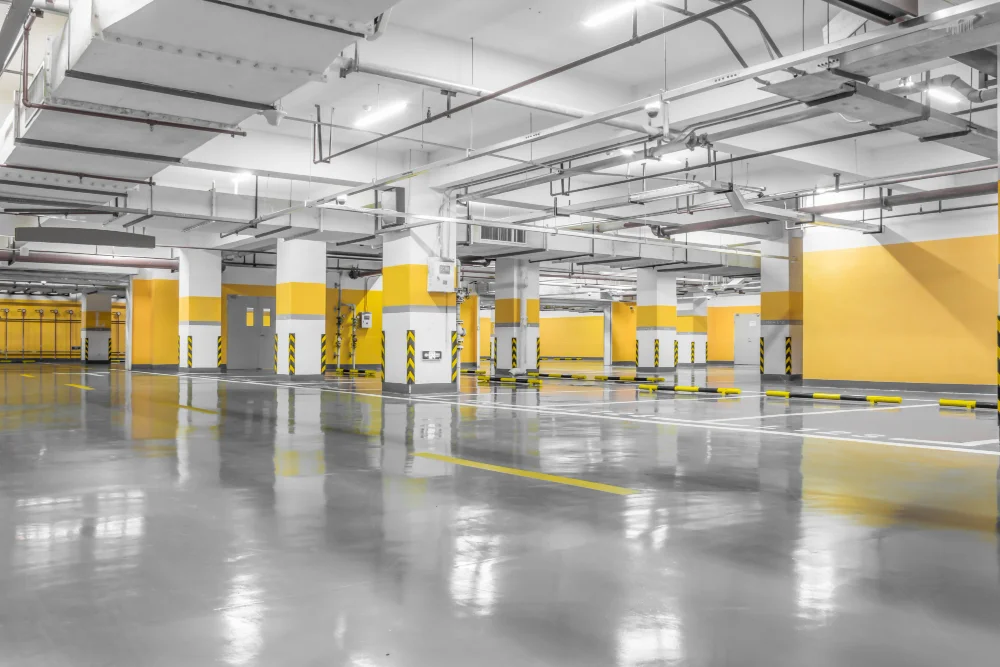
Hospital Parking Lot Light
Hospital Parking Lot Light refers to the complete planning, system selection, and on-site installation of lighting across hospital parking areas, including entry lanes, pedestrian paths, and vehicle circulation zones. The service involves engineering layout design, material procurement, installation, and final commissioning under one execution framework.


What This Service Includes
The Hospital Parking Lot Light service covers the full lifecycle of lighting execution across outdoor parking zones within hospital premises. It begins with mapping vehicle circulation, entry-exit flows, and pedestrian pathways, followed by lighting layout design that aligns with safety visibility requirements.
VS Wilson operates as an end-to-end execution partner based in the UAE, delivering hospital parking lighting projects across the Middle East, USA, and Europe. The work follows an EPC model—covering design planning, equipment sourcing, on-site installation, and final handover. This ensures lighting is not just installed, but aligned with traffic flow, safety needs, and operational continuity in active hospital environments.


What This Service Includes
Parking circulation lighting mapped with vehicle movement patterns
Lighting design considers ambulance access and emergency routes
Fixture selection aligned with outdoor exposure and durability
On-site installation coordinated with hospital operational hours
The Hospital Parking Lot Light service covers the full lifecycle of lighting execution across outdoor parking zones within hospital premises. It begins with mapping vehicle circulation, entry-exit flows, and pedestrian pathways, followed by lighting layout design that aligns with safety visibility requirements.
From an execution point of view, the work extends into procurement of suitable fixtures, pole systems, wiring infrastructure, and control systems. Installation is carried out in phases to avoid disruption to hospital operations. Final commissioning includes lux level verification, glare adjustment, and system testing to ensure consistent lighting performance across the entire parking area.
Hospital Parking Lot Lighting Design & Installation
This variation reflects how many project owners search when they need both planning and execution combined under one scope. While the core service remains Hospital Parking Lot Light, this phrasing highlights the need for coordinated design and installation rather than separate vendors.
In actual projects, design decisions directly impact installation complexity. Pole spacing, beam angles, and fixture mounting heights must be planned with execution feasibility in mind. The service integrates both stages, ensuring that layout drawings translate accurately on-site. This avoids mismatches between design intent and physical installation, which is a common issue when handled separately.
Hospital LED Parking Lights
This keyword variation focuses on the technology choice within the same service. Clients searching this are typically looking for energy-efficient and long-life lighting systems, but still require full installation and layout execution.
LED systems are used in most hospital parking projects due to their lower energy consumption and stable light output. However, installation requires careful driver selection, surge protection, and thermal management—especially in outdoor conditions. The service includes proper integration of LED fixtures into the overall lighting system, ensuring compatibility with control systems and backup power setups.
Healthcare Parking Lot Lighting Systems
This variation represents a broader system-level search, where users are looking beyond fixtures toward complete lighting infrastructure. It still falls within the Hospital Parking Lot Light service but emphasizes integrated systems.
In execution, this includes pole-mounted fixtures, underground cabling, control panels, and sometimes automation layers such as motion-based dimming. The system must work cohesively, especially in hospitals where lighting continuity is critical. The service ensures that all components are aligned, tested, and delivered as one functioning system rather than isolated installations.
Real-World Applications & Use Cases
Hospital parking areas are not uniform spaces. Some sections handle high-speed entry traffic, while others serve pedestrian-heavy zones near entrances. Lighting must adapt accordingly.
In emergency entry zones, higher illumination levels are required to support ambulance movement and quick navigation. In visitor parking areas, glare control becomes important to avoid discomfort for drivers and pedestrians. Multi-level parking structures introduce additional complexity, where vertical clearance and shadow management must be addressed.
In actual projects, one common issue is uneven lighting distribution, where certain zones remain dim due to poor pole placement. This service resolves such issues through structured layout planning and execution-based adjustments.
Hospital Car Park Lighting Layout Planning
This keyword reflects users specifically looking for layout planning within the same service scope. It remains part of the Hospital Parking Lot Light execution but focuses on the planning stage.
Layout planning involves calculating pole spacing, mounting heights, and beam distribution based on parking geometry. From an execution standpoint, this stage determines how efficiently installation will proceed. Poor planning often leads to rework during installation.
The service ensures that layout planning is done with installation feasibility in mind, reducing on-site corrections and ensuring uniform light coverage across all parking zones.
When This Service Becomes Necessary
Hospital Parking Lot Light becomes necessary when visibility issues begin affecting safety or operational flow. This usually happens when parking areas expand, older lighting systems degrade, or new zones are added without proper lighting integration.
In many cases, facilities rely on outdated fixtures that no longer meet required illumination levels. Another trigger is frequent complaints about dark zones or glare affecting drivers. Renovation or expansion projects also require complete lighting redesign and execution.
Delaying this service often results in higher long-term costs due to repeated fixes rather than structured upgrades.
Project Execution Process
Hospital Parking Lot Light execution follows a structured lifecycle that connects planning, procurement, and installation into one coordinated workflow. The process begins with site assessment, where parking layout, traffic flow, and existing infrastructure are analyzed.
Design planning translates this into lighting layouts, specifying fixture types, pole positions, and control systems. Procurement ensures that all materials match the design requirements, avoiding compatibility issues during installation.
On-site execution is phased to maintain hospital operations, with careful coordination around active parking usage. Final stages include system testing, lux level validation, and adjustments for glare and uniformity.
This integrated approach avoids the common problem of design and installation misalignment, which often leads to performance gaps.
Technical & Safety Considerations
Outdoor hospital parking lighting must handle environmental exposure, electrical safety, and operational reliability. Fixtures must withstand heat, dust, and moisture without performance degradation.
Electrical systems require proper grounding and surge protection, especially in regions with unstable power conditions. Light distribution must avoid dark patches while preventing excessive brightness that can affect driver visibility.
One overlooked factor in many projects is backup power integration. Parking lighting must remain functional during outages, particularly in emergency zones. This service includes planning for such contingencies within the overall system.
Common Problems & Risks in Lighting Installation
One frequent issue is incorrect pole spacing, leading to uneven lighting distribution. This usually happens when installation is done without proper layout planning.
Another risk is mismatched components, where fixtures, drivers, and control systems are not aligned. This results in premature failures or inconsistent performance.
From an execution standpoint, poor coordination with hospital operations can disrupt parking usage. Night-time installations or phased execution planning are often required but not always considered.
These risks are addressed by handling the project as a complete execution cycle rather than isolated tasks.
How to Choose the Right Lighting Setup
Selecting the right Hospital Parking Lot Light setup depends on parking size, traffic density, and operational priorities. The decision is not limited to fixture selection but extends to layout, control systems, and installation strategy.
From a practical perspective, uniform light distribution is more important than simply increasing brightness. Over-lighting certain zones while leaving others dim creates visibility issues.
Another decision factor is maintenance access. Pole heights and fixture placement should allow easy servicing without disrupting parking operations. Choosing a provider who manages both design and execution reduces the risk of misalignment between planning and actual installation.
Pricing Factors
The cost of Hospital Parking Lot Light projects depends on layout complexity, fixture types, pole infrastructure, and site conditions. Larger parking areas with multiple entry points require more detailed planning and higher installation effort.
Material selection also impacts cost. LED systems with advanced drivers and control integration are more expensive initially but reduce long-term operational costs.
Execution conditions play a major role. Working within active hospital environments often requires phased installation, night work, and additional safety measures, which affect overall pricing.
Choosing low-cost installation without proper planning often leads to rework, making the total cost higher over time.
Why Choose This Service
Hospital Parking Lot Light projects require coordination between design, procurement, and installation. Handling these stages separately often leads to inconsistencies.
VS Wilson approaches this as a complete execution responsibility. Visit our About Us page to understand how project coordination, site execution, and system integration are handled across different regions.
The focus is on delivering a functional lighting system that aligns with real parking conditions, rather than just installing fixtures.
Service Coverage
VS Wilson operates from the UAE, with project execution across Dubai, Abu Dhabi, and other regions within the country. The company also undertakes on-site deployment projects across the Middle East, USA, and Europe.
Teams travel to project locations, handling installation and coordination directly on-site. This allows consistent execution standards across different regions without relying on third-party implementation.
Common Buyer Concerns Before Hiring
Buyers often question whether design and installation should be handled separately. In practice, this creates coordination gaps, where installation does not match design intent.
Another concern is cost control. While standalone installation may appear cheaper, it often results in performance issues that require corrections later.
There is also hesitation around project disruption. Hospital environments require careful scheduling, and poorly planned installations can interfere with operations.
Choosing a provider that manages the full execution lifecycle reduces these risks significantly.
FAQs
1. What does Hospital Parking Lot Light service include?
It includes layout planning, fixture selection, pole installation, wiring, control systems, and final commissioning. The service covers the entire execution cycle rather than just installation.
2. Can this service be executed without disrupting hospital operations?
Yes, installations are typically phased or scheduled during low-traffic hours. Planning ensures minimal interference with daily parking usage.
3. Are LED systems necessary for hospital parking lighting?
LED systems are commonly used due to energy efficiency and longer lifespan, but selection depends on project requirements and system compatibility.
4. How is lighting uniformity maintained across large parking areas?
Uniformity is achieved through proper layout planning, including pole spacing, mounting height, and beam angle calculations before installation.
5. Do you handle international projects?
Yes, project teams travel from the UAE to execute on-site installations across the Middle East, USA, and Europe, depending on project scope.
6. Is compliance with lighting standards included?
Yes, lighting design and execution consider applicable illumination and safety standards relevant to hospital environments.
7. How long does a typical project take?
Timelines vary based on parking size and complexity, but phased execution allows work to progress without disrupting operations.
Discuss Your Project
Hospital parking lighting often involves layout challenges, operational constraints, and safety requirements that need careful planning before execution. Whether you are upgrading an existing system or developing a new parking facility, it helps to evaluate the site conditions and execution approach early.
You can discuss your project scope, layout concerns, and execution requirements through our Contact page to explore how the work can be planned and delivered across UAE, Middle East, USA, or Europe.
Image Gallery
Related Services