Corridor Lighting Design & Installation
Corridor Lighting Design & Installation is a complete EPC-based service covering lighting planning, fixture selection, procurement, and on-site installation for passageways and transitional spaces. It ensures consistent illumination, safe movement, and visually structured layouts across corridors in residential, commercial, and institutional environments.


What This Corridor Lighting Design & Installation Service Covers
Corridor lighting projects involve more than placing lights in sequence. From an execution standpoint, the challenge is maintaining visual continuity while accommodating structural beams, service ducts, and varying ceiling heights. This service ensures that lighting does not appear fragmented or inconsistent once installed.
At VS Wilson, this service is delivered as a full lifecycle execution model—from design engineering and material sourcing to installation and final commissioning. Based in UAE, projects are executed across the Middle East, USA, and Europe through on-site deployment. Corridors often appear simple on drawings, but in actual projects, they demand careful spacing logic, glare control, and alignment with ceiling structures—especially when multiple services like HVAC and fire systems are involved.


What This Corridor Lighting Design & Installation Service Covers
Lighting layout planning based on corridor length and width
Spacing decisions are calculated to avoid dark patches and over-bright zones across the entire pathway
Fixture selection aligned with ceiling and architectural constraints
Lighting types are chosen considering false ceiling depth, service lines, and maintenance accessibility
Wiring, load distribution, and control integration planning
Electrical routing is planned early to prevent clashes with other building systems during execution
On-site installation, alignment, and final commissioning
Fixtures are installed with precise positioning and tested for uniform output and visual consistency
Corridor lighting projects involve more than placing lights in sequence. From an execution standpoint, the challenge is maintaining visual continuity while accommodating structural beams, service ducts, and varying ceiling heights. This service ensures that lighting does not appear fragmented or inconsistent once installed.
Types of Lighting Solutions Offered
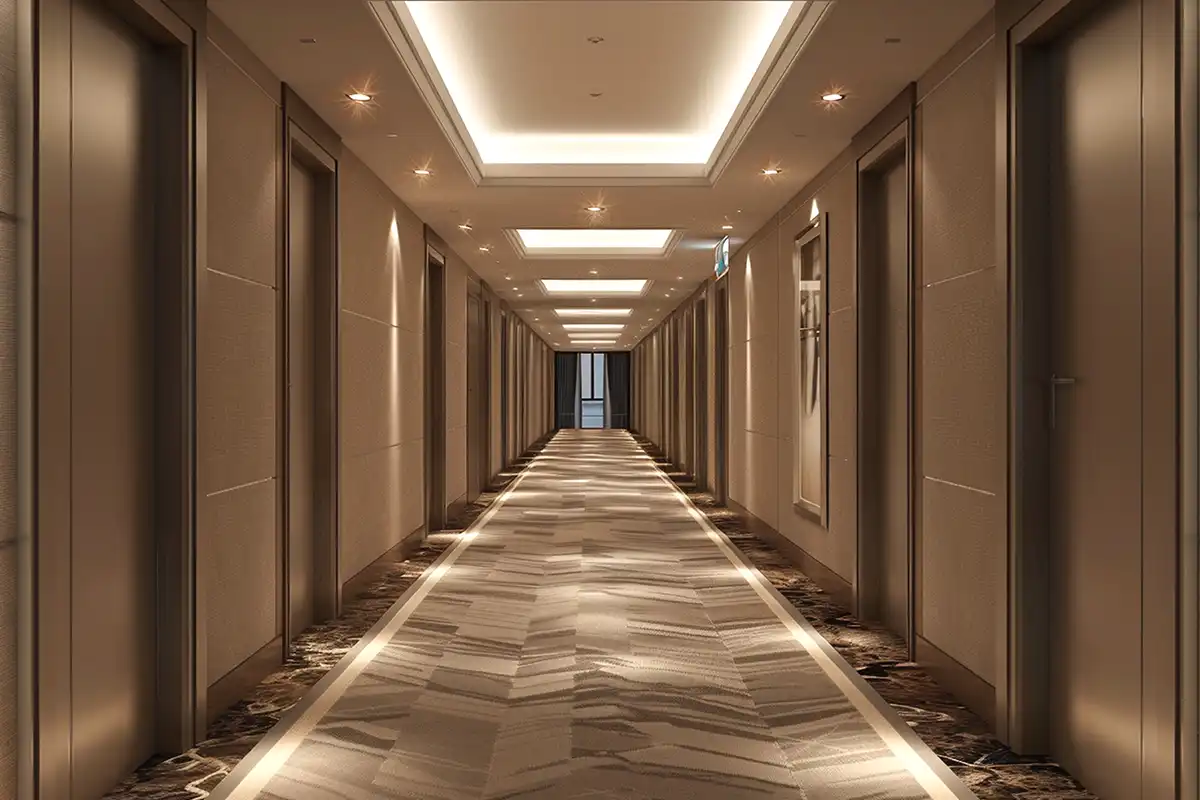
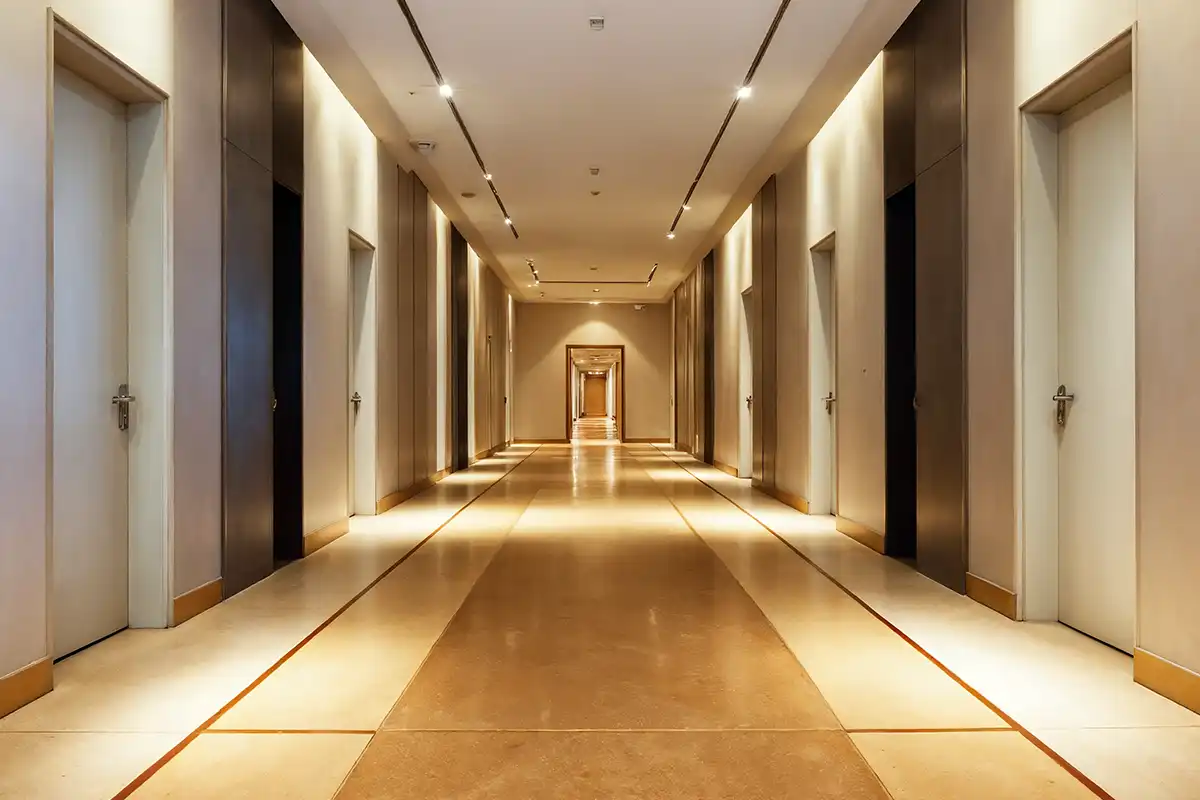
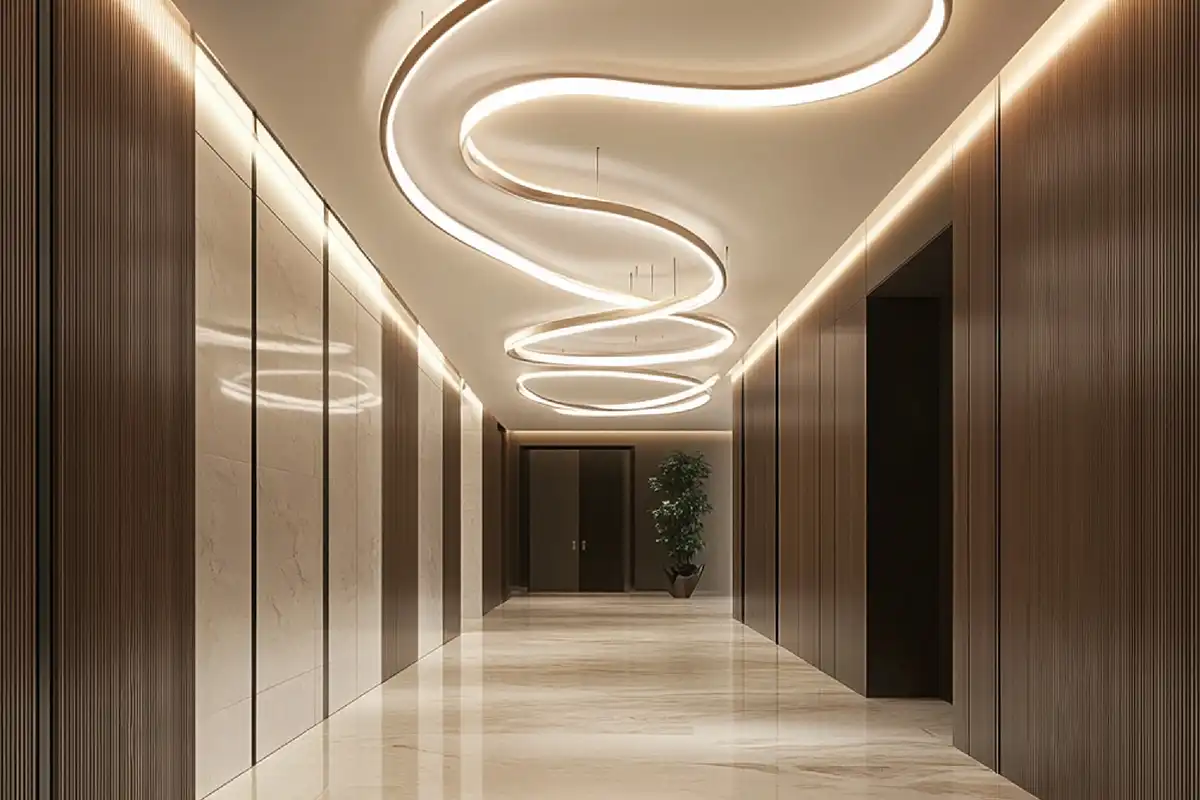
Recessed Linear Lighting
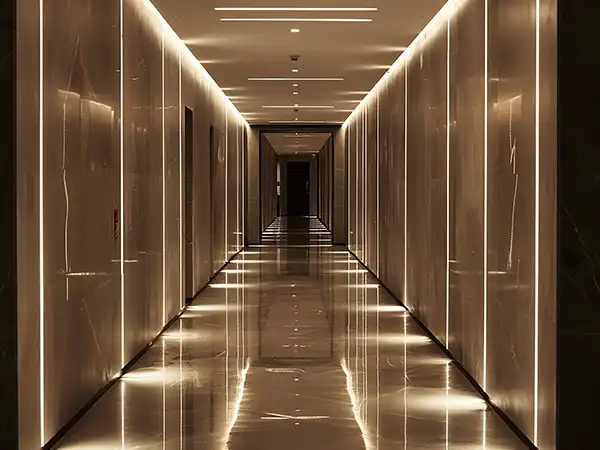
Used in modern corridors where continuous light lines guide movement and maintain clean ceiling aesthetics
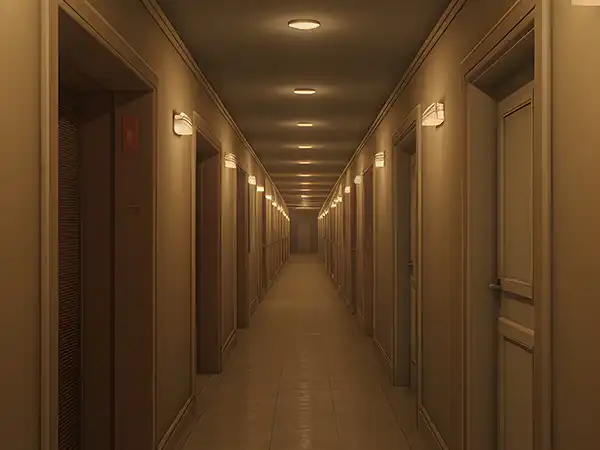
Downlight-Based Corridor Lighting
Common in residential and hotel corridors where controlled pools of light define walking paths
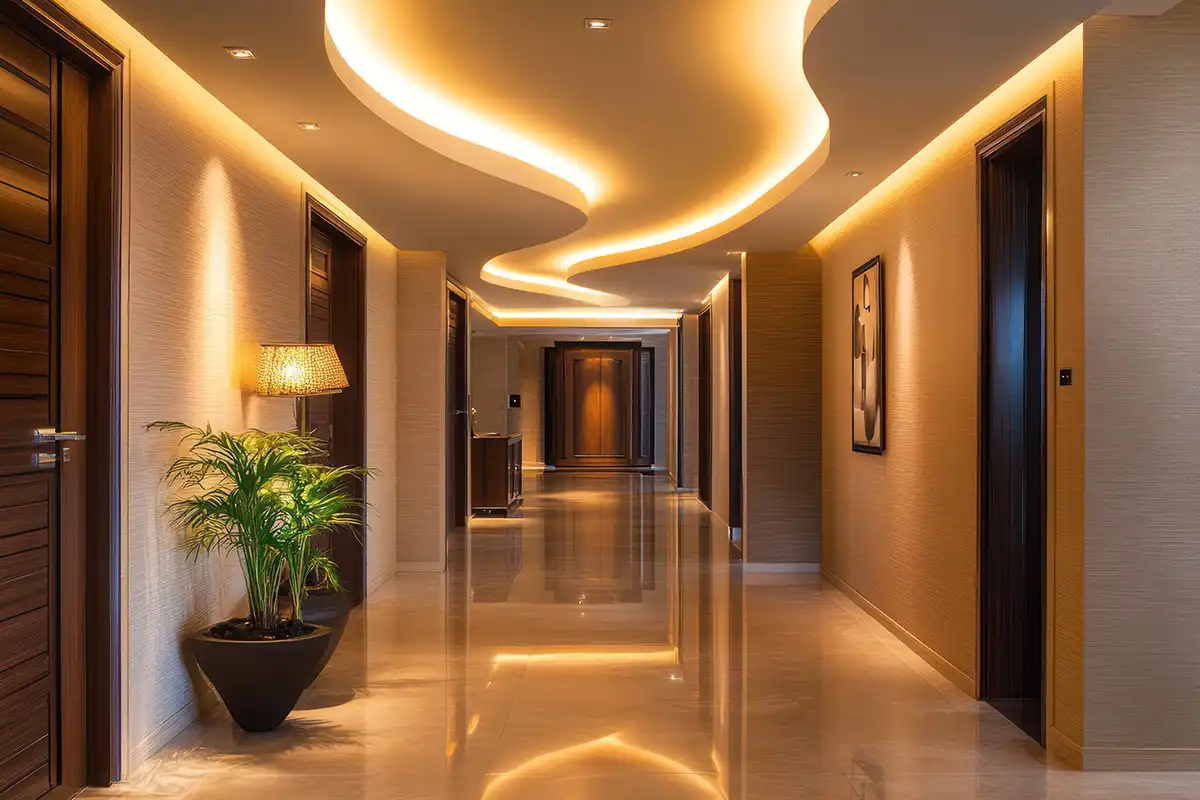
Cove Lighting for Corridors
Installed along edges or ceiling recesses to create indirect illumination without glare
Wall Washer Lighting
Highlights corridor walls, often used in galleries or premium commercial spaces
LED Strip-Based Guidance Lighting
Installed along skirting or lower wall sections for subtle navigation support in low-light environments
Real-World Applications & Use Cases
In residential apartments, corridor lighting often fails when fixtures are spaced evenly without considering door openings. This results in shadow zones near entrances. Proper planning avoids this by adjusting fixture placement based on actual usage flow.
In hotels, long corridors require visual rhythm. If lighting repeats too predictably, the space feels monotonous. Slight variation in intensity or fixture grouping can improve perception without complicating execution.
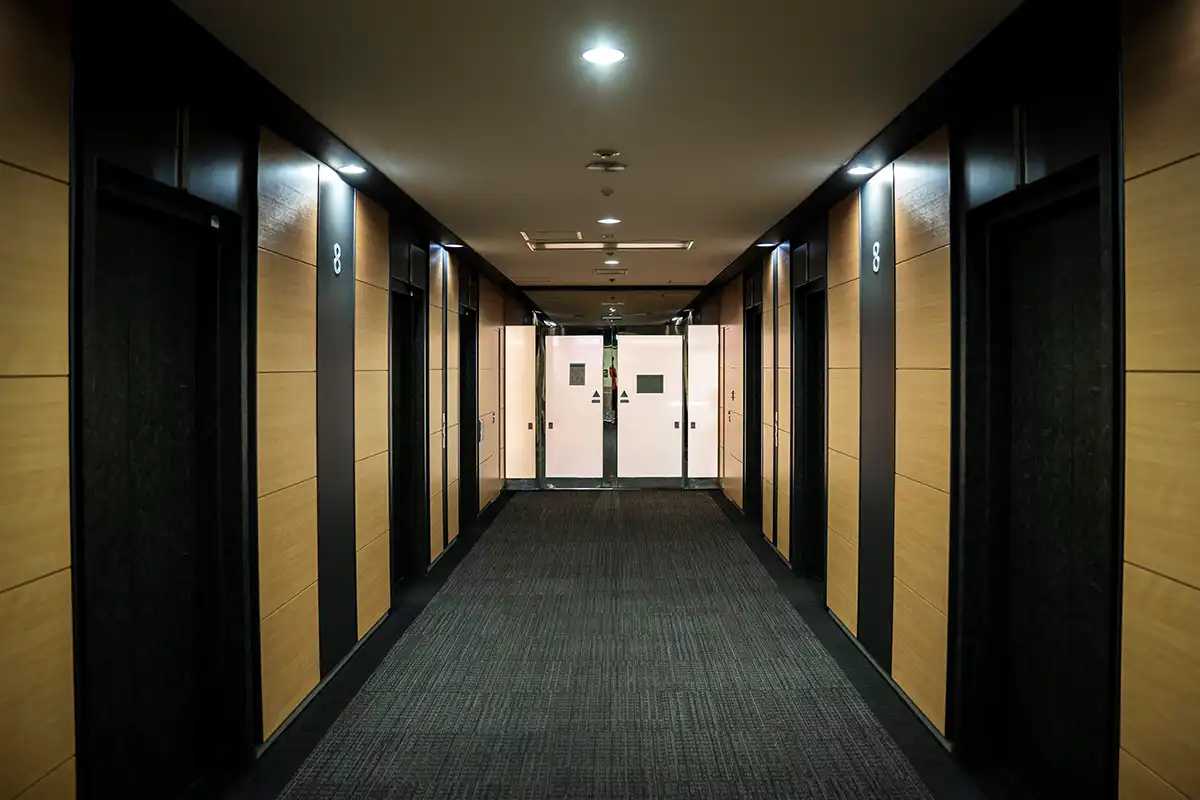
Commercial office corridors usually involve multiple services above the ceiling. Lighting layouts must adapt to HVAC ducts and cable trays. Ignoring this during design leads to last-minute adjustments on site, which often compromise alignment.
Hospitals and institutional corridors demand consistent lux levels for safety. Any fluctuation in brightness can affect movement, especially during emergencies.
When Corridor Lighting Design & Installation Becomes Necessary
This service becomes essential when corridor lengths increase or when multiple functional zones connect through passageways. In small spaces, basic lighting may work, but as projects scale, inconsistencies start appearing.
It is also required when false ceilings are introduced. Once ceiling layers are added, lighting placement becomes restricted, and planning must happen before execution begins.
Renovation projects often reveal poor wiring layouts or uneven lighting distribution. In such cases, redesigning the corridor lighting system avoids recurring issues.
Environments & Project Conditions This Service Fits
This service works across residential buildings, hotels, office spaces, hospitals, and retail environments. Each setting introduces different constraints.
In residential setups, ceiling height limitations influence fixture selection. In commercial spaces, coordination with fire safety and HVAC systems becomes critical.
Corridors with natural light require adaptive lighting strategies to balance daylight and artificial lighting. In enclosed corridors, artificial lighting becomes the primary source, requiring higher precision in planning.
Corridor Lighting Design & Installation Process
Corridor lighting execution follows a structured EPC workflow where design, procurement, and installation are tightly coordinated to avoid on-site conflicts and rework.
The process begins with site assessment and layout planning. Corridor dimensions, ceiling structure, and service lines are evaluated to define fixture positions.
Next comes lighting design and load calculation. Fixture types, wattage, and spacing are finalized to achieve consistent illumination without overloading circuits.
Material procurement follows, ensuring compatibility between fixtures, drivers, and control systems. This stage often determines long-term reliability.
Installation is executed on-site with alignment checks. Even minor deviations in spacing can disrupt visual consistency across long corridors.
Finally, testing and commissioning are carried out. Light levels, uniformity, and control systems are verified before project handover.
Technical & Safety Considerations
Corridor lighting must maintain uniform lux levels to support safe movement. Sudden brightness variations can cause discomfort or visibility issues.
Glare control is often overlooked. Fixtures placed directly in line of sight can create discomfort, especially in long corridors.
Emergency lighting integration is another critical factor. Backup systems must activate instantly without affecting normal lighting circuits.
Heat management also plays a role. Poor ventilation around fixtures can reduce lifespan and affect performance over time.
Common Problems & Risks in Corridor Lighting Installation
One frequent issue is misalignment caused by late-stage ceiling changes. When lighting is installed after ceiling modifications, spacing becomes inconsistent.
Another risk is over-lighting. Excessive fixtures increase energy consumption without improving usability.
Improper wiring routes can create maintenance challenges. Accessing fixtures later becomes difficult if planning is not done correctly.
Coordination gaps between design and installation teams often result in compromised layouts. This is why EPC execution reduces such risks.
How to Choose the Right Corridor Lighting Setup
Choosing the right setup depends on corridor length, ceiling structure, and usage intensity. A short residential corridor does not require the same approach as a hotel passageway.
Fixture selection should consider maintenance access. In real projects, difficult-to-reach fixtures increase long-term costs.
Lighting distribution must be tested at the design stage. Relying on visual estimation often leads to uneven results.
Engaging a full execution partner ensures that design decisions are practical and implementable on-site, not just visually appealing on plans.
Pricing Factors
Corridor lighting costs depend on layout complexity, fixture type, and installation conditions. Longer corridors require more precise planning, which increases design effort.
Ceiling type plays a major role. False ceilings with multiple service layers demand additional coordination during installation.
Fixture selection impacts both upfront and long-term costs. High-efficiency LED systems reduce energy consumption but require proper driver integration.
Labor costs vary based on site accessibility and project scale. International projects may involve logistics and deployment planning.
Why Choose This Corridor Lighting Design & Installation Service
This service is structured around execution clarity rather than just design output. Every decision is aligned with how it will be installed on-site.
At VRD Creative, corridor lighting projects are handled with full coordination between design, procurement, and execution teams. This reduces rework and ensures consistency across long passageways.
To understand how project execution is handled across different environments, you can review our approach on the About us page.
Service Coverage
The company operates from UAE, delivering projects across Dubai and Abu Dhabi as primary regions.
International projects are executed across the Middle East, USA, and Europe through on-site deployment. Teams travel based on project requirements, ensuring direct supervision and execution.
This model allows consistent quality without relying on third-party implementation.
Common Buyer Concerns Before Hiring
Many buyers worry about uneven lighting after installation. This usually happens when spacing is not calculated properly during design.
Another concern is maintenance difficulty. Poor planning often results in fixtures that are hard to access.
Budget control is also a key factor. Without proper planning, costs can increase due to rework or incorrect material selection.
Clients also question whether design will match execution. This is where EPC-based services provide clarity and accountability.
FAQs
1. How is corridor lighting different from regular room lighting?
Corridor lighting focuses on continuous movement and visibility rather than static usage. It requires uniform distribution across length, avoiding dark spots or excessive brightness. The design must also align with walking paths and structural constraints, which makes it more planning-intensive than standard room lighting.
2. What type of lighting works best for long corridors?
Linear lighting and evenly spaced downlights are commonly used for long corridors. The choice depends on ceiling type and visual preference. Linear systems provide continuity, while downlights offer controlled illumination zones. Proper spacing calculation is more important than fixture type.
3. Can corridor lighting be integrated with automation systems?
Yes, corridor lighting can be connected to motion sensors or centralized control systems. This is useful in commercial or hotel environments where energy efficiency and controlled usage are required. Integration must be planned during the electrical layout stage.
4. Do you handle international corridor lighting projects?
Yes, projects are executed across the Middle East, USA, and Europe through on-site deployment. The team travels to the project location, handling design, procurement, installation, and final commissioning as a complete execution service.
5. What are common mistakes in corridor lighting projects?
Common mistakes include incorrect fixture spacing, ignoring ceiling constraints, and poor wiring planning. These issues often lead to uneven lighting and maintenance challenges. Most of these problems arise when design and execution are handled separately.
6. How long does a corridor lighting project take?
Timelines depend on corridor length, project scale, and site conditions. Smaller residential projects may take a few days, while large commercial corridors require coordinated scheduling with other services. Execution planning plays a major role in timeline accuracy.
Discuss Your Project
Corridor lighting requires careful alignment between design intent and on-site execution, especially in large or complex layouts. If you are planning a project in UAE or need on-site deployment across international locations, it’s worth discussing layout strategy, fixture selection, and execution sequencing in detail.
You can share your project requirements, drawings, or site conditions through our Contact page to explore how the full execution process can be structured from planning to final installation.
Image Gallery