
Airport Ramp Lighting Task
Airport Ramp Lighting Task refers to the planning, supply, installation, and commissioning of lighting systems used in aircraft parking, servicing, and movement areas. It involves engineering layout design, fixture selection, on-site installation, and final system calibration under real operational conditions.
What This Service Includes
Airport Ramp Lighting Task covers the complete lifecycle from initial assessment to final system validation. It includes understanding apron geometry, selecting appropriate mounting structures such as high masts or pole systems, integrating control mechanisms, and ensuring proper light distribution across aircraft stands. Unlike isolated installation work, this service connects design decisions directly with execution realities, ensuring that lighting performs as expected once aircraft operations begin.
VS Wilson operates as a complete project execution partner, handling Airport Ramp Lighting Task through an EPC model—covering design engineering, material procurement, installation, and final commissioning. Based in the UAE, projects are executed across the Middle East, USA, and Europe through on-site deployment teams. This ensures that lighting systems are not only installed correctly but also aligned with operational workflows, aircraft safety requirements, and ground crew visibility needs.
What This Service Includes
Apron layout mapping aligned with aircraft movement patterns
Lighting design calibrated for pilot and ground crew visibility
Fixture selection based on mounting height and spread
On-site installation with operational zone coordination
Lighting layout planning for apron zones
This involves mapping aircraft stand positions, service lanes, and equipment movement paths before any fixture placement decisions are made.
Fixture selection based on operational conditions
Instead of generic fixtures, selection is influenced by mounting height, beam angle, and expected glare impact on cockpit visibility.
On-site installation within active airport environments
Work is often executed around live operations, requiring coordination with airport authorities and phased installation planning.
System testing under real operating scenarios
Final adjustments are done after installation to match actual night-time conditions, not just theoretical design calculations.
Airport Ramp Lighting Task covers the complete lifecycle from initial assessment to final system validation. It includes understanding apron geometry, selecting appropriate mounting structures such as high masts or pole systems, integrating control mechanisms, and ensuring proper light distribution across aircraft stands. Unlike isolated installation work, this service connects design decisions directly with execution realities, ensuring that lighting performs as expected once aircraft operations begin.
Apron & Ramp Lighting Systems
Apron & Ramp Lighting Systems represent how users often search for the same Airport Ramp Lighting Task when focusing on aircraft servicing zones. These systems are not separate services but variations in how the requirement is defined based on operational zones within airports.
From an execution standpoint, these systems involve combining floodlighting, pole-mounted luminaires, and control networks to achieve uniform visibility across apron areas. In real projects, lighting must account for aircraft size variations, service equipment movement, and refueling operations. The system is designed as a unified setup, not isolated fixtures, ensuring consistent illumination without creating high-contrast zones that affect visibility.
Airport Apron Lighting Systems
Airport Apron Lighting Systems is another search variation used when the focus shifts specifically to aircraft parking and servicing areas. While the terminology differs, the execution remains part of the same Airport Ramp Lighting Task.
These systems are planned around aircraft stand layouts, ensuring that lighting does not interfere with pilot line-of-sight or ground crew operations. In actual installations, light distribution is adjusted to avoid shadows created by aircraft wings and service vehicles. The system also integrates with airport infrastructure, including power supply routing and maintenance access planning.
LED Apron Lighting Solutions
LED Apron Lighting Solutions reflect a preference for energy-efficient and long-life lighting systems within the same service scope. This variation highlights the type of fixtures used rather than changing the nature of the service.
In real execution scenarios, LED systems are selected not just for efficiency but for their ability to provide controlled beam angles and stable output. This becomes critical when working with high mast installations where incorrect beam spread can create uneven lighting. Proper driver selection and thermal management are also considered during procurement to avoid early performance degradation.
Aircraft Stand & Gate Lighting Systems
Aircraft Stand & Gate Lighting Systems describe the same service when focused on passenger boarding and aircraft docking areas. These zones require a different lighting approach compared to open apron spaces.
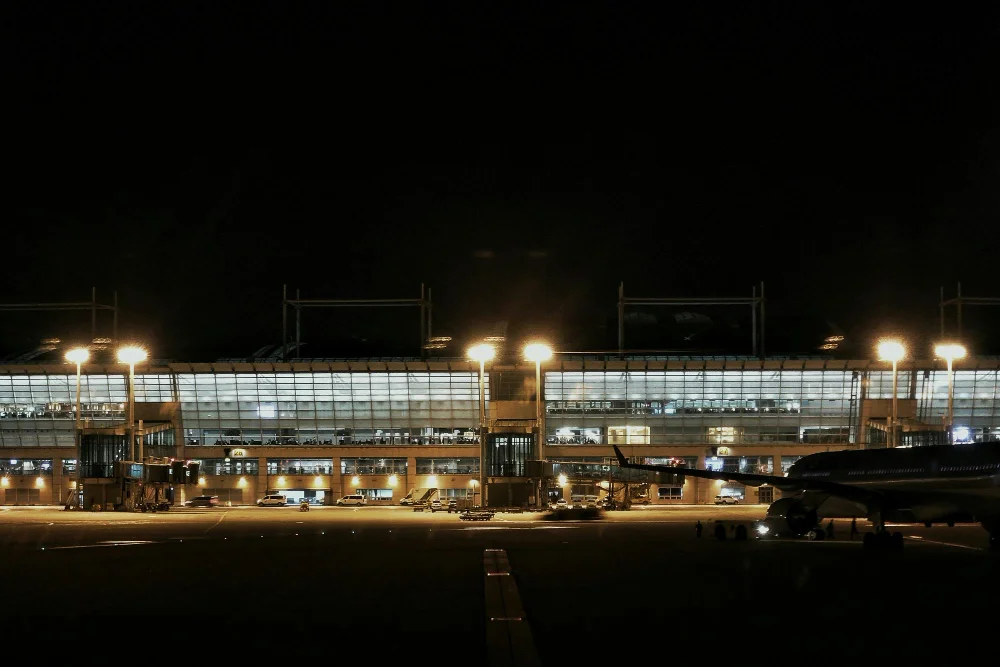
From an execution perspective, lighting near gates must balance visibility for ground crew while avoiding glare for passengers and cockpit operations. Fixture positioning is often adjusted based on terminal structures, jet bridges, and service equipment. This requires coordination between lighting design and structural elements already present at the site.
High Mast Apron Lighting Systems
High Mast Apron Lighting Systems are used when large areas need to be covered with fewer mounting points. This is a common approach within Airport Ramp Lighting Task for wide apron zones.
In practice, high mast installations require careful planning of pole height, foundation design, and maintenance access systems. The challenge is not just illumination but achieving uniform distribution without excessive brightness directly under the mast. Beam angles and fixture orientation play a major role in avoiding dark patches between aircraft stands.
Airport Ramp Lighting Control Systems
Airport Ramp Lighting Control Systems represent the operational layer of the same service, where lighting is managed based on activity and time.
These systems may include centralized controls, scheduling mechanisms, or sensor-based adjustments. In real projects, control systems are integrated during installation rather than added later, ensuring compatibility with electrical infrastructure. Proper planning avoids issues like uneven switching zones or delayed response during operational changes.
ICAO Compliant Apron Lighting
ICAO Compliant Apron Lighting reflects regulatory alignment within Airport Ramp Lighting Task. Clients often search this term when compliance is a priority.
Execution involves aligning lighting levels, uniformity ratios, and glare limits with ICAO guidelines. However, compliance is not just about meeting numbers. In actual projects, adjustments are made after installation to match real-world conditions, as theoretical calculations may not account for structural obstructions or equipment movement.
Project Execution Process for Airport Ramp Lighting Task
Airport Ramp Lighting Task is executed through a coordinated EPC workflow that connects design decisions directly with on-site realities. It begins with site assessment, where apron layout, aircraft types, and operational patterns are studied.
Design planning follows, focusing on lighting distribution, fixture positioning, and mounting structures. Procurement is handled based on these design parameters, ensuring compatibility between selected equipment and site conditions.
Installation is carried out in phases, often during restricted operational windows. This requires coordination with airport authorities to avoid disruptions. After installation, testing is conducted under actual night-time conditions, followed by adjustments to achieve required illumination levels and uniformity.
This approach reduces the gap between design intent and final performance, which is a common issue when design and execution are handled separately.
Real-World Applications & Use Cases
Airport Ramp Lighting Task is typically required in aircraft parking zones, cargo handling areas, maintenance bays, and remote stands. Each of these areas has different lighting demands based on operational activity.
For example, cargo zones often require higher vertical illumination for equipment handling, while maintenance areas demand focused lighting for inspection tasks. Remote stands, on the other hand, rely heavily on high mast systems due to larger open spaces.
In actual projects, these variations are handled within a single integrated lighting plan rather than separate systems, ensuring consistency across the entire airside environment.
Technical & Safety Considerations
Lighting in airport ramp areas must balance visibility with safety. Excessive brightness can create glare for pilots, while insufficient lighting affects ground crew operations.
One practical challenge is managing shadows caused by aircraft structures. This usually happens when lighting is designed without considering aircraft dimensions. Another factor is electrical routing, where improper planning can lead to maintenance difficulties later.
Weather conditions also influence fixture selection, especially in coastal or desert environments. Corrosion resistance and thermal performance are considered during procurement to avoid early system failures.
Common Problems & Risks in Lighting Installation
One common issue is uneven illumination caused by incorrect fixture spacing. This often becomes visible only after installation, requiring costly adjustments.
Another risk is glare affecting cockpit visibility, which usually happens when fixtures are installed without proper angle calibration. Coordination gaps between design and installation teams can also lead to misalignment between planned and actual fixture positions.
These problems are not always visible during planning but become critical during operation, which is why integrated execution plays a key role.
How to Choose the Right Lighting Setup
Selecting the right Airport Ramp Lighting Task approach depends on aircraft types, apron size, and operational intensity. A design that works for narrow-body aircraft may not suit wide-body operations.
Mounting strategy is another key factor. High mast systems may reduce the number of poles but require precise beam control. Lower pole systems offer flexibility but may increase installation complexity.
From a decision standpoint, separating design from execution often leads to mismatches. A unified approach ensures that design assumptions are validated during installation, reducing the need for rework.
Pricing Factors
Pricing for Airport Ramp Lighting Task is influenced by several practical factors rather than a fixed rate. Site size, number of aircraft stands, and mounting structure requirements play a major role.
High mast installations typically involve higher initial costs due to structural requirements, while distributed pole systems may increase installation complexity. Electrical infrastructure, including cabling and control systems, also impacts overall cost.
A common mistake is focusing only on fixture pricing. In reality, installation complexity and post-installation adjustments often contribute significantly to total project cost. Poor planning at this stage can lead to repeated modifications, increasing both time and expense.
Why Choose This Service
Airport Ramp Lighting Task requires coordination between design, procurement, and installation. Handling these separately often leads to inconsistencies in final output.
VS Wilson approaches this as a unified execution process, ensuring that design decisions are carried through to installation without deviation. To understand how this approach is structured, visit our About Us page.
This reduces the risk of performance gaps and ensures that lighting systems function as intended under real operational conditions.
Service Coverage
The service is based in the UAE, with project execution across the Middle East, USA, and Europe. Teams are deployed on-site depending on project requirements.
International projects are handled through coordinated deployment, ensuring that the same execution standards are maintained regardless of location. This includes planning, installation, and final commissioning at the project site.
Common Buyer Concerns Before Hiring
Buyers often question whether lighting performance will match design expectations. This concern is valid, especially when design and installation are handled by different parties.
Another concern is project disruption during installation. In airport environments, even minor delays can affect operations, making execution planning critical.
Long-term maintenance is also a factor. Poor fixture selection or installation methods can lead to frequent failures, increasing operational costs over time.
FAQs
1. What is Airport Ramp Lighting Task?
It refers to the complete process of designing, supplying, installing, and commissioning lighting systems used in aircraft parking and servicing areas. It includes planning layout, selecting fixtures, and executing installation on-site.
2. How is apron lighting different from runway lighting?
Apron lighting focuses on aircraft servicing and ground operations, while runway lighting is designed for aircraft navigation during takeoff and landing. The design requirements and lighting levels differ significantly.
3. Why is glare control important in apron lighting?
Glare can affect pilot visibility and create safety risks during aircraft movement. Proper fixture positioning and beam control help reduce this issue.
4. Do you handle international airport projects?
Yes, projects are executed across the Middle East, USA, and Europe through on-site deployment teams, maintaining consistent execution standards.
5. What type of lighting is used in apron areas?
LED-based floodlighting and high mast systems are commonly used due to their efficiency and ability to cover large areas effectively.
6. How long does installation take?
Timeline depends on project size, site conditions, and operational constraints. Installation is often phased to align with airport schedules.
Discuss Your Project
If your project involves aircraft stand lighting, apron expansion, or upgrading existing systems, it is worth evaluating how the lighting will perform under real operational conditions. VS Wilson supports project planning, system selection, and on-site execution across UAE, Middle East, USA, and Europe.
You can outline your project requirements, site constraints, or execution challenges through our Contact page to begin a detailed discussion.
Image Gallery