Common Area Lighting Services
Common area lighting is a full-scope service covering design planning, material selection, and on-site installation for shared building spaces such as corridors, lobbies, staircases, and utility zones. It is executed through an EPC model where engineering, procurement, and installation are handled together to ensure consistency across all areas.


What This Service Includes
This service covers the full lifecycle of common area lighting. It begins with understanding how shared spaces are used in real buildings, followed by technical layout development. Material procurement is handled with attention to durability and availability. Installation is executed on-site with adjustments based on actual conditions, ensuring the final output matches both safety standards and user experience.
At VS Wilson, projects are handled as complete execution assignments. The team operates from the UAE and deploys on-site across the Middle East, USA, and Europe, managing everything from layout planning to final commissioning. This approach avoids the common gap between design intent and actual installation results.


What This Service Includes
Lighting layout aligned with movement and usage patterns
Design decisions are based on how people actually use corridors, entries, and shared spaces during different hours.
Fixture selection based on maintenance access and durability
Material choices consider cleaning cycles, replacement frequency, and long-term operational practicality.
Lux level planning for safe and consistent illumination
Brightness is calculated based on safety requirements and visual comfort, not just aesthetic preference.
On-site execution with alignment to architectural constraints
Installation adapts to real site conditions, including ceiling heights, wiring limitations, and finishing materials.
This service covers the full lifecycle of common area lighting. It begins with understanding how shared spaces are used in real buildings, followed by technical layout development. Material procurement is handled with attention to durability and availability. Installation is executed on-site with adjustments based on actual conditions, ensuring the final output matches both safety standards and user experience.
Types of Lighting Solutions Offered
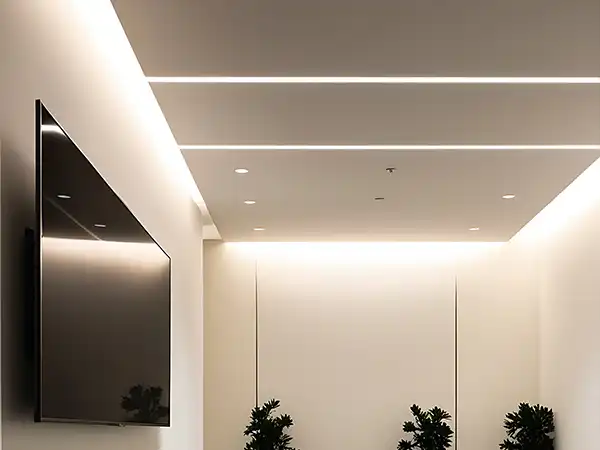
Corridor Linear Lighting
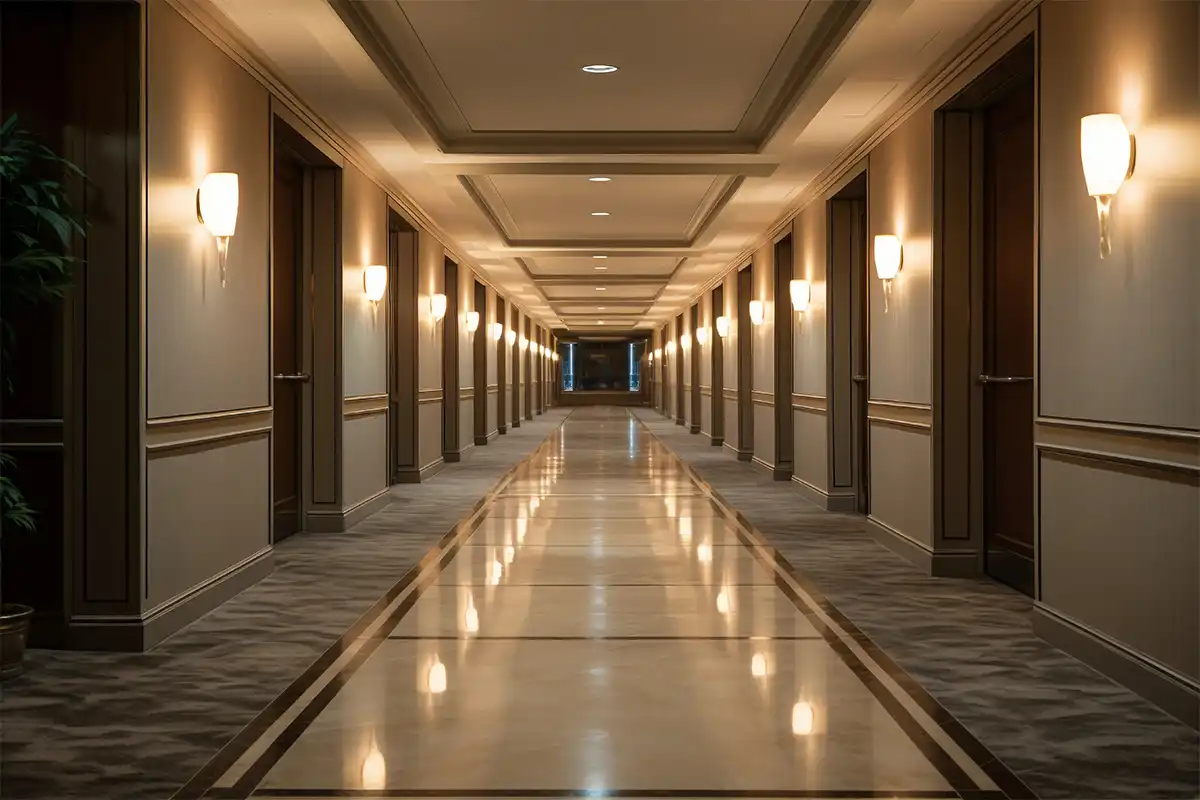
Used for long passageways where uniform light distribution is required to avoid dark patches or visual fatigue.
Lobby Feature Lighting
Designed to create visual hierarchy at entry points without overpowering the space or causing glare.
Staircase Safety Lighting
Focused on visibility and step clarity, especially in emergency or low-light conditions.
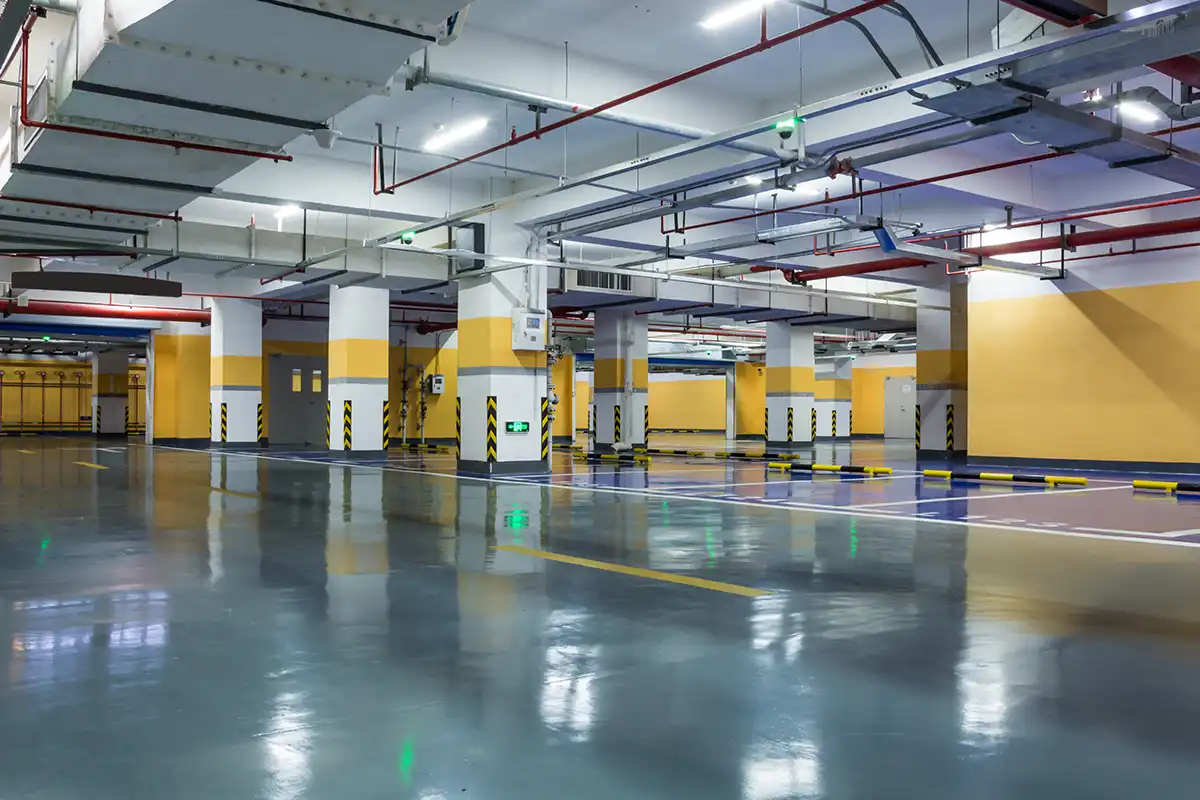
Parking Access Transition Lighting
Balances brightness between outdoor and indoor areas to prevent sudden visibility changes.
Utility Area Functional Lighting
Applied in service zones where clarity is more important than visual design.
Real-World Applications & Use Cases
In residential towers, common area lighting often becomes inconsistent when handled without proper planning. Corridors may have uneven brightness, and lobbies may feel either too dim or overly harsh. This service ensures balanced lighting across all shared zones.
In commercial buildings, lighting must support both movement and visual orientation. Poorly planned layouts can create confusion in navigation, especially in large complexes.
In mixed-use developments, lighting must adapt to different usage patterns throughout the day. This usually requires careful zoning and control system integration, which is often overlooked in standard installations.
When This Service Becomes Necessary
This service is typically required when buildings move beyond basic lighting installation and need structured planning. It becomes critical during new construction, renovation of aging properties, or when existing lighting fails to meet safety or usability expectations.
In many projects, this need arises after occupants start facing issues such as dim corridors, excessive glare, or inconsistent lighting across floors. Addressing these problems later is more expensive than planning correctly from the beginning.
Environments & Project Conditions This Service Fits
Common area lighting is relevant in residential towers, hotels, office buildings, hospitals, and mixed-use developments. Each environment has different expectations.
For example, residential buildings require comfort and subtle visibility, while commercial environments prioritize clarity and navigation. In real projects, ceiling height, wall finishes, and natural light availability significantly influence design decisions.
Project Execution Process
Common area lighting projects are executed through a structured process that connects design, procurement, and installation into one workflow. This ensures that what is planned on paper is actually achievable on-site without compromise.
The process starts with site evaluation and understanding movement patterns across shared spaces. Based on this, lighting layouts are developed with calculated lux levels.
Material selection follows, where fixtures are chosen based on durability, access for maintenance, and compatibility with the building structure.
On-site installation is then carried out with continuous adjustments. In real scenarios, wiring routes, ceiling conditions, and structural elements often require modifications that are not visible during planning.
Final testing ensures uniform light distribution, proper functioning of control systems, and elimination of glare or shadow zones. This end-to-end approach avoids mismatches between design and execution.
Technical & Safety Considerations
Lighting in shared spaces must meet both safety and usability standards. This includes maintaining consistent illumination levels, avoiding sharp contrast zones, and ensuring visibility in emergency conditions.
Control systems are often integrated to manage energy usage, especially in low-traffic areas. However, incorrect sensor placement can lead to delayed activation, which affects user experience.
Material selection also plays a role in safety. Fixtures must withstand continuous usage and should not degrade quickly under environmental conditions such as humidity or dust.
Common Problems & Risks in Lighting Installation
One of the most frequent issues is uneven lighting distribution. This happens when layouts are not calculated properly and fixtures are placed based on guesswork.
Another common problem is glare, especially in narrow corridors. This usually occurs when fixture positioning is not aligned with eye level and movement direction.
There are also coordination issues between design teams and installation teams. When these are handled separately, the final output often deviates from the intended design.
In real projects, these problems lead to rework, increased costs, and dissatisfaction among occupants.
How to Choose the Right Lighting Setup
Choosing the right common area lighting setup depends on how the space is actually used. The first step is understanding movement patterns, peak usage times, and safety requirements.
Material selection should not be based only on appearance. Maintenance access, replacement cost, and durability must be considered. In many buildings, fixtures are difficult to access, making maintenance expensive.
Control systems should be selected based on usage patterns. For example, motion sensors work well in low-traffic areas but may not be suitable for continuously used corridors.
To understand execution capability and approach, reviewing the company background helps. Visit our About Us page to see how projects are handled across different environments.
Pricing Factors
Pricing for common area lighting is influenced by multiple factors rather than a fixed rate. The size of the building and number of floors directly impact material and installation scope.
Fixture type plays a significant role. High-durability fixtures with longer lifespan cost more initially but reduce long-term maintenance expenses.
Design complexity also affects pricing. Projects requiring detailed lux calculations, control systems, and architectural integration involve more planning effort.
Site conditions can further impact cost. Difficult access, structural constraints, and retrofit requirements often increase execution time and complexity.
Choosing a low-cost approach without proper planning often leads to higher long-term costs due to rework and maintenance issues.
Why Choose This Service
This service is structured as a complete execution solution rather than fragmented tasks. It eliminates the disconnect between design and installation, which is a common issue in lighting projects.
The approach is based on actual project conditions rather than theoretical layouts. Adjustments are made on-site to ensure the final outcome matches the intended performance.
The team operates as an execution partner, handling design, procurement, and installation under one system. This reduces coordination gaps and ensures accountability throughout the project.
Service Coverage
The company operates from the UAE, with project execution across Dubai, Abu Dhabi, and other regions.
For international projects, teams are deployed on-site across the Middle East, USA, and Europe. This includes full project handling from planning to final installation.
The service is not limited to remote consulting. All projects involve physical execution at the client location, ensuring consistency between design and final output.
Common Buyer Concerns Before Hiring
Buyers often worry about whether the lighting will look different after installation compared to design plans. This concern is valid because many projects fail to align execution with planning.
Another concern is maintenance. In shared spaces, frequent replacement or difficult access can become a long-term issue.
Cost control is also a major factor. Without proper planning, projects may exceed budget due to unexpected adjustments during installation.
Execution capability is often overlooked. Handling design and installation separately increases the risk of misalignment.
FAQs
1. What is included in common area lighting services?
It includes lighting layout design, lux level calculation, fixture selection, material procurement, and on-site installation. The service ensures that all shared spaces receive consistent and functional lighting based on actual usage conditions.
2. How is common area lighting different from regular lighting?
Common area lighting focuses on shared spaces where movement, safety, and uniformity are critical. Unlike individual room lighting, it must handle continuous usage and varying occupancy levels.
3. Can this service be executed internationally?
Yes, projects are executed on-site across the Middle East, USA, and Europe. Teams travel to the project location and handle full installation and execution.
4. How long does a typical project take?
Timelines depend on building size, complexity, and site conditions. Larger projects with multiple floors and integrated control systems require more coordination and execution time.
5. Is design-only service available?
While design consultation can be provided, full execution is recommended. Separating design and installation often leads to inconsistencies and rework.
6. What are the risks of poor lighting planning?
Poor planning can lead to uneven lighting, glare, safety issues, and higher maintenance costs. These problems are difficult and expensive to fix after installation.
7. How are lighting levels decided?
Lux levels are calculated based on safety standards, movement patterns, and space usage. This ensures proper visibility without over-lighting or energy waste.
Discuss Your Project
If you're planning a building or upgrading existing shared spaces, it's worth evaluating how lighting will perform in real conditions rather than just on drawings. Each project has unique movement patterns, structural constraints, and maintenance considerations.
You can discuss your requirements, site conditions, and execution planning with the team to understand how the project would be handled from start to finish, including international deployment if required. Discuss our project through Contact us page.
Image Gallery