Educational Lighting
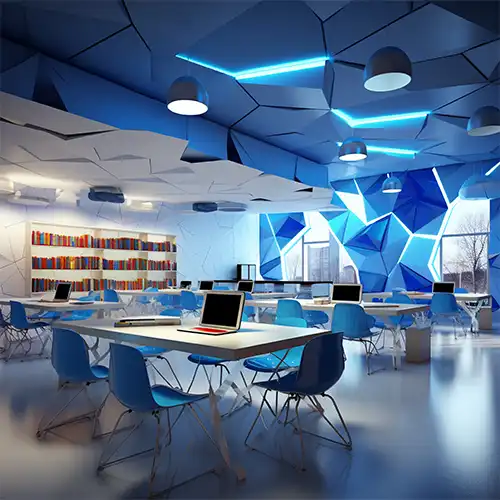
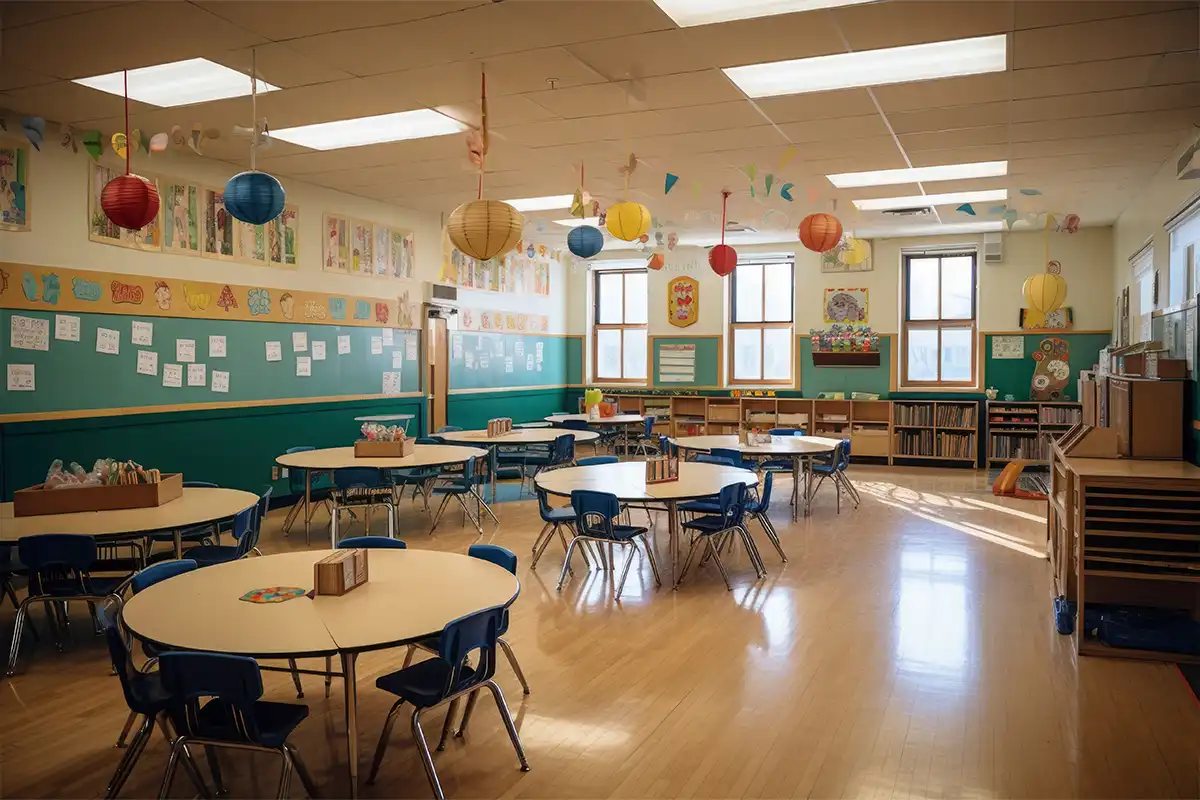
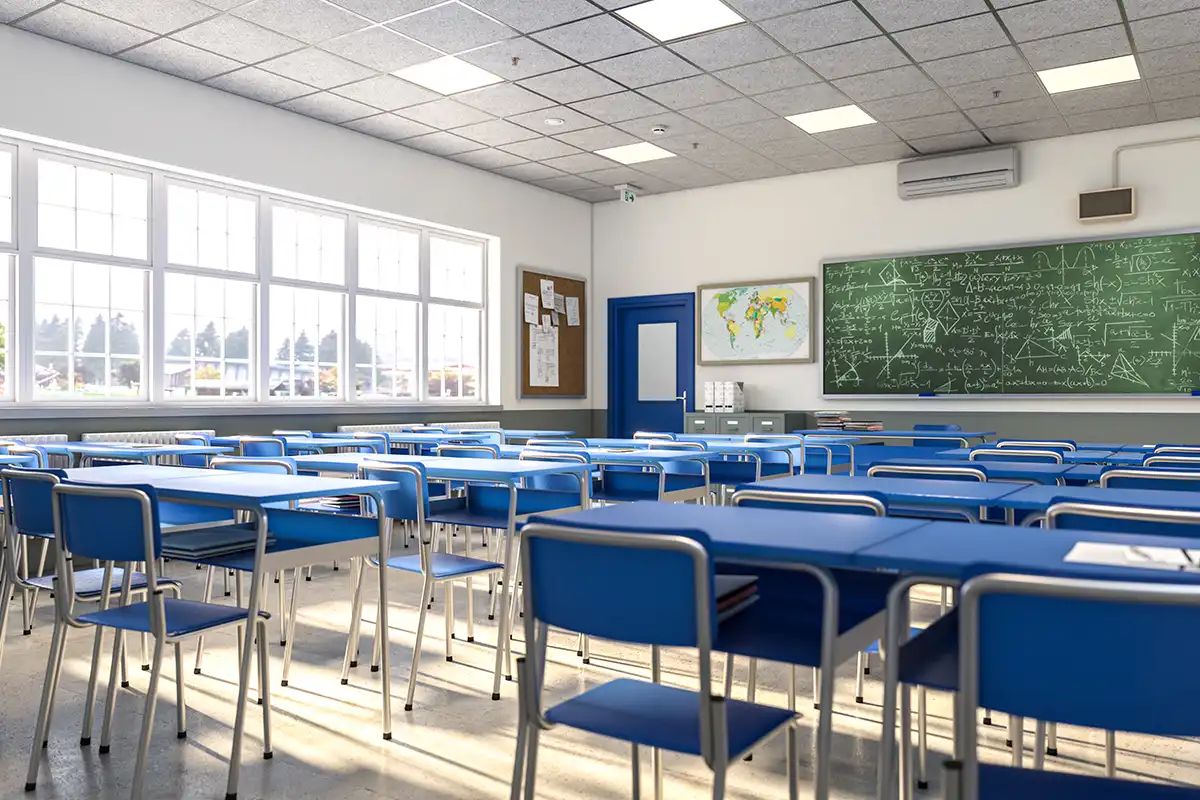
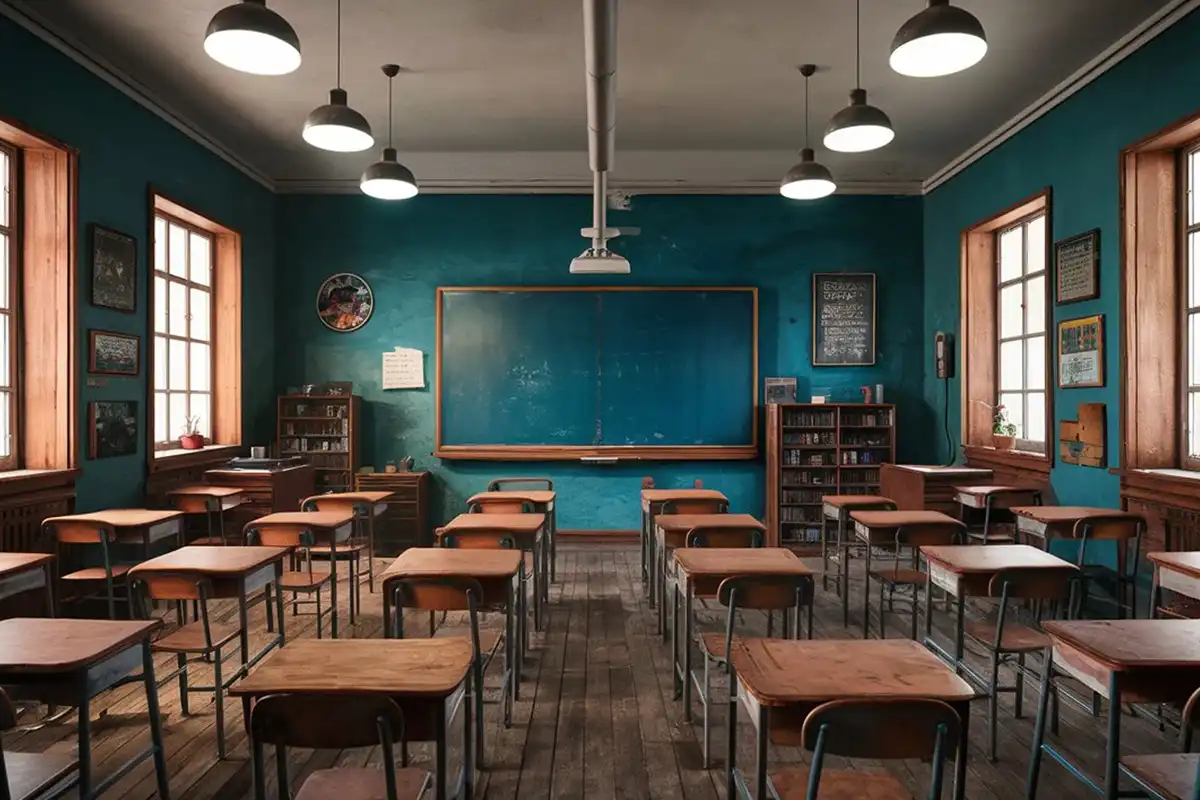
Educational Lighting refers to the complete planning, sourcing, and on-site execution of lighting systems across academic spaces such as classrooms, labs, libraries, and corridors. It involves fixture selection, layout engineering, installation, and final commissioning tailored to learning conditions.
VS Wilson operates as an end-to-end EPC partner, handling design planning, procurement, and on-site execution across UAE, Middle East, USA, and Europe. From concept to final commissioning, projects are delivered with coordinated installation, ensuring lighting aligns with teaching layouts, visual comfort, and long-duration usage requirements typical in educational environments.
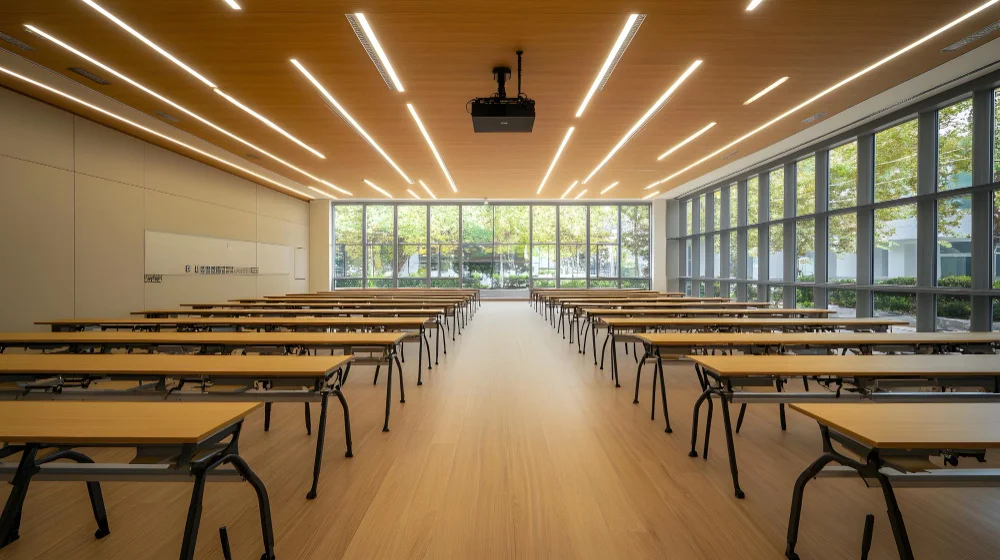
- Balanced illumination across classrooms, labs, and corridors.
- Glare-controlled setups supporting long study hours.
- Lighting layouts aligned with teaching zones and boards.
- Integrated control systems for flexible learning environments.
What This Service Includes
Educational Lighting is not just fixture placement. It involves understanding how students interact with spaces across hours. In actual projects, issues like glare on smart boards, uneven brightness across rows, or excessive brightness near windows often surface if not planned correctly.
This service includes layout mapping for each zone, coordination with electrical contractors, fixture sourcing based on durability, and complete on-site installation. Control systems may also be integrated to allow teachers or facility managers to adjust lighting levels depending on usage.
Types of Lighting Solutions Offered
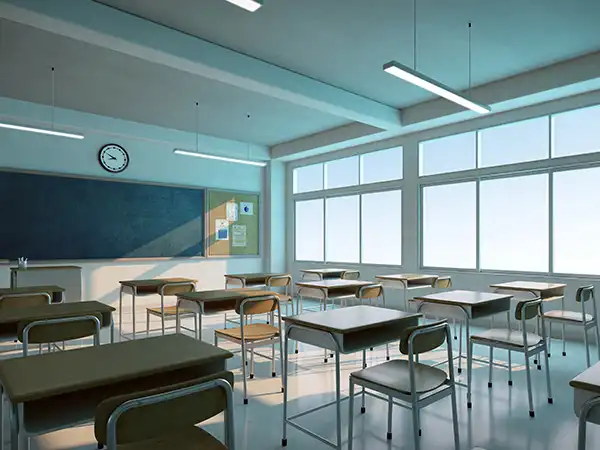
Classroom Panel Lighting
Uniform ceiling-mounted panels designed to reduce eye strain during long sessions.
Board-Focused Linear Lighting
Directional fixtures installed to ensure writing boards remain clearly visible without reflection.
Library Ambient Lighting
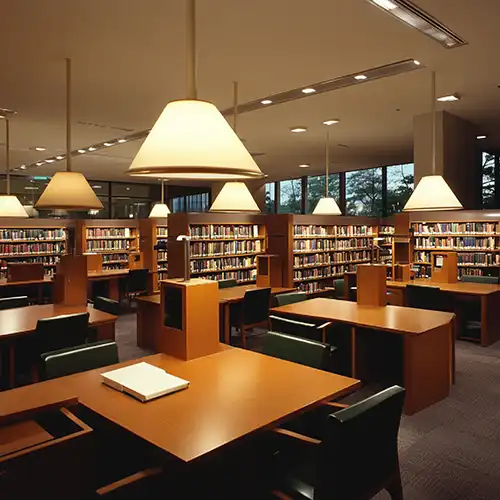
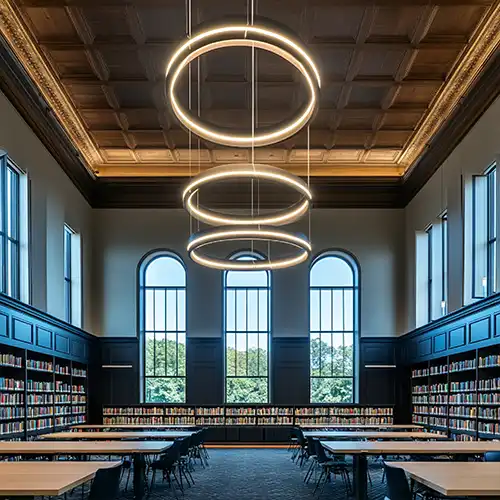
Soft, evenly distributed lighting suited for reading zones with minimal visual fatigue.
Laboratory Task Lighting
Focused illumination over workstations where precision tasks are performed.
Corridor and Transition Lighting
Continuous lighting ensuring safe movement between academic spaces.
Multipurpose Hall Lighting
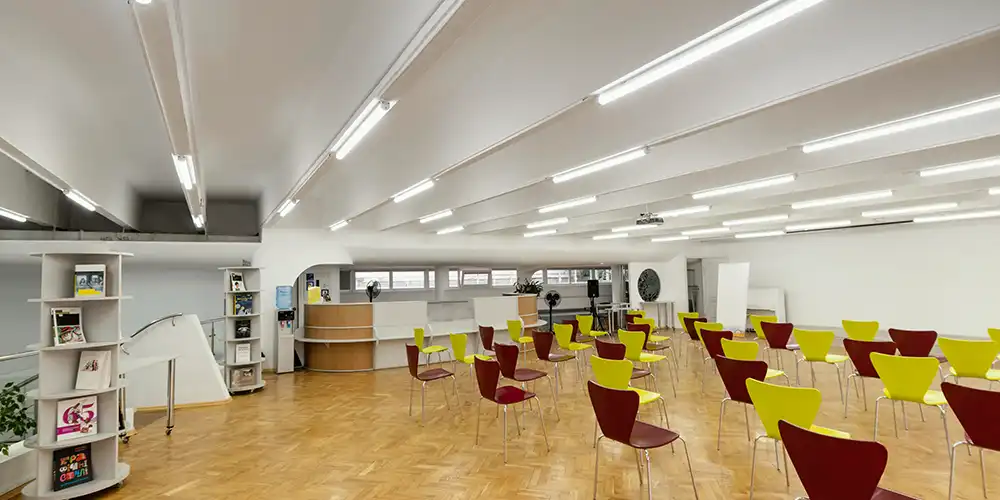
Flexible lighting systems adaptable for lectures, presentations, and events.
Real-World Applications & Use Cases
Educational Lighting becomes critical in environments where visual clarity directly affects learning outcomes. In real classroom setups, poor lighting often leads to students in the back rows struggling to read boards, while those near windows deal with excessive brightness contrast.
In libraries, lighting inconsistencies cause reading fatigue, especially during extended hours. Laboratories require sharper lighting control, where shadows can interfere with practical work.
In large campuses, corridor lighting also plays a role in safety and navigation. From an execution point of view, each of these areas requires different lighting behavior, even though they fall under the same project.
Education Lighting Solutions
This term is often used by clients searching for system-level lighting setups across educational facilities. While the terminology differs, the requirement remains part of Educational Lighting delivered as a complete EPC project.
Education Lighting Solutions typically involve integrating multiple zones into one coordinated system. Classrooms, labs, auditoriums, and outdoor pathways must function together. In actual projects, this means balancing different light intensities, fixture types, and control systems within one electrical plan.
Instead of treating each area separately, the execution focuses on overall campus consistency. This reduces maintenance complexity and ensures uniform visual comfort across different learning environments.
School Lighting Design & Installation
This variation reflects a more execution-focused search intent, where users are actively looking for design and installation services. It directly aligns with Educational Lighting delivered as a complete project lifecycle.
School Lighting Design & Installation involves detailed layout planning based on classroom dimensions, ceiling structure, and seating arrangements. During execution, installation teams coordinate with civil and electrical work to ensure proper alignment.
In real projects, one common challenge is mismatch between design drawings and actual site conditions. This is where on-site adjustments and execution expertise become critical to ensure the final lighting setup performs as intended.
When This Service Becomes Necessary
Educational Lighting is usually reconsidered when students complain about visibility, or when institutions upgrade to digital boards and modern teaching methods. Older setups often fail to support new technologies.
It also becomes necessary during new campus construction, renovation of classrooms, or when institutions expand their facilities. In some cases, energy consumption and maintenance issues push management to re-evaluate existing systems.
Ignoring these signs often leads to long-term inefficiencies, both in performance and operational cost.
Environments & Project Conditions This Service Fits
This service is suited for schools, colleges, coaching institutes, training centers, and research facilities. It also applies to large campuses where multiple buildings require coordinated lighting systems.
Projects may involve new construction where lighting is integrated from the beginning, or retrofit scenarios where existing infrastructure must be adapted. Ceiling height, natural light entry, and usage patterns all influence execution decisions.
Project Execution Process
Educational Lighting projects follow a structured EPC workflow that ensures coordination across design, procurement, and installation stages.
The process begins with site evaluation, where layouts, ceiling structures, and electrical provisions are studied. Based on this, lighting plans are developed considering classroom orientation and usage patterns.
Material procurement follows, where fixtures and control systems are sourced based on durability and performance expectations. During installation, coordination with site teams is critical to align fixtures with actual classroom layouts.
Final stages include testing, brightness adjustments, and commissioning. In many cases, minor adjustments are required after installation to correct real-world inconsistencies that are not visible in drawings.
Technical & Safety Considerations
Educational spaces demand controlled brightness levels to prevent eye fatigue. Excessively bright or poorly distributed lighting often leads to discomfort during long sessions.
Electrical safety also plays a role, especially in labs and high-usage areas. Proper wiring, load distribution, and fixture placement are essential to avoid overheating or frequent failures.
From an execution standpoint, fixture mounting stability and maintenance accessibility must be considered early, especially in large campuses.
Common Problems & Risks in Lighting Installation
One frequent issue is uneven illumination, where certain areas remain dim while others are overly bright. This usually happens when layouts are copied without considering actual room dimensions.
Another risk is glare on smart boards or projection screens, which disrupts teaching. Poor fixture selection also leads to frequent maintenance issues.
In many projects, design and installation are handled separately, leading to coordination gaps. This often results in misalignment between planned and executed lighting.
How to Choose the Right Lighting Setup
Selecting the right Educational Lighting setup requires evaluating classroom dimensions, teaching methods, and usage hours. It is not just about brightness levels.
Decision-makers should assess whether lighting supports board visibility, reduces glare, and maintains uniformity across seating areas. Fixture durability and maintenance access also influence long-term cost.
From a practical standpoint, working with a team that handles both design and execution reduces coordination issues. Fragmented approaches often lead to rework and performance gaps.
Pricing Factors
Educational Lighting costs depend on layout complexity, number of zones, fixture types, and installation conditions. Larger campuses with multiple buildings naturally require higher coordination and planning.
Material selection plays a significant role. High-usage environments require fixtures with longer lifespans, which may increase upfront cost but reduce maintenance expenses over time.
Execution challenges such as working around existing structures or retrofitting old systems also impact pricing. Choosing low-cost solutions often results in higher long-term expenses due to inefficiencies and frequent replacements.
Why Choose This Service
Educational Lighting requires coordination between design understanding and on-site execution. VS Wilson approaches this as a complete project responsibility rather than isolated tasks.
Projects are handled from planning to final commissioning, ensuring alignment between design intent and actual installation. Teams are deployed on-site across UAE, Middle East, USA, and Europe depending on project scale.
To understand execution capability and project handling approach, visit our About Us.
Service Coverage
VS Wilson operates from the UAE, delivering Educational Lighting projects across Dubai, Abu Dhabi, and the wider Middle East.For international requirements, teams travel for on-site execution across the USA and Europe. Projects are handled through coordinated deployment, ensuring consistency in design and installation regardless of location.
Common Buyer Concerns Before Hiring
Buyers often question whether lighting will actually improve learning conditions or just change appearance. This depends heavily on execution accuracy.
Another concern is disruption during installation, especially in operational institutions. Proper planning minimizes downtime.
There is also uncertainty about long-term maintenance. Poorly executed projects often lead to recurring issues, increasing operational costs over time.
FAQs
1. How is Educational Lighting different from general lighting?
Educational Lighting focuses on visual clarity, uniform brightness, and reduced eye strain across long usage hours. Unlike general lighting, it considers classroom layouts, board visibility, and learning conditions rather than just illumination.
2. Can lighting be upgraded without rebuilding classrooms?
Yes, retrofit solutions are possible. Existing wiring and ceiling structures are evaluated, and fixtures are replaced or repositioned to improve performance without major structural changes.
3. Do you handle international school projects?
Yes, projects are executed globally with on-site deployment. Teams travel from the UAE base to handle installation across the Middle East, USA, and Europe.
4. How long does a typical school lighting project take?
Timeline depends on project scale. A single building may take a few weeks, while large campuses require phased execution to avoid disruption.
5. Is lighting design enough without installation support?
Design alone often leads to execution gaps. Real-world conditions differ from drawings, making on-site coordination essential for proper results.
6. What kind of maintenance is required after installation?
Maintenance depends on fixture type and usage. Well-planned systems reduce frequency of replacements and simplify access for servicing.
Discuss Your Project
Educational environments require careful planning before execution, especially when multiple spaces and usage conditions are involved. Whether you are building a new campus or upgrading existing classrooms, lighting decisions directly impact usability and long-term maintenance.
VS Wilson handles complete project execution across UAE, Middle East, USA, and Europe through on-site deployment. You can discuss your layout, project scale, and execution requirements through our Contact us to evaluate the right approach before implementation.