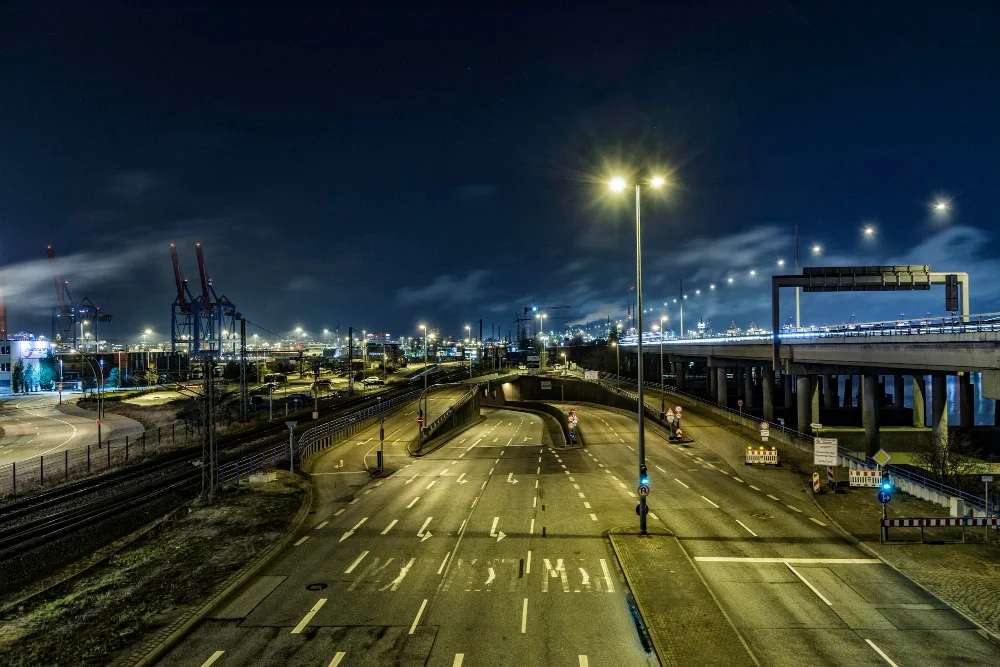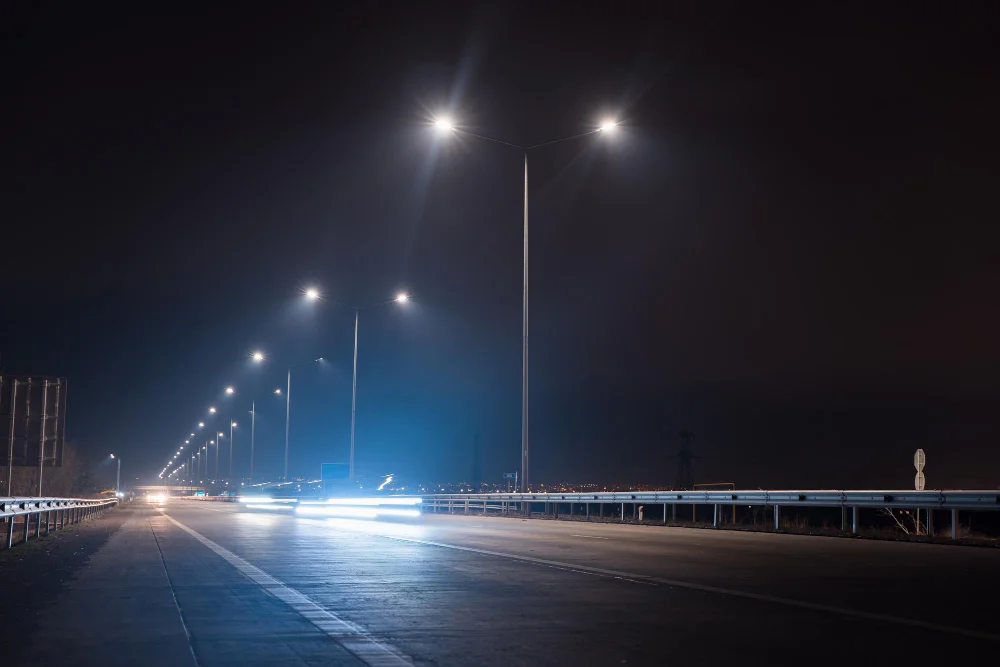


Motorway Lighting
Motorway lighting refers to the complete planning, engineering, material sourcing, and on-site installation of lighting systems for high-speed road networks. It includes layout design, pole positioning, luminaire selection, control integration, and final commissioning as a unified execution process.
What This Motorway Lighting Service Covers
Motorway lighting projects involve more than fixture placement. The service covers illumination planning based on road classification, traffic density, and visibility requirements. It includes engineering calculations, fixture selection, and system integration with power infrastructure.
At VS Wilson, this service is delivered as a full EPC model where design planning, procurement, installation, and final delivery are handled as one coordinated system. Based in the UAE, projects are executed across the Middle East, USA, and Europe through on-site deployment. This approach avoids fragmentation between design and execution, which is often where roadway projects fail or underperform.
What This Motorway Lighting Service Covers
Lighting layout engineered for traffic speed conditions
Design accounts for vehicle speed, glare, and visibility transitions
Material procurement aligned with outdoor infrastructure durability
Selected components are matched to environmental exposure and long-term maintenance cycles
Pole positioning and mounting structure coordination
Installation aligns with road geometry, medians, and shoulder constraints
On-site installation with electrical integration and testing
Execution includes cabling, control setup, and real-time system validation
Motorway lighting projects involve more than fixture placement. The service covers illumination planning based on road classification, traffic density, and visibility requirements. It includes engineering calculations, fixture selection, and system integration with power infrastructure.
From an execution point of view, coordination with civil layouts, drainage lines, and traffic movement becomes critical. The service ensures that lighting is not treated as an afterthought but as an integrated part of the transport infrastructure system.
Motorway Lighting Design and Engineering Approach
Motorway lighting design focuses on creating consistent visibility across long travel distances while controlling glare and energy usage. It involves photometric planning, pole spacing calculations, and beam angle selection based on road width and traffic flow.
In actual projects, uniformity becomes a challenge when road elevation changes or when interchanges are introduced. Design adjustments are made to avoid dark patches or excessive brightness zones. This stage also considers maintenance access and electrical routing, which many basic design approaches ignore.
Highway Lighting Installation and On-Site Execution
Highway lighting installation represents the physical execution phase where design intent is translated into working infrastructure. It includes pole erection, cabling, control panel setup, and system testing under real conditions.
This usually becomes complex when dealing with active roads. Traffic management, safety compliance, and installation sequencing are planned before execution begins. Improper sequencing can delay projects or create safety risks, which is why installation is handled as part of the EPC workflow rather than as a separate contractor activity.
Roadway Lighting Systems and Control Integration
Roadway lighting systems combine luminaires, poles, wiring, and control units into a functional network. These systems are often integrated with timers, sensors, or centralized control platforms.
From a practical standpoint, control systems are where long-term operational efficiency is determined. Without proper integration, even well-installed lighting setups can lead to unnecessary energy usage or uneven performance. This is why system design includes control logic aligned with traffic patterns and operational requirements.
LED Motorway Lighting Solutions in Modern Infrastructure
LED motorway lighting solutions represent a shift toward energy-efficient and longer-lasting lighting systems. They are widely used due to lower maintenance cycles and better control over light distribution.
In real deployments, LED selection is not just about efficiency. Beam angle precision, heat dissipation, and driver reliability affect long-term performance. Poor selection often leads to early failures or inconsistent lighting output. This is addressed during procurement by matching fixtures to environmental and operational conditions.
Smart Roadway Lighting Systems and Automation
Smart roadway lighting systems introduce automation through sensors, adaptive dimming, and centralized monitoring. These systems adjust lighting levels based on traffic density or time-based conditions.
This usually becomes relevant in high-traffic corridors where energy optimization is required without compromising visibility. Integration with control software allows monitoring of faults and performance, reducing manual inspection requirements.
Real-World Applications of Motorway Lighting
Motorway lighting is used across expressways, interchanges, toll roads, and high-speed corridors. It plays a role in reducing accident risk, improving driver visibility, and supporting night-time traffic flow.
In large infrastructure projects, lighting also interacts with signage visibility, pedestrian crossings, and emergency lanes. Poor lighting coordination can reduce the effectiveness of these elements, which is why lighting is treated as part of the overall transport system rather than a standalone feature.
Project Execution Process for Motorway Lighting
Motorway lighting execution follows a structured EPC approach starting from design planning to final commissioning. It includes site evaluation, lighting calculations, procurement, installation, and testing.
In actual projects, coordination between electrical teams, civil contractors, and traffic management authorities is critical. Delays often occur when these elements are not aligned early. Execution planning includes staging, material logistics, and phased installation to maintain traffic flow while work is carried out.
Technical and Safety Considerations in Motorway Lighting
Motorway lighting must comply with illumination standards, glare control limits, and electrical safety regulations. These factors directly affect road safety and project approval.
From an execution perspective, grounding systems, cable protection, and pole stability are critical. Ignoring these aspects can lead to operational failures or safety risks over time. Weather exposure, dust accumulation, and heat conditions are also factored into system design.
Common Problems and Risks in Motorway Lighting Projects
Motorway lighting failures often result from poor coordination between design and installation. Misaligned pole placement, incorrect beam angles, or inconsistent wiring can reduce effectiveness.
Another issue is underestimating environmental impact. Dust, humidity, and temperature variations affect fixture performance. Projects that ignore these conditions usually face higher maintenance costs or early system failure.
How to Choose the Right Motorway Lighting Setup
Choosing the right motorway lighting setup depends on road type, traffic density, and operational requirements. It involves selecting appropriate fixtures, layout design, and control systems.
From a decision-making perspective, relying only on product specifications can lead to poor outcomes. The focus should be on how the entire system performs after installation. This includes maintenance accessibility, energy usage, and long-term reliability.
Pricing Factors for Motorway Lighting Projects
Motorway lighting pricing is influenced by project scale, pole infrastructure, fixture type, and control system complexity. Installation conditions and site accessibility also impact cost.
Lower-cost approaches often skip proper planning or use unsuitable materials. This usually leads to higher long-term expenses due to maintenance or system failure. A structured EPC approach balances upfront cost with operational stability.
Why This Motorway Lighting Service Approach Works
Motorway lighting projects require alignment between design, procurement, and execution. Handling these stages separately often creates gaps that affect performance.
VS Wilson approaches this as a unified process, ensuring that design intent is maintained through execution. You can review execution capabilities and project approach on the About Us page. This integrated approach reduces coordination issues and improves overall system reliability.
Service Coverage
Motorway lighting projects are executed from a UAE operational base, covering Dubai, Abu Dhabi, and wider regions. Teams are deployed across the Middle East, USA, and Europe based on project requirements.
Execution is carried out on-site, with teams traveling to project locations. This ensures that installation quality and system performance are directly controlled rather than outsourced.
Common Buyer Concerns Before Hiring
Buyers often question whether design and installation should be handled separately. In motorway lighting, this separation usually leads to mismatched execution.
Another concern is long-term maintenance. Poor planning increases operational costs over time. Choosing a service that integrates planning, procurement, and execution reduces these risks and provides better control over outcomes.
FAQs
1. What does motorway lighting include?
Motorway lighting includes design planning, fixture selection, pole installation, wiring, and system commissioning. It is executed as a complete infrastructure project rather than a standalone installation.
2. Can motorway lighting projects be executed internationally?
Yes, projects are executed across the Middle East, USA, and Europe through on-site deployment, ensuring direct control over installation and performance.
3. What is the difference between motorway and street lighting?
Motorway lighting is designed for high-speed traffic and long-distance visibility, while street lighting focuses on urban environments with lower speeds and more localized illumination.
4. How long does a motorway lighting project take?
Timelines vary based on project scale, road conditions, and installation complexity. Large projects require phased execution to maintain traffic flow during installation.
5. Are smart systems necessary for motorway lighting?
Smart systems are not mandatory but are increasingly used for energy control and monitoring. They are beneficial in large-scale or high-traffic environments.
6. What affects motorway lighting performance over time?
Environmental conditions, fixture quality, installation accuracy, and maintenance planning all influence long-term performance.
Discuss Your Project
Motorway lighting projects require coordination between design intent, execution planning, and on-site conditions. If you are evaluating a new project or upgrading an existing system, it is worth discussing layout feasibility, installation sequencing, and control integration before finalizing decisions.
You can share your project scope, site conditions, and execution requirements through our Contact us page to explore how the project can be planned and delivered across UAE, Middle East, USA, or Europe.
Image Gallery





Related Services