Supermarket lighting
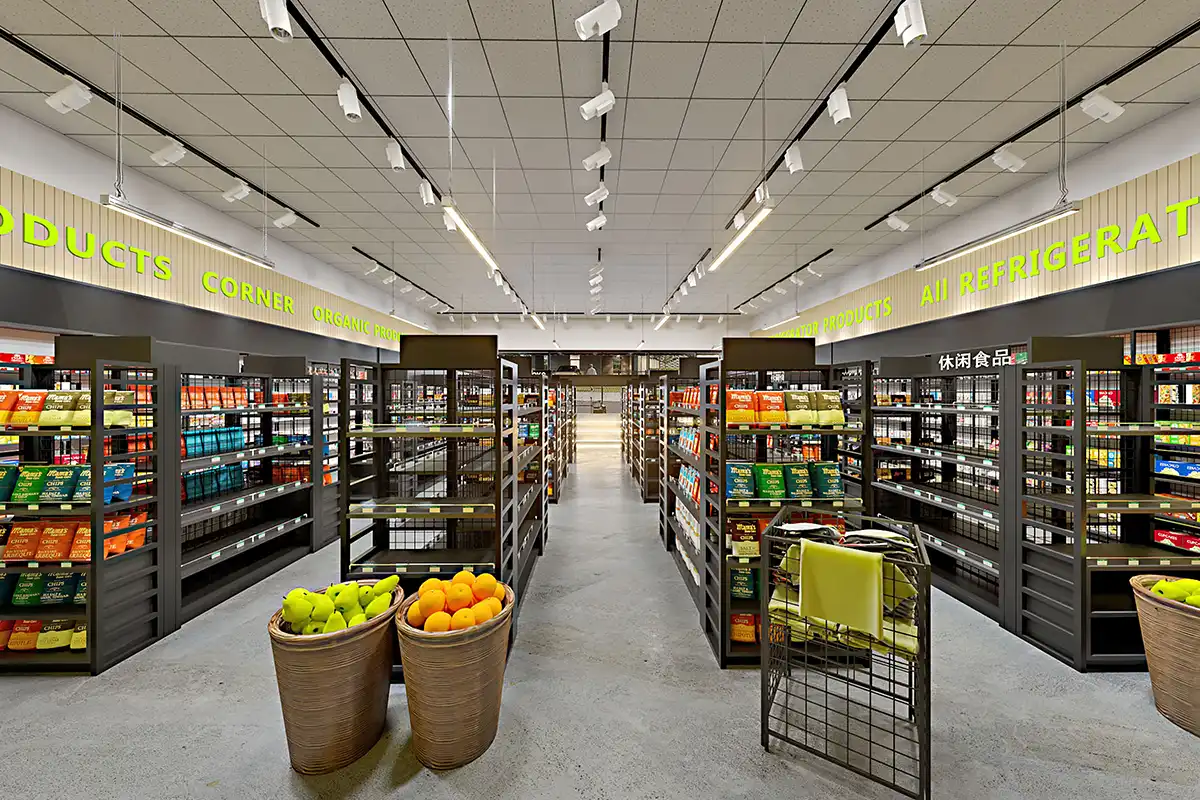
Supermarket lighting is a complete lighting design and execution service focused on retail environments, covering layout planning, fixture selection, electrical coordination, installation, and final calibration. It ensures that product visibility, customer movement, and visual clarity are aligned through a fully installed lighting system.
At VS Wilson, supermarket lighting is delivered as an EPC model engineering design, procurement of lighting systems, and on-site execution are handled as one continuous process. Based in the UAE, projects are executed across the Middle East, USA, and Europe through on-site deployment. From planning to final commissioning, the entire lighting system is implemented with full lifecycle responsibility.
What This Service Includes
Supermarket lighting involves more than placing fixtures across the ceiling. In actual projects, lighting must respond to shelf height, product packaging, and aisle spacing. Without this alignment, certain sections appear darker or overly bright.
Another key aspect is coordination with store layout. If lighting is planned before shelving is finalized, misalignment occurs. This is why execution planning considers final store arrangement, not just architectural drawings.
Types of Lighting Solutions Offered
Aisle Lighting Systems
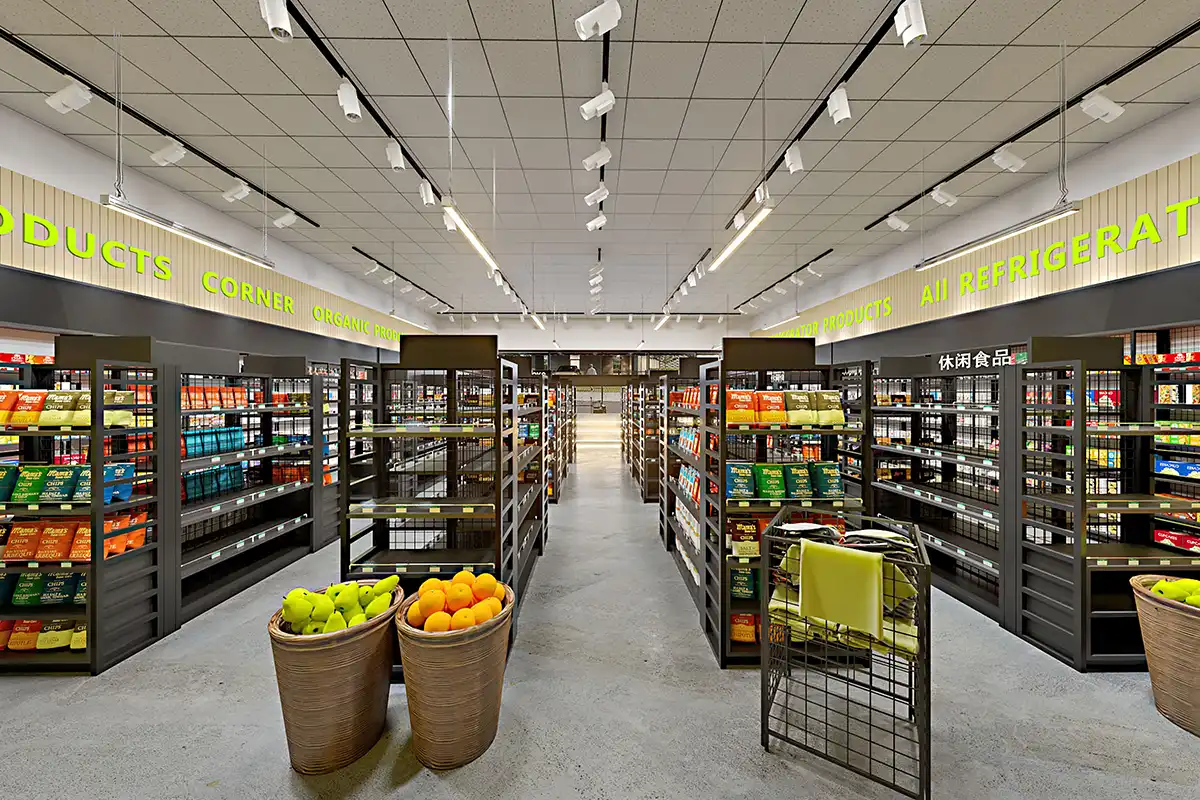
Linear lighting designed to provide uniform illumination across long product aisles
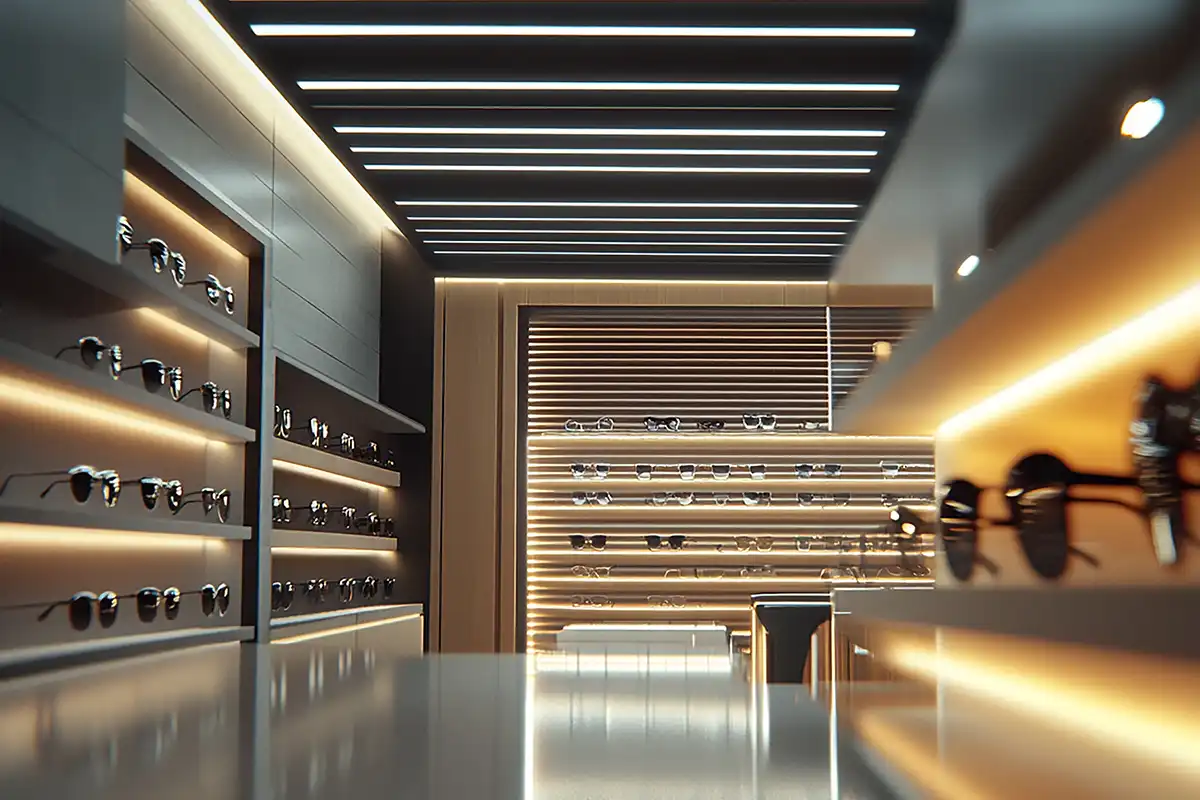
Display-Focused Shelf Lighting
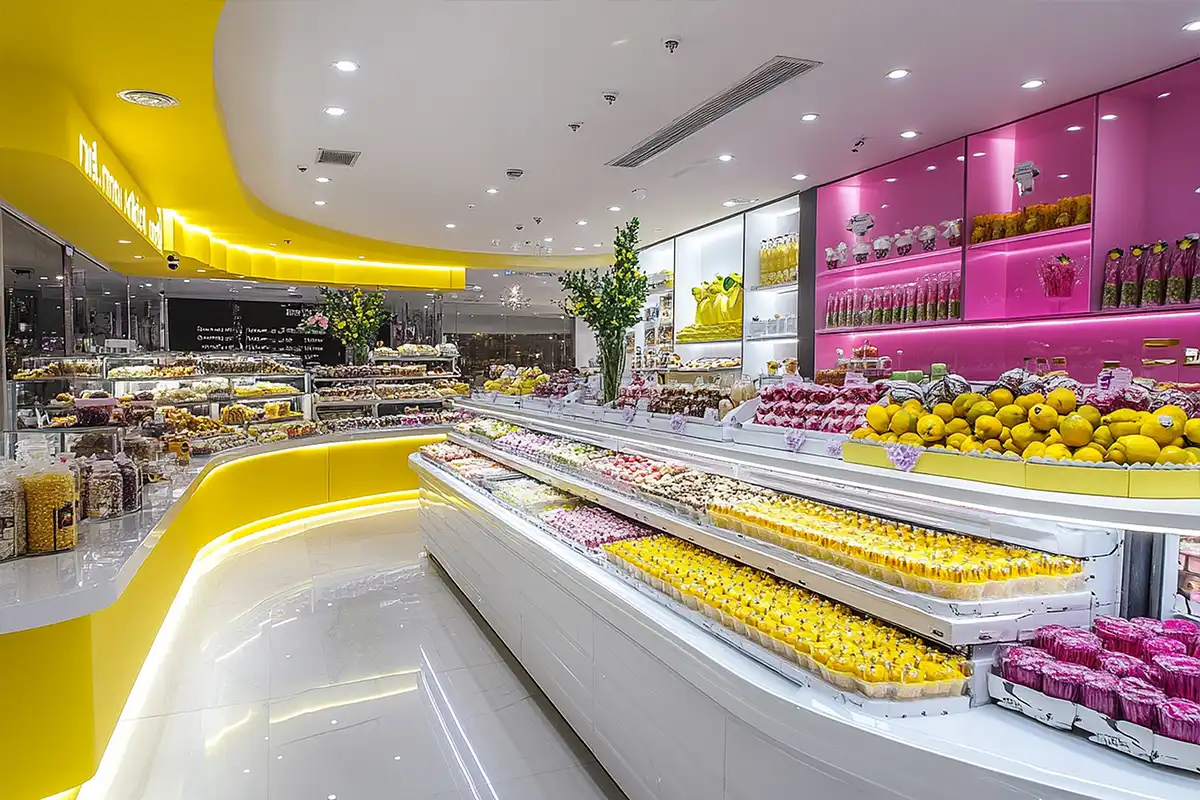
Lighting directed specifically at product shelves to improve visibility and clarity
Checkout Counter Lighting
Focused lighting ensuring clear visibility for billing areas without glare
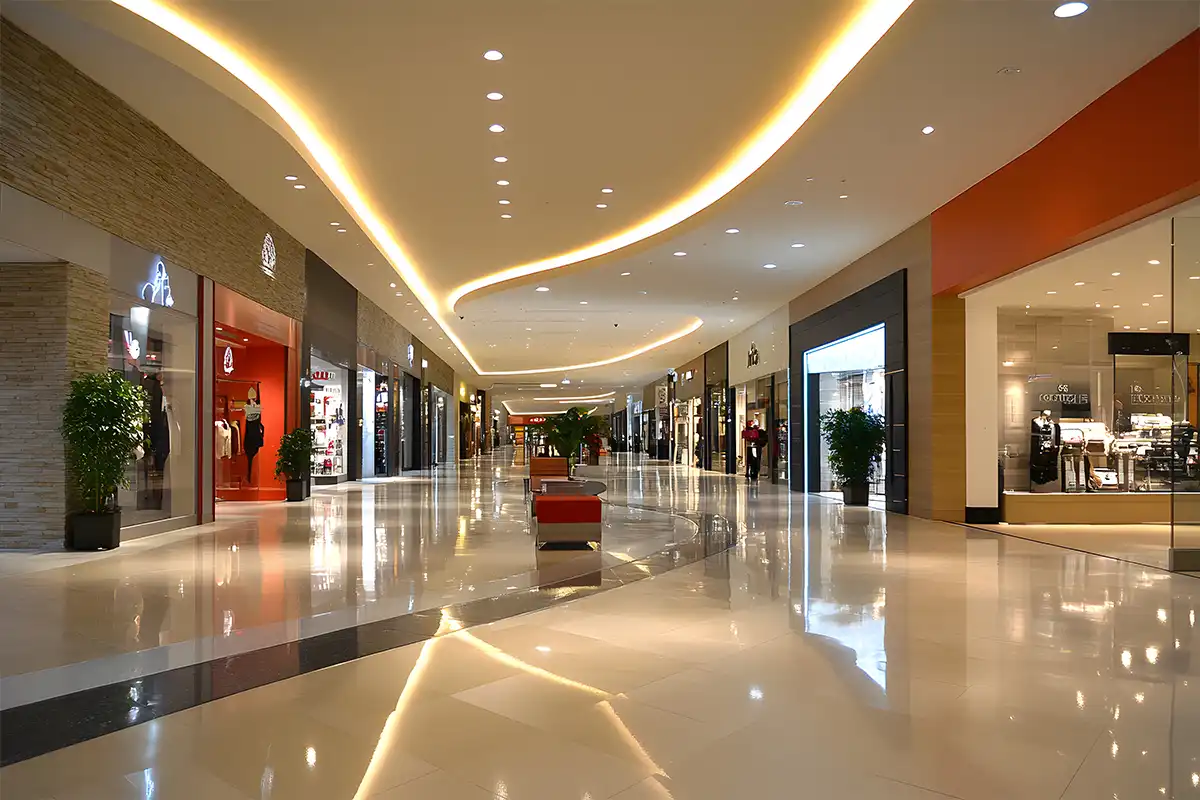
Ambient Store Lighting
General lighting that maintains overall brightness across the store
Cold Storage Lighting
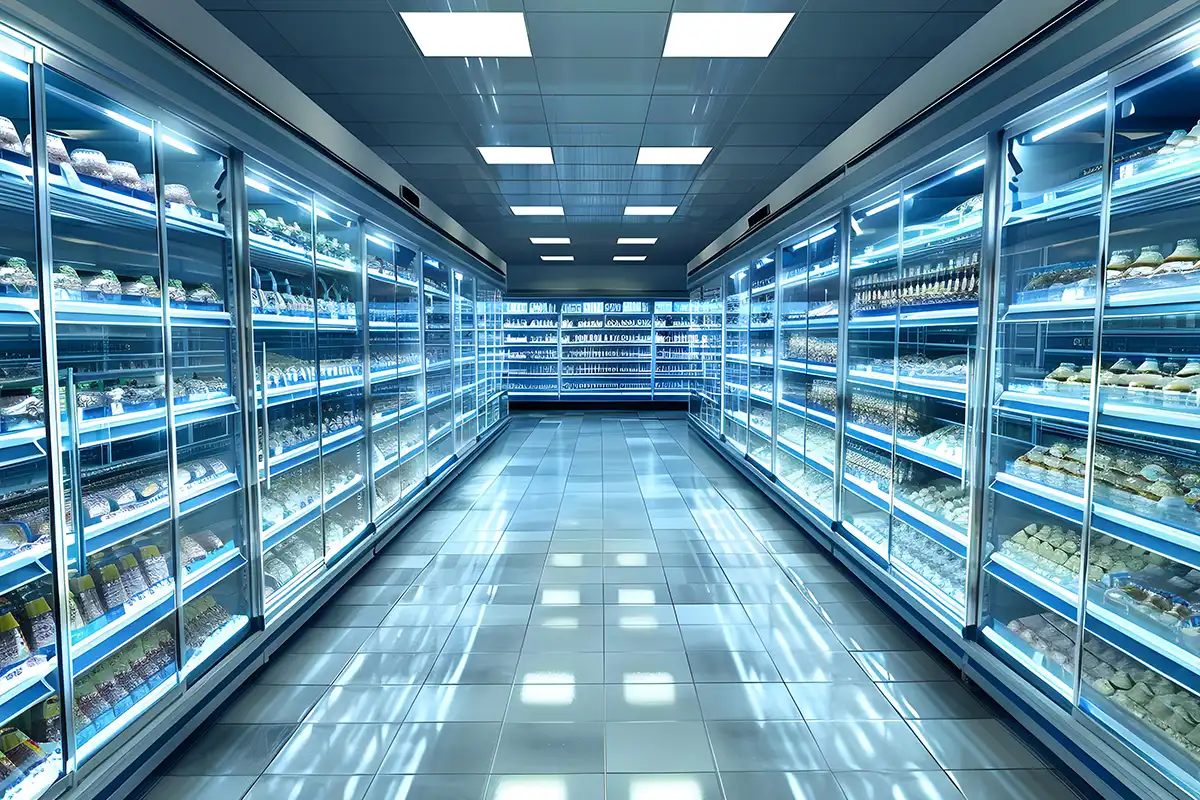
Specialized lighting designed for refrigerated sections with moisture resistance
Supermarket & Hypermarket Lighting Design
This variation reflects larger-scale retail environments where lighting must cover extensive floor areas with consistent output. While the term changes, it remains part of supermarket lighting executed as a full project lifecycle.
Supermarket & hypermarket lighting design involves scaling lighting systems without losing uniformity. In real installations, maintaining consistent brightness across large spaces becomes challenging.
Execution requires careful spacing of fixtures and alignment with shelving layouts. It also involves managing energy consumption while ensuring visibility remains consistent across all sections of the store.
Hallway Lighting
Hallway lighting in supermarkets refers to aisle lighting where customers navigate between product sections. It is a functional variation within supermarket lighting focused on movement and orientation.
In actual projects, poorly planned hallway lighting creates uneven brightness, making aisles appear patchy. This affects customer movement and product visibility.
Execution focuses on aligning lighting with aisle direction and spacing. Fixtures are positioned to avoid shadows caused by shelving while maintaining continuous light distribution along the pathway.
Under Cabinet Lighting
Under cabinet lighting represents a focused lighting approach used beneath shelves or display units. It is part of supermarket lighting where product-level visibility becomes critical.
This type of lighting is used in sections where overhead lighting does not reach effectively. In practice, it highlights products placed on lower shelves or inside display units.
Execution requires concealed installation and precise placement. Incorrect positioning can create glare or uneven highlights, affecting how products are perceived.
Pathway Lighting
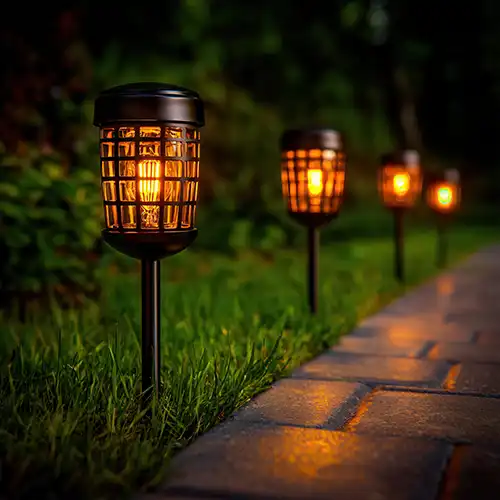
Pathway lighting refers to lighting used in circulation areas within supermarkets, guiding customer movement through the store layout. It is a functional component of supermarket lighting.
In real setups, pathway lighting helps define movement zones without overpowering product lighting. It ensures that customers can navigate easily without confusion.
Execution involves balancing brightness levels between pathways and display areas. If pathway lighting is too strong, it reduces focus on products. If too weak, navigation becomes difficult.
Shop Lighting Design
Shop lighting design is a broader search variation where users look for retail lighting solutions. When applied to supermarkets, it aligns with the same execution model.
This involves integrating lighting across all store zones—entrance, aisles, display areas, and checkout counters. Each zone requires a different lighting approach.
Execution ensures that all zones work together as one system rather than isolated setups. This avoids inconsistencies where some areas appear visually disconnected from others.
Real-World Applications & Use Cases
Supermarket lighting is applied in grocery stores, hypermarkets, retail chains, and food marts where product visibility directly impacts sales.
In many cases, stores suffer from uneven lighting where certain shelves appear dim. This typically happens when lighting is installed without considering shelf height and product placement.
Another common issue is glare. Bright fixtures placed incorrectly create reflections on packaging, making products harder to view.
Lighting also influences customer movement. Properly planned lighting guides customers through aisles and highlights key product areas.
When This Service Becomes Necessary
Supermarket lighting becomes necessary when existing lighting fails to support product visibility or creates discomfort for customers.
This often happens during store renovations or layout changes. New shelving arrangements make existing lighting ineffective.
It is also required when stores aim to improve product presentation. Lighting plays a direct role in how products appear, influencing purchasing decisions.
In expansion projects, lighting must be planned alongside store layout to avoid rework after installation.
Project Execution Process
Supermarket lighting is executed through a structured lifecycle that integrates design, procurement, installation, and final calibration into one system.
The process begins with store layout analysis where aisle structure, shelf height, and product categories are studied. This is followed by lighting design planning where fixture types and positions are defined.
Procurement ensures that fixtures match design specifications without substitutions. During installation, electrical routing and fixture placement are executed with coordination across teams.
The final stage involves on-site testing. Lighting is adjusted based on real product visibility and customer movement patterns. This step ensures that the system performs as intended in actual store conditions.
Technical & Safety Considerations
Supermarket lighting systems must handle long operating hours and maintain consistent performance.
Heat management is critical. Fixtures operating continuously can generate heat, affecting both performance and customer comfort.
Electrical safety must also be ensured. Improper wiring increases risk and affects reliability.
Fixture durability is another factor. Retail environments require lighting systems that can handle constant usage without frequent maintenance.
Common Problems & Risks in Lighting Installation
One major issue is uneven lighting across aisles. This occurs when fixture spacing is not aligned with shelf layout.
Another risk is glare from incorrect fixture angles. This affects product visibility and customer comfort.
In many projects, lighting is installed without testing on actual products. This results in poor presentation and requires costly adjustments later.
How to Choose the Right Lighting Setup
Choosing the right supermarket lighting setup involves evaluating store layout, product categories, and customer movement patterns before selecting fixtures.
Start by identifying key product zones. High-visibility areas require focused lighting, while general areas require uniform illumination. Placement is more important than fixture type. Even the right fixture will fail if positioned incorrectly. It is also important to work with a provider who handles full execution. This ensures alignment between design and installation.

Pricing Factors
Pricing in supermarket lighting depends on store size, layout complexity, fixture type, and installation conditions. Larger stores require more fixtures and detailed planning. Complex layouts increase execution time and cost.
Fixture quality also impacts pricing. Durable lighting systems reduce long-term maintenance costs.
Lower-cost installations often lead to poor lighting performance, requiring rework. This increases total project cost over time.
Why Choose This Service
Supermarket lighting requires coordination between design and execution. Handling both ensures consistent results.
This approach avoids common issues like uneven lighting and glare. It also ensures that lighting supports product visibility effectively.
The service focuses on real store conditions rather than theoretical layouts.
Service Coverage
VS Wilson operates from the UAE and executes supermarket lighting projects across the Middle East, USA, and Europe.
All projects are handled through on-site deployment. Teams travel to the project location, complete installation, and perform final calibration.
This ensures consistent execution quality across regions.
Common Buyer Concerns Before Hiring
Buyers often question whether lighting will improve product visibility. This depends on how well design and execution are aligned.
Another concern is cost variation. Differences usually reflect fixture quality and installation precision.
There is also concern about store disruption during installation. Proper planning minimizes downtime and ensures smooth execution.
FAQs
1. What does supermarket lighting include?
It includes lighting layout design, fixture selection, electrical planning, installation, and final calibration. The goal is to ensure consistent product visibility and comfortable shopping conditions.
2. Can lighting be upgraded without closing the store?
Yes, but it requires phased execution planning. Work is scheduled to minimize disruption while maintaining store operations.
3. Do you handle large-scale hypermarket projects?
Yes, large-scale projects are executed through on-site deployment with full lifecycle responsibility.
4. How does lighting affect product sales?
Lighting directly influences how products appear. Poor lighting reduces visibility, while proper lighting improves presentation and customer engagement.
5. Is energy efficiency considered in supermarket lighting?
Yes, lighting systems are planned to balance energy consumption with performance.
6. Why is professional execution important?
Incorrect installation leads to uneven lighting and glare. Professional execution ensures consistent results and reduces long-term issues.
Discuss Your Project
Supermarket lighting decisions depend heavily on actual store layout, product arrangement, and customer movement. Discussing these factors early helps avoid rework and ensures the lighting system performs as expected after installation.
You can review your store requirements, layout plans, and execution strategy through our Contact page. Projects across UAE, Middle East, USA, and Europe are executed through on-site deployment with full lifecycle responsibility.