Pathway Lighting
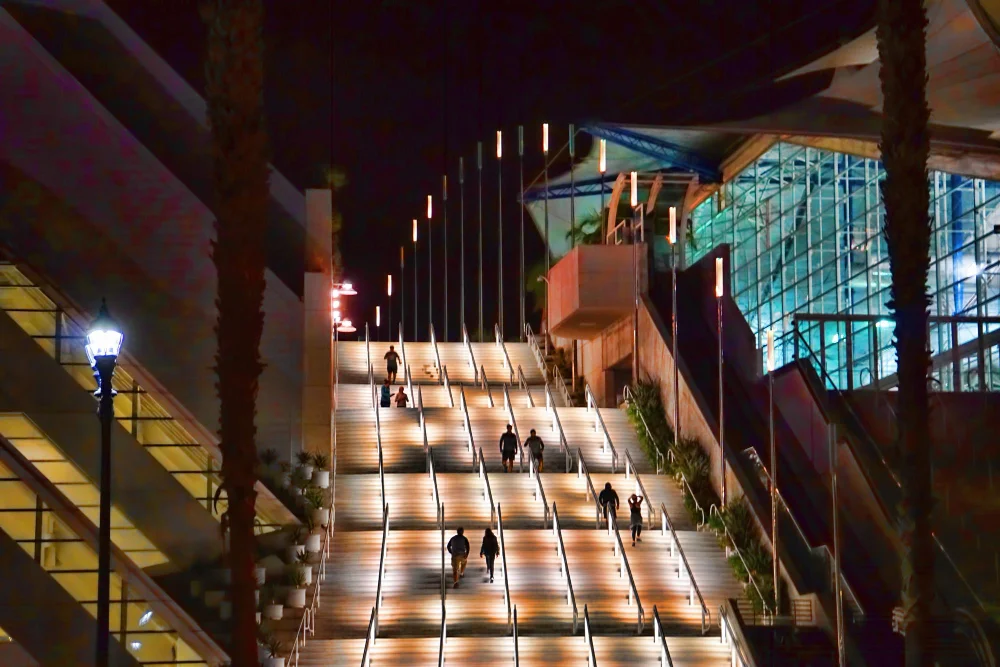
Pathway lighting refers to the design, planning, and installation of lighting systems along walkways, drive paths, and outdoor circulation areas to ensure safe movement, visual clarity, and controlled illumination. This service includes fixture selection, wiring layout, on-site installation, and final calibration as part of a complete EPC execution model.


Scope of Pathway Lighting Service
Pathway lighting service covers the complete process of planning, selecting, and installing lighting systems along movement zones. It includes technical layout design, material procurement, electrical routing, fixture installation, and final adjustment based on actual site conditions.
At VS Wilson, pathway lighting is handled as a full lifecycle project. From design and engineering planning to procurement and on-site execution, projects are delivered across UAE, Middle East, USA, and Europe through coordinated deployment teams. Each installation is aligned with actual site conditions, not just layout drawings.


Scope of Pathway Lighting Service
Fixture positioning based on walking patterns and usage
Placement considers real movement paths and entry-exit transitions across residential and commercial layouts
Cable routing integrated within civil and landscape planning
Electrical pathways are aligned early to avoid rework during finishing stages
Fixture selection based on exposure and environmental conditions
Outdoor durability, moisture resistance, and maintenance access are evaluated before finalizing fittings
On-site alignment and light calibration after installation
Final adjustments ensure consistent illumination without hotspots or dark patches
Pathway lighting service covers the complete process of planning, selecting, and installing lighting systems along movement zones. It includes technical layout design, material procurement, electrical routing, fixture installation, and final adjustment based on actual site conditions.
From an execution point of view, the complexity usually appears when pathways are already constructed. Retrofitting requires careful surface handling, concealed wiring strategies, and coordination with landscape or flooring elements. This is where integrated planning avoids damage and ensures clean finishing.
Outdoor Path Lighting Design & Installation
Outdoor path lighting design & installation is essentially a focused variation of pathway lighting where exposure conditions, weather impact, and open-space visibility become primary considerations. Users searching this term typically require a more robust setup for gardens, villas, or open commercial pathways.
In real projects, outdoor installations require deeper groundwork planning. Soil conditions, water drainage, and surface finishing directly affect fixture stability. Lighting is not just placed along edges but aligned with visual guidance, ensuring movement clarity without over-illumination.
Execution includes trenching for wiring, waterproof connections, and selecting fixtures that withstand long-term exposure. The service remains part of the same EPC model, covering design, procurement, and on-site installation as a unified workflow.
Landscape Pathway Lighting Solutions
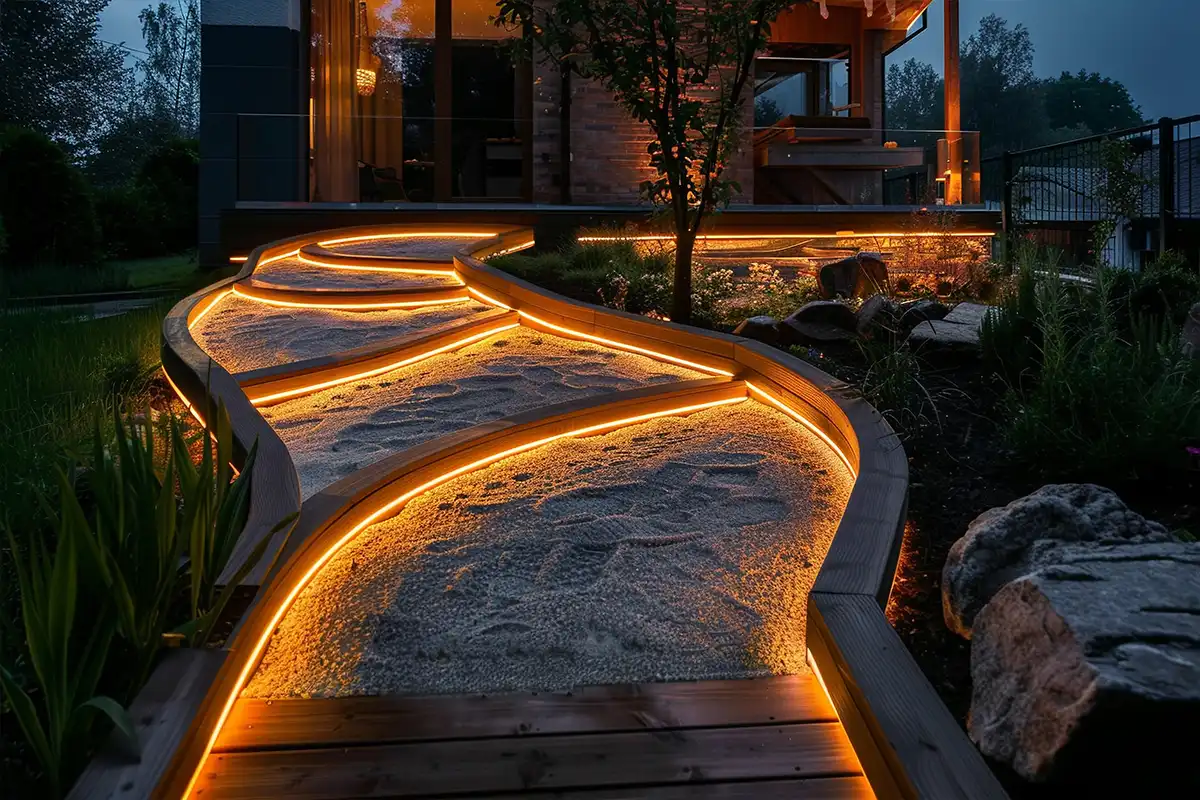
Landscape pathway lighting solutions represent another variation where the focus shifts toward integration with natural elements like gardens, lawns, and architectural outdoor features. The core requirement still falls under pathway lighting but with added sensitivity to visual balance and environmental blending.
In actual landscape setups, lighting must avoid overpowering the surroundings. Instead of uniform brightness, controlled layering is applied. Fixtures are placed to guide movement subtly while preserving the visual character of the landscape.
Execution involves coordinating with landscape teams, ensuring cable protection within soil layers, and adjusting fixture height and spacing after plantation or finishing work is completed. This avoids rework and maintains long-term stability.
Types of Pathway Lighting Solutions Offered
Walkway lights
Used along pedestrian routes where consistent illumination is required without visual fatigue
Outdoor path lights
Designed for open environments where exposure resistance and wider spread are necessary
Sidewalk lights
Applied in structured pathways with defined edges, often in commercial or urban settings
Exterior path lights
Installed in villa entries, garden edges, and driveways with focus on directional lighting
Real-World Applications & Use Cases
Pathway lighting is commonly applied across residential villas, commercial complexes, hospitality landscapes, and institutional campuses. In villa projects, it ensures safe access between entrance gates, parking areas, and garden spaces.
In commercial environments, it plays a functional role in guiding movement between buildings, parking zones, and entry pathways. Poorly designed lighting often leads to uneven visibility, which becomes a safety concern.
From an execution perspective, each use case differs in spacing, brightness control, and wiring approach. Residential projects often prioritize visual balance, while commercial spaces require consistent illumination levels for safety compliance.
When This Service Becomes Necessary
Pathway lighting becomes necessary when movement areas lack visibility during low-light conditions or when navigation clarity is compromised. This usually happens in large outdoor layouts, landscaped zones, or properties with multiple access routes.
In actual projects, the need often arises after construction when users realize uneven lighting or dark zones. Retrofitting at this stage becomes more complex, requiring surface handling and concealed wiring adjustments.
Early integration avoids these challenges and ensures that lighting is aligned with movement flow rather than being added as an afterthought.
Project Execution Process
Pathway lighting execution follows a structured EPC model starting with site evaluation and layout planning. Movement paths are analyzed to determine fixture placement, spacing, and wiring routes.
The next stage involves selecting appropriate fixtures based on environmental exposure and usage requirements. Procurement is handled in alignment with project timelines to avoid delays.
On-site execution includes trenching, cable laying, fixture installation, and alignment with civil or landscape work. Final calibration ensures consistent illumination across the pathway.
If execution is fragmented between different vendors, alignment issues often arise. A unified approach ensures that design intent matches actual installation outcomes.
Technical & Safety Considerations
Pathway lighting systems must address electrical safety, waterproofing, and long-term durability. Outdoor installations require proper insulation, moisture-resistant fittings, and stable mounting.
From a technical perspective, spacing between fixtures plays a critical role. Too close leads to glare, while too far creates dark zones. This balance is achieved through on-site adjustments rather than fixed calculations.
Voltage drop over longer pathways is another factor often overlooked. Proper cable sizing and distribution planning prevent uneven brightness across installations.
Common Problems & Risks in Lighting Installation
One common issue is inconsistent lighting due to improper spacing or incorrect fixture selection. This leads to uneven visibility and affects usability.
Another risk appears when wiring is installed without coordination with civil work. This often results in rework, surface damage, or exposed cabling.
In some cases, low-cost installations fail within months due to poor waterproofing or incorrect fittings. Rectifying such issues later involves higher cost than proper initial execution.
How to Choose the Right Pathway Lighting Setup
Choosing the right pathway lighting setup depends on movement patterns, surface type, and environmental exposure. The first step is identifying how the space is used, not just how it looks.
In practical scenarios, fixture placement is tested on-site rather than finalized only on drawings. This ensures that actual visibility matches expectations.
Another important factor is coordination between design and execution. When handled separately, gaps often appear. A single execution partner ensures alignment from planning to final installation.
Pricing Factors
Pathway lighting cost depends on layout complexity, pathway length, fixture type, and installation conditions. Projects with longer pathways or difficult terrain require more extensive wiring and preparation.
Material selection also impacts pricing. Outdoor-rated fixtures and waterproof systems involve higher initial cost but reduce long-term maintenance.
Execution challenges such as retrofitting, surface cutting, or coordination with existing structures can increase project complexity. Choosing low-cost alternatives often leads to rework, making total cost higher over time.
Why Choose This Service
Pathway lighting requires alignment between design intent and on-site execution. VS Wilson operates as a complete project execution partner, handling everything from planning to final installation.
Visit our About Us page to understand how project coordination, material handling, and execution planning are managed across different regions.
Projects are handled with a focus on real conditions rather than theoretical layouts, ensuring reliable performance and long-term usability.
Service Coverage
Pathway lighting projects are executed from UAE as the primary base, covering Dubai, Abu Dhabi, and surrounding regions.
International projects across the Middle East, USA, and Europe are handled through on-site deployment, where teams travel to project locations and execute installations directly.
This approach ensures consistency in design execution regardless of location.
Common Buyer Concerns Before Hiring
Many buyers hesitate due to uncertainty around cost, durability, and execution quality. These concerns are valid, especially in outdoor lighting projects where environmental exposure plays a major role.
Another common confusion is whether to hire separate designers and installers. In practice, this often leads to coordination gaps and inconsistent results.
Selecting a single execution partner reduces these risks and ensures accountability across the entire project lifecycle.
FAQs
1. What is pathway lighting used for?
Pathway lighting is used to improve visibility and guide movement along walkways, driveways, and outdoor paths. It ensures safe navigation during low-light conditions and reduces the risk of accidents.
2. How is pathway lighting installed?
Installation involves layout planning, wiring setup, fixture placement, and final calibration. It is executed on-site with coordination between electrical and civil work.
3. Are solar pathway lights reliable?
Solar pathway lights can work for small setups, but for larger or critical pathways, wired systems provide more consistent brightness and reliability.
4. What spacing is required between path lights?
Spacing depends on fixture type and brightness. In actual projects, it is adjusted on-site to avoid dark zones and glare.
5. Can pathway lighting be installed after construction?
Yes, but retrofitting involves additional work such as surface cutting and concealed wiring adjustments, making it more complex than planned installation.
6. Do you handle international pathway lighting projects?
Yes, projects are executed across UAE, Middle East, USA, and Europe through on-site deployment and coordinated execution teams.
Discuss Your Project
If your project involves outdoor pathways, villa landscapes, or commercial walkways, the lighting setup needs to be planned alongside execution, not added later. Each site has different surface conditions, movement patterns, and exposure factors.
Discuss your project requirements, layout conditions, or execution challenges through our Contact page to evaluate the right pathway lighting approach for your site.
Image Gallery




Related Services