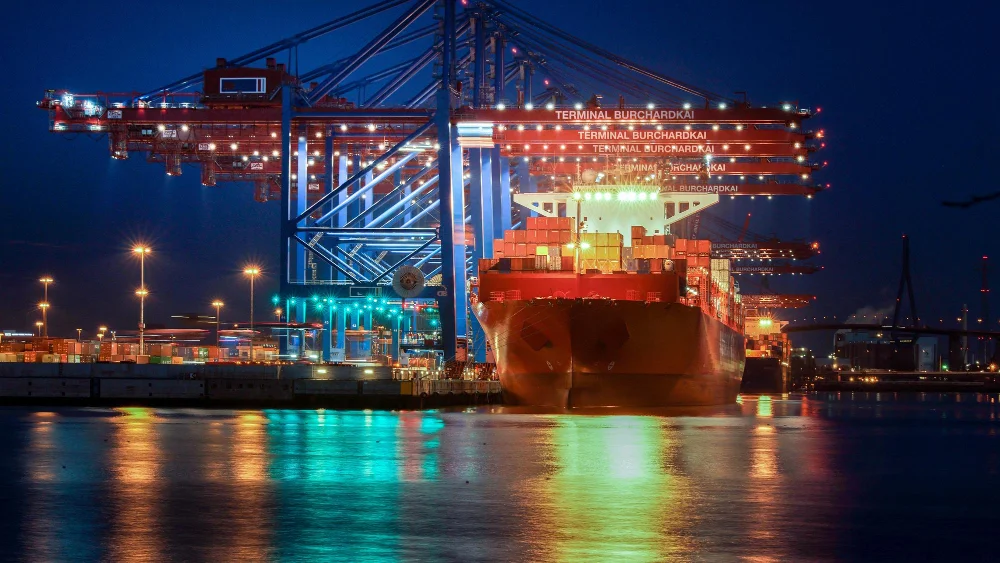
Seaport Road Lighting
Seaport Road Lighting involves designing, supplying, and installing lighting systems across port roads to support vehicle movement, cargo handling, and operational safety. It includes engineering layouts, fixture selection, material procurement, on-site installation, and final commissioning under a complete EPC model.
Scope of Seaport Road Lighting Service
Seaport Road Lighting covers far more than fixture placement. It begins with understanding how vehicles move within port environments, especially where container trucks, forklifts, and service vehicles operate simultaneously. From an execution point of view, lighting placement depends heavily on traffic density, turning radii, and blind zones.
At VS Wilson, this service is handled as full lifecycle project execution. The team operates from the UAE and travels across the Middle East, USA, and Europe to deliver on-site installations. From initial planning to final commissioning, every stage is coordinated as one integrated responsibility rather than fragmented work.
Scope of Seaport Road Lighting Service
Traffic flow mapping before lighting layout decisions
Each road segment is studied for vehicle type, movement speed, and congestion points before placing fixtures
Material procurement aligned with marine-grade durability
Selected components are chosen based on corrosion resistance and long-term performance under salt exposure
Electrical routing designed for heavy operational zones
Cable pathways are planned considering crane zones, container stacking, and restricted trenching areas
On-site installation synchronized with port activity cycles
Work is executed without disrupting logistics, often during controlled operational windows
Seaport Road Lighting covers far more than fixture placement. It begins with understanding how vehicles move within port environments, especially where container trucks, forklifts, and service vehicles operate simultaneously. From an execution point of view, lighting placement depends heavily on traffic density, turning radii, and blind zones.
The service includes engineering design, fixture selection, procurement of marine-resistant materials, structured installation, and testing under actual working conditions. Unlike generic road lighting, these projects must function under continuous industrial activity, where lighting failures can directly affect operations.
Port roadway lighting systems
This term reflects how users search for structured lighting setups specifically designed for port roads. While it differs slightly in wording, it still falls under Seaport Road Lighting and represents system-level planning rather than isolated fixtures.
Port roadway lighting systems are built around coverage uniformity, minimal shadow zones, and glare control for long vehicle paths. In real projects, this usually involves integrating high mast poles with mid-level fixtures to handle both wide coverage and localized visibility. The execution includes designing pole heights, beam angles, and circuit grouping so maintenance can be managed without shutting down entire sections.
Terminal road lighting installation
This variation focuses on installation-heavy intent where users are looking for execution rather than design alone. It still falls within Seaport Road Lighting as part of terminal infrastructure development.
Terminal road lighting installation often involves working alongside ongoing port operations. This usually happens when expansion zones or new terminals are under development. Installation planning must consider restricted access areas, crane movement paths, and safety protocols. From an execution standpoint, sequencing matters more than speed, because improper coordination can disrupt operations or delay project timelines.
High mast port road lighting
This keyword reflects preference for high mast systems within Seaport Road Lighting, especially in wide roadway areas. It represents a structural variation within the same service.
High mast port road lighting is typically used where large coverage is required with minimal pole obstruction. In practice, these installations are not just about height. Wind load calculations, foundation depth, and maintenance access systems play a major role. If these factors are ignored, long-term issues such as pole vibration or fixture misalignment start appearing, especially in coastal environments.
LED port road lighting solutions
Users searching this variation are usually focused on energy-efficient systems, but still require full execution. It remains part of Seaport Road Lighting rather than a separate service.
LED port road lighting solutions involve more than replacing fixtures. The actual benefit depends on proper driver selection, thermal management, and control integration. In real installations, poorly selected LEDs often lead to uneven brightness or early failure due to heat and humidity. This is why system-level design is critical rather than just switching to LED fixtures.
Industrial port access road lighting
This variation highlights access roads within port zones, often connecting highways to terminals. It still falls under Seaport Road Lighting execution.
Industrial port access road lighting deals with mixed traffic conditions where heavy trucks merge with service vehicles. Lighting design here focuses on transition zones, entry checkpoints, and merging lanes. In actual projects, these areas often face visibility issues due to sudden brightness changes, which need to be corrected through gradual illumination planning rather than uniform lighting.
Port yard and roadway lighting design
This search variation reflects combined yard and road lighting needs within ports. It is still executed under the same Seaport Road Lighting scope.
Port yard and roadway lighting design requires balancing wide-area illumination with focused visibility. Yard zones require flood lighting, while roadways need directional lighting. If both are not coordinated, glare from yard lighting can interfere with driver visibility. This is a common issue that is often missed in generic designs but becomes evident after installation.
Real-World Applications & Use Cases
Seaport Road Lighting is used in container terminals, cargo handling zones, fuel transport routes, and maintenance access roads. Each application comes with a different lighting challenge.
In container terminals, lighting must handle stacked containers that create shadow zones. In fuel transport routes, glare control becomes critical due to reflective surfaces. Maintenance roads require consistent illumination even during partial shutdowns. These variations mean a single lighting approach cannot be applied across all zones, which is where execution planning becomes essential.
Project Execution Process for Seaport Road Lighting
Seaport Road Lighting projects follow a structured execution path that integrates design, procurement, and installation as one continuous workflow. It begins with site evaluation, followed by lighting calculations, material selection, installation planning, and final commissioning.
During design, actual site conditions are studied rather than relying only on drawings. Procurement focuses on sourcing fixtures and materials suited for marine environments. Installation is executed in phases to align with port operations. Final commissioning includes real-time testing during night operations to verify coverage and visibility.
What most competitors do not explain is that coordination with port authorities is often the most time-sensitive part. Without proper scheduling, installation delays can extend project timelines significantly.
Technical & Safety Considerations
Seaport Road Lighting must account for corrosion, wind exposure, and operational hazards. Salt-laden air affects fixture lifespan, while heavy machinery movement creates vibration risks.
Electrical safety becomes critical because cables often run through active industrial zones. Improper routing can lead to damage during operations. Another overlooked factor is glare control, especially for crane operators and truck drivers. Excessive brightness without direction can reduce visibility instead of improving it.
Common Problems & Risks in Lighting Installation
One frequent issue is uneven lighting caused by poor layout planning. This usually happens when fixtures are placed without considering container stacking or vehicle movement patterns.
Another risk is premature fixture failure due to incorrect material selection. Marine environments accelerate corrosion, and standard fixtures often fail within short periods. There is also the risk of installation conflicts with ongoing operations, which can lead to delays or safety concerns.
How to Choose the Right Seaport Road Lighting Setup
Choosing the right Seaport Road Lighting setup depends on traffic patterns, operational zones, and environmental conditions. It requires evaluating lighting height, fixture type, beam distribution, and control systems based on actual site usage rather than standard templates.
In practice, decision-making should focus on how lighting performs under real conditions. For example, high mast systems may reduce pole count but can create maintenance challenges. Similarly, LED systems reduce energy use but require proper thermal management. The right choice balances performance, maintenance, and long-term reliability.
To understand how execution capability aligns with these decisions, visit our About Us page.
Pricing Factors
Pricing for Seaport Road Lighting is influenced by site scale, pole height requirements, fixture type, and installation complexity. Projects involving high mast systems or difficult access zones typically require more structural work, which impacts cost.
Another major factor is project coordination. Ports operate continuously, so installation must be scheduled around operations. This increases planning effort and execution time. Attempting to reduce cost by simplifying design often leads to higher long-term expenses due to maintenance or rework.
Why Choose This Service
Seaport Road Lighting requires coordination across design, procurement, and on-site execution. Handling these stages separately often creates gaps where design does not match installation realities.
A unified execution model reduces these risks. It ensures that what is designed can actually be installed and maintained under real conditions. This becomes especially important in international projects where teams must adapt to different site conditions quickly.
Service Coverage
The service is executed from a UAE base, covering projects across Dubai, Abu Dhabi, and the wider region. Teams are deployed to the Middle East, USA, and Europe depending on project requirements.
Execution is always carried out on-site, with teams traveling for installation, coordination, and commissioning. There are no assumptions of permanent overseas presence, only project-based deployment.
Common Buyer Concerns Before Hiring
Buyers often question whether lighting can be installed without disrupting port operations. This depends heavily on execution planning and coordination.
Another concern is long-term maintenance. In marine environments, poorly selected systems fail quickly, leading to repeated costs. There is also uncertainty about whether design recommendations will actually work during real operations. These concerns are valid and should be addressed during planning rather than after installation.
FAQs
1. What makes Seaport Road Lighting different from regular road lighting?
Seaport Road Lighting is designed for industrial traffic, heavy equipment movement, and marine conditions. It involves corrosion-resistant materials, high mast systems, and glare-controlled layouts that are not required in standard roadway lighting.
2. How is lighting installed without stopping port operations?
Installation is planned in phases, often during low-activity windows. Work is coordinated with port authorities to avoid disruption, which requires careful scheduling rather than continuous installation.
3. Are high mast systems always required for port roads?
Not always. High mast systems are used for wide coverage, but in some areas, mid-height poles provide better visibility. The choice depends on site layout and operational needs.
4. How long does a typical Seaport Road Lighting project take?
Project timelines vary based on site size and operational constraints. Installation is often staged, which can extend duration compared to standard road projects.
5. Can you handle international projects outside UAE?
Yes, teams are deployed from the UAE to execute projects across the Middle East, USA, and Europe, depending on project requirements.
6. Do you provide both design and execution?
Yes, the service is handled as a complete EPC model, covering design, procurement, installation, and final commissioning.
Discuss Your Project
Every seaport project comes with different operational constraints, from traffic density to installation access limitations. Discussing these early helps align lighting design with execution feasibility and long-term performance.
If you are planning Seaport Road Lighting across UAE, the Middle East, USA, or Europe, you can outline your site conditions, project scale, and operational challenges for evaluation. Start the discussion through the Contact page.
Image Gallery
Related Services