Industry Lighting Solutions
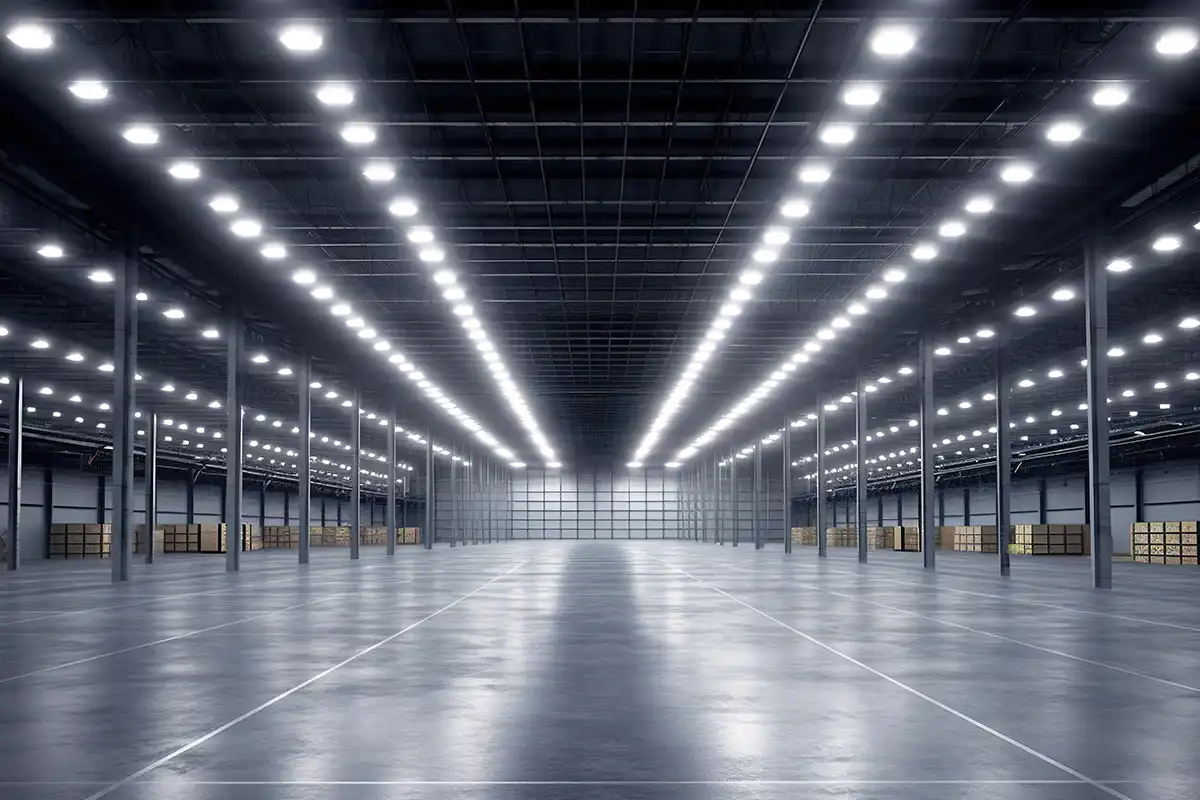
Industry Lighting covers the engineering, procurement and physical execution of lighting systems for factories, production plants, warehouses, workshops, utility buildings and exposed industrial areas. The service is delivered through an EPC model connecting design planning, technical preparation, material procurement, on-site installation, testing and final project completion.
VS Wilson operates from the UAE as an end-to-end execution partner rather than a design-only consultant or product seller. Projects are coordinated from the UAE and physically delivered through on-site deployment across Dubai, Abu Dhabi, the wider Middle East, the USA and Europe. International work is handled through project-specific mobilisation without implying permanent local offices outside the UAE.
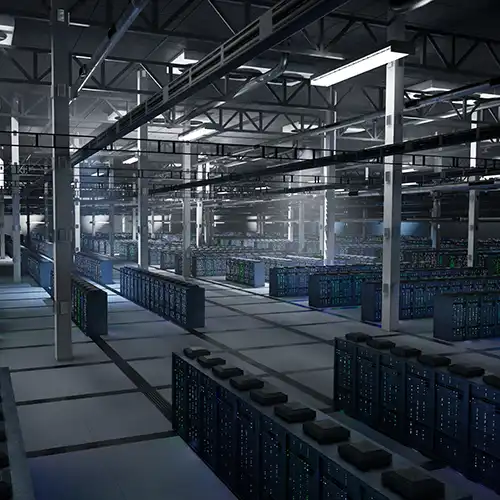
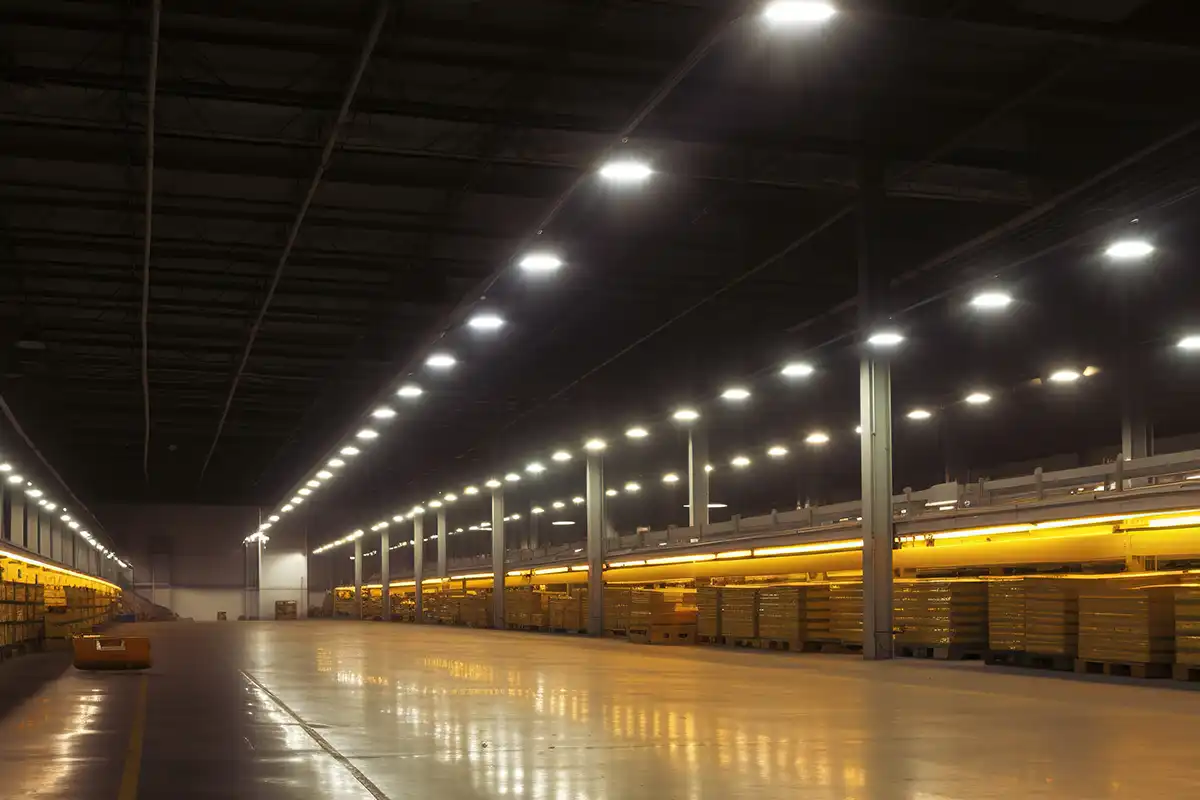
Industrial Pendant Lighting for High-Ceiling Work Areas
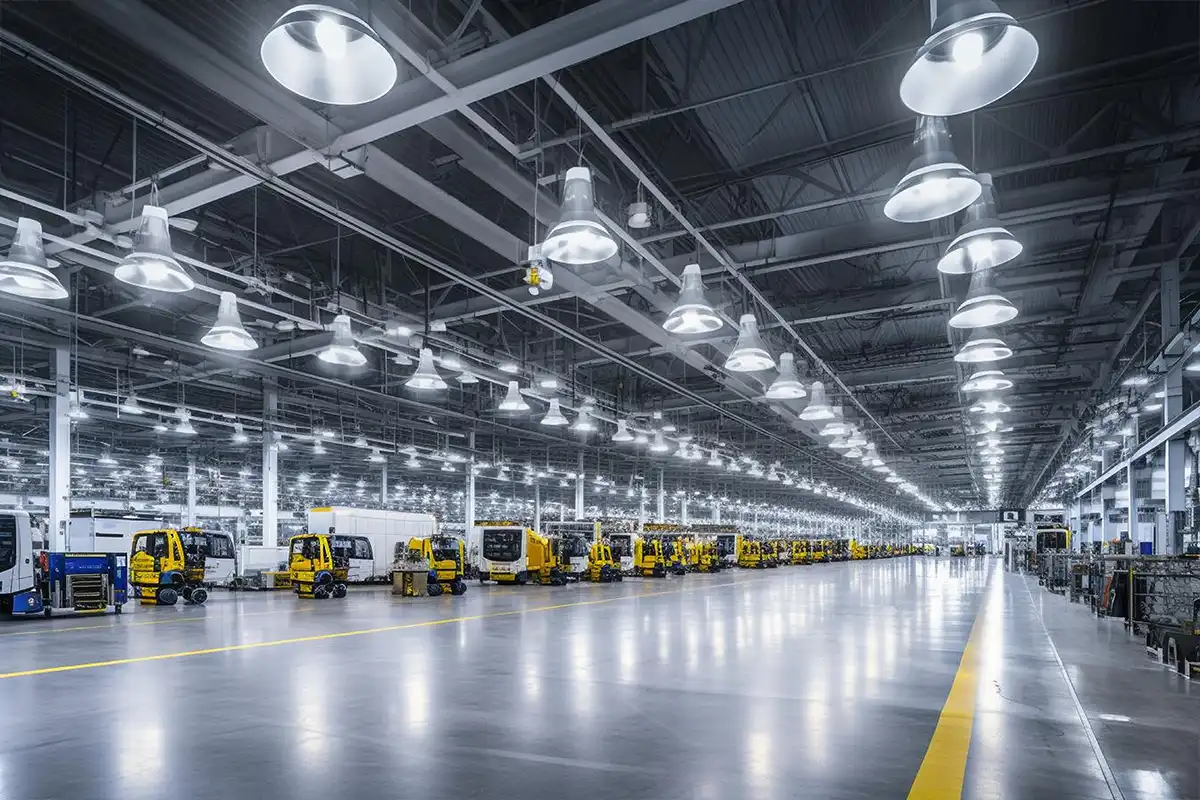
Industrial pendant lighting is a fixture-specific search variation within Industry Lighting. It is normally considered where a roof or structural ceiling sits too far above the working plane for direct ceiling-mounted fixtures to provide controlled illumination. The buyer still requires the same engineering, procurement, installation and commissioning lifecycle.
Pendant fittings can bring light closer to production lines, inspection points, maintenance benches or movement routes. The suspension arrangement, however, must be coordinated with cranes, ducts, conveyors, sprinklers and overhead services.
In actual projects, reducing the mounting height without reviewing fixture distribution may create bright pools below each fitting and darker gaps between them. Suspension length, vibration and movement must also be considered before brackets or chains are selected.
VS Wilson develops the layout, reviews product data, procures the selected fittings and installs the complete arrangement on site. Final checks confirm that suspension positions and beam distribution remain appropriate after machinery and production equipment are in place.
What the Industry Lighting Service Covers
Operating tasks translated into practical lighting zones
Workstations, equipment faces and movement routes determine where illumination must actually reach.
Technical schedules connected directly with procurement
Fixture data, accessories and mounting requirements are checked before purchase commitments are made.
Site installation coordinated with existing infrastructure
Machinery, structures, ducts and cable routes are reviewed before fixture positions are finalised.
Completed areas assessed beyond basic switch-on testing
Dark zones, glare, aiming and maintenance access are examined before project closure.
Industry Lighting includes the complete process needed to convert an industrial operating requirement into a functioning installed system. The work begins with production layouts, building information, task locations, ceiling heights, environmental conditions and electrical infrastructure.
Engineering develops fixture positions, mounting details, lighting calculations, control intent and technical schedules. Procurement then identifies suitable luminaires, brackets, sensors, emergency components and installation accessories.
On site, planned positions are checked against real structures. This matters because drawings may not show recently added machinery, pipework or service routes. Installation proceeds with access planning, mounting work, electrical coordination and system setup.
Testing covers circuit operation, emergency response, control behaviour and visible performance across the actual work area. Completion is based on usable lighting, not simply whether every fitting receives power.
Industrial Ceiling Lights for Production and Utility Spaces
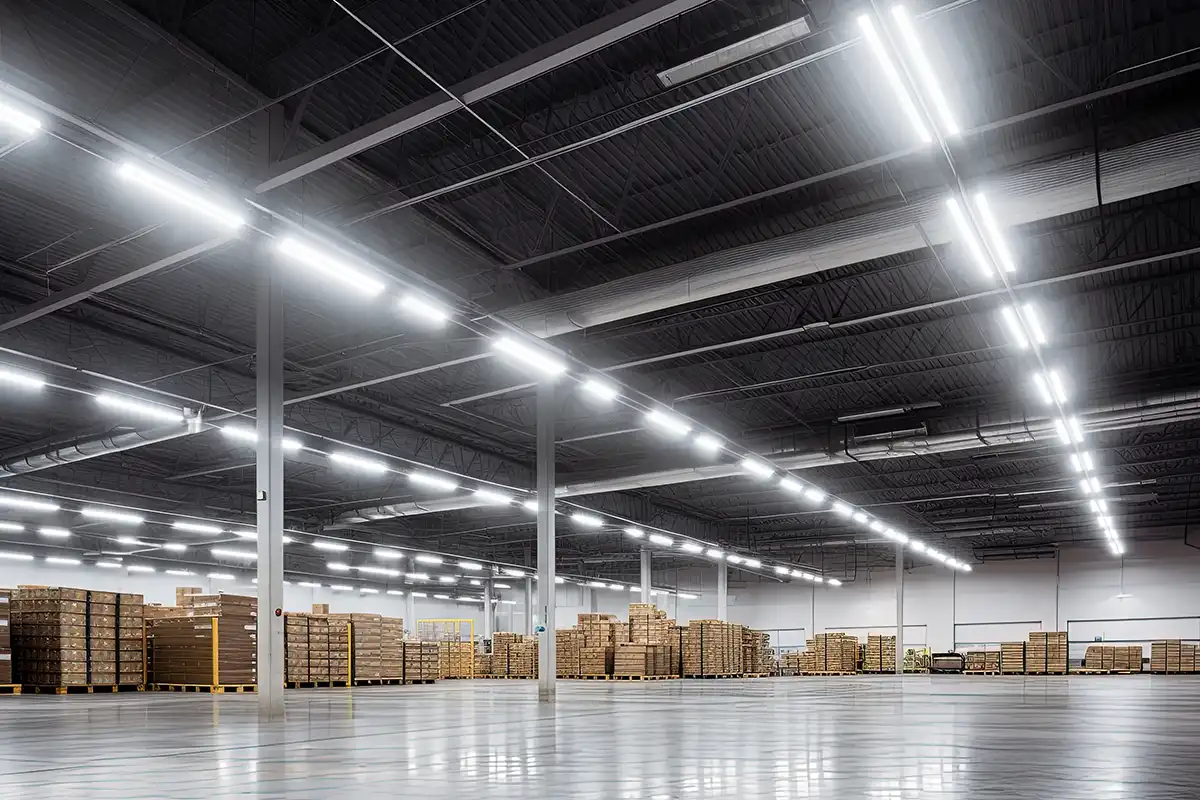
Industrial ceiling lights represent another mounting-led variation of Industry Lighting. Buyers use this term for factories, service rooms, enclosed workshops and utility buildings where direct surface mounting is possible. Although the fixture type differs, the commercial need remains a complete project covering design, materials, installation and delivery.
A ceiling-mounted layout must account for ceiling construction, mounting height, service congestion and maintenance access. Fittings positioned above fixed machinery can become difficult to reach after commissioning. Moving them later may affect spacing and leave areas below equipment poorly illuminated.
Optical distribution should match the room rather than the fixture category. Wide layouts may need broader beam patterns, while narrow service rooms can suffer from excessive wall brightness and uncomfortable glare.
VS Wilson coordinates fixture selection with the building structure, electrical arrangement and operational purpose. The result is handled as one EPC scope rather than separate design, supply and installation activities.
Industry Lighting Applications Across Industrial Facilities
Industry Lighting is used where personnel need dependable visibility for production, inspection, movement, loading, maintenance and emergency response.
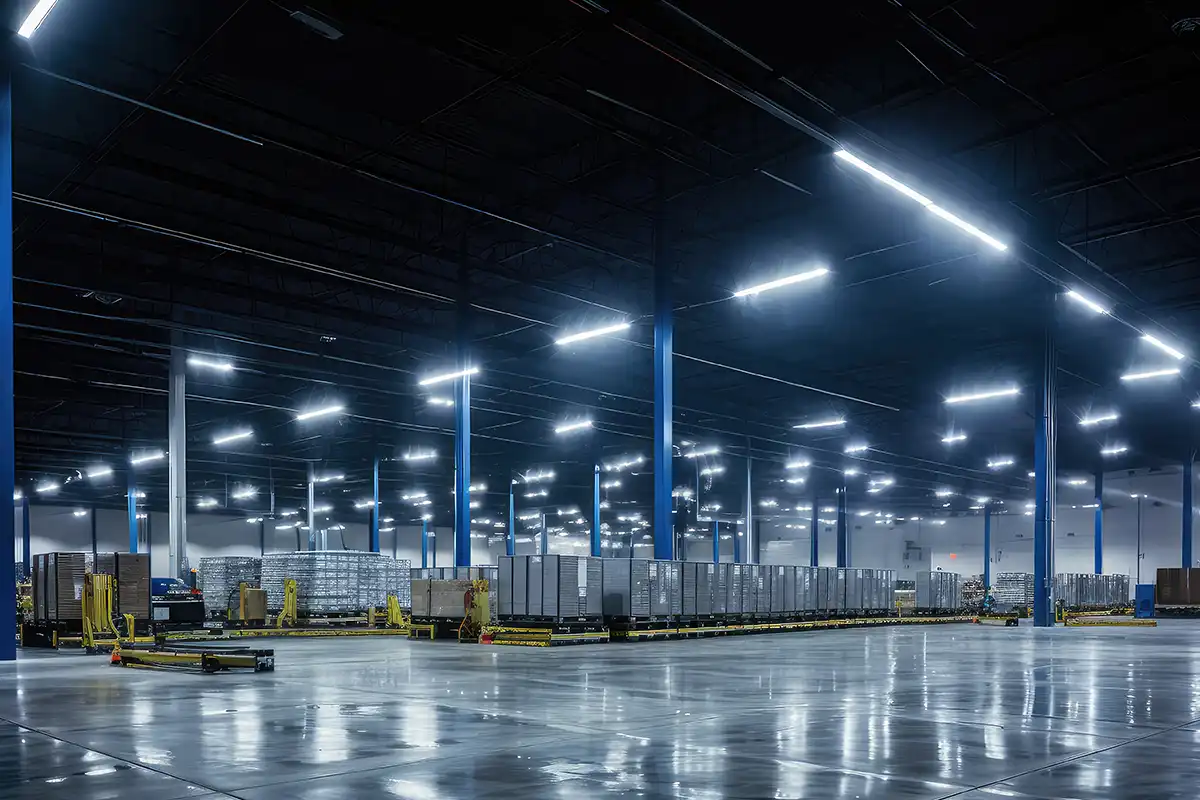
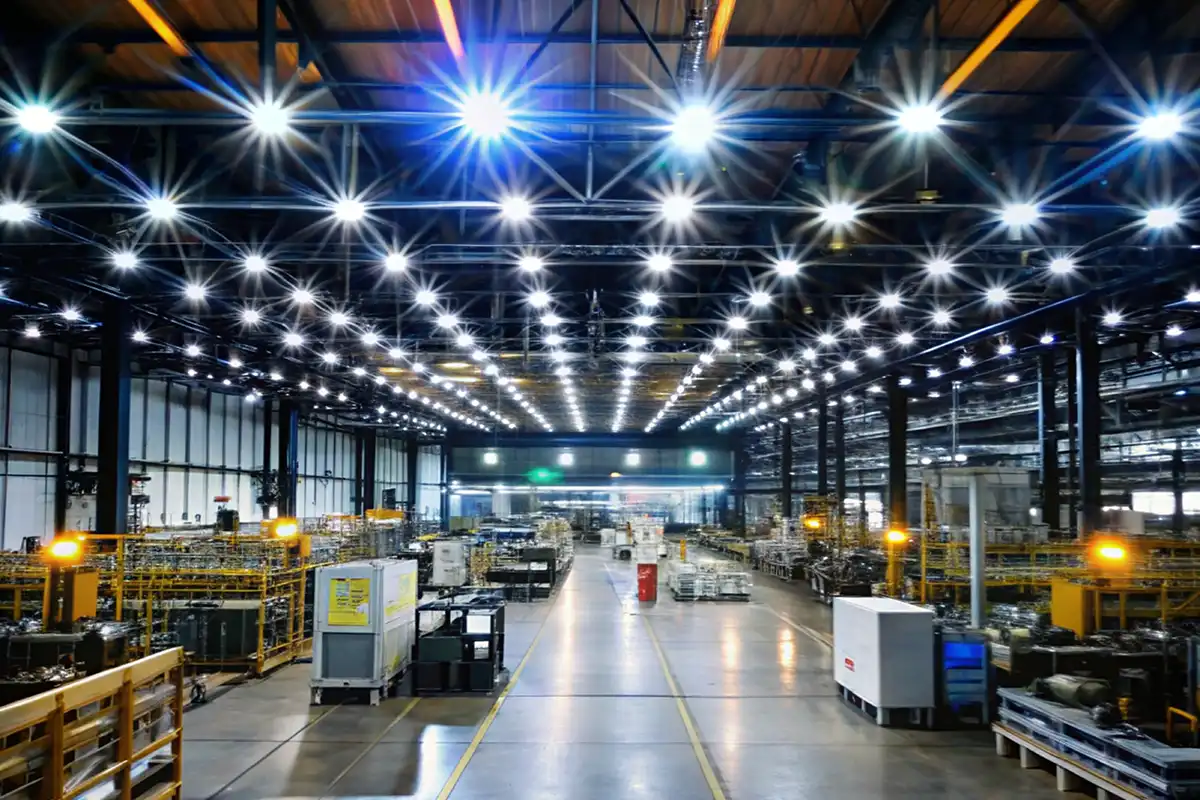
Manufacturing floors require light across machinery, operator positions, material handling routes and component inspection areas. Warehouses need balanced aisle illumination that remains useful at floor level and across vertical rack faces. Workshops place greater emphasis on detailed tasks, tool handling and maintenance work.
Utility rooms require clear visibility around panels, controls and equipment labels. Loading bays must account for vehicle movement, dock edges and changing obstructions created by parked trailers or stored materials. Outdoor yards, internal roads and perimeter areas add weather exposure and larger mounting distances.
A single fixture family rarely resolves all these conditions properly. The useful approach is to divide the facility according to the activity, geometry, risk and maintenance method of each area.
Stack Light Integration with Industrial Control Systems
A stack light is a signalling component within the wider Industry Lighting and automation environment. Users search for stack lights when machinery status, production conditions, faults or operator actions need immediate visual communication. It remains part of the same execution scope when lighting and control interfaces are being coordinated together.
Stack lights usually use multiple illuminated segments to communicate conditions such as normal operation, waiting, warning or stoppage. The meaning of each colour should be standardised across the facility rather than decided independently for every machine.
Visibility depends on position. A unit mounted behind an enclosure, pipe or tall machine may be technically functional but practically ineffective. Viewing distance, ambient brightness, ceiling height and operator location influence the final mounting point.
VS Wilson can coordinate physical placement, procurement and installation with the responsible automation or machine-control team. The control logic itself must remain aligned with the approved process philosophy and equipment interface.
When Professional Industry Lighting Becomes Necessary
Professional Industry Lighting becomes necessary when the project involves large floor areas, multiple working zones, high ceilings, moving equipment, environmental exposure or significant coordination between different contractors.
It is also required when an existing facility has uneven illumination, repeated lamp replacement, excessive glare, blocked light paths or fittings positioned where routine access is difficult. These problems often develop after layouts change and lighting remains untouched.
A simple fixture replacement may reduce wattage but still leave the original distribution problem unresolved. Similarly, adding more lights without checking beam direction can increase brightness while making operator discomfort worse.
Professional execution connects the lighting requirement with the structure, electrical system, machinery arrangement and working schedule. This becomes particularly important in operational plants where access windows are limited and rework may interrupt production.
Industrial Environments and Project Conditions
Industry Lighting must be selected around the installation environment because industrial conditions vary far more than room dimensions alone suggest.
Facilities may contain dust, moisture, oil vapour, elevated temperatures, vibration, chemical exposure or frequent washdown. Coastal and outdoor plants introduce corrosion, wind loading and direct solar heat. Food, pharmaceutical and clean-production areas may impose different enclosure and cleaning requirements.
Physical conditions also influence execution. High-level work may require scaffolding, mobile platforms or lifting equipment. Active production lines can restrict installation hours, while overhead cranes and conveyors affect mounting locations.
A common weakness in broad lighting pages is that they describe fixture features but do not explain how those products will be installed and maintained around actual plant equipment. VS Wilson treats the environment, access method and long-term servicing requirement as part of the original lighting decision.
Industry Lighting Project Execution Process
Industry Lighting execution follows a connected sequence of engineering, procurement, site preparation, installation and commissioning. Keeping these stages aligned prevents the design from being weakened by unchecked product substitutions, unsuitable mounting details or last-minute fixture relocation during site work.
Operational and Site Assessment
The process begins with facility drawings, machine layouts, task locations, ceiling information, operating schedules and environmental conditions. Existing facilities may require physical surveys because available drawings often differ from the final installed arrangement.
Lighting Engineering and Layout Planning
Illumination requirements are translated into fixture positions, mounting heights, optical distributions and control zones. Calculations are reviewed alongside equipment shadows, rack geometry and realistic working planes.
Technical Scheduling and Material Procurement
Luminaires, brackets, controls, emergency units and accessories are specified. Proposals from LED manufacturers and suppliers are checked against the design rather than accepted solely on wattage or lumen output.
Site Preparation and Installation Coordination
Access equipment, working permits, electrical readiness and structural supports are coordinated before installation. Work sequencing is planned around production schedules and other site contractors.
On-Site Installation and System Setup
Fixtures, controls and supports are installed at approved positions. Where an obstruction forces a location change, the effect on light distribution and access is reviewed before work continues.
Testing, Adjustment and Final Delivery
Circuits, sensors, emergency functions and control behaviour are tested. Aiming and visible coverage are checked in the completed environment before outstanding issues are closed and the project is handed over.
LED Lighting Manufacturers and Project Procurement
LED lighting manufacturers represent one part of the Industry Lighting supply chain; they do not replace the contractor responsible for system planning and execution. Buyers may begin with manufacturer searches, but a catalogue selection does not confirm that the proposed fitting suits the facility, mounting condition or operating task.
Technical review should compare optical distribution, ambient temperature limits, enclosure construction, electrical characteristics, dimensions, mounting accessories and control compatibility. Photometric files should correspond with the exact model being offered.
Substitution requires particular attention. Two products may show similar wattage and lumen output while producing different beam patterns. A change in bracket design or body dimensions can also create installation conflicts that were not visible during procurement.
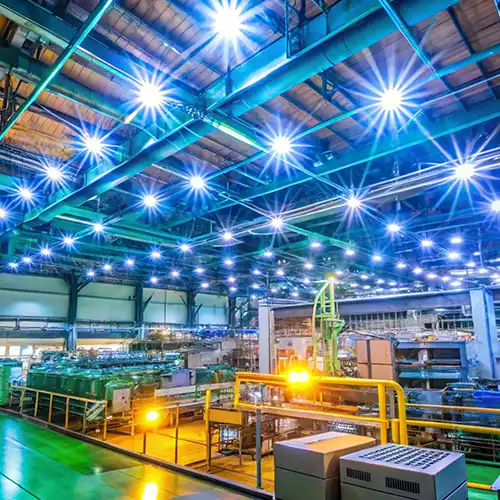
VS Wilson manages this interface by connecting manufacturer evaluation with design intent, material schedules, physical installation and final site performance.
Technical and Safety Considerations for Industry Lighting
Industrial lighting decisions affect visibility, maintenance access, electrical loading and safe movement throughout the facility.
Glare is a frequent issue in high-output installations. A fitting may deliver strong measured illumination while making displays, machine surfaces or surrounding hazards harder to see from an operator’s normal position.
Shadowing must be reviewed around racks, ducts, crane beams, vessels and machinery. Average lux values alone can hide sharp differences between clear floor areas and critical task positions.
Electrical planning should consider circuit loading, switching, inrush current, emergency operation and control interfaces. Mounting hardware must be suitable for the structure and any expected vibration.
Maintenance safety deserves early attention. A fixture positioned above permanent machinery may require production shutdown or specialised access every time it needs inspection. Shifting that position during design is usually easier and less costly than solving the problem after commissioning.
Outdoor Lighting Manufacturers for Exposed Industrial Areas
Outdoor lighting manufacturers supply luminaires for industrial roads, yards, loading areas and plant perimeters. Within Industry Lighting, however, outdoor suitability must be verified against the specific site rather than assumed from an exterior-use label. The complete requirement still includes layout design, procurement, mounting, installation and testing.
Fixture selection should account for water and dust exposure, corrosion, ambient temperature, wind, mounting height and possible mechanical impact. Optical distribution must suit the route or working area without sending excessive light toward adjacent buildings or operator sightlines.
Support design is equally important. A durable luminaire attached to an unsuitable bracket can rotate under vibration or wind, gradually moving away from the intended aiming position.
VS Wilson coordinates equipment from appropriate outdoor lighting manufacturers with pole or structural mounting, electrical interfaces and practical site access.
Common Industry Lighting Installation Risks
A repeated execution problem occurs when a supplier substitutes a fitting after the layout has been approved. The replacement may be described as equivalent, but a different beam angle can produce dark zones or unwanted glare.
Another risk appears when fixture positions are chosen from architectural drawings without checking machinery and service routes. Installers then move fittings during site work to avoid obstructions. These apparently small changes may alter spacing across an entire production zone.
Incorrect support selection can create vibration, movement or accelerated corrosion. Poor control zoning may leave large areas illuminated when only one process line is operating, while badly positioned sensors can react to vehicle movement or fail to detect workers.
Low-cost installation choices often move expenditure into the future. Additional fixtures, access equipment, rewiring and production shutdowns can exceed the saving achieved during initial procurement.
How to Choose the Right Industry Lighting Setup
The right Industry Lighting setup is based on operating tasks, building geometry, environmental exposure, electrical infrastructure and maintenance requirements. Fixture selection should come after these conditions are understood, not before.
Begin by identifying what personnel need to see. General movement, detailed inspection, machine operation, loading and emergency response require different visual conditions.
Next, divide the facility into working zones. Production lines, racks, workshops, service rooms and external roads should not automatically share one fixture specification.
The proposed layout must then be reviewed against structures and equipment. Calculation software can show acceptable averages while machinery creates deep shadows at the actual task position.
Finally, assess delivery responsibility. Lighting manufacturers supply products, consultants prepare layouts and installers carry out site work. An EPC execution partner connects those interfaces. Visit our About Us page to understand how VS Wilson approaches engineering, procurement and site delivery.
Industry Lighting Pricing Factors
Industry Lighting pricing depends on engineering depth, fixture specification, facility size, mounting conditions, control requirements and the complexity of physical installation. A quotation based only on fixture quantity does not reveal the total project requirement.
Material cost varies with optics, construction, operating temperature, environmental protection, emergency functions and control compatibility. Products from different lighting manufacturers can also require different brackets, wiring accessories or installation methods.
Site conditions often have a greater cost impact than expected. High ceilings may require mobile platforms or scaffolding. Active factories can restrict working hours, while production machinery may prevent straightforward access to cable routes and mounting positions.
Existing facilities may require surveys, removal work, temporary lighting or structural adaptation. International projects add mobilisation, travel, induction and local coordination.
Buyers should compare engineering, procurement, access, installation, testing and handover inclusions line by line. A lower quotation may represent a smaller responsibility rather than the same result at a lower cost.
Why Choose Integrated Industry Lighting Execution
Integrated Industry Lighting execution keeps engineering intent connected with the products purchased and the way they are installed.
When separate parties handle design, supply and installation, problems commonly appear between responsibilities. A supplier may propose a substitute without seeing the full layout. An installer may move a fitting to avoid a duct. The consultant may discover the change only during final inspection.
VS Wilson coordinates the complete project lifecycle from technical assessment and lighting planning through material procurement, on-site installation, testing and project delivery. This model does not eliminate coordination with architects, MEP consultants, automation teams or main contractors. It gives the lighting scope one controlled execution path.
For project owners, the main advantage is decision clarity. Technical changes, procurement questions and field constraints can be assessed against the same performance and completion requirements.
Industry Lighting Service Coverage
VS Wilson operates from the UAE and supports Industry Lighting projects throughout Dubai, Abu Dhabi and other Emirates through its UAE-based engineering and execution structure.
Projects across the wider Middle East, USA and Europe are handled through project-specific mobilisation. Depending on the agreed scope, personnel may travel for site assessment, installation coordination, physical execution, testing or complete project delivery.
International capability does not mean permanent local offices or continuously stationed teams in every market. Project planning, procurement coordination and mobilisation are managed from the UAE before teams are deployed to the client’s location.
This operating model suits substantial industrial projects where lighting decisions must remain connected with actual site conditions and where remote design advice alone would leave unresolved installation responsibility.
Common Buyer Concerns Before Hiring
Industrial buyers often need to decide whether to appoint a consultant, purchase directly from LED lighting manufacturers or engage a contractor for complete execution.
A consultant may be sufficient when the client already controls detailed procurement and has a capable installation team. Direct purchasing can work when specifications, quantities, optical data, supports and controls are fully resolved.
Complete execution becomes more appropriate when responsibility must continue from planning through site completion. It reduces the chance that every party assumes someone else checked the substitution, mounting arrangement or final coverage.
Another concern is whether professional execution costs more. The initial scope can appear higher because it includes work that product-only quotations omit. The useful comparison is not fixture price against project price. It is the total cost of engineering, materials, access, installation, adjustment and correction if the original arrangement does not perform as required.
FAQs
What is included in an Industry Lighting project?
An Industry Lighting project can include facility assessment, lighting calculations, layouts, fixture and control specifications, material procurement, mounting coordination, on-site installation, testing and handover. The final responsibility depends on the agreed scope, but a complete EPC project keeps these stages connected rather than assigning them as unrelated activities.
Is VS Wilson one of the LED lighting manufacturers?
No. VS Wilson is a lighting project contractor and execution partner rather than an LED manufacturer. The company evaluates and procures suitable equipment from relevant manufacturers, then coordinates the selected materials with the engineering layout, site conditions, control requirements, installation work and final project testing.
Where is industrial pendant lighting normally used?
Industrial pendant lighting is commonly used in high-ceiling production areas, workshops and covered industrial structures where direct ceiling mounting places the source too far from the task. Suspension height, overhead services, vibration, crane movement and maintenance access should be reviewed before the pendant position and fixture distribution are finalised.
Can industrial ceiling lights be installed above machinery?
They can be installed above machinery where the mounting position, access method and light distribution remain practical. However, permanent equipment may make future inspection difficult or block part of the beam. The layout should be checked against the final machine arrangement before ceiling positions and electrical points are fixed.
How should a stack light be positioned?
A stack light should be visible from the operator’s normal working position and should not be obstructed by machinery, enclosures or structural components. Viewing distance, ambient brightness and colour meaning must also be considered. Positioning should be coordinated with the automation team responsible for the machine status and alarm logic.
What should be checked when comparing lighting manufacturers?
Project teams should compare optical data, dimensions, construction, environmental ratings, electrical behaviour, controls, accessories and installation compatibility. Similar wattage or lumen values do not make two fixtures equivalent. The exact model should be checked against the approved layout and mounting arrangement before a procurement substitution is accepted.
Does VS Wilson execute Industry Lighting projects outside the UAE?
Yes. VS Wilson can deploy teams for projects across the Middle East, USA and Europe, subject to project requirements, scheduling and mobilisation planning. International work is executed through travel and site deployment from the UAE rather than through claims of permanent offices or permanently based teams in each location.
What information is needed before preparing a proposal?
Useful inputs include the facility location, floor and ceiling plans, equipment layout, operating activities, required lighting levels, environmental conditions, control expectations, project schedule and desired execution scope. Existing plants may require a site survey when drawings are incomplete or no longer represent the actual installed equipment.
Discuss Your Industry Lighting Project
A productive Industry Lighting discussion should begin with the facility layout, operating tasks, installation conditions and the responsibility expected across engineering, procurement and execution. VS Wilson can plan UAE projects and mobilise teams for on-site delivery across the Middle East, USA and Europe.
Share your project drawings, site limitations and intended programme through the Contact page so the system can be assessed as a complete industrial execution requirement rather than a stand-alone fixture enquiry.