Airport Lighting
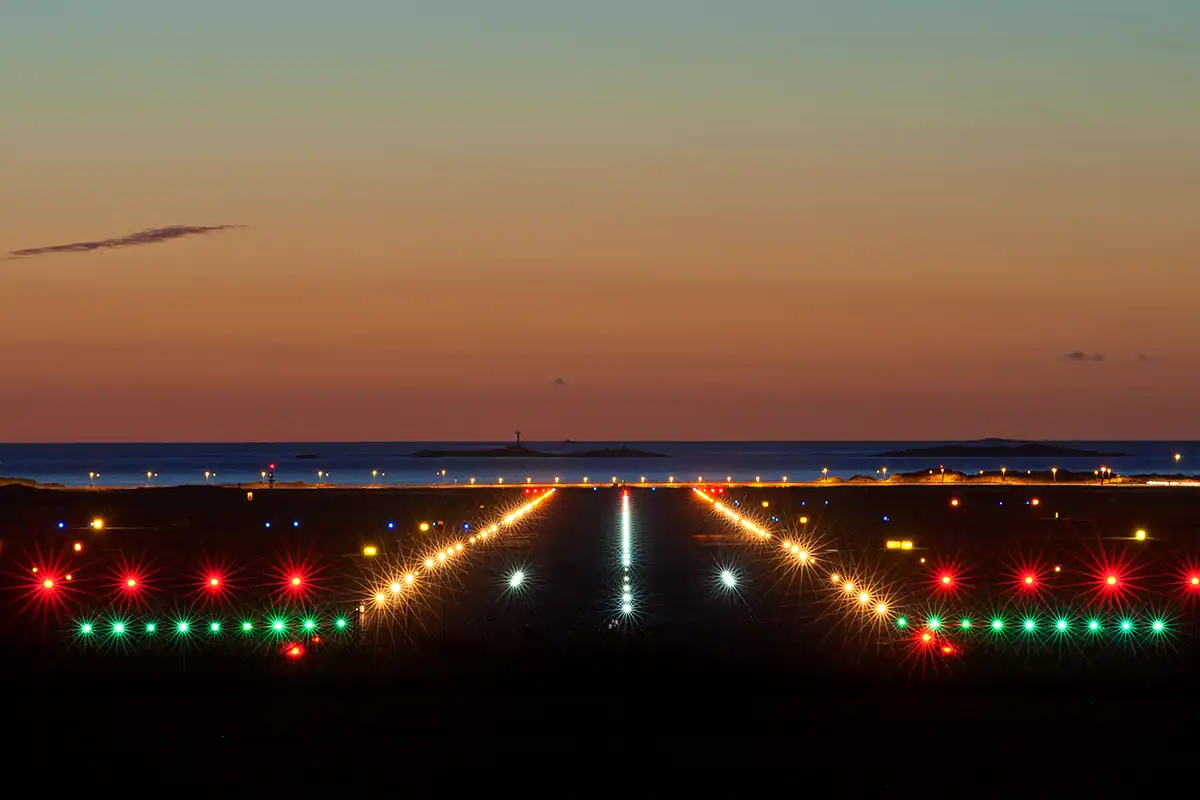
Airport lighting refers to the planning, procurement, installation, and commissioning of lighting systems across runways, taxiways, aprons, and aviation zones. It includes layout engineering, fixture placement, electrical infrastructure, and operational testing based on aviation requirements.
VS Wilson delivers Airport lighting as a full EPC solution, managing design planning, material procurement, on-site installation, and final commissioning across UAE, Middle East, USA, and Europe. Each project is executed from concept to operational readiness, ensuring lighting systems perform reliably under real aviation conditions rather than remaining theoretical design outputs.
What This Service Includes
Airport lighting requires more than general illumination. It operates within strict visibility and safety constraints. In actual projects, minor misalignment can affect pilot perception during landing or taxiing. This service includes full system planning, sourcing of aviation-grade fixtures, installation across multiple zones, and calibration to meet operational standards. Control systems may also be integrated to manage different lighting intensities depending on flight operations.
Airport Lighting Design
Airport Lighting Design represents the planning stage within the broader Airport lighting service, where layout, intensity levels, and zoning are defined based on aviation requirements.
This stage determines how lighting systems interact with aircraft movement, pilot visibility, and ground operations. In real projects, design must account for runway orientation, surrounding structures, and environmental factors like fog or dust.
Execution is not isolated from design. The same team ensures that planned layouts are implemented correctly on-site, avoiding the common gap where design intent does not translate into actual performance.
Airport Ramp Lighting Task
This keyword reflects a specific operational zone within Airport lighting where aircraft parking, loading, and ground handling take place. It remains part of the same service but focuses on apron-level execution.
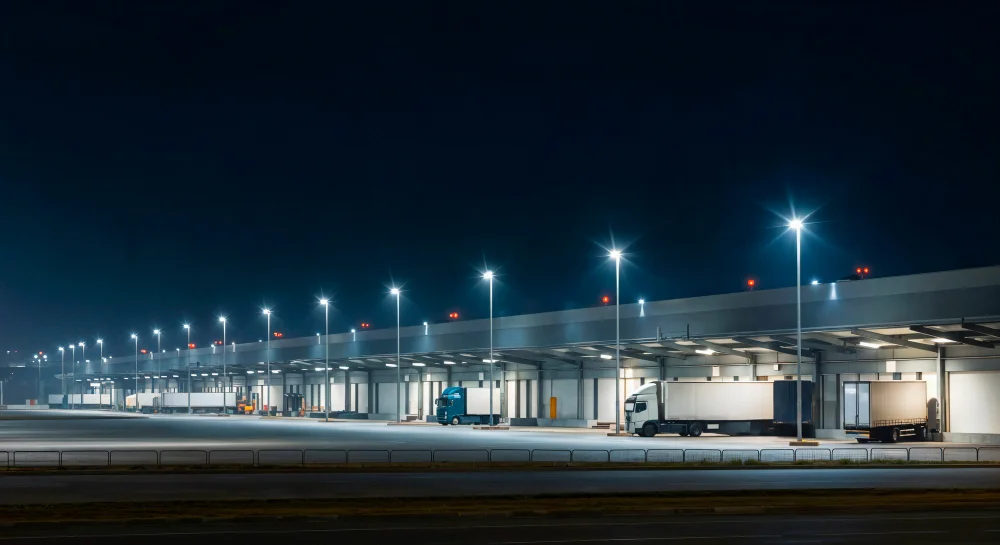
Airport Ramp Lighting Task involves illuminating aircraft stands, service areas, and movement zones without interfering with pilot visibility. In actual installations, excessive brightness or incorrect angles can create glare for cockpit crews.
Execution requires controlled light spread and careful positioning, ensuring ground staff visibility while maintaining safe aircraft operations.
Airport Security Lighting
Airport Security Lighting represents a variation where lighting is used for surveillance, monitoring, and restricted access zones within the airport environment.
While still part of Airport lighting, this area focuses on perimeter zones, entry points, and surveillance coverage. Lighting must support camera visibility while maintaining consistent illumination levels.
In real projects, uneven lighting often creates blind spots, reducing effectiveness of security systems. Execution involves aligning lighting with surveillance infrastructure, ensuring both systems function together.
Helipad Light
Helipad Light is a specialized subset within Airport lighting, focusing on smaller landing zones used for helicopters.
These systems require precise positioning to guide pilots during landing, especially in low-visibility conditions. In actual projects, incorrect light placement can distort depth perception during descent.
Execution involves installing perimeter lights, approach lighting, and guidance systems, ensuring visibility without overwhelming the pilot with excessive brightness.
Types of Lighting Solutions Offered
Runway Edge Lighting Systems
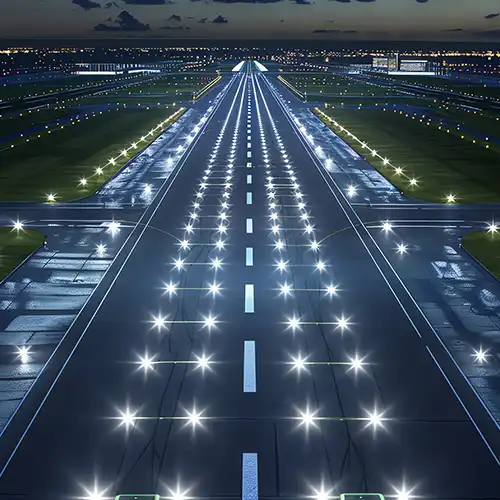
Defines runway boundaries with consistent spacing for pilot guidance during landing and takeoff.
Taxiway Lighting Systems
Guides aircraft movement between runways and terminals with directional clarity.
Apron and Ramp Lighting
Illuminates aircraft parking and service zones for safe ground operations.
Perimeter Security Lighting
Covers boundary areas to support monitoring and restricted access control.
Helipad Guidance Lighting
Provides visual cues for helicopter landing and takeoff zones.
Real-World Applications & Use Cases
Airport lighting is used across multiple operational zones where visibility directly impacts safety. Runways require precise edge definition, while taxiways guide aircraft movement between different zones.
Apron areas support ground handling operations, where staff and equipment movement must remain visible. Security lighting is applied across perimeter zones to prevent unauthorized access.
In actual projects, different zones operate under different lighting requirements, yet must function as one coordinated system. This makes execution more complex than standard infrastructure lighting.
Project Execution Process
Airport lighting projects follow a coordinated EPC workflow where planning and execution are tightly linked. The process begins with site evaluation, where runway dimensions, operational zones, and environmental conditions are studied.
Design planning defines lighting layouts, intensity levels, and control systems. Procurement follows, where aviation-grade fixtures and components are sourced based on durability and compliance requirements.
Installation involves precise positioning of fixtures, alignment with structural elements, and integration with electrical systems. Testing is conducted under simulated operational conditions.
In many projects, adjustments are required after initial testing. This step is critical, as real-world conditions often reveal issues not visible in design drawings. Proper execution ensures these are corrected before final commissioning.
Technical & Safety Considerations
Airport lighting operates under strict safety requirements. Visibility must remain consistent under varying weather conditions, including fog, rain, and dust.
Electrical systems require redundancy to ensure continuous operation. Failure in lighting systems can disrupt airport functionality.
Fixture placement must also consider aircraft movement and pilot line of sight. Poor alignment can create visual confusion during landing or taxiing.
Common Problems & Risks in Lighting Installation
One major issue is misalignment of runway lighting, which affects pilot perception. This usually happens when installation does not follow design specifications precisely.
Another risk is inadequate backup systems. Power failure without redundancy can disrupt operations.
A common gap is treating design and execution separately. Without on-site calibration, even well-planned systems fail to perform correctly.
How to Choose the Right Airport lighting Setup
Selecting the right Airport lighting setup requires evaluating operational zones, safety requirements, and long-term reliability. It is not just about illumination levels. Decision-makers should assess whether the system supports runway visibility, reduces glare, and integrates with control systems. Maintenance access and system durability also influence decisions.
From an execution perspective, working with a provider handling both design and installation reduces risk. Fragmented approaches often result in performance inconsistencies.

Pricing Factors
Airport lighting costs depend on project scale, number of operational zones, and system complexity. Large airports with multiple runways require extensive infrastructure. Material selection significantly impacts cost. Aviation-grade fixtures and control systems are designed for long-term reliability, which increases initial investment.
Installation complexity also affects pricing. Working across active airport zones requires careful coordination, often extending timelines.
Choosing low-cost alternatives often leads to operational risks and higher long-term expenses. Proper execution reduces these risks and ensures system reliability.
Why Choose This Service
Airport lighting requires coordination between technical planning and execution precision. VS Wilson approaches projects as a complete responsibility, ensuring alignment from design to commissioning.
Execution teams are deployed on-site across UAE, Middle East, USA, and Europe depending on project requirements. Each project is handled with attention to operational conditions and safety requirements.
To understand project execution capability, visit our About Us page.
Service Coverage
VS Wilson operates from the UAE, delivering Airport lighting projects across Dubai, Abu Dhabi, and the wider Middle East.
For international projects, teams travel for on-site execution across the USA and Europe. Projects are handled through coordinated deployment, ensuring consistent execution across locations.
Common Buyer Concerns Before Hiring
Buyers often question whether lighting systems will meet aviation safety requirements. This depends on execution accuracy and calibration.
Another concern is project disruption during installation. Proper planning minimizes impact on operations.
There is also concern about long-term reliability. Poorly executed systems often lead to maintenance challenges and operational risks.
FAQs
1. What does Airport lighting include?
Airport lighting includes runway, taxiway, apron, and security lighting systems, along with design, procurement, installation, and commissioning.
2. Can airport lighting be upgraded without shutting operations?
Yes, phased execution allows upgrades while maintaining operations, though careful planning is required.
3. Do you handle international airport projects?
Yes, projects are executed globally through on-site deployment across Middle East, USA, and Europe.
4. How is runway lighting tested after installation?
Testing involves simulated operational conditions, including visibility checks and alignment verification.
5. Is design-only service sufficient for airport lighting?
Design alone often fails without execution alignment. On-site calibration is essential for performance.
6. What factors affect airport lighting reliability?
System durability, proper installation, and backup power integration all influence long-term reliability.
Discuss Your Project
Airport lighting projects require careful coordination between design, infrastructure, and operational conditions. Whether you are developing a new airport zone or upgrading existing systems, early planning helps avoid execution challenges.
VS Wilson delivers airport lighting projects across UAE, Middle East, USA, and Europe through on-site deployment. You can discuss your project scope, site conditions, and execution requirements through our Contact page to evaluate the right approach before implementation