Port Lighting
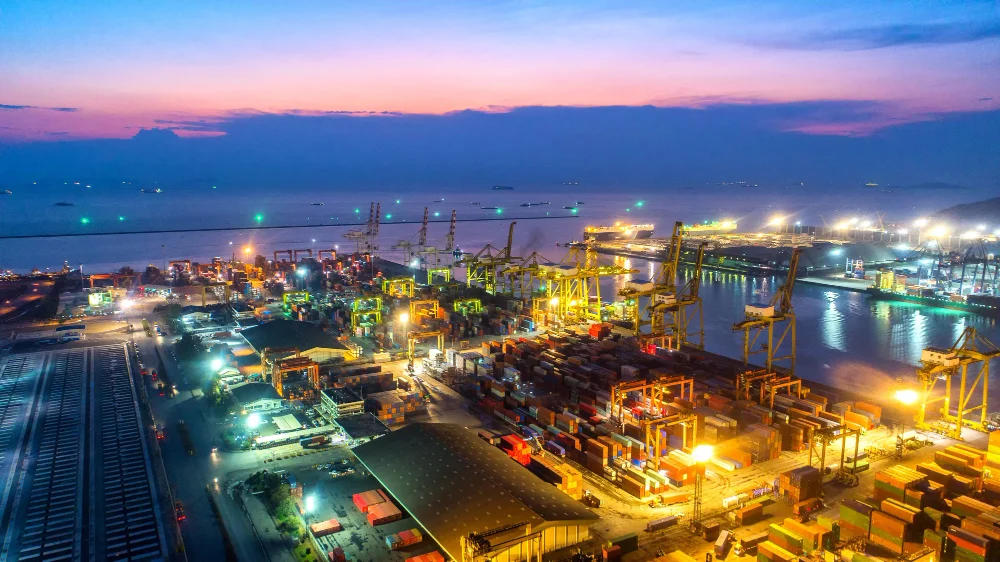
Port Lighting covers the engineering, procurement and physical execution of lighting systems across container yards, quays, berths, internal roads, access gates, warehouses and supporting marine infrastructure. It is delivered through an EPC model combining lighting design, technical planning, material procurement, on-site installation, adjustment and final commissioning.
VS Wilson operates from the UAE as an end-to-end project execution partner. Port projects in Dubai, Abu Dhabi and other Emirates are coordinated through the UAE operational base. Teams may also be mobilised for on-site work across the Middle East, USA and Europe according to project scale. International delivery reflects planned site deployment, not permanent overseas offices.
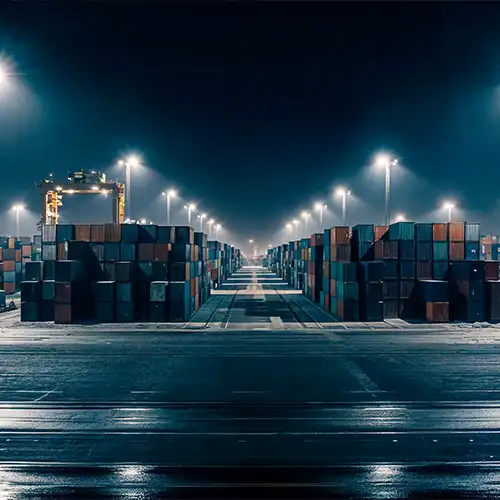
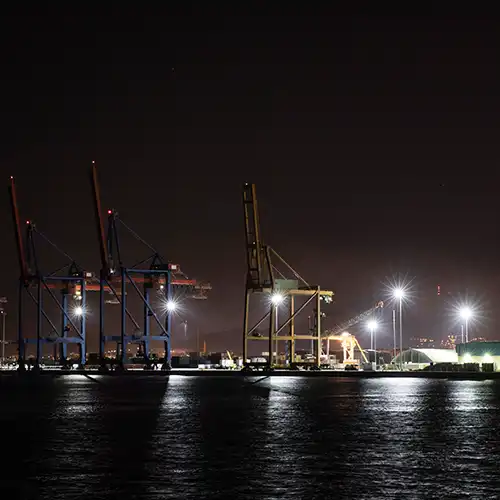
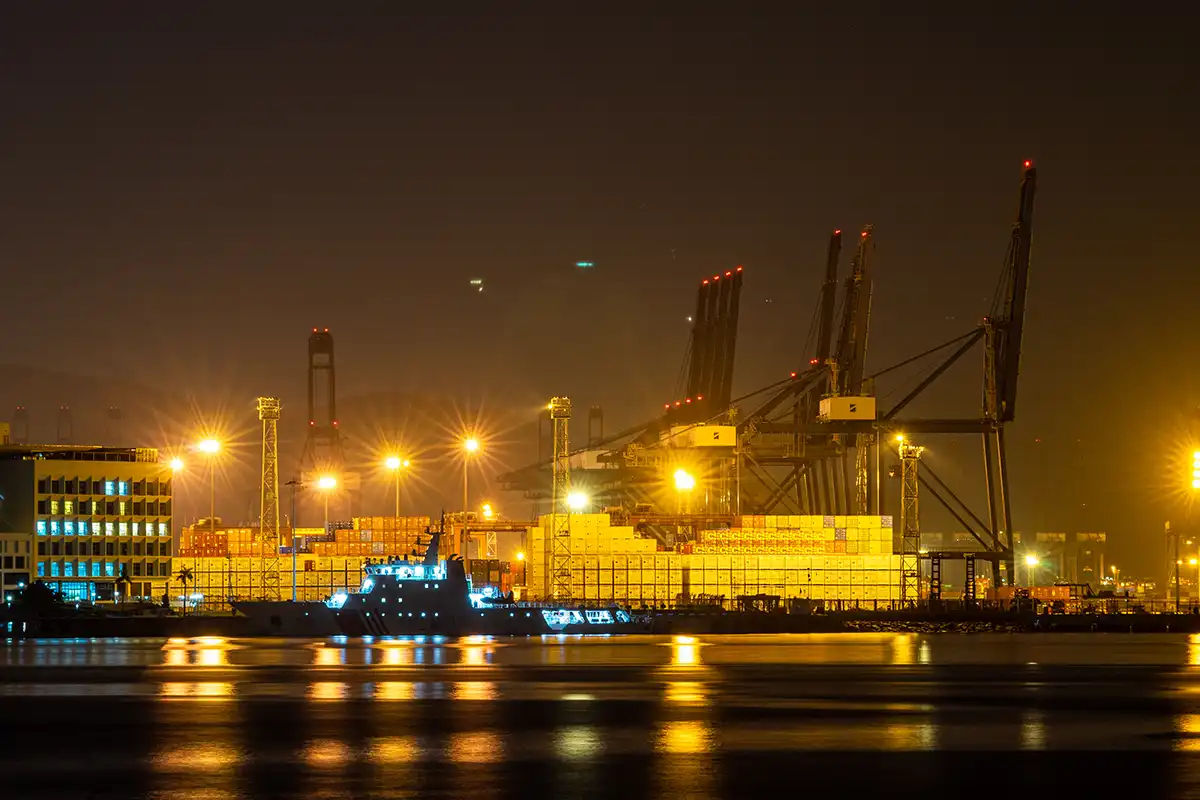
Sea Port Lighting for Cargo and Marine Operations
Sea port lighting is a close search variation of Port Lighting. Users commonly use the term when their requirement involves marine terminals, cargo berths, harbour-side roads or waterside infrastructure. The search wording changes, but the commercial need remains an integrated design, procurement, installation and commissioning project.
Salt-laden air, humidity, strong wind and repeated exposure to moisture affect far more than the luminaire enclosure. Supporting brackets, fasteners, cable entries, control cabinets and pole finishes must also suit the location.
From an execution point of view, the water boundary changes how equipment can be reached. Some fixtures may require boom lifts, elevated platforms, marine access or restricted working arrangements near an active berth.
VS Wilson treats sea port lighting as part of the same EPC delivery model. The layout is developed around port operations, materials are reviewed against the environment, and installation teams are deployed to complete and test the system on site.
Scope of the Port Lighting Service
Operational movements shape the initial lighting plan
Vehicle paths, crane travel and pedestrian activity determine where usable visibility is required.
Marine conditions influence every material decision
Salt exposure, moisture and wind affect luminaires, brackets, fasteners and supporting structures.
Installation planning begins before equipment arrives
Access machinery, shutdown periods and contractor interfaces are coordinated during technical preparation.
Night testing confirms the installed result
Aiming, glare, shadows and operational visibility are assessed after the full system is energised.
Port Lighting includes the work required to convert an operational brief into a functioning lighting installation. Planning begins with port layouts, berth geometry, traffic routes, cargo-handling equipment, security zones, structural information and electrical infrastructure.
The engineering stage establishes mounting positions, pole heights, beam distributions, control groups and technical schedules. Procurement connects those decisions with luminaires, brackets, drivers, control components, cables and mounting accessories.
Installation involves more than fixing equipment at height. Port operations, crane clearances, live traffic, waterside access and multiple contractor activities must be considered before deployment.
Testing then checks how the system performs within the actual terminal environment. A calculated layout can still require final adjustment when containers, cranes, vessels and temporary cargo stacks create conditions that were not fully represented during design.
Port Lighting Systems Offered
High-Mast Port Lighting
Elevated systems distribute light across container yards, open storage areas and broad cargo-handling zones while reducing ground-level obstructions.
Quay and Berth Lighting
Fixtures support mooring activity, cargo transfer, inspection, maintenance and safe movement along waterside operational areas.
Container Terminal Lighting
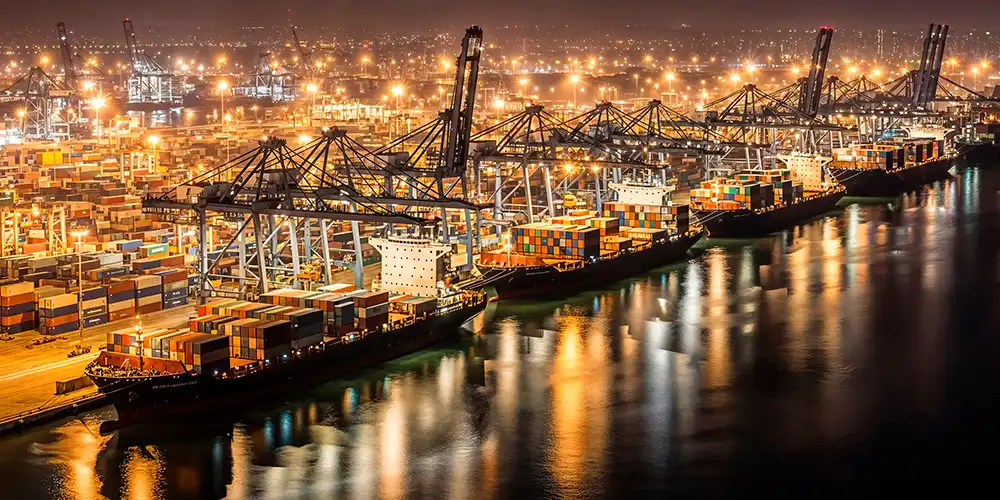
Layouts account for container stacking, reach stackers, cranes, terminal tractors, pedestrian routes and changing obstruction patterns.
Port Road Lighting
Internal roads, junctions, gate approaches and vehicle inspection areas require controlled visibility without creating glare for drivers.
Warehouse and Transit-Shed Lighting
Industrial luminaires support loading, storage, sorting, document checking and movement between internal and external zones.
Security and Perimeter Lighting
Lighting assists controlled access, fence-line observation, surveillance coverage and gate operations without relying on uncontrolled brightness.
Emergency and Egress Lighting
Backed-up systems support escape routes, stairs, equipment rooms, control spaces and defined emergency response locations.
Smart Port Lighting Controls
Scheduled switching, zoning, remote monitoring and sensor-led operation can reduce unnecessary runtime where operating patterns permit.
Port Lighting Applications Across Marine Facilities
Port Lighting supports activities that take place across both landside and waterside zones.
Container terminals require visibility across crane lanes, stack areas, reefer zones, terminal roads and transfer points. Bulk cargo facilities need lighting around conveyors, hoppers, stockpiles, ship loaders and maintenance access routes.
Ro-Ro terminals create a different operating pattern. Vehicle ramps, marshalling lanes, trailer parking and passenger separation require lighting that supports movement without placing harsh sources directly within driver sightlines.
At general cargo berths, loading arrangements can change according to the vessel and material being handled. Fixture placement must therefore avoid depending on one fixed cargo configuration.
Fuel and chemical terminals may introduce classified-area requirements. Warehouses, workshops, customs zones, security gates and administration areas create additional lighting conditions.
The page does not merge these into separate service categories. They remain operational zones within one coordinated Port Lighting project.
When Port Lighting Execution Becomes Necessary
Professional Port Lighting execution becomes necessary when port operations continue after dark, existing illumination has become uneven, new cargo equipment changes visibility conditions or expansion work creates additional roads, yards and berths.
It is also required when older fittings are being replaced with LED equipment. A one-for-one replacement may reduce connected load but can fail to reproduce the original distribution. Differences in beam shape, mounting angle and fixture position may leave operational areas darker even when the new product has a higher published lumen output.
Another trigger is repeated maintenance. Fittings located above active lanes, waterside edges or crane structures can be costly to access. If failures occur frequently, the expense involves more than the replacement component. Traffic control, lifting equipment, work permits and operational interruption may also be required.
A planned project considers these consequences before procurement begins.
Port Environments and Project Conditions
Port lighting equipment operates in an environment shaped by marine exposure, heavy machinery, vibration, open space and continuous operational change.
Coastal conditions can accelerate corrosion across fittings, brackets and fixings. Wind affects elevated structures and may gradually alter poorly secured aiming positions. Dust from bulk materials can collect on optical surfaces, while high ambient temperatures influence drivers and control equipment.
The physical layout is rarely static. Containers move, temporary storage zones expand and different vessels create changing shadows along a berth. Cranes and loaders can block beams that appear unobstructed on a simplified drawing.
Installation conditions are equally important. Live traffic routes may limit daytime access. Some areas can only be isolated for short periods, requiring labour, access equipment and materials to arrive in a carefully controlled sequence.
Generic fixture descriptions rarely explain these project conditions. Yet these conditions often determine whether the installed system remains dependable after handover.
Port Lighting Project Execution Process
Port Lighting execution follows one connected lifecycle covering operational review, engineering, procurement, site coordination, installation and commissioning. Keeping those stages under coordinated responsibility helps prevent approved layouts from being weakened by unsuitable substitutions, inaccessible mounting positions or unreviewed site changes.
Port Operational Review
The team reviews terminal layouts, berth activity, cargo movement, crane positions, road networks, security zones, working hours and available electrical information. Existing ports may require night surveys because daytime inspections do not reveal glare, dark transitions or competing light sources.
Lighting Engineering and Layout Planning
Fixture locations, pole heights, aiming directions, optical distributions and control zones are developed around the real activity in each area. Container heights, crane movement and waterside boundaries are included in the planning logic.
Technical Preparation and Material Procurement
Approved schedules are converted into procurement packages covering luminaires, poles, brackets, controls, cables and related accessories. Alternative products are reviewed against optics, environmental conditions and installation details before acceptance.
On-Site Port Lighting Installation
Access arrangements, traffic management, excavation readiness, structural supports and electrical interfaces are coordinated. Installation may be phased to avoid unnecessary disruption to terminal operations.
Control Setup and System Integration
Lighting groups, schedules, monitoring systems and relevant automation interfaces are configured according to the operational plan. Manual override and maintenance requirements are considered during setup.
Night Testing and Final Commissioning
Completed areas are inspected under representative operating conditions. Aiming, dark zones, spill light, glare and transitions between adjacent areas are checked before final adjustments and handover.
Technical and Safety Considerations for Port Lighting
Port Lighting must support visibility without creating conditions that interfere with drivers, crane operators, security teams or waterside activities.
Glare is one of the most important concerns. Extremely bright fittings installed at unsuitable angles can reduce the ability to see objects beyond the source. This is especially relevant on internal roads and near crane cabins where operators view the area from elevated positions.
Uniformity also matters. Sharp transitions between bright and dark areas slow visual adaptation and can conceal pedestrians, equipment edges or road changes.
Structural coordination should consider pole foundations, wind exposure, bracket loading and access for future maintenance. Electrical planning must account for circuit loading, switching, emergency requirements, surge conditions and control interfaces.
At fuel or chemical handling terminals, hazardous-area classification may affect equipment selection. The approved area-classification documents and project specifications should guide those decisions rather than assumptions based only on proximity to cargo-handling operations.
Common Port Lighting Installation Risks
One recurring problem is designing around an empty yard. The calculation may show acceptable coverage, but stacked containers later block low-angle beams and create narrow dark corridors.
A second risk appears when high-mast locations are selected without fully considering crane travel, underground services or future expansion. Moving the mast during construction can alter the distribution across a much larger area than expected.
Unchecked fixture substitution also creates problems. Similar wattage does not mean identical beam performance. A replacement with a different optical pattern can cause glare, spill light or weak illumination between poles.
Installation sequencing presents another risk. Foundations, cables, poles, controls and luminaires may be handled by different contractors. When interfaces are not coordinated, equipment can reach the site before supports or power supplies are ready.
These are execution problems, not simply product problems. They are easier to control when engineering, procurement and installation remain connected.
Ship Navigation Lights and Port Lighting Scope Boundaries
Ship Navigation Lights are related to maritime safety but do not represent the same service intent as land-based Port Lighting. Buyers may search the terms together because both operate within a port environment, yet vessel-mounted navigation equipment follows a different functional and regulatory scope.
Port Lighting covers infrastructure such as quays, container yards, roads, gates, warehouses and operational work zones. Ship Navigation Lights are installed on vessels to communicate vessel status, direction or activity to other marine traffic.
The two systems should not create visual confusion. Poorly aimed shore lighting, excessive brightness or uncontrolled coloured light near the water may interfere with the visibility of marine signals.
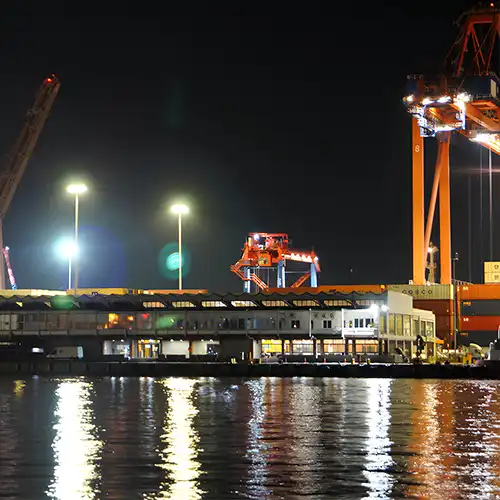
VS Wilson’s primary service positioning remains port-side EPC lighting execution. Where a project interfaces with navigational systems, coordination should be undertaken with the relevant marine authority, vessel specialist and navigation-equipment provider
How to Select the Right Port Lighting System
The right Port Lighting system is selected by matching illumination requirements with operational movement, obstruction patterns, marine exposure, maintenance access and control strategy. Fixture selection should follow this assessment rather than begin with a preferred wattage or supplier catalogue.
Start by separating the port into operational zones. A container stack, quay edge, access gate and internal road do not require the same beam distribution or mounting approach.
Next, model realistic obstructions. Container heights, cranes, vessels, conveyors and temporary storage can substantially change where the light reaches.
Environmental suitability must then be reviewed across the complete assembly. A marine-resistant fixture installed with unsuitable brackets or fasteners still creates a weak system.
The delivery model should also be assessed. Design-only work leaves procurement and installation interfaces with the client. Full EPC execution keeps those decisions connected. Visit our About Us page to understand VS Wilson’s planning and delivery approach.
Port Lighting Pricing Factors
Port Lighting pricing depends on site size, engineering complexity, mounting infrastructure, environmental specification, controls and the practical conditions under which installation will occur.
The number of luminaires is only one part of the cost. High-mast foundations, poles, access equipment, brackets, cables, control panels and civil work can materially affect the project value.
Installation becomes more complex around live terminal operations. Restricted work windows, traffic management, waterside access, permits and phased shutdowns may increase labour and mobilisation requirements.
Existing ports can require surveys, removal of old equipment, cable testing and structural adaptations. New developments may involve coordination with civil, electrical, security and terminal-automation packages.
International execution also includes travel, mobilisation, induction and coordination with local project stakeholders.
Buyers should compare what each quotation includes across engineering, materials, foundations, installation, controls, testing and handover. A lower price may exclude major execution responsibilities rather than provide the same scope more efficiently.
Why Integrated Port Lighting Execution Matters
Integrated Port Lighting execution keeps the operational requirement connected with the equipment purchased and the conditions encountered during construction.
When engineering, supply and installation are divided without clear control, each party may optimise only its own portion. The designer may not review a proposed substitution. The supplier may not know that a bracket conflicts with a crane structure. The installer may move the fixture to simplify access without checking the effect on the wider layout.
VS Wilson coordinates design planning, technical preparation, procurement, on-site deployment, installation, adjustment and final project completion through one delivery sequence.
This approach does not remove the role of port consultants, marine specialists, electrical contractors or terminal operators. It gives those stakeholders a connected execution route for the lighting package.
Capability is demonstrated through controlled interfaces and realistic planning rather than broad promotional claims.
Port Lighting Service Coverage
VS Wilson operates from the UAE and coordinates Port Lighting projects across Dubai, Abu Dhabi and the wider Emirates through its UAE-based project structure.
Projects elsewhere in the Middle East, the USA and Europe can be undertaken through planned mobilisation and on-site deployment. Depending on the agreed responsibility, teams may travel for site assessment, lighting installation, execution management, testing or complete project delivery.
This international model does not imply permanent offices or permanently located teams in every country. Project coordination, procurement planning and mobilisation are organised through the UAE operational base.
The service is intended for substantial maritime and terminal projects where design decisions must remain connected to cargo activity, marine exposure, construction interfaces and physical installation.
Common Buyer Concerns Before Hiring
Buyers often question whether they need a lighting consultant, a fixture supplier or an end-to-end execution contractor.
A consultant may be sufficient when the port already controls detailed procurement, foundations, electrical works, installation and commissioning. A supplier may be appropriate when specifications and quantities are fully resolved.
Complete execution becomes more valuable where the project still contains design decisions, marine-environment concerns, high-mast infrastructure, operational restrictions or several contractor interfaces.
Cost comparison creates another difficulty. A product quotation cannot be directly compared with an EPC quotation that includes surveys, engineering, structural coordination, installation and testing.
Project owners should therefore compare responsibility rather than headline price. The correct question is not only who supplies the lights. It is who remains accountable when site conditions require changes and when the completed area must perform under real night operations.
FAQs
What does a complete Port Lighting project include?
A complete Port Lighting project may cover operational assessment, site surveys, lighting layouts, technical specifications, material procurement, pole and bracket coordination, control planning, on-site installation, night testing and final handover. The exact scope depends on whether the project involves a new terminal, expansion or upgrade of an operating port.
Is sea port lighting different from general industrial lighting?
Sea port lighting shares some industrial fixture types, but its execution conditions differ. Marine exposure, open-yard geometry, container obstruction, crane movement, waterside work and continuous vehicle activity influence layouts and material selection. These factors require port-specific planning rather than applying a standard warehouse or factory lighting arrangement.
Why were USB lights excluded from this page?
USB lights, USB LED lights, LED strip USB products and mini USB lights serve consumer electronics, portable accessories and decorative applications. They do not match the commercial intent of a port infrastructure project. Including them would attract irrelevant visitors and weaken the page’s relevance for terminal owners, consultants and contractors.
Are Ship Navigation Lights included in Port Lighting?
Ship Navigation Lights are generally vessel-mounted safety systems and are not the primary scope of land-based Port Lighting. Port infrastructure lighting covers yards, roads, quays, gates and supporting facilities. Any interface between shore lighting and marine navigation systems should be coordinated with the relevant marine specialists and authorities.
Can existing port lights be upgraded to LED?
Yes, but a one-for-one replacement should not be assumed. Existing pole spacing, mounting height, beam pattern, circuit condition and control arrangement must be reviewed. An LED fitting with higher lumen output may still perform poorly if its distribution differs from the original equipment or does not suit current port operations.
How are container shadows considered in the lighting design?
Container heights, stack patterns and lane arrangements should be included during layout planning. High mounting positions and suitable optical distributions can reduce shadowing, but final performance should also be inspected after installation. Changing stack configurations mean the system must remain workable across more than one operating scenario.
Can VS Wilson execute Port Lighting projects outside the UAE?
Yes. VS Wilson can mobilise personnel for projects across the Middle East, USA and Europe according to scope, schedule and site requirements. International projects are delivered through planned deployment from the UAE rather than through claims of permanent local offices or permanently stationed teams in those markets.
What information is required for an initial Port Lighting assessment?
Useful information includes the port layout, terminal type, berth and yard dimensions, cargo operations, crane positions, container-stack assumptions, existing electrical infrastructure, operating schedule and expected project scope. Site surveys or night assessments may be required where drawings are incomplete or the facility is already operational.
Discuss Your Port Lighting Project
A useful Port Lighting consultation begins with the terminal layout, cargo movements, waterside conditions, existing infrastructure and the responsibility required across engineering, procurement and execution. VS Wilson can coordinate UAE projects and mobilise teams for on-site delivery across the Middle East, USA and Europe.
Share available drawings, operating constraints and project timelines through the Contact page so the lighting requirement can be reviewed as a complete port execution package rather than a stand-alone fixture purchase.