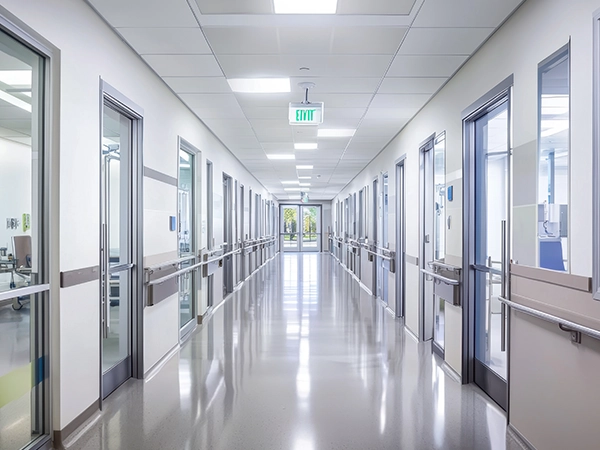
Hospital Corridor Lighting Systems
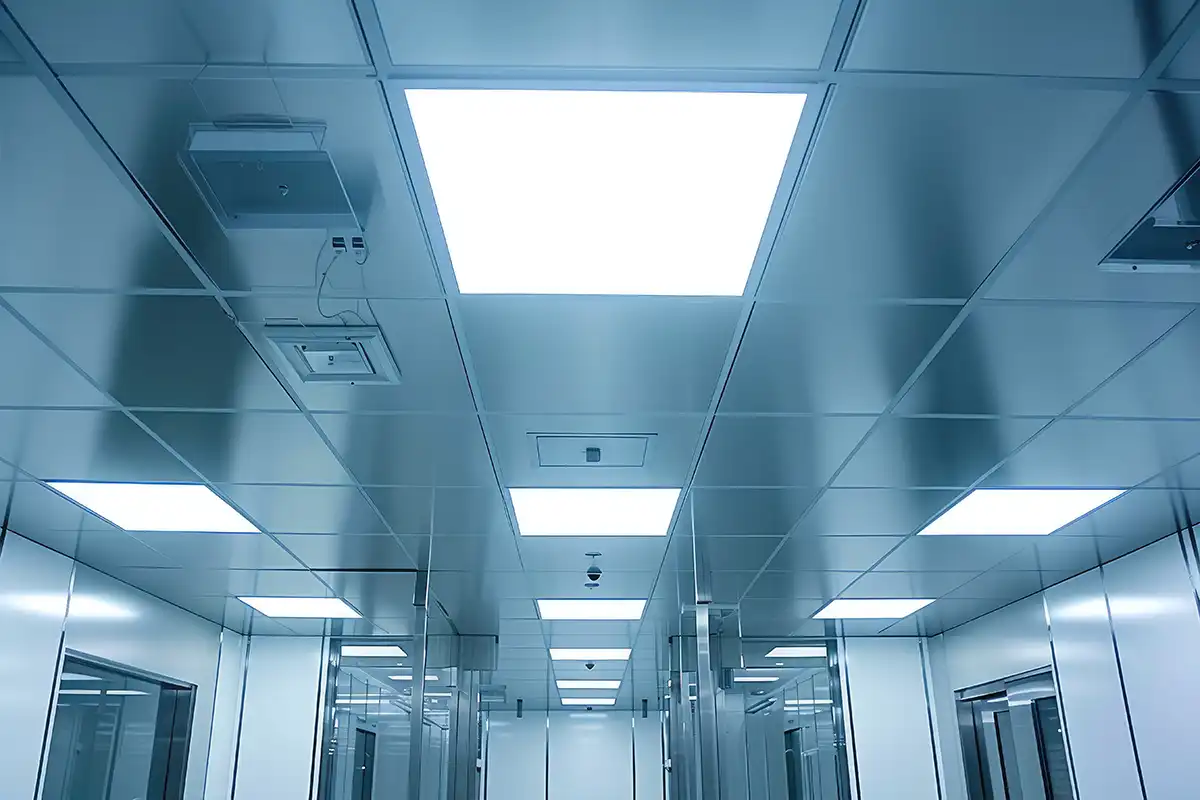
Hospital Corridor Lighting Systems refer to the complete planning, procurement, and installation of lighting setups designed for patient movement, staff efficiency, and safety compliance within healthcare corridors. This includes layout engineering, fixture selection, emergency integration, and execution under operational hospital conditions.


Scope of Hospital Corridor Lighting Systems
Hospital Corridor Lighting Systems involve complete lifecycle execution including planning, procurement, installation, and final calibration. In real hospital projects, corridor lighting is not just about brightness—it must balance safety, comfort, and operational continuity. This service ensures all elements are aligned from the beginning, avoiding rework after installation.
VS Wilson operates from UAE as a full EPC execution partner, handling corridor lighting projects across the Middle East, USA, and Europe. The service includes engineering design, sourcing compliant lighting systems, and on-site installation. From initial planning to final commissioning, every stage is executed under one coordinated delivery model, ensuring corridor lighting performs reliably under real hospital usage conditions.


Scope of Hospital Corridor Lighting Systems
Lighting layout aligned with patient and staff movement
Corridor paths are studied to avoid dark zones during continuous usage.
Integration with emergency and backup lighting systems
Lighting remains functional during power interruptions through coordinated system planning.
Fixture selection based on glare control and visibility
Specific fixtures are chosen to prevent discomfort for patients on stretchers.
On-site installation within active hospital environments
Execution is managed carefully to avoid disruption to ongoing hospital operations.
Hospital Corridor Lighting Systems involve complete lifecycle execution including planning, procurement, installation, and final calibration. In real hospital projects, corridor lighting is not just about brightness—it must balance safety, comfort, and operational continuity. This service ensures all elements are aligned from the beginning, avoiding rework after installation.
Hospital Corridor Lighting Design and Its Execution Impact
Hospital corridor lighting design represents how the system is planned before installation, but in actual projects, it cannot be separated from execution. Clients searching for hospital corridor lighting design are typically at the planning stage, yet decisions made here directly affect installation feasibility.
Design involves spacing calculations, fixture placement, and emergency lighting coordination. However, if design is done without considering ceiling structure or wiring routes, installation becomes complicated. This service ensures design decisions are made with execution constraints in mind, avoiding delays and site-level conflicts.
Hospital Corridor Lighting Installation Requirements
Hospital corridor lighting installation reflects the execution phase but is closely tied to earlier planning stages. Buyers searching this term often underestimate the complexity involved in installing lighting within operational healthcare facilities.
Installation involves mounting fixtures, routing cables, integrating control systems, and ensuring compliance with safety standards. In live hospital environments, work is often done in phases to avoid disrupting patient movement. This requires coordination with facility management and strict adherence to timelines.
LED Hospital Corridor Lighting in Healthcare Facilities
LED hospital corridor lighting is a commonly searched variation focusing on energy efficiency and long-term performance. However, its success depends on how it is integrated into the overall Hospital Corridor Lighting Systems.
LED systems reduce heat and maintenance requirements, but incorrect placement can still create uneven illumination. From an execution point of view, selecting LED fixtures is only one part—the layout and installation determine actual performance.
Hospital Hallway Lighting Systems as Functional Infrastructure
Hospital hallway lighting systems represent the same core requirement but are often searched using different terminology. These systems are not decorative—they function as operational infrastructure within healthcare facilities.
They must support continuous movement, emergency situations, and patient comfort. In many projects, hallway lighting also integrates with wayfinding systems and control panels, requiring coordination with other building systems.
Healthcare Corridor Lighting Solutions for Patient-Centric Environments
Healthcare corridor lighting solutions highlight the need for patient-focused lighting conditions. This variation is often used by designers and consultants focusing on user experience.
In real hospital setups, lighting must avoid harsh brightness while still maintaining visibility. This balance is achieved through fixture selection, placement angles, and light distribution planning. The service ensures these factors are handled during both design and installation.
Patient Corridor Lighting Design and Visual Comfort Considerations
Patient corridor lighting design emphasizes comfort for individuals being transported through corridors. This is particularly important in facilities where patients are moved on stretchers.
Lighting must avoid direct glare into the patient’s eyes while maintaining adequate visibility for staff. This requires careful positioning of fixtures and selection of appropriate beam angles. These decisions are implemented during installation, not just design.
Real-World Applications & Use Cases
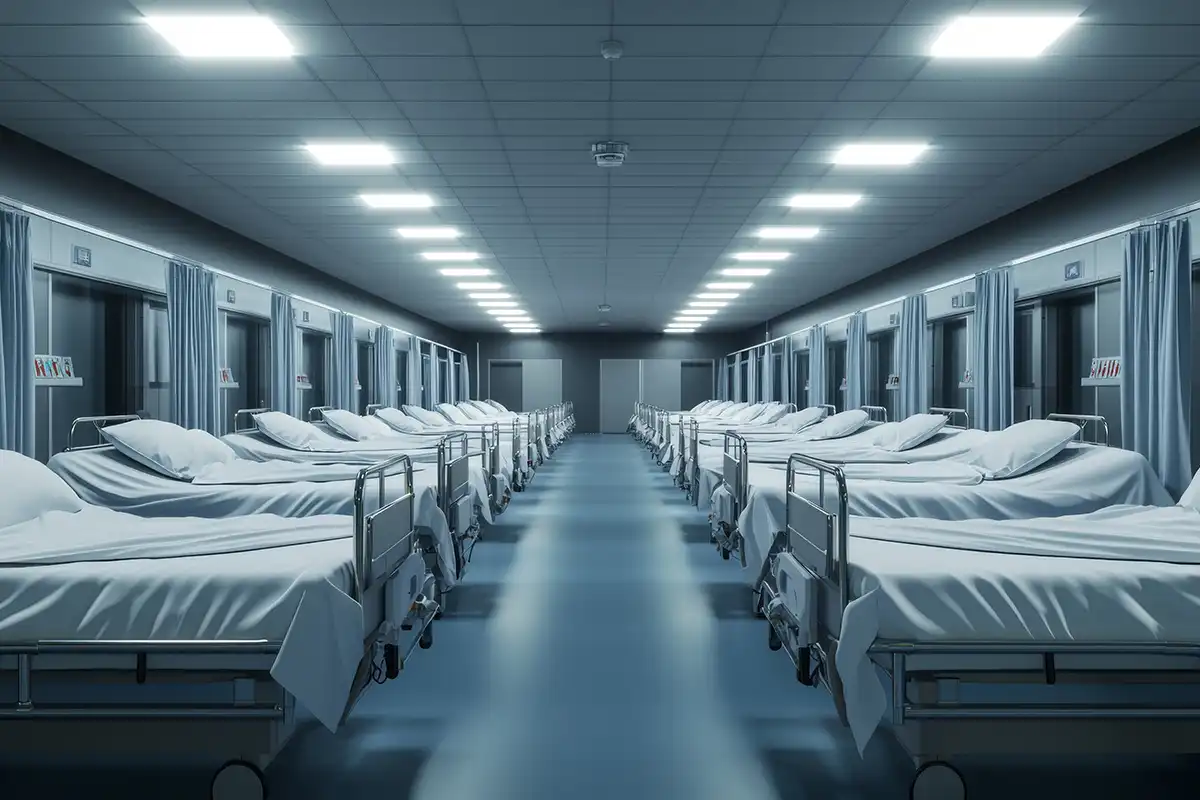
In actual hospital projects, corridor lighting plays a critical role during emergency situations where visibility must remain consistent. This is especially important in ICU-connected corridors where rapid movement is common.
Another scenario involves long corridors in large hospitals where uneven lighting can create visual fatigue for staff. Properly planned lighting systems prevent this issue by maintaining uniform illumination throughout.
When This Service Becomes Necessary
This service becomes necessary during new hospital construction, facility expansion, or corridor renovation projects. It is also required when existing lighting systems fail to meet updated healthcare standards.
In many cases, older fluorescent systems are replaced with LED setups, requiring complete redesign and installation adjustments.
Project Execution Process
Hospital Corridor Lighting Systems are executed through a structured EPC process involving design, procurement, installation, and final commissioning. Each stage is interconnected and impacts system performance.
The process starts with site assessment and corridor usage analysis. This includes understanding movement patterns and operational requirements.
Next comes design planning, where lighting layouts and system specifications are defined. Procurement follows, ensuring compliant lighting systems are sourced.
Installation is carried out on-site, including mounting and wiring. Finally, testing and calibration ensure consistent illumination and system reliability under real conditions.
Technical & Safety Considerations
Lighting systems must comply with healthcare safety standards, including emergency lighting requirements and electrical safety norms. Improper installation can lead to system failure during critical situations.
Glare control and uniform light distribution are also essential to avoid discomfort and maintain visibility.
Common Problems & Risks in Lighting Installation
One common issue is uneven lighting distribution caused by incorrect fixture spacing. This usually happens when design is not aligned with actual site conditions.
Another risk is failure in emergency lighting integration, which can compromise safety during power outages.
How to Choose the Right Lighting Setup
Choosing the right Hospital Corridor Lighting Systems requires evaluating corridor length, usage patterns, and compliance requirements. It is not just about selecting fixtures but ensuring the entire system works cohesively.
Many projects face issues when design and installation are handled separately. Misalignment between these stages leads to delays and performance issues. To understand how execution capability impacts results, visit our About Us page.
Pricing Factors
Pricing depends on corridor length, fixture type, installation complexity, and compliance requirements. Longer corridors require more fixtures and careful spacing, increasing cost.
Retrofitting existing corridors often costs more due to structural adjustments and rewiring. Choosing low-cost options may reduce initial expenses but often leads to higher maintenance and rework costs.
Why Choose This Service
This service ensures that corridor lighting is planned and executed as a unified system rather than separate tasks. It reduces coordination gaps and improves long-term performance.
VS Wilson handles complete project execution, including international deployments, ensuring consistent delivery standards.
Service Coverage
VS Wilson operates from UAE and executes projects across Dubai, Abu Dhabi, and the broader Middle East. The company also undertakes projects in the USA and Europe through on-site deployment.
Teams travel to project locations and manage installation and commissioning directly, maintaining execution consistency.
Common Buyer Concerns Before Hiring
Buyers often question whether lighting will perform consistently across long corridors. This concern arises when systems are not properly planned.
Another concern is installation disruption in operational hospitals. Proper execution planning minimizes downtime and avoids workflow interruptions.
FAQs
1. What are Hospital Corridor Lighting Systems?
They include design, procurement, and installation of lighting setups for hospital corridors, ensuring safety, visibility, and compliance under real usage conditions.
2. Do you handle international hospital projects?
Yes, projects are executed on-site across the Middle East, USA, and Europe, with teams traveling for installation and commissioning.
3. What is the difference between corridor and general hospital lighting?
Corridor lighting focuses on continuous movement, emergency readiness, and patient comfort, unlike general lighting which may serve broader areas.
4. Can existing corridor lighting be upgraded?
Yes, older systems can be replaced with modern setups, often requiring redesign and installation adjustments.
5. How is lighting designed for long hospital corridors?
It involves spacing calculations, fixture selection, and integration with emergency systems to maintain uniform illumination.
6. Is LED lighting suitable for hospital corridors?
Yes, LED systems are commonly used due to lower maintenance and consistent performance when properly installed.
Discuss Your Project
Hospital corridor lighting requires careful coordination between planning and execution, especially in operational healthcare environments. VS Wilson manages complete project delivery across UAE, Middle East, USA, and Europe with on-site deployment.
Discuss your corridor lighting requirements, site conditions, or execution planning through our Contact page to evaluate the right approach for your facility.
Image Gallery
Related Services