OPD Examination Lights for Clinics & Hospitals
OPD Examination Lights for Clinics & Hospitals involve designing, sourcing, and installing clinical lighting systems that provide precise, shadow-free illumination for patient examination zones. This service includes layout planning, equipment selection, procurement, on-site installation, and final calibration.


What This Service Includes
This service goes beyond supplying fixtures. It involves mapping clinical usage, identifying light positioning angles, selecting suitable mounting formats, and ensuring the lighting performs consistently under continuous use. In real outpatient setups, incorrect beam direction or insufficient lux levels can lead to repeated adjustments during patient examination, which slows down operations.
VS Wilson operates from the UAE as a full EPC execution partner, handling projects across the Middle East, USA, and Europe through on-site deployment. From engineering design to procurement and final commissioning, the entire lighting setup is delivered as a unified project. In actual OPD environments, lighting is not just about brightness—it directly affects diagnosis accuracy, doctor comfort, and patient handling efficiency.


What This Service Includes
Clinical illumination planning based on examination workflows
Lighting layouts are developed considering doctor positioning, patient orientation, and procedure type.
Fixture selection aligned with medical-grade requirements
Only examination-grade luminaires with proper intensity and control ranges are specified.
Electrical integration and mounting execution
Includes wiring coordination, load handling, and structural mounting readiness on-site.
Final calibration and directional light adjustment
Each light is adjusted post-installation to match real usage conditions in OPD rooms.
This service goes beyond supplying fixtures. It involves mapping clinical usage, identifying light positioning angles, selecting suitable mounting formats, and ensuring the lighting performs consistently under continuous use. In real outpatient setups, incorrect beam direction or insufficient lux levels can lead to repeated adjustments during patient examination, which slows down operations.
Medical Examination Lights for OPD & Clinical Use
This keyword reflects a broader search pattern where users may be evaluating clinical-grade lighting for outpatient environments. While the terminology varies, the requirement remains part of the same OPD examination lighting service.
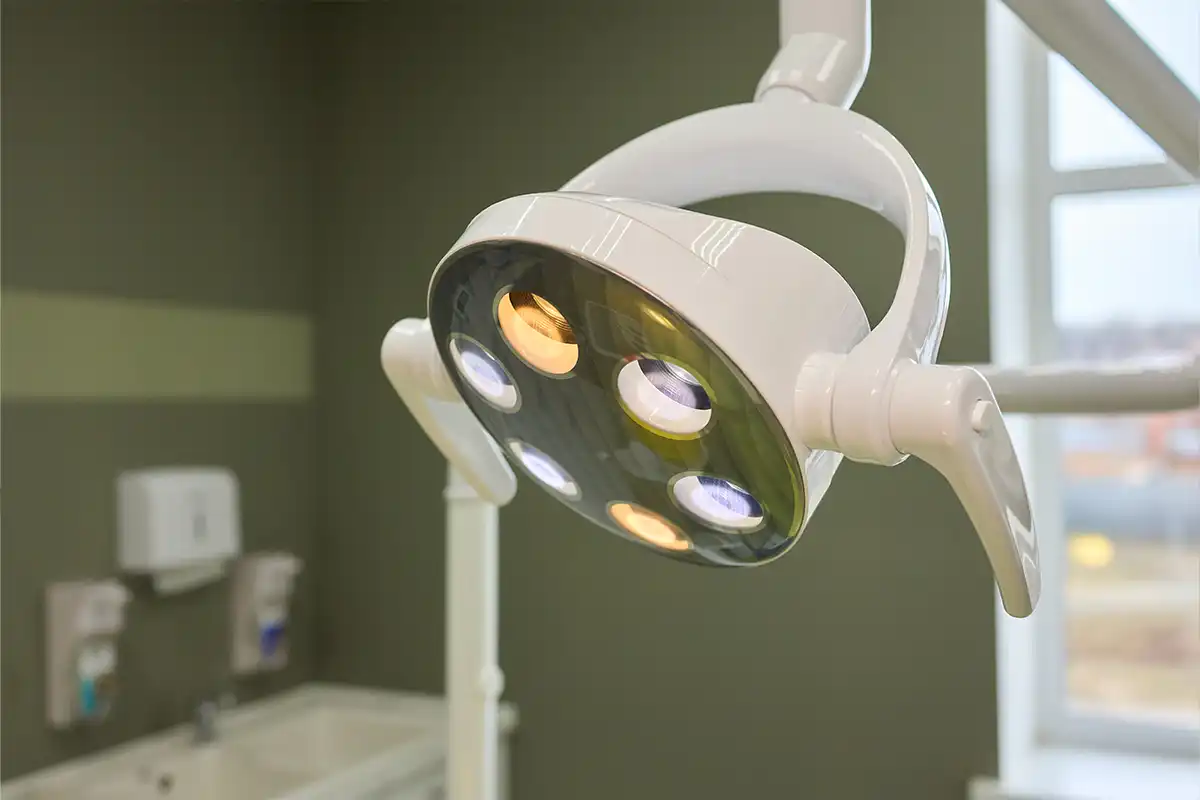
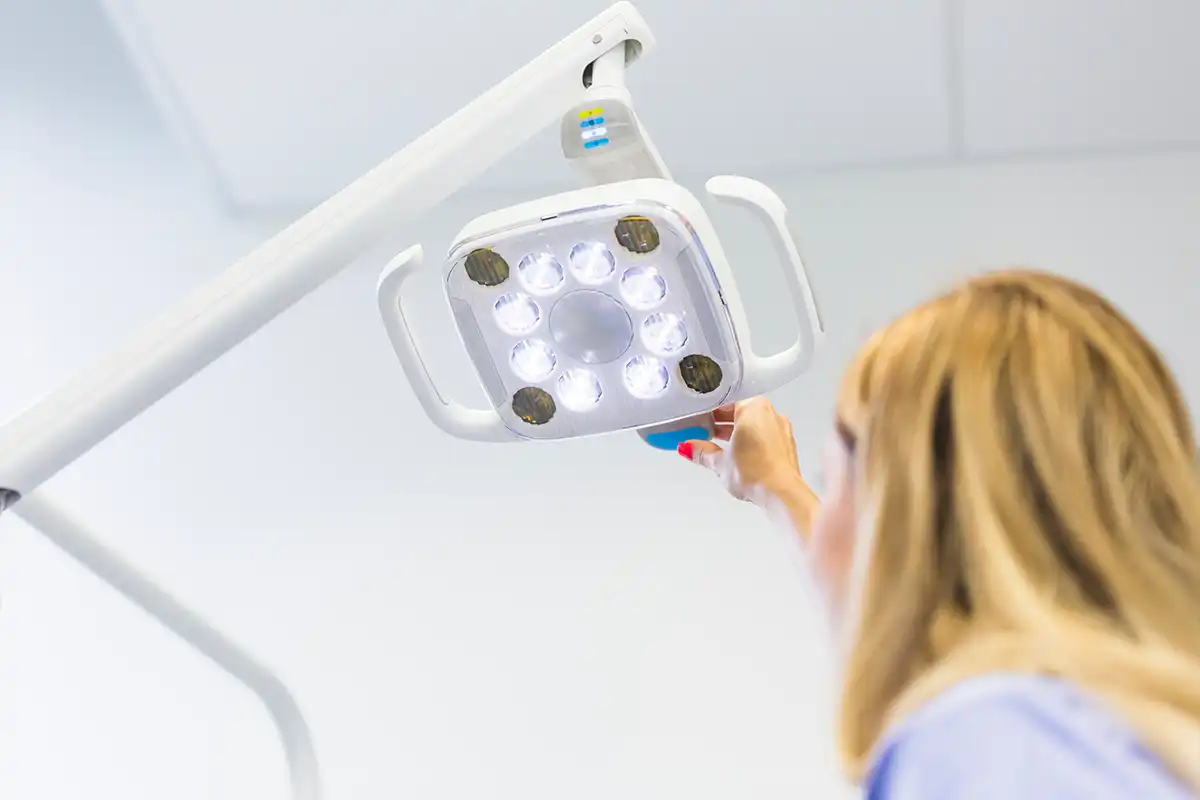
In actual clinics, medical examination lights must deliver consistent brightness without glare. Doctors often adjust light direction multiple times during a single patient consultation. That’s why these systems are designed with flexible arms, stable mounts, and controlled intensity. VS Wilson integrates these requirements during the design phase itself, ensuring that once installed, the lighting behaves predictably without constant manual correction.
LED Examination Lights for Clinics & Outpatient Departments
Users searching for LED-based systems are typically focused on energy consumption, longevity, and heat control. This falls within the same service scope but highlights a specific technical preference.
LED OPD Examination Light systems are commonly selected because they maintain stable color temperature and reduce heat buildup around the patient. In small consultation rooms, excessive heat from lighting can create discomfort during longer examinations. From an execution perspective, proper driver selection and heat dissipation planning become critical. VS Wilson ensures that LED systems are not just installed but configured to perform reliably over extended usage hours.
Ceiling Mounted Examination Lights
This variation indicates preference for fixed installation setups, often in rooms where space constraints or workflow require unobstructed movement.
Ceiling Mounted Examination Lights are typically used in OPD rooms where floor space must remain clear. However, improper mounting height or incorrect arm reach can restrict usability. In real projects, structural ceiling conditions often dictate mounting feasibility. VS Wilson handles these constraints during site evaluation, ensuring that ceiling installations are both structurally safe and functionally usable for medical staff.
Mobile Examination Lights for Clinics
Some users look for flexible lighting options, especially in clinics with changing room usage or multi-purpose spaces. This keyword reflects that adaptability requirement.
Mobile Examination Lights for Clinics are useful where examination setups are not fixed. However, they introduce challenges such as cable management, stability, and positioning accuracy. In practice, poorly designed mobile lights tend to shift during use, affecting focus. VS Wilson evaluates movement patterns within the clinic before recommending mobile setups, ensuring that flexibility does not compromise clinical precision.
Real-World Applications & Use Cases
In OPD rooms, lighting is directly involved in diagnosis. Whether it’s dermatology inspections, ENT examinations, or general physician check-ups, the ability to clearly observe patient conditions depends on focused illumination.
This becomes especially critical when dealing with subtle visual indicators such as skin texture, eye response, or wound assessment. In many clinics, general room lighting is mistakenly relied upon, leading to inconsistent visibility. Proper OPD examination lighting eliminates this issue by providing targeted illumination exactly where needed.
Another common scenario occurs in multi-doctor clinics where room usage changes throughout the day. Lighting must adapt without requiring reinstallation. This is where adjustable and mobile configurations become essential.
When This Service Becomes Necessary
This service becomes necessary when clinical spaces are being newly developed, renovated, or when existing lighting fails to support accurate examination.
A direct answer: If doctors are frequently repositioning lights, struggling with shadows, or relying on handheld torches during examinations, the current lighting setup is inadequate.
In actual projects, this issue is often identified only after operations begin. Retrofitting becomes more complex because electrical points and mounting positions are already fixed. Planning it correctly during the initial stage avoids such disruptions.
Environments & Project Conditions This Service Fits
OPD lighting is not uniform across all facilities. Small clinics, multi-specialty hospitals, diagnostic centers, and outpatient wings all have different requirements.
In compact clinics, ceiling height and space constraints dominate decisions. In hospitals, standardization across multiple rooms becomes important. In international projects, compliance with local electrical standards also plays a role.
VS Wilson handles these variations through site-specific planning, ensuring that each environment receives a configuration that works in practice, not just on paper.
Project Execution Process
OPD Examination Lights for Clinics & Hospitals are delivered through a structured process covering design, procurement, installation, and commissioning.
The process begins with site evaluation, where room dimensions, ceiling conditions, and workflow patterns are studied. This is followed by lighting layout planning, where positioning and beam angles are defined.
Procurement involves selecting clinically suitable fixtures and ensuring compatibility with electrical systems. During installation, mounting structures, wiring, and positioning are executed on-site. Finally, lights are calibrated based on real usage scenarios, not just theoretical alignment.
A key gap in many projects is the disconnect between design and installation. VS Wilson handles both under a single execution model, avoiding misalignment issues.
Technical & Safety Considerations
Clinical lighting must meet specific standards for brightness, color rendering, and electrical safety.
Shadowless Examination Lights are often required for procedures involving close observation. Poor CRI (Color Rendering Index) can distort visual perception, which directly impacts diagnosis.
Another critical factor is electrical safety. OPD rooms operate continuously, so load balancing and wiring quality cannot be compromised. Heat generation, especially in enclosed rooms, must also be managed.
Common Problems & Risks in Lighting Installation
One frequent issue is incorrect placement of lights relative to examination tables. Even high-quality fixtures fail if positioned poorly.
Another risk comes from choosing lights based only on specifications rather than usability. Adjustable Surgical & Examination Lights, for example, require proper arm balance and movement control. If not installed correctly, they become difficult to operate.
In many projects, lighting is treated as a secondary element, which leads to rework after operations begin. This increases cost and disrupts clinical activities.
How to Choose the Right Lighting Setup
Choosing OPD Examination Lights for Clinics & Hospitals depends on examination type, room size, and workflow.
A direct answer: Select lighting based on how doctors interact with patients, not just fixture specifications. Beam direction, adjustability, and mounting position matter more than wattage alone.
From an execution perspective, combining ceiling-mounted systems with mobile backups often provides flexibility. It’s also important to evaluate whether the lighting allows quick adjustments during consultation without interrupting the process.
Pricing Factors
Pricing is influenced by fixture type, mounting complexity, electrical modifications, and project scale.
Ceiling installations typically require structural preparation, while mobile setups involve different cost components. LED systems may have higher upfront cost but reduce long-term maintenance.
A common mistake is selecting low-cost fixtures without considering usability. In clinical environments, replacing poorly performing lights after installation costs significantly more than investing correctly upfront.
Why Choose This Service
This service is designed for complete execution rather than partial supply or consultancy.
VS Wilson manages the entire lifecycle—from planning to installation—ensuring that lighting performs as expected in real clinical use. You can review our execution approach on our About Us page.
Handling design and installation together avoids coordination gaps that often occur when multiple vendors are involved.
Service Coverage
VS Wilson operates from the UAE and executes projects across Dubai, Abu Dhabi, and the wider region.
For international projects in the Middle East, USA, and Europe, teams are deployed on-site to handle full execution. This includes planning, procurement, installation, and final commissioning.
The service is not remote-based. Every project is physically executed at the client location.
Common Buyer Concerns Before Hiring
Buyers often worry whether the lighting will actually perform as expected after installation.
Another concern is whether the installation will disrupt clinic operations. Poor planning can lead to downtime.
There is also confusion between suppliers and execution partners. Many vendors provide fixtures but do not handle installation alignment, which creates gaps in final output.
FAQs
1. How is OPD examination lighting different from general clinic lighting?
OPD lighting focuses on targeted illumination for patient examination, unlike general lighting which provides ambient brightness. It requires directional control, shadow reduction, and higher accuracy in color rendering to support diagnosis.
2. Can you handle international clinic lighting projects?
Yes, projects across the Middle East, USA, and Europe are executed through on-site deployment. Teams travel to the project location and manage installation and commissioning directly.
3. Do you provide only lights or complete installation?
This is a full EPC service. It includes design, procurement, installation, and final calibration. The project is delivered as a complete system, not just equipment supply.
4. Are mobile examination lights reliable for regular use?
They are useful in flexible setups, but stability and positioning must be carefully evaluated. Poor-quality mobile lights often shift during use, affecting precision.
5. What is the role of shadowless lighting in OPD rooms?
Shadowless lighting ensures that the examination area remains evenly lit without obstruction. This is especially important for close observation tasks where shadows can distort visibility.
6. How long does installation typically take?
Timeline depends on project size and complexity. Single-room setups may take a few days, while multi-room clinics require phased execution to avoid operational disruption.
Discuss Your Project
If you are planning a clinic or upgrading existing OPD spaces, it helps to evaluate lighting at the execution stage rather than after operations begin. VS Wilson handles complete project delivery across UAE, Middle East, USA, and Europe with on-site deployment.
You can discuss layout requirements, clinical workflows, and installation planning through our Contact page to align the lighting setup with real usage conditions.
Image Gallery
Related Services