Oil and Gas Lighting Solutions
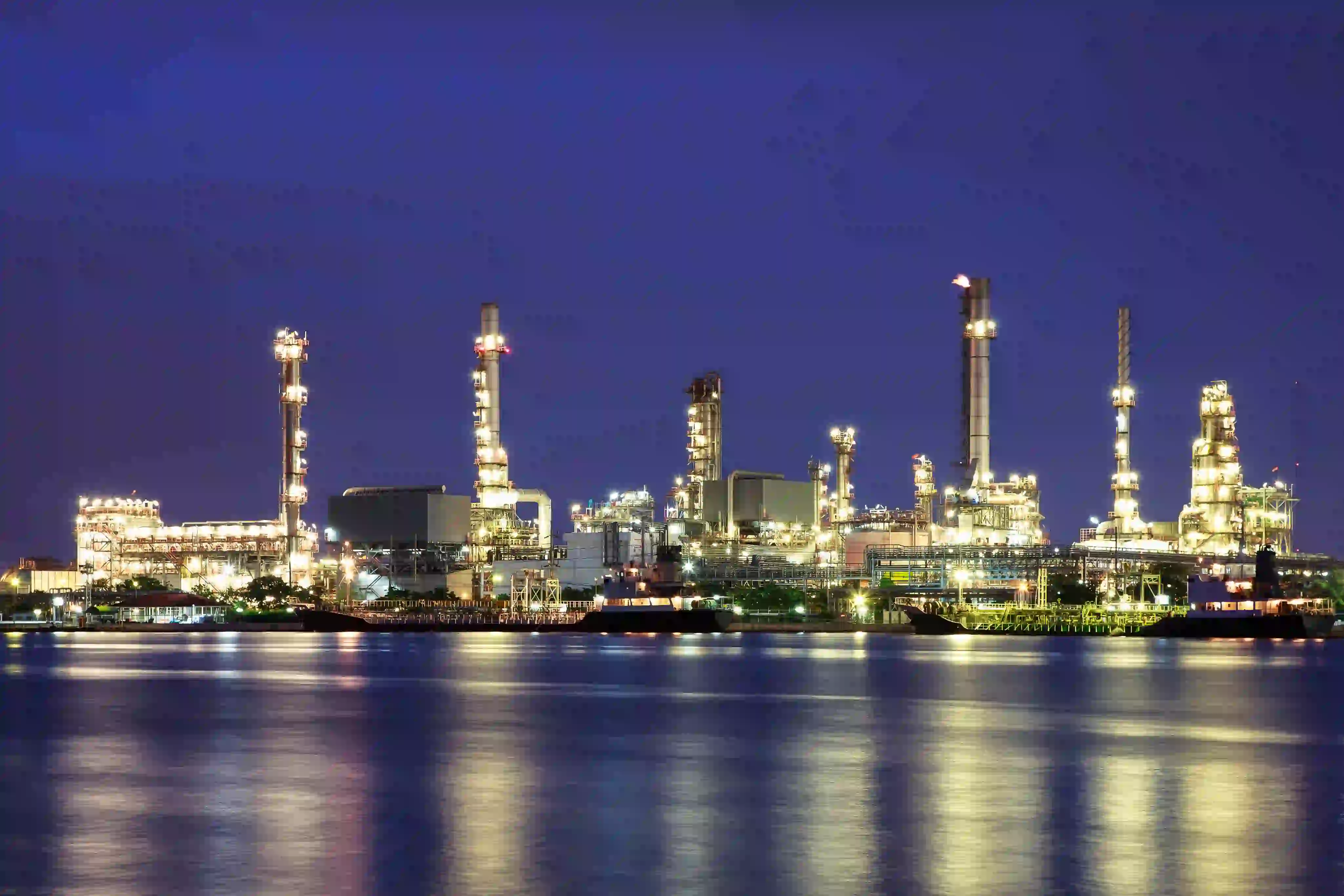
Oil and Gas lighting covers the engineering, procurement and on-site execution of lighting systems for refineries, tank farms, processing areas, fuel terminals, loading zones and supporting industrial facilities. The scope connects hazardous-area assessment, lighting layouts, equipment selection, material procurement, installation, testing and final delivery under one EPC model.
VS Wilson operates from the UAE and acts as an end-to-end execution partner rather than a design-only consultant. Projects are planned from the operational base in the UAE, with teams deployed to sites across Dubai, Abu Dhabi, the wider Middle East, the USA and Europe where project conditions require physical execution. Responsibility can continue from concept and engineering coordination through procurement, installation, adjustments and final commissioning.
ATEX Lighting for Hazardous Oil and Gas Areas
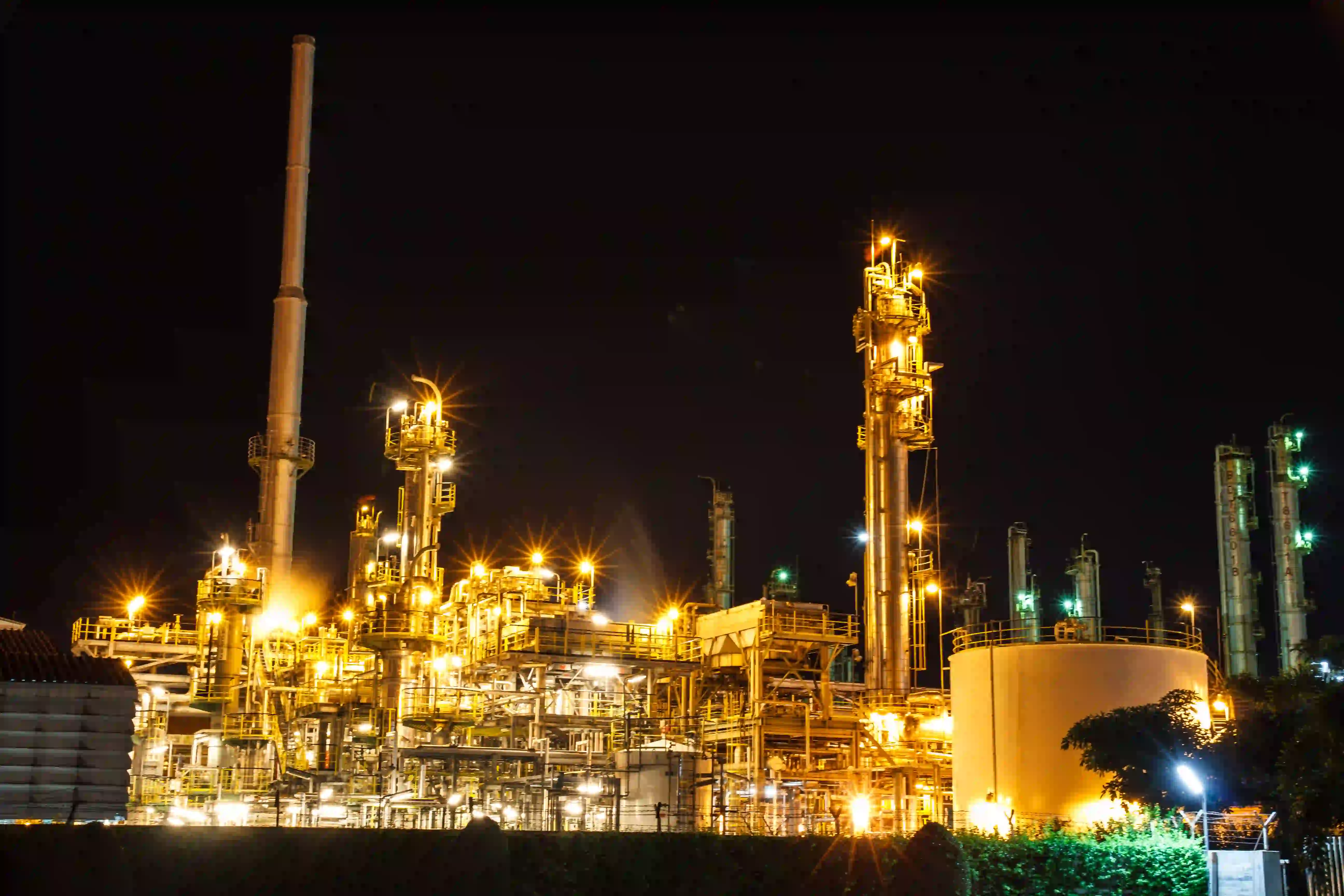
ATEX lighting is a search variation used when the project contains potentially explosive atmospheres and the buyer needs equipment selected for a defined hazardous zone. It remains part of the wider Oil and Gas lighting scope because equipment approval alone does not address layout, installation, cabling, inspection or commissioning.
A potentially explosive atmosphere can form where gases, vapours, mists or combustible materials mix with air under conditions where ignition is possible. ATEX Directive 2014/34/EU covers equipment and protective systems intended for these environments within the European market.
The first project decision is therefore not “Which ATEX fitting should we buy?” It is whether the proposed luminaire classification matches the documented zone, gas group, temperature class, ambient conditions and required equipment protection level.
Installation details are equally important. An appropriately certified fitting can still become a project risk when the wrong cable gland is used, enclosure entries are modified incorrectly, unused openings are not closed correctly or maintenance access is ignored.
What Oil and Gas Lighting Service Includes
Hazardous-area information translated into lighting specifications
Zone drawings and process conditions guide fixture, gland, cable and mounting decisions.
Lighting layouts coordinated around operating plant restrictions
Fixture positions account for access routes, structures, equipment shadows and maintenance reach.
Procurement reviewed before equipment reaches the project site
Technical schedules are checked against certification, voltage, temperature and environmental requirements.
Installation completed with documented testing and adjustments
Circuits, mounting, aiming and control functions are reviewed before project handover.
Oil and Gas lighting is a complete project activity that joins engineering decisions with field execution. It begins by reviewing area classifications, plant drawings, operating activities, illumination requirements, emergency conditions and maintenance constraints.
The engineering stage develops fixture schedules, mounting details, circuit intent, lux calculations and installation layouts. Procurement then converts those requirements into compatible luminaires, control components, junction arrangements, glands, accessories and support hardware.
On site, the work includes setting out positions, coordinating access, installing fixtures and associated components, protecting certified equipment interfaces and carrying out functional checks. Completion is not based only on whether a fixture switches on. Light distribution, dark spots, glare, emergency operation, mounting stability and accessibility must also be reviewed before delivery.
ATEX LED Lighting for Industrial Operations
ATEX LED lighting describes the same hazardous-area requirement with additional emphasis on LED technology, operating life, energy use and maintenance planning. Buyers often search this term when replacing older discharge fixtures or developing a new facility with lower routine maintenance demand.
From an execution point of view, a replacement programme cannot be based only on wattage comparison. Existing mounting heights, beam distribution, supply conditions, inrush current, circuit loading, emergency arrangements and control compatibility need review.
The selected ATEX LED lighting should provide usable illumination across walkways, valves, gauges, loading positions and operating equipment without creating severe glare. Thermal conditions also matter. A luminaire suitable for one ambient range may not suit an exposed Middle East installation where enclosure temperatures rise under direct solar exposure.
VS Wilson handles these decisions within the engineering, procurement and installation lifecycle rather than treating the LED fitting as an isolated purchase.
ATEX Flood Light and ATEX LED Flood Light Applications
An ATEX flood light is generally searched for where wider or higher-output coverage is needed within the Oil and Gas lighting project. The requirement may arise around loading areas, process skids, pipe racks, maintenance zones, tank access points or open industrial structures.
The difference between an ATEX flood light and an ATEX LED flood light is often a technology preference rather than a separate service requirement. Both require careful placement, certified equipment selection and installation appropriate to the hazardous-area documentation.
Beam angle and aiming should be decided using the actual task plane. Increasing output does not automatically resolve poor visibility. A powerful floodlight aimed from the wrong structure may illuminate pipework while leaving platforms, stair treads or equipment faces in shadow.
Mounting vibration, wind exposure, corrosion conditions and access for future inspection should be resolved before supports are fabricated. This is one of the areas generic supplier pages often leave unexplained: the light output may be acceptable on paper while the proposed mounting arrangement remains impractical on site.
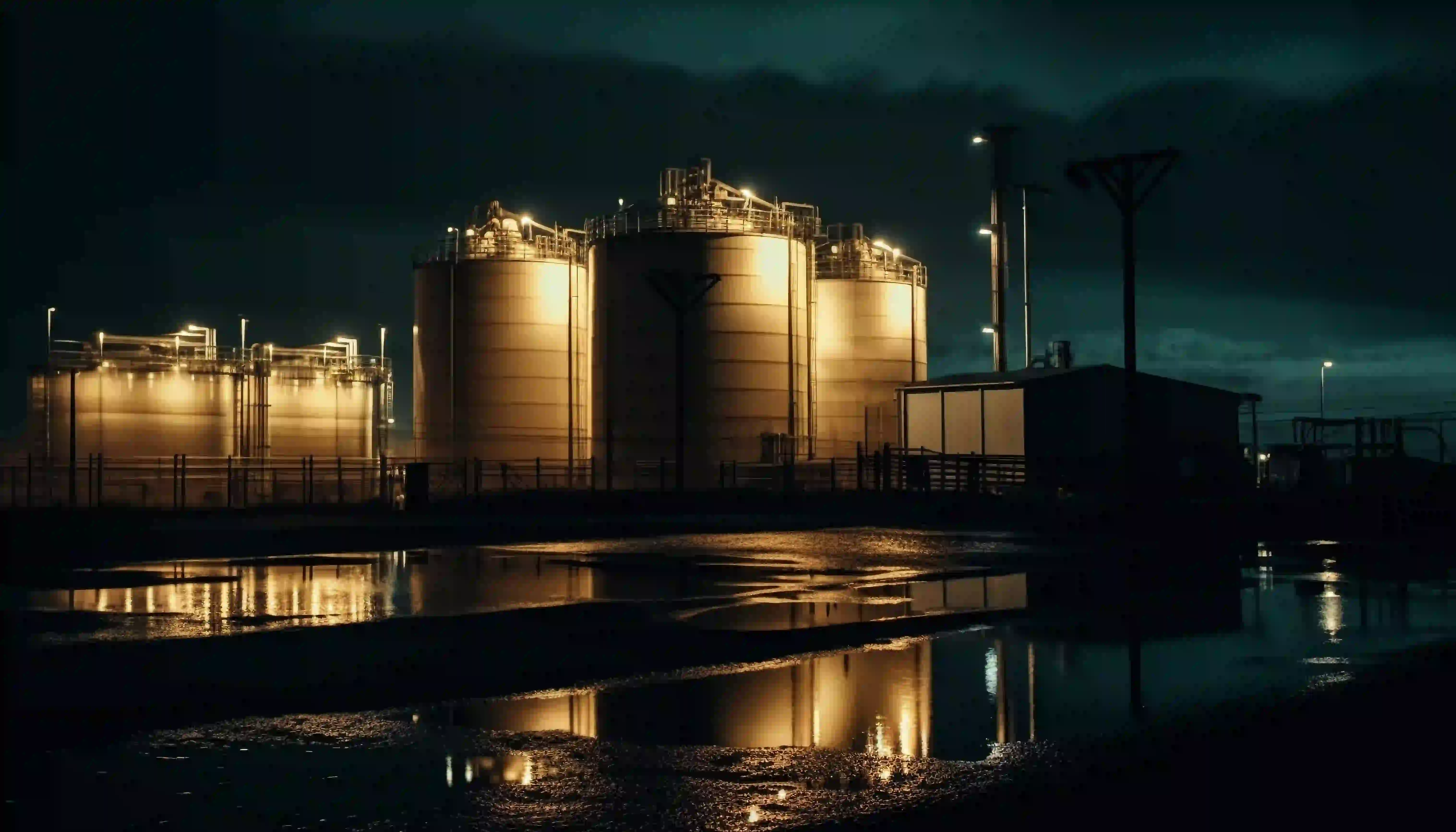
Oil Storage Tank Lighting and Fuel Storage Tanks Light Planning
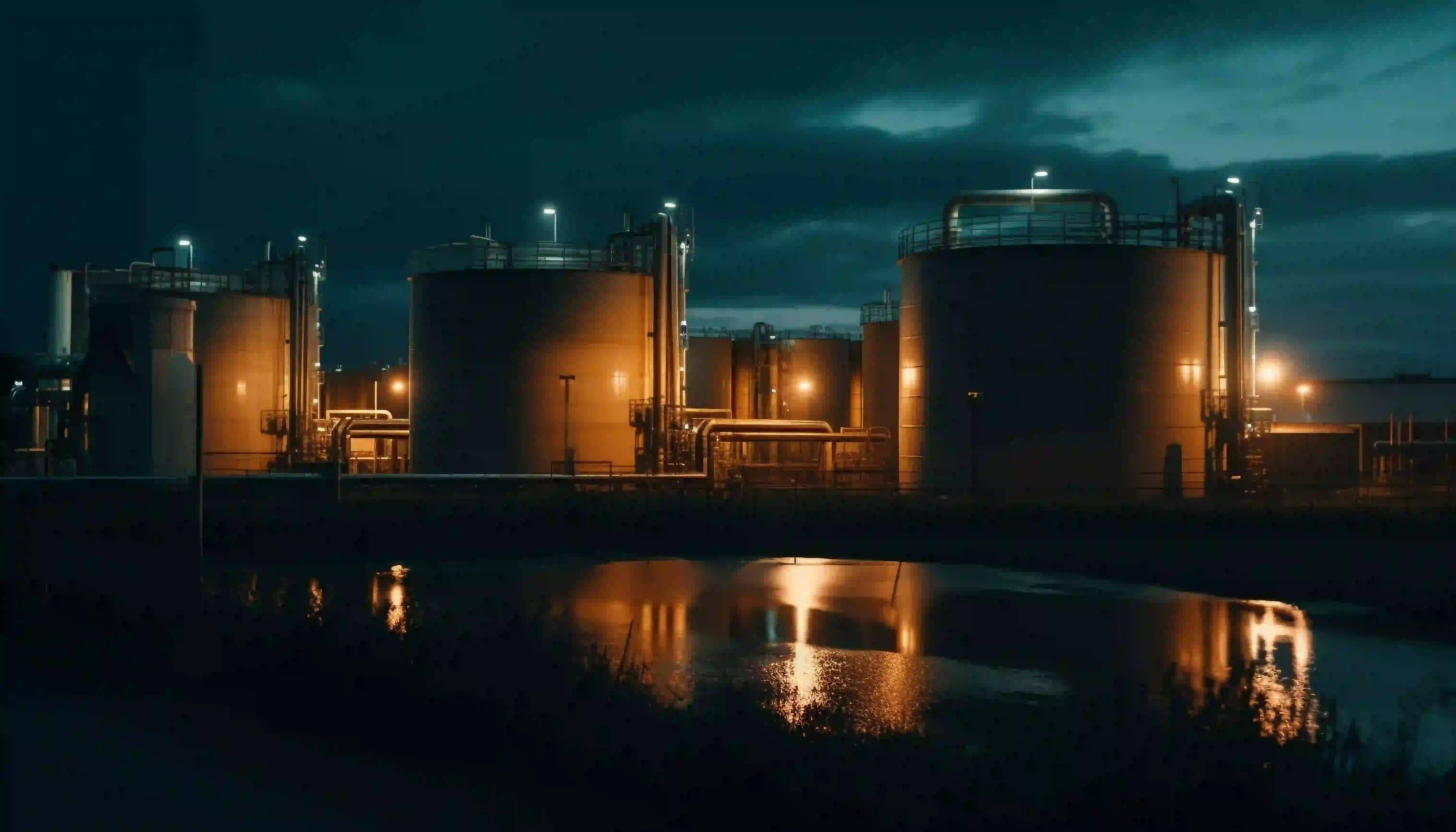
Oil Storage Tank lighting is a zone-focused variation of Oil and Gas lighting used by buyers planning tank farms, inspection routes, bund areas, transfer points and access structures. Fuel Storage Tanks Light searches usually reflect the same commercial requirement, although terminology changes by project team and facility type.
Lighting around storage tanks must be planned around more than the tank shell. Engineers need to consider stairways, ladders, platforms, valves, manifolds, level indication points, bund walls, connecting pipework and vehicle movement.
Fixture positions should not obstruct inspection or create difficult maintenance locations. Direct glare at elevated access platforms can reduce visibility rather than improve it, particularly when personnel move between bright and dark areas.
The hazardous-area classification drawing remains the basis for equipment selection. Zones are established according to how frequently an explosive gas atmosphere may occur and how long it may remain present. Zone 0 represents continuous or long-duration presence, Zone 1 covers likely occurrence during normal operation, and Zone 2 applies where occurrence is unlikely and short-lived.
Real-World Applications of Oil and Gas Lighting
Oil and Gas lighting supports operations where personnel must inspect equipment, read instruments, move safely and respond during normal or emergency conditions.
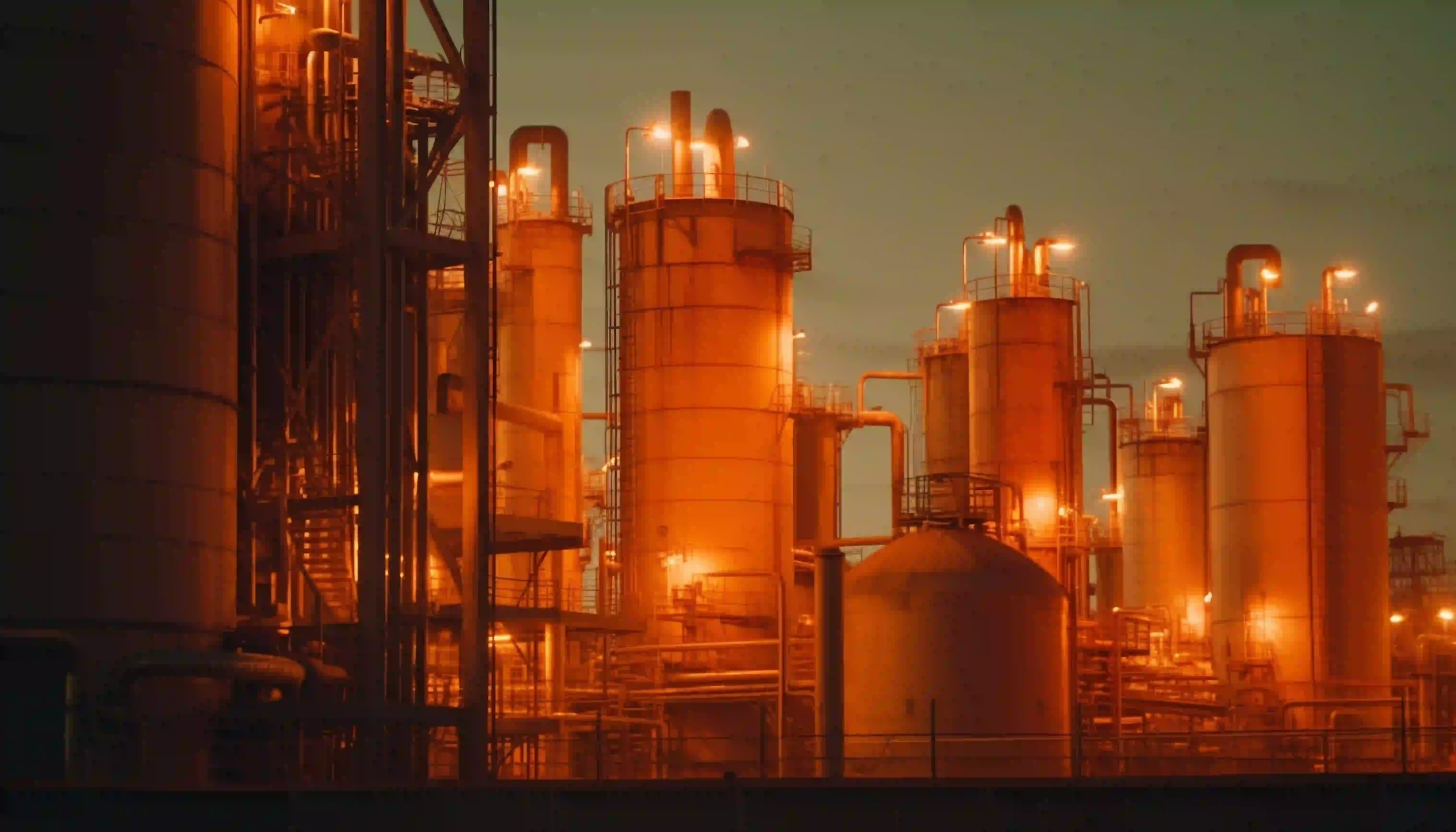
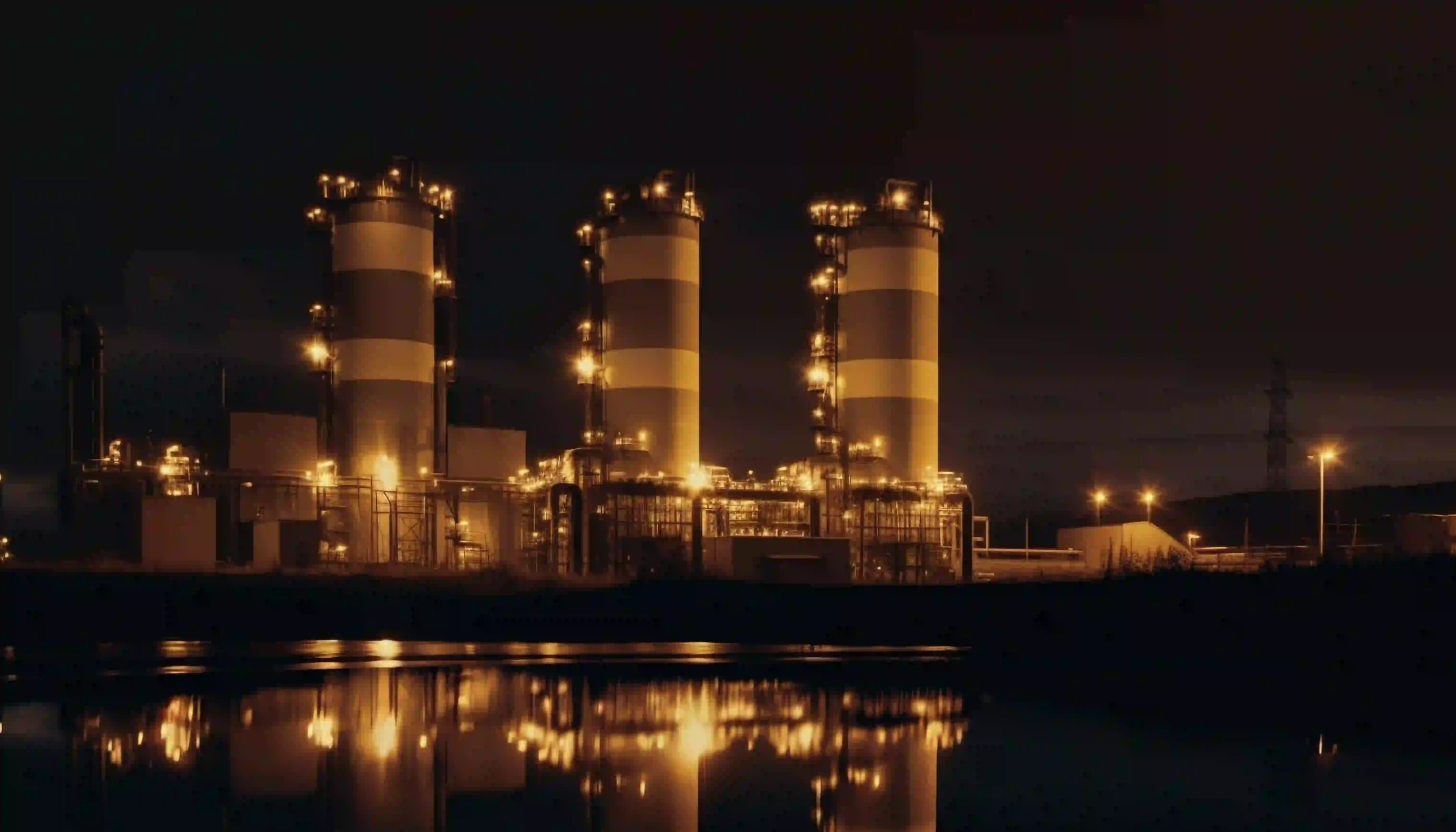
Typical project environments include refineries, petrochemical processing areas, gas handling facilities, fuel depots, tank farms, loading bays, pump stations, compressor areas, pipe racks, workshops, utility buildings, offshore support zones and industrial access roads.
The problem being solved changes by location. A loading point may require clear visibility around couplings and vehicle movement. A process structure needs controlled illumination across multiple elevations. Tank access routes require consistent stair and platform lighting. Maintenance areas need enough vertical illumination to identify components and work safely.
For this reason, a single fixture schedule should not be copied across an entire facility. Each operating zone needs lighting selected around its task, hazardous classification, mounting conditions and maintenance reality.
When Oil and Gas Lighting Execution Becomes Necessary
Professional Oil and Gas lighting execution becomes necessary when the project involves classified areas, unfamiliar environmental conditions, multiple contractors, operational shutdown restrictions or formal testing and handover requirements.
It is also required when an existing installation shows repeated fixture failure, severe corrosion, poor visibility, non-matching replacement products, damaged enclosure entries or lighting layouts that no longer reflect current plant operations.
A partial approach often creates gaps. The consultant may prepare a layout without validating procurement substitutions. The supplier may provide certified fixtures without considering support fabrication. The installer may receive equipment that does not match the glands, voltage, mounting arrangement or site classification.
An integrated EPC approach reduces these interface failures by keeping engineering intent, procurement verification and installation responsibility connected until completion.
Environments and Project Conditions This Service Fits
The service is suited to indoor, outdoor, elevated, coastal, dusty, corrosive, vibration-prone and temperature-sensitive industrial environments.
Project conditions can include live operating facilities, restricted work permits, shutdown windows, scaffold access, working at height, congested pipework and installation near process equipment. Exposed projects may also require consideration of solar heat, salt-laden air, wind loading, water ingress and accelerated corrosion.

Area classification should be completed by the responsible project authority before equipment is selected. Hazardous-area classification assesses the likelihood and likely duration of a flammable atmosphere so the need for specially protected electrical equipment can be determined.
VS Wilson uses this project information to coordinate lighting layouts, procurement schedules, installation methods and testing requirements.
Oil and Gas Lighting Project Execution Process
Oil and Gas lighting project execution follows a connected engineering, procurement, installation and delivery sequence. The purpose is to prevent field decisions from drifting away from the approved hazardous-area, illumination and operational requirements.
Site and Technical Information Review
The process begins with drawings, hazardous-area schedules, client standards, operating conditions, architectural or structural information and electrical supply details. Site surveys may be required where existing records do not reflect actual conditions.
Lighting Engineering and Layout Development
Required illumination levels, task locations, mounting heights, glare risk, emergency routes and maintenance access are translated into layouts and fixture schedules. Calculations are checked against real obstructions rather than an empty design model.
Material Selection and Procurement
Luminaires and accessories are reviewed for hazardous-area suitability, environmental protection, voltage, temperature limits, certification documentation and installation compatibility. Substitutions are technically assessed before approval.
Installation Planning and Site Deployment
Work sequencing is coordinated around access, permits, shutdowns, scaffolding, other trades and available mounting structures. Teams are deployed to the project location for physical installation.
Testing, Aiming and Completion
Circuits, controls, emergency operation and installed equipment are checked. Floodlights are aimed under practical site conditions, defects are closed and completion documentation is prepared for handover.
Technical and Safety Considerations for ATEX Lighting
The technical review must connect the hazardous-area classification with the complete installed assembly. Fixture certification is only one part of that assessment.
Project teams should verify equipment category or protection level, gas or dust group, temperature classification, ambient temperature rating, ingress protection, enclosure material, cable-entry method, gland compatibility, voltage and emergency function.
Using electricity in a potentially explosive atmosphere can introduce ignition sources through sparks or hot surfaces. Fixed electrical installations therefore need appropriate design, installation, inspection and maintenance controls.
Physical placement also affects safety. Fixtures should remain accessible without forcing maintenance teams into unsafe positions. Supports must withstand the expected environment. Cable routes should avoid heat sources, mechanical damage and unnecessary exposure.
Documentation must match the equipment delivered. Product markings, certificates and schedules should be checked before installation rather than reconstructed at handover.
Common Problems and Risks in Lighting Installation
A common failure occurs when procurement selects a technically different fixture because it appears commercially equivalent. Changes in beam angle, ambient rating, certification scope, mounting arrangement or cable entry can invalidate the original layout and installation plan.
Another risk is treating hazardous-area luminaires like ordinary industrial fittings. Drilling enclosures, changing certified components, using unsuitable glands or failing to secure unused entries can compromise the equipment protection concept.
Poor coordination creates operational problems as well. Fixtures may be hidden behind new pipework, positioned where scaffolding is permanently needed for maintenance or aimed toward operators and vehicle drivers.
Low-cost decisions can therefore move expenditure rather than remove it. The initial purchase may be lower, but redesign, replacement, access equipment, shutdown time and repeated maintenance create a higher project cost later.
How to Choose the Right Oil and Gas Lighting Setup
The right Oil and Gas lighting setup is the one that satisfies the documented hazardous-area requirements, provides usable illumination for actual plant tasks and can be installed and maintained within the project’s physical constraints.
Begin with classification and operating information, not a fixture catalogue. Confirm where personnel work, which equipment needs inspection, where emergency movement occurs and what structures are available for mounting.
Next, compare complete technical compatibility. Check certification markings, temperature limits, gas group, ingress protection, materials, optics, electrical characteristics, cable entries and emergency requirements.
Vendor selection should consider who controls the interfaces. An Explosion-Proof Lighting Supplier may provide compliant products, while an EPC execution partner must also coordinate engineering, procurement, supports, wiring interfaces, installation, testing and handover.
Visit our About Us page to review how VS Wilson approaches lighting planning and international project execution.
Oil and Gas Lighting Pricing Factors
Oil and Gas lighting pricing depends on the hazardous-area requirements, project scale, fixture quantity, mounting complexity, access conditions, procurement documentation and the amount of field coordination required.
Equipment certification and construction influence material cost, but fixture price alone is not a reliable project budget. Support fabrication, certified glands, junction arrangements, control components, cabling interfaces, scaffolding, lifting equipment, travel, permits, testing and commissioning can materially affect the execution value.
A replacement project may cost less in design but more in site investigation and adaptation. A new installation may allow cleaner engineering, although changing layouts or delayed structural information can increase coordination work.
International deployment also requires planning for travel, logistics, site inductions and local execution conditions. A credible quotation should therefore follow a technical review. Budgeting from fixture counts alone can omit the work required to create a safe, maintainable installed system.
Industrial Lighting Solutions UAE for Oil and Gas Projects
Industrial Lighting Solutions UAE is a broader search variation used by buyers seeking lighting support for facilities operating under industrial conditions. Within this page, it refers specifically to Oil and Gas lighting rather than general warehouses, factories or commercial buildings.
VS Wilson uses the UAE as its operational base for engineering coordination, procurement planning and project mobilisation. Dubai and Abu Dhabi projects can be supported within the broader UAE execution model.
For oil and gas facilities, the service is narrowed around hazardous areas, exposed operating environments, plant access, certified equipment and controlled installation. This distinction matters because a standard industrial luminaire schedule cannot simply be transferred into a classified process area.
Why Choose a Complete Oil and Gas Lighting Execution Model
A complete execution model keeps design decisions connected to the equipment purchased and the way that equipment is installed.
This reduces the risk of approved layouts being weakened by unchecked substitutions, unsuitable supports, incorrect accessories or field changes made without technical review. It also gives project owners, consultants and contractors a clearer responsibility path when drawings, procurement and site conditions conflict.
VS Wilson can coordinate lighting engineering, material procurement, site mobilisation, installation, testing and completion as one managed scope. Capability is demonstrated through project handling logic rather than unsupported claims.
The result is a lighting system developed around the operating facility, not a collection of fittings purchased independently and left for different parties to interpret.
Service Coverage and On-Site Deployment
VS Wilson is based in the UAE and executes Oil and Gas lighting projects through project-specific site deployment.
The UAE remains the operational base, with project capability across Dubai, Abu Dhabi and other Emirates. Teams may also travel to projects in the wider Middle East, the USA and Europe depending on scope, programme and site requirements.
International coverage does not imply permanent offices or locally stationed teams in every country. Engineering coordination, procurement and mobilisation are planned from the UAE, followed by physical deployment to the client location for installation, supervision, testing or complete execution as agreed.
This model suits high-value projects where the lighting scope requires direct coordination with consultants, contractors, plant representatives and site safety teams.
Common Buyer Concerns Before Hiring
Buyers often question whether they need a lighting consultant, an Explosion-Proof Lighting Supplier or a complete execution contractor.
Consultancy may be sufficient when the client already has procurement, installation and technical coordination resources. A supplier may be suitable where the specification and installation design are fully resolved.
Full execution becomes more appropriate when responsibility must continue across engineering, material selection, procurement verification, installation and commissioning. It is especially valuable where site access is difficult or hazardous-area documentation must remain aligned with the installed system.
Another concern is cost. A lower quotation may exclude supports, accessories, installation access, testing or international deployment. Scope comparisons should therefore be made line by line rather than by total value alone.
FAQs
What does Oil and Gas lighting execution include?
Oil and Gas lighting execution includes engineering review, lighting calculations, layouts, hazardous-area equipment selection, procurement coordination, on-site installation, testing, adjustments and project handover. The exact scope depends on facility conditions, area classifications and client responsibilities, but it should maintain continuity from design decisions through final installed performance.
Is every light used at an oil facility required to be ATEX certified?
Not necessarily. Equipment selection depends on the hazardous-area classification of its installation location and the governing project requirements. Some supporting or non-classified areas may use standard industrial equipment, while zoned areas require appropriately protected equipment. The approved classification drawings and project specifications should guide the decision.
What is the difference between ATEX lighting and explosion-proof lighting?
ATEX lighting refers to equipment intended for potentially explosive atmospheres under the applicable European regulatory framework. “Explosion-proof” is often used more broadly and may refer to different protection concepts or regional certification systems. Buyers should compare the actual certification, marking and intended installation zone rather than relying on the description alone.
Can existing oil terminal lighting be upgraded to LED?
Yes, but the upgrade should include a technical review of existing circuits, supports, area classifications, ambient conditions, emergency functions and required illumination. Replacing fixtures only by matching wattage can change distribution, glare, circuit behaviour and maintenance access. A survey-led upgrade provides a more reliable basis for selection.
Does VS Wilson work as a lighting consultant or an execution contractor?
VS Wilson can support engineering and design consultation, but its primary positioning is end-to-end project execution. The company can connect design planning with procurement, site installation, testing and final delivery, reducing the coordination gap that occurs when consulting, material supply and installation are assigned separately.
Can VS Wilson execute Oil and Gas lighting projects outside the UAE?
Yes. VS Wilson is UAE-based and can deploy project teams to locations across the Middle East, USA and Europe, subject to project scope and mobilisation requirements. International work is handled through planned travel and on-site execution rather than by claiming permanent local operations in each market.
What information is required before preparing a project proposal?
Useful inputs include project location, hazardous-area drawings, lighting layouts if available, facility type, operating conditions, required standards, supply voltage, fixture schedules, project programme and installation responsibilities. Where information is incomplete, a technical review or site assessment may be needed before the execution scope can be defined accurately.
How should Oil and Gas lighting contractors be compared?
Compare the technical scope, hazardous-area understanding, procurement controls, installation responsibility, documentation, access assumptions, testing and handover requirements. A quotation that includes fixtures but excludes certified accessories, supports, site access or commissioning cannot be compared directly with a complete EPC execution proposal.
Discuss Your Oil and Gas Lighting Project
Oil and gas facilities require lighting decisions that remain technically aligned from hazardous-area review through final installation. VS Wilson can discuss design development, material procurement, site conditions and execution planning for projects across the UAE, Middle East, USA and Europe.
Share your facility requirements, available drawings, operating environment and expected project scope through our Contact page so the next step can be based on the actual execution conditions rather than a generic fixture quotation.