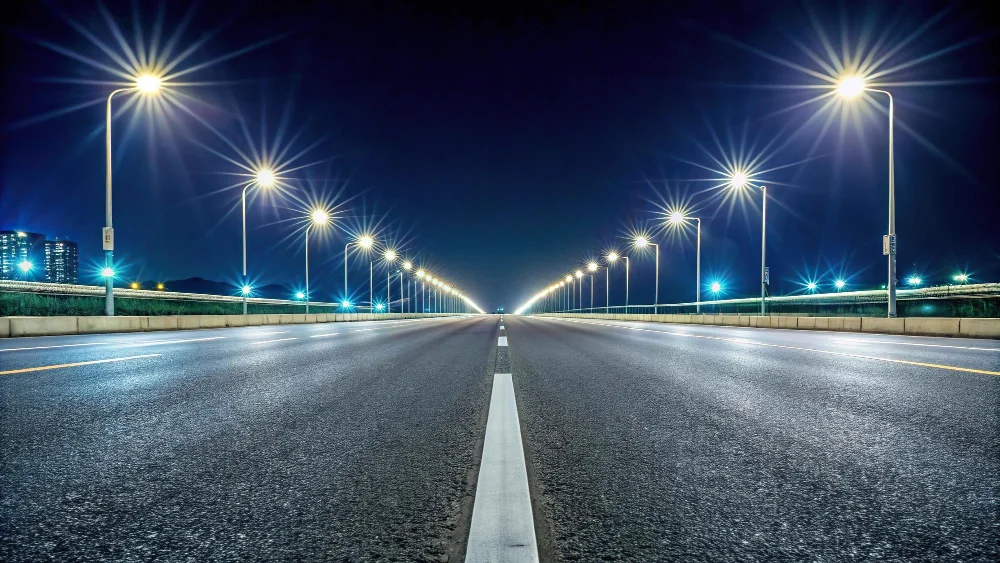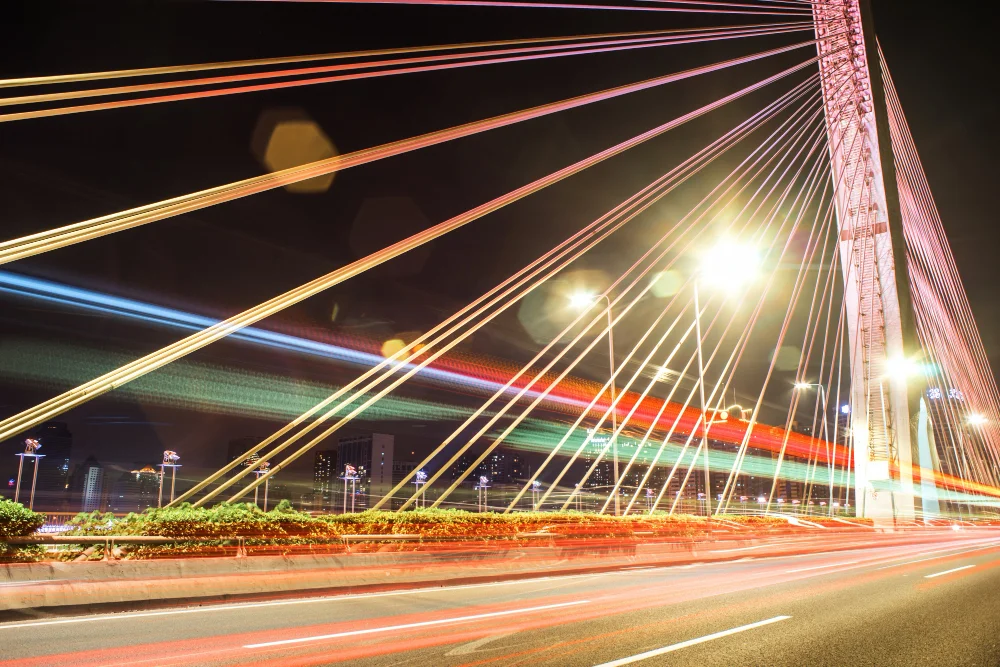
Street Lighting
Street Lighting is a complete infrastructure service that covers planning, system design, material procurement, installation, and final commissioning of outdoor lighting systems for roads and public spaces. At VS Wilson, this is delivered as a full EPC model—handling engineering layouts, sourcing fixtures and poles, executing on-site installation, and ensuring operational readiness.
Operating from the UAE and executing projects across the Middle East, USA, and Europe, the team deploys on-site to manage real conditions such as road width, traffic flow, and environmental exposure. This approach avoids common gaps between design intent and actual performance, ensuring lighting systems function correctly once installed.
- Lighting layouts engineered for road safety and visibility
- Integrated pole, fixture, and control system planning
- On-site installation aligned with road geometry conditions
- End-to-end project execution from concept to commissioning
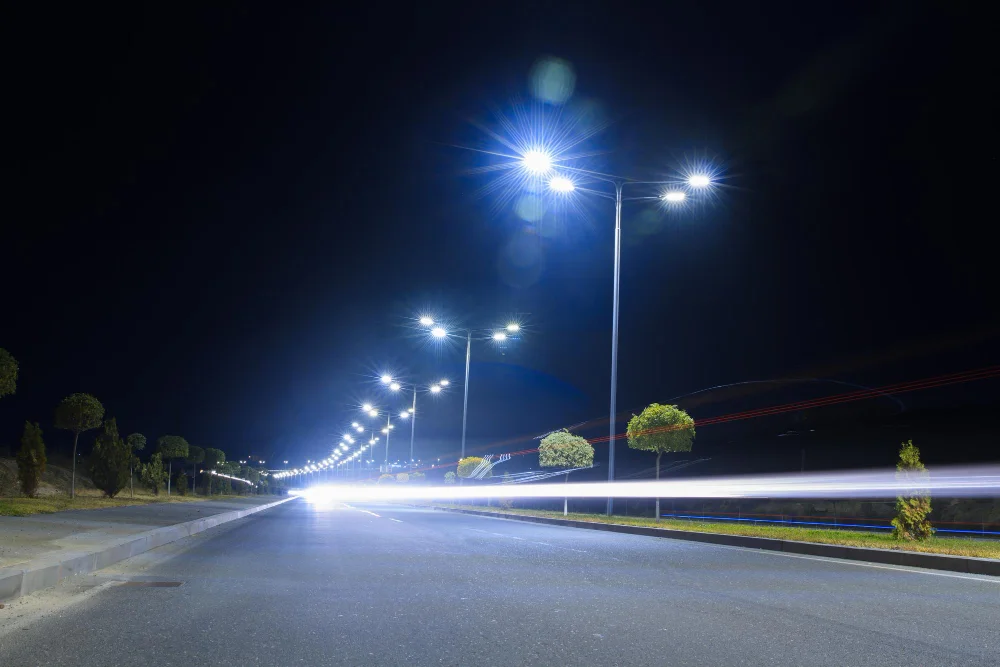
What This Street Lighting Service Includes
Lighting layout planning based on road usage patterns
Design considers traffic density, speed, and visibility zones to prevent uneven illumination and dark patches
Material procurement aligned with project specifications
Fixtures, poles, drivers, and control systems are sourced to match design calculations and environmental exposure
On-site installation with alignment to civil infrastructure
Pole positioning, cable routing, and mounting are executed considering terrain and existing utilities
System testing and final commissioning
Illumination levels, uniformity, and control systems are tested before project handover
Street Lighting involves more than placing fixtures along a road. It includes understanding how light spreads across surfaces, how glare affects drivers, and how spacing impacts visibility. In actual projects, improper alignment or incorrect mounting height often leads to inconsistent lighting, which this service addresses through precise planning and execution.
Street Lighting Solutions for Different Infrastructure Needs
This term reflects how users search for complete project handling rather than individual components. While “Street Lighting” defines the service, “Street Lighting Solutions” typically indicates a need for integrated planning, procurement, and execution under one responsibility.
In practice, this includes adapting lighting systems to highways, internal roads, industrial zones, or urban streets. Each environment requires different pole heights, beam angles, and spacing strategies. From an execution standpoint, handling everything under one system avoids mismatches between design assumptions and on-site realities, especially when dealing with varying terrain or road geometry.
LED Street Lighting Solutions
This variation represents a shift toward lower energy consumption and longer operational life, but it still falls within the same Street Lighting execution scope. Clients searching for LED solutions are usually focused on lifecycle cost rather than just installation.
LED Street Lighting Solutions require careful driver selection, heat dissipation planning, and lumen output balancing. In real installations, over-specifying brightness can create glare issues, while under-specifying leads to poor visibility. The service ensures correct wattage selection, spacing, and mounting height to achieve balanced illumination across the roadway.
Smart Street Lighting Systems
This keyword reflects demand for control and monitoring rather than just illumination. It still operates under the same Street Lighting framework but introduces automation and remote management layers.
Smart Street Lighting Systems involve integrating sensors, timers, or centralized control panels. In actual deployment, coordination between electrical infrastructure and control systems becomes critical. Poor integration often results in malfunctioning dimming schedules or communication failures. This service ensures compatibility between hardware and control protocols during execution.
Solar Street Lighting Solutions
Solar-based systems are often chosen where grid access is limited or energy independence is required. While the power source differs, the execution still falls under the broader Street Lighting service.
Solar Street Lighting Solutions require careful positioning of panels, battery capacity planning, and sunlight exposure analysis. In real-world conditions, incorrect panel orientation or shading can reduce performance significantly. The service accounts for geographic conditions and ensures system reliability through proper installation and component matching.
Street Lighting Design & Installation
This search variation highlights the dual requirement of planning and execution. Many projects fail because design and installation are handled separately without coordination.
Street Lighting Design & Installation as a combined service ensures that calculated layouts are actually implemented correctly on-site. This includes verifying pole spacing during installation, adjusting for site constraints, and ensuring wiring aligns with planned load distribution. It reduces rework and ensures the system performs as intended after commissioning.
Real-World Applications & Use Cases
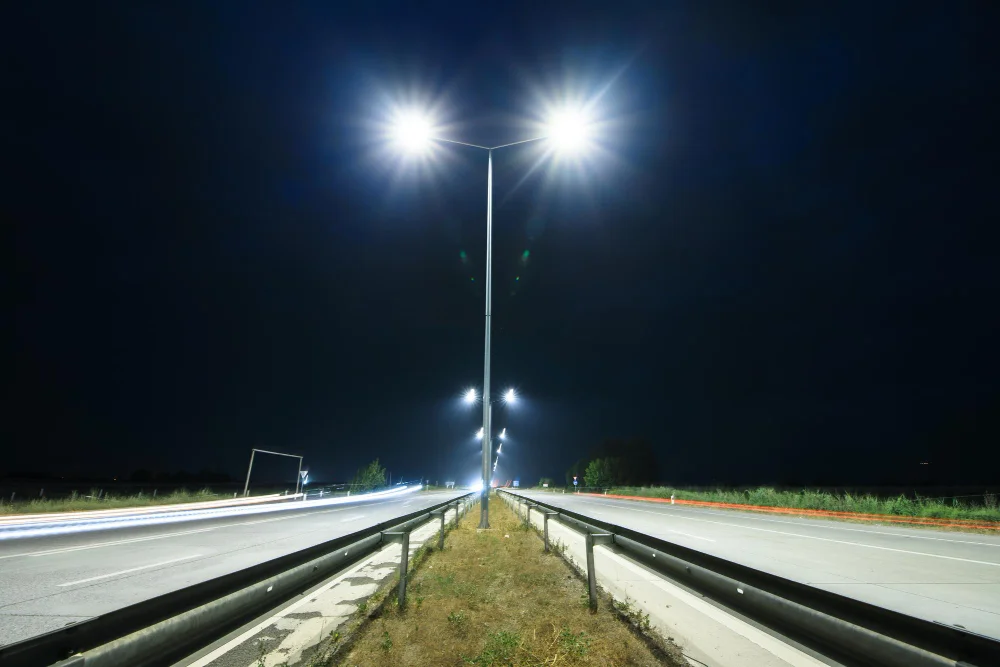
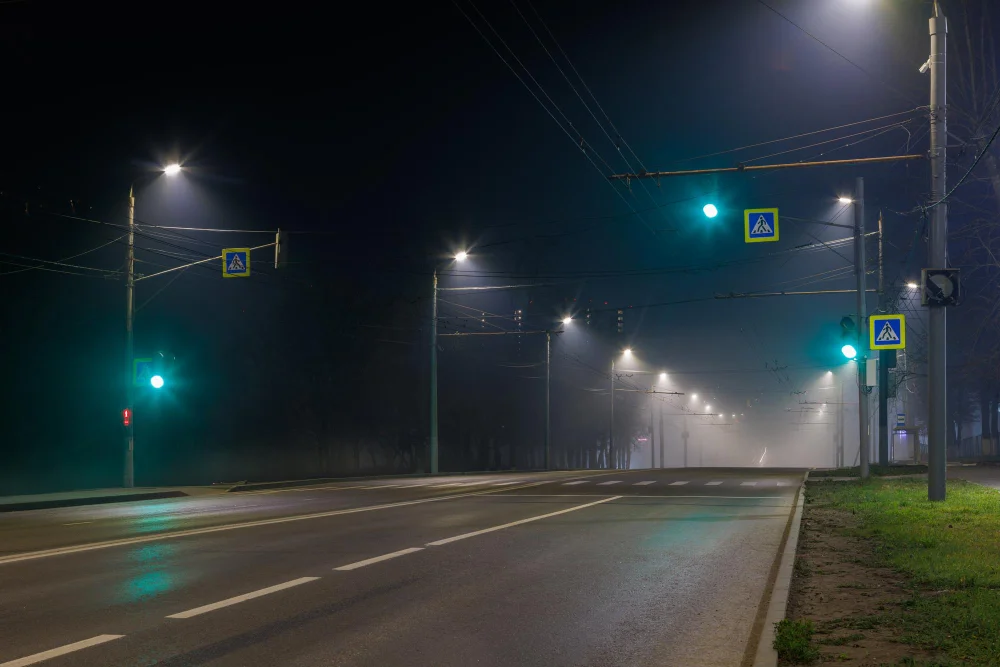
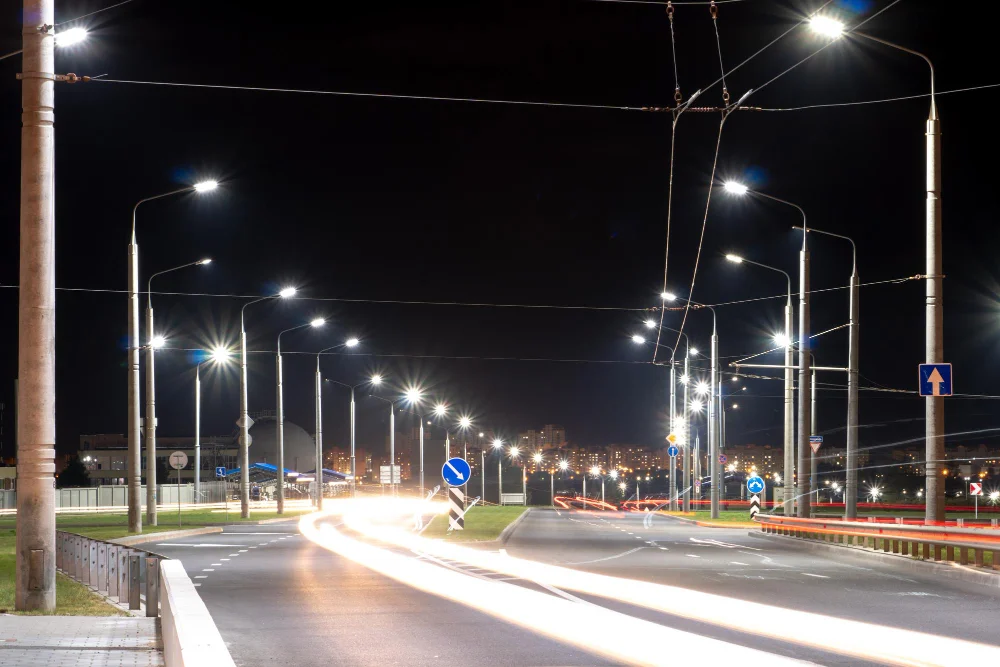
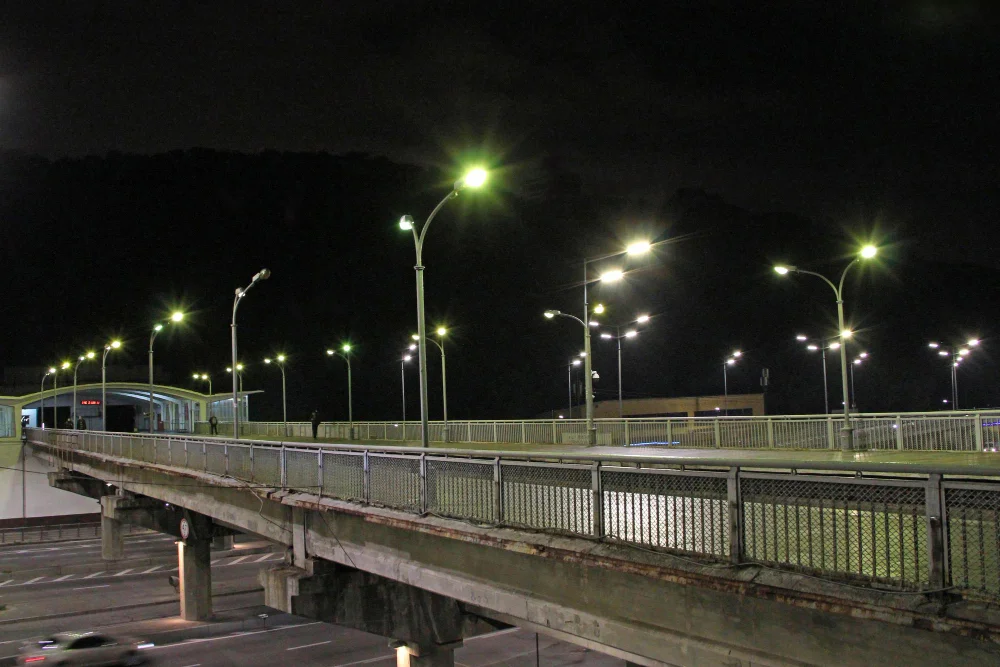
Street Lighting is used across highways, residential communities, industrial zones, and public infrastructure projects. Each scenario introduces different challenges. Highways require long-throw illumination and minimal glare, while internal roads need balanced lighting for pedestrian and vehicle interaction.
In industrial areas, lighting must account for heavy vehicle movement and dust exposure. In urban zones, aesthetic considerations may also influence pole design and fixture selection. From an execution perspective, these differences affect everything from mounting height to cable routing.
Project Execution Process
Street Lighting projects follow a structured sequence that connects design with on-site reality. It begins with site evaluation, where road width, traffic behavior, and existing infrastructure are assessed. This feeds into lighting calculations that determine pole spacing, height, and fixture output.
Material procurement follows, ensuring compatibility across poles, luminaires, and control systems. Installation is then carried out with attention to alignment, wiring, and structural stability. Final commissioning includes lux level testing and system adjustments.
In many projects, issues arise when installation deviates from design. This is avoided by maintaining continuity across all stages under one execution team.
Technical & Safety Considerations
Street Lighting must comply with illumination standards, electrical safety requirements, and environmental exposure factors. Incorrect grounding or cable insulation can create long-term risks.
Another critical factor is glare control. Excessive brightness or incorrect angles can reduce visibility rather than improve it. Wind load on poles, corrosion resistance, and IP ratings of fixtures also influence system durability.
Common Problems & Risks in Street Lighting Projects
One frequent issue is uneven lighting caused by incorrect pole spacing. This usually happens when installation teams adjust layouts without recalculating illumination levels.
Another challenge is component mismatch. Using incompatible drivers or control systems often leads to premature failures. In solar systems, poor battery sizing results in reduced operating hours.
These problems typically arise when design and execution are handled separately, leading to inconsistencies between planned and actual performance.
How to Choose the Right Street Lighting Setup
Selecting the right Street Lighting system depends on road type, usage, and long-term operational considerations. High-speed roads require different beam patterns compared to pedestrian-heavy zones.
Decision-makers should evaluate not just initial installation but also maintenance access, energy consumption, and system lifespan. In many cases, choosing lower-cost components results in higher replacement frequency and operational disruptions.
Working with a team that handles both design and execution reduces these risks by aligning planning with actual site conditions.
Pricing Factors
Street Lighting costs vary based on pole height, spacing, fixture type, and control systems. Site conditions also play a major role. Uneven terrain or existing infrastructure can increase installation complexity.
Another factor is system type. LED and smart systems involve higher upfront costs but reduce operational expenses over time. Solar systems depend on battery capacity and panel size, which directly influence pricing.
Cost variations often occur when project scope is not clearly defined at the start. A structured EPC approach helps maintain cost predictability by aligning design, procurement, and execution from the beginning.
Why Choose This Street Lighting Service
Street Lighting requires coordination across multiple disciplines—electrical design, structural installation, and system integration. VS Wilson operates as a complete execution partner, handling the entire lifecycle from planning to commissioning.
Instead of separating design and installation, the service ensures both are aligned. This reduces errors, avoids rework, and ensures the system performs as expected once operational.
For more insight into execution capability, visit our About Us page (http://vswilson.com/about-us)
Service Coverage
The company operates from the UAE, delivering Street Lighting projects across Dubai, Abu Dhabi, and other regions. For larger infrastructure projects, teams are deployed across the Middle East, USA, and Europe.
Execution is always handled on-site, with teams traveling to project locations to manage installation and commissioning directly.
Common Buyer Concerns Before Hiring
Clients often question whether a single provider can handle both design and execution effectively. In practice, separating these stages increases coordination challenges and project delays.
Another concern is long-term performance. Poor installation or incorrect system selection can lead to frequent failures, increasing maintenance costs.
Choosing an execution-focused provider helps ensure that planning decisions translate correctly into on-site implementation.
FAQs
What does Street Lighting service include?
It includes layout planning, lighting calculations, material procurement, pole installation, wiring, and final system commissioning. The service ensures that lighting performs as intended after installation, not just on paper.
Do you handle international Street Lighting projects?
Yes, projects are executed across the Middle East, USA, and Europe through on-site deployment. Teams travel to project locations to manage installation and commissioning directly.
Is LED Street Lighting better than traditional systems?
LED systems consume less energy and have longer operational life. However, correct wattage selection and spacing are essential to avoid glare or poor visibility.
Can Street Lighting be integrated with smart controls?
Yes, systems can include sensors, timers, and remote monitoring. Proper integration during installation is important to ensure reliable operation.
How long does a Street Lighting project take?
Timelines depend on project size, site conditions, and system complexity. Larger infrastructure projects require detailed planning and phased execution.
What are the risks of poor Street Lighting installation?
Incorrect spacing, wiring issues, or component mismatch can lead to uneven lighting, failures, and increased maintenance costs.
Discuss Your Project
If you're planning a Street Lighting project and need clarity on system selection, execution planning, or site conditions, VS Wilson can support full lifecycle delivery. From UAE-based operations to international project deployment across the Middle East, USA, and Europe, projects are executed on-site with complete responsibility.
You can outline your requirements, site conditions, or infrastructure plans through our Contact page to initiate a structured discussion.