Cinematic Lighting Design
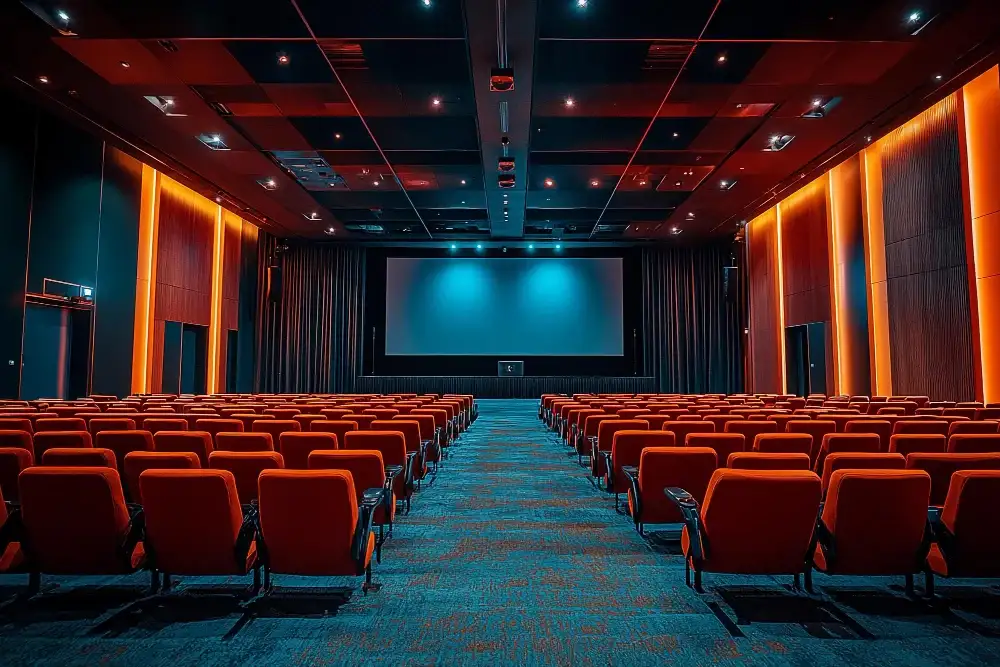
Cinematic Lighting Design is a complete project-based service that involves planning, sourcing, installing, and fine-tuning lighting systems specifically for cinematic environments. It includes scene-based lighting layouts, LED integration, control systems, and on-site execution tailored to viewing conditions.


Scope of Cinematic Lighting Design Service
From an execution point of view, this service includes designing lighting zones, selecting compatible LED systems, integrating control panels, and ensuring that installation does not interfere with soundproofing or interior finishes.
VS Wilson operates as an end-to-end execution partner, handling Cinematic Lighting Design through a full EPC model. This includes design engineering, procurement of lighting systems, on-site installation, programming, and final commissioning. Projects are executed across UAE, Middle East, USA, and Europe through physical deployment teams, ensuring that the lighting setup aligns precisely with screen performance, seating layout, and acoustic considerations.


Scope of Cinematic Lighting Design Service
Lighting layout aligned with screen brightness and viewing angles
Design is adjusted to avoid glare, reflections, and visual distraction during playback
Control system programming for multi-scene lighting transitions
Lighting scenes are configured to shift automatically between viewing, pause, and entry modes
Fixture selection based on room dimensions and surface materials
Each lighting component is chosen based on how it interacts with walls, ceilings, and finishes
On-site installation with concealed wiring and integration checks
Execution includes routing, mounting, and testing without disturbing acoustic treatment
Cinematic Lighting Design goes beyond placing lights around a screen. It involves careful alignment between light intensity, color temperature, and viewing comfort. In actual projects, even a slight mismatch in brightness can affect contrast perception on screen.
From an execution point of view, this service includes designing lighting zones, selecting compatible LED systems, integrating control panels, and ensuring that installation does not interfere with soundproofing or interior finishes.
film lighting within Cinematic Lighting Design
Film lighting represents a technical variation within Cinematic Lighting Design where the focus shifts toward controlled illumination similar to studio-grade environments. Users searching for this term often expect precision lighting that mimics cinematic production setups while still being installed in residential or private spaces.
In practical execution, film lighting requires layered lighting zones, including ambient, accent, and task lighting. This setup ensures that the environment supports both viewing and occasional recording or content creation. The same EPC workflow applies, where design, procurement, installation, and calibration are handled as one integrated process rather than separate tasks.
home theater led lighting as part of Cinematic Lighting Design
Home theater led lighting is a commonly searched variation where users focus specifically on LED-based solutions within cinematic environments. While the search intent highlights LED usage, the requirement still falls under full Cinematic Lighting Design execution.
From a project perspective, LED systems are selected based on dimming capability, heat output, and integration with control systems. In real residential setups, poorly selected LED strips can cause uneven light diffusion or visible hotspots. Proper installation ensures consistent light spread, hidden placement, and synchronized control with the viewing system.
Home cinema led lighting integration
Home cinema led lighting reflects a similar intent but often relates to customized residential cinema rooms where lighting must align with interior design elements. Despite the difference in terminology, the execution remains part of Cinematic Lighting Design.
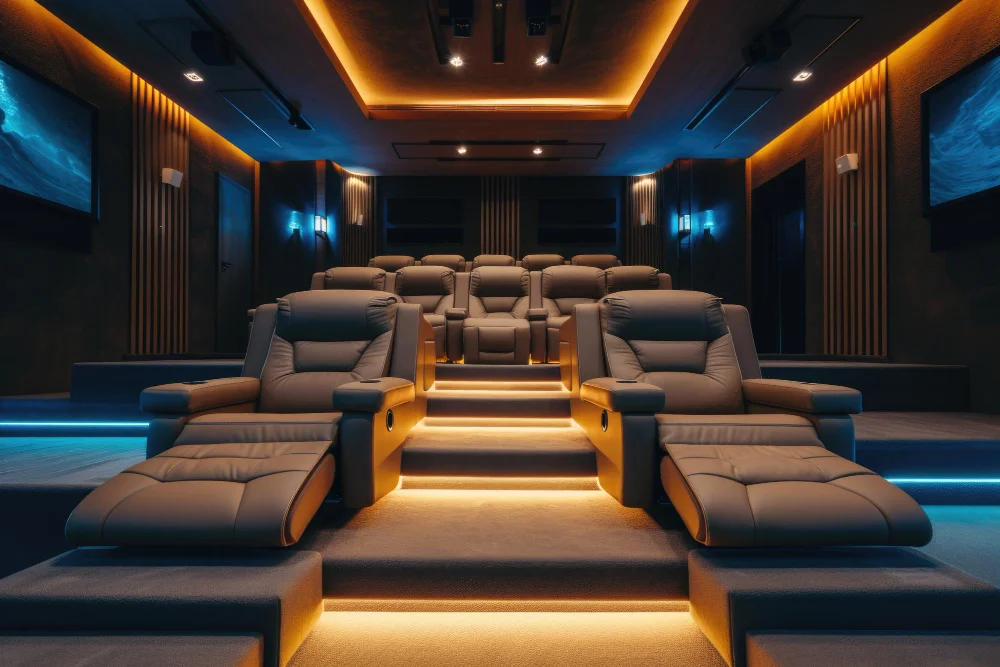
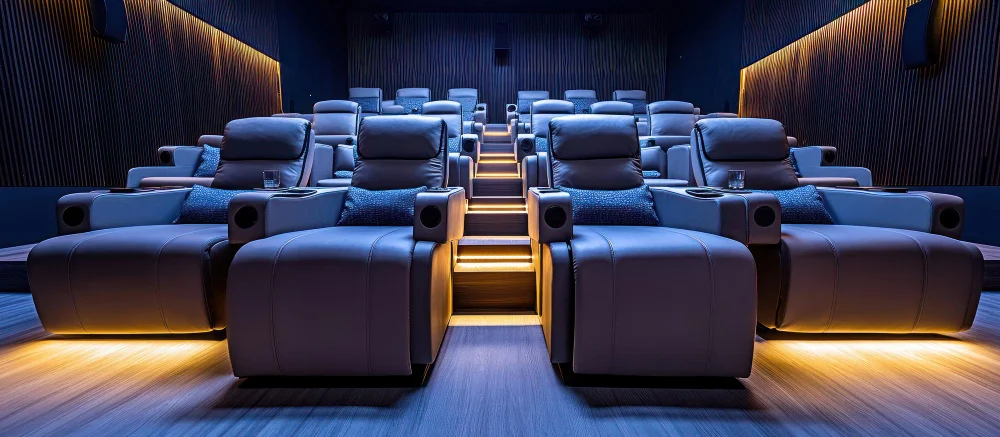
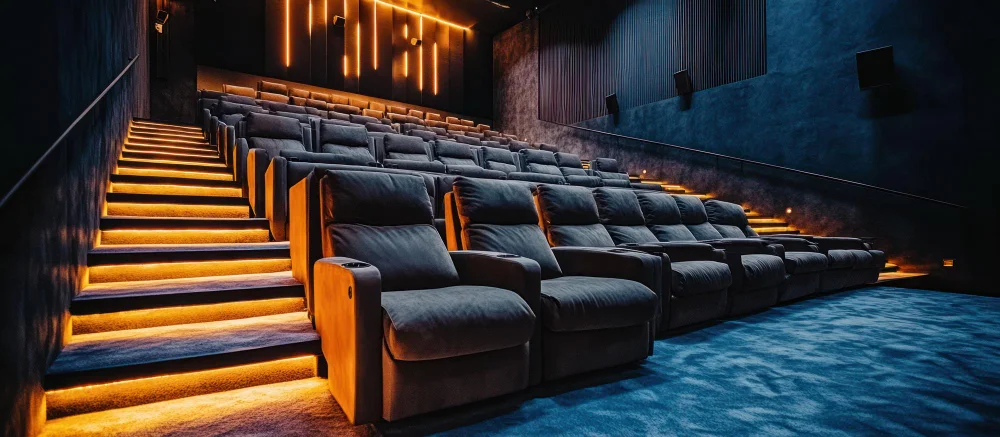
Here, lighting is integrated into ceiling coves, wall panels, and step lighting. The challenge lies in maintaining visual comfort without affecting screen visibility. This usually happens when light angles are not controlled properly. The service ensures correct positioning, diffuser selection, and system programming so that lighting supports the cinematic experience rather than interfering with it.
Types of Lighting Solutions Offered
Ambient cinematic lighting
Used to create a base light layer that maintains visibility without affecting screen contrast
Accent LED movie lights
Focused lighting used for architectural features or pathway visibility without drawing attention
Step and pathway lighting
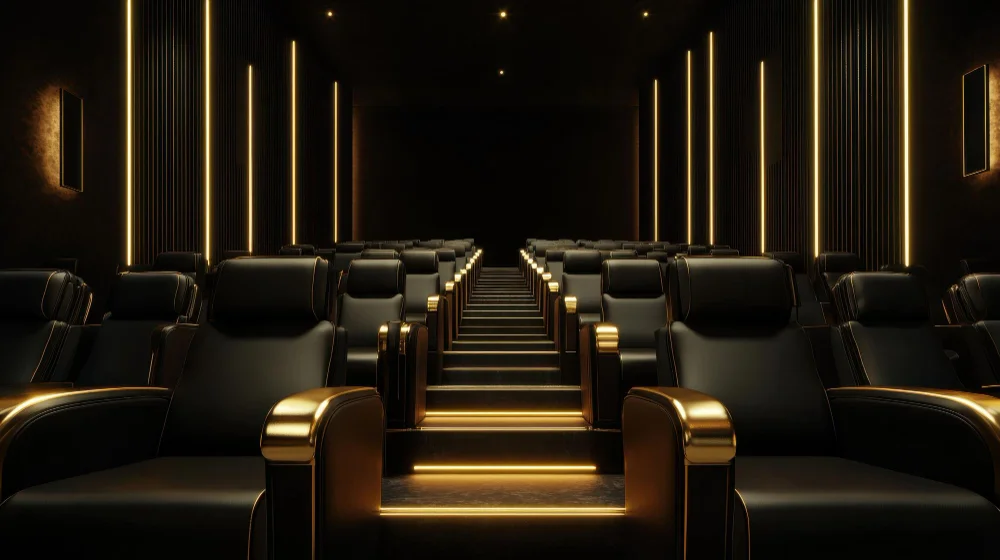
Low-level lighting installed for safe movement during low-light viewing conditions
Cove lighting for cinema ceilings
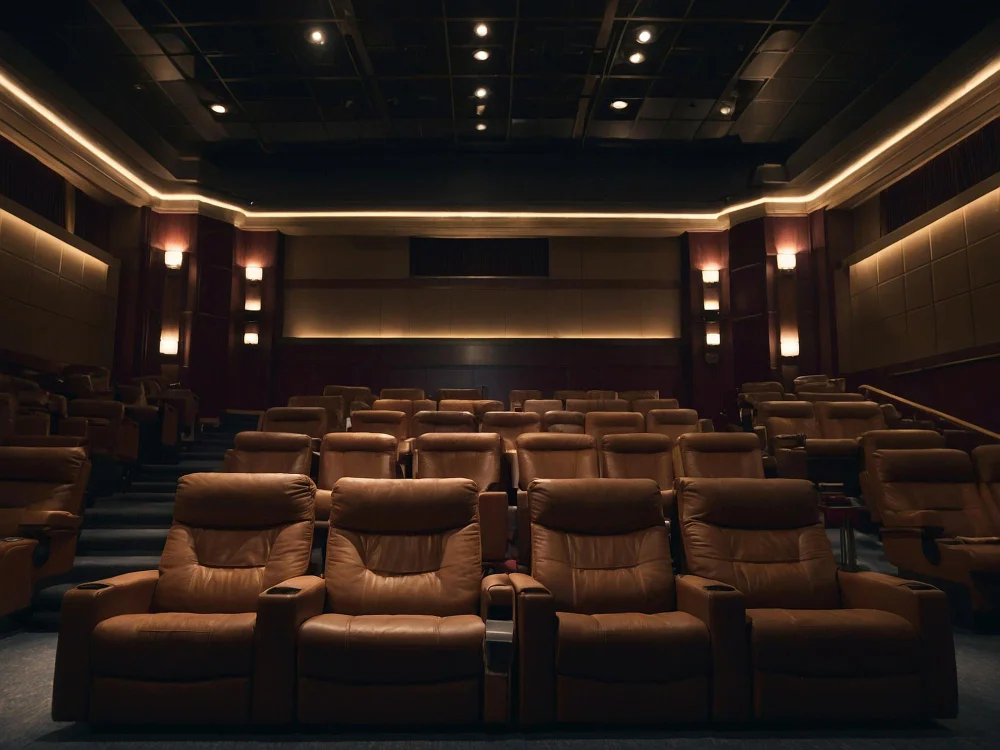
Hidden lighting integrated into ceiling edges to provide indirect illumination
Wall panel integrated lighting
Installed behind acoustic panels to create soft backlit effects without glare
Real-World Applications of Cinematic Lighting Design
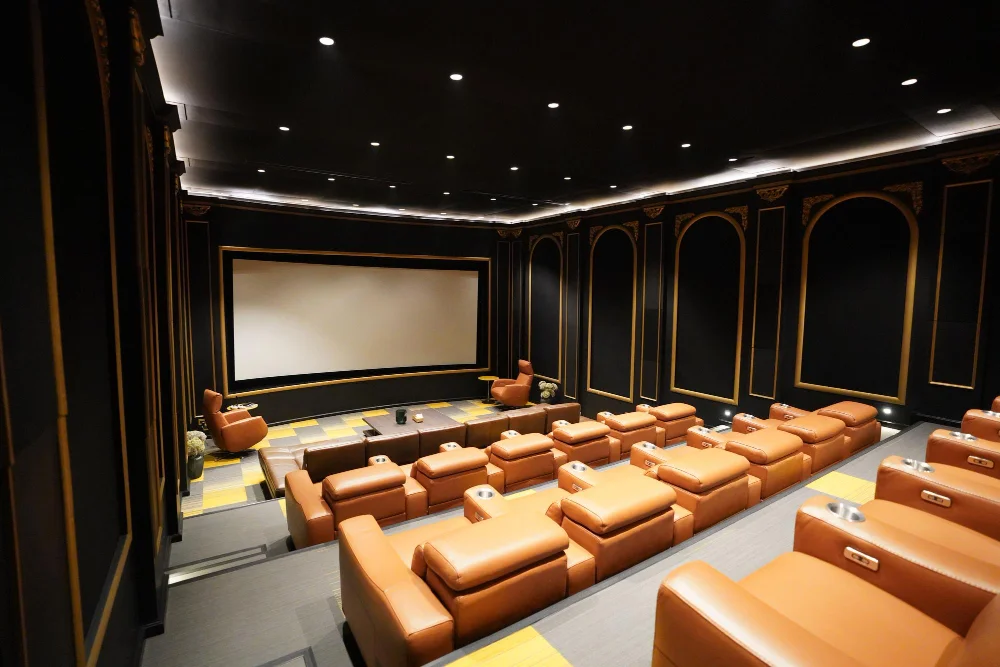
Cinematic Lighting Design is commonly applied in dedicated home theaters, private screening rooms, luxury villas, and media rooms. In actual projects, the requirement often arises when standard lighting setups create reflections on screens or disrupt viewing comfort.
It is also used in hybrid spaces where users want both entertainment and occasional content creation setups. In such cases, lighting must adapt to different usage modes. The service ensures that lighting transitions smoothly between functional and cinematic environments without requiring manual adjustments.
When Cinematic Lighting Design Becomes Necessary
This service becomes necessary when lighting starts affecting screen clarity, visual comfort, or room usability. In many setups, overhead lights create glare, while insufficient lighting makes movement difficult during viewing.
It is also required when integrating automation systems or upgrading a standard media room into a dedicated cinematic space. From an execution perspective, early planning avoids rework, especially when ceiling structures or wall panels are already installed.
Environments & Project Conditions This Service Fits
Cinematic Lighting Design is suitable for enclosed rooms, sound-treated environments, and spaces with controlled light entry. It works best where external light can be minimized and lighting can be fully controlled.
Projects may involve new construction or retrofitting existing rooms. In retrofit cases, challenges include limited wiring access and fixed interior layouts. The service adapts to these conditions through customized routing and fixture selection.
Cinematic Lighting Design Project Execution Process
Cinematic Lighting Design follows a structured EPC workflow that connects planning, procurement, and on-site execution into one continuous process. It starts with understanding the room layout, viewing distance, and screen specifications.
Design planning defines lighting zones, fixture placement, and control systems. Procurement ensures compatibility between LED systems, drivers, and automation controls. On-site execution includes wiring, fixture installation, and system integration.
Testing and calibration are critical stages. Lighting levels are adjusted based on actual viewing conditions, not theoretical calculations. This is where most generic setups fail. Final commissioning ensures that all lighting scenes function correctly and align with user preferences.
Technical & Safety Considerations
Cinematic Lighting Design requires careful handling of electrical load distribution, heat management, and dimming compatibility. In many projects, incorrect driver selection leads to flickering or uneven dimming.
Fixture placement must also consider acoustic panels and insulation materials. Improper installation can damage soundproofing layers. The service ensures that all components are installed without compromising structural or acoustic integrity.
Common Problems & Risks in Cinematic Lighting Design
A common issue is over-lighting, where excessive brightness reduces screen contrast. Another risk is poor placement of LED strips, leading to visible hotspots or uneven illumination.
Coordination gaps between design and installation often result in rework. For example, wiring paths may interfere with ceiling structures or acoustic panels. This is why a unified execution approach is critical.
Improper control system integration can also limit functionality. Without proper programming, users cannot switch between viewing modes effectively.
How to Choose the Right Cinematic Lighting Design Setup
Choosing the right Cinematic Lighting Design setup depends on room dimensions, screen type, and usage pattern. A proper setup balances visibility, comfort, and cinematic immersion without overcomplicating controls.
From a decision point of view, it is important to evaluate whether the provider handles full execution or only design. Projects handled in isolation often face compatibility issues during installation. A complete EPC approach reduces coordination gaps and ensures consistent results.
It is also important to review how lighting interacts with interiors and acoustic treatments. Decisions made during design directly impact installation feasibility and long-term performance.
Pricing Factors
Cinematic Lighting Design pricing depends on room size, number of lighting zones, type of LED systems, and control integration complexity. Projects with advanced automation or customized interiors require higher planning and execution effort.
Cost variations also come from installation challenges. For example, retrofitting an existing room often involves additional labor for concealed wiring. Attempting low-cost installations usually leads to performance issues, requiring corrections later.
From a project perspective, investing in proper execution reduces long-term maintenance and avoids repeated adjustments.
Why Choose This Service
Cinematic Lighting Design delivered through a complete execution model reduces the risk of mismatched systems and installation errors. It ensures that design decisions are aligned with on-site realities.
The service integrates lighting systems, control systems, and installation workflows into one coordinated process. This approach avoids common issues seen in fragmented execution.
To understand how execution capability translates into project outcomes, visit our About Us page.
Service Coverage
VS Wilson operates from the UAE and executes Cinematic Lighting Design projects across Dubai, Abu Dhabi, and the wider Middle East region.
For international projects in USA and Europe, teams travel on-site to handle full execution. This includes design validation, material coordination, installation, and final commissioning. Projects are not handled remotely, ensuring consistency and control over the final outcome.
Common Buyer Concerns Before Hiring
Buyers often worry about whether lighting will affect screen quality or create glare. This usually happens when lighting is planned without considering viewing angles and screen brightness.
Another concern is execution reliability. Projects handled by multiple vendors often face delays and coordination issues. A single execution partner reduces these risks.
There is also hesitation around cost. However, poorly executed lighting setups often require rework, increasing overall expenses.
FAQs
1. What does Cinematic Lighting Design include in a project?
It includes lighting layout planning, fixture selection, control system integration, installation, and final calibration. The service ensures that lighting works in sync with the viewing environment and does not interfere with screen performance.
2. Is film lighting different from Cinematic Lighting Design?
Film lighting is a variation within Cinematic Lighting Design. It focuses more on controlled lighting setups similar to production environments but is still executed as part of the same overall service.
3. Can LED movie lights be used in home theaters?
Yes, led movie lights are commonly used, but they must be selected and installed carefully. Improper placement or low-quality components can create uneven lighting and affect viewing comfort.
4. What are the types of cinema lights used?
Types of cinema lights include ambient lighting, accent lighting, step lighting, and cove lighting. Each serves a specific purpose in maintaining visibility while preserving screen clarity.
5. Do you handle international Cinematic Lighting Design projects?
Yes, projects are executed on-site across the Middle East, USA, and Europe. Teams travel to the project location for full installation and commissioning.
6. Is this service only for residential setups?
No, Cinematic Lighting Design can also be applied in private screening rooms, media rooms, and specialized commercial environments.
7. How long does a Cinematic Lighting Design project take?
Project timelines depend on room size, complexity, and installation conditions. Typical execution includes planning, installation, and calibration stages.
Discuss Your Project
Cinematic lighting setups often require coordination between layout, controls, and installation conditions. Whether you are planning a dedicated home theater or upgrading an existing space, the discussion should start with how the room will actually be used and executed.
Projects across UAE, Middle East, USA, and Europe are handled through on-site deployment with full lifecycle execution.
Discuss your project requirements, room conditions, and execution planning through our Contact page.
Image Gallery
Related Services