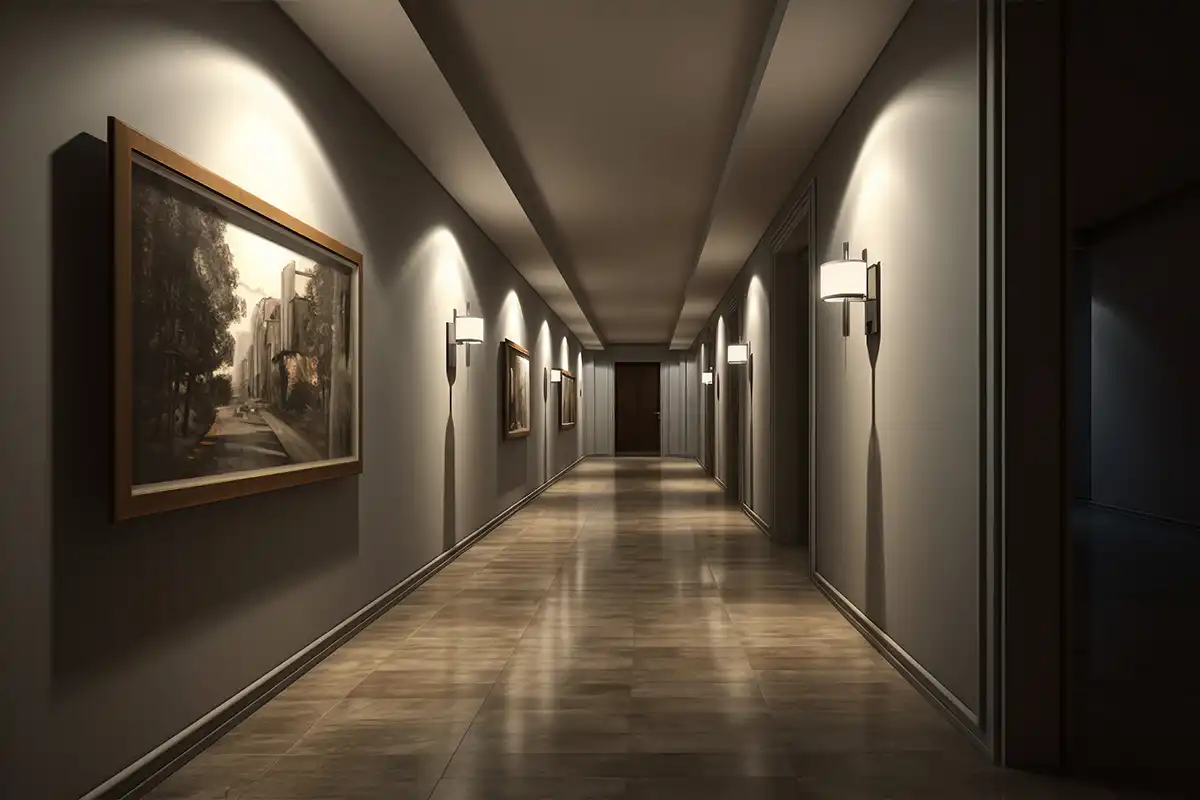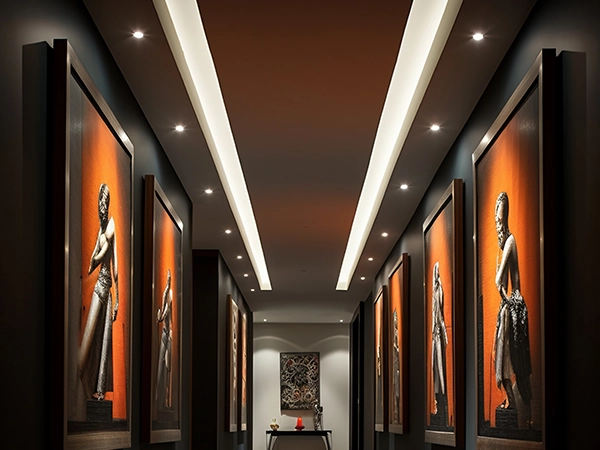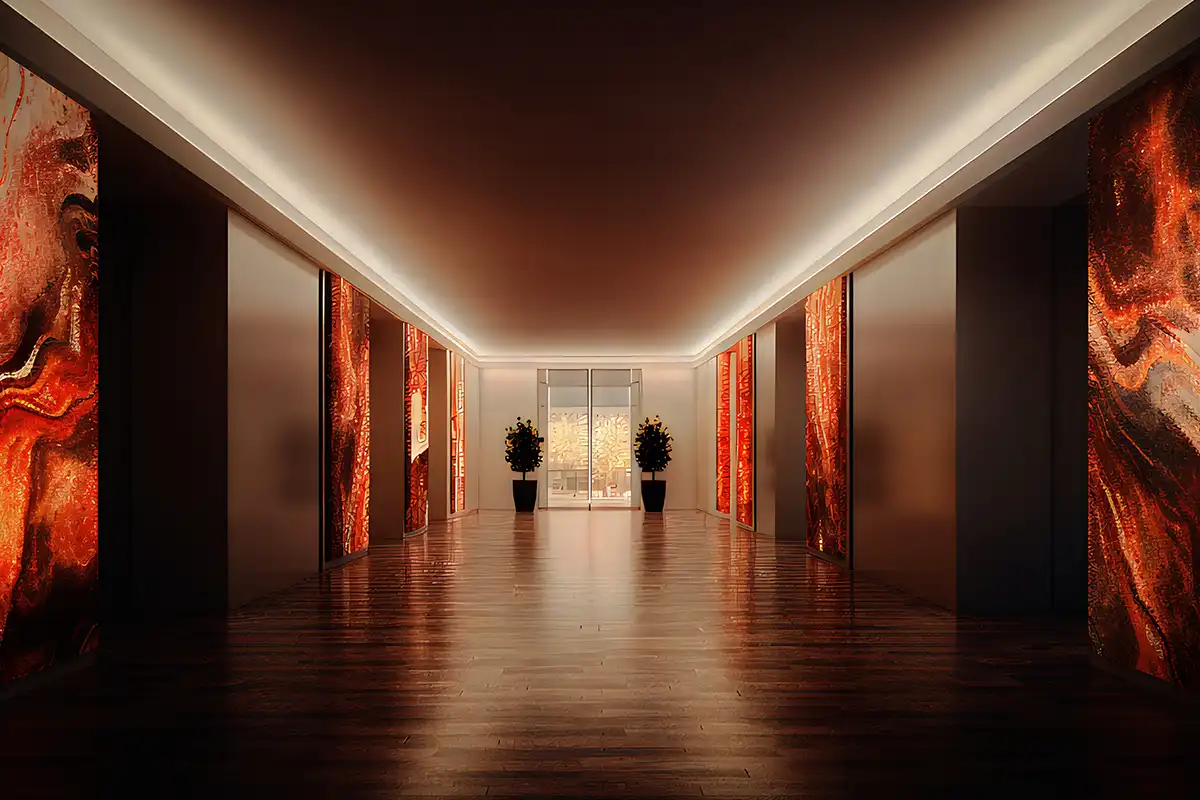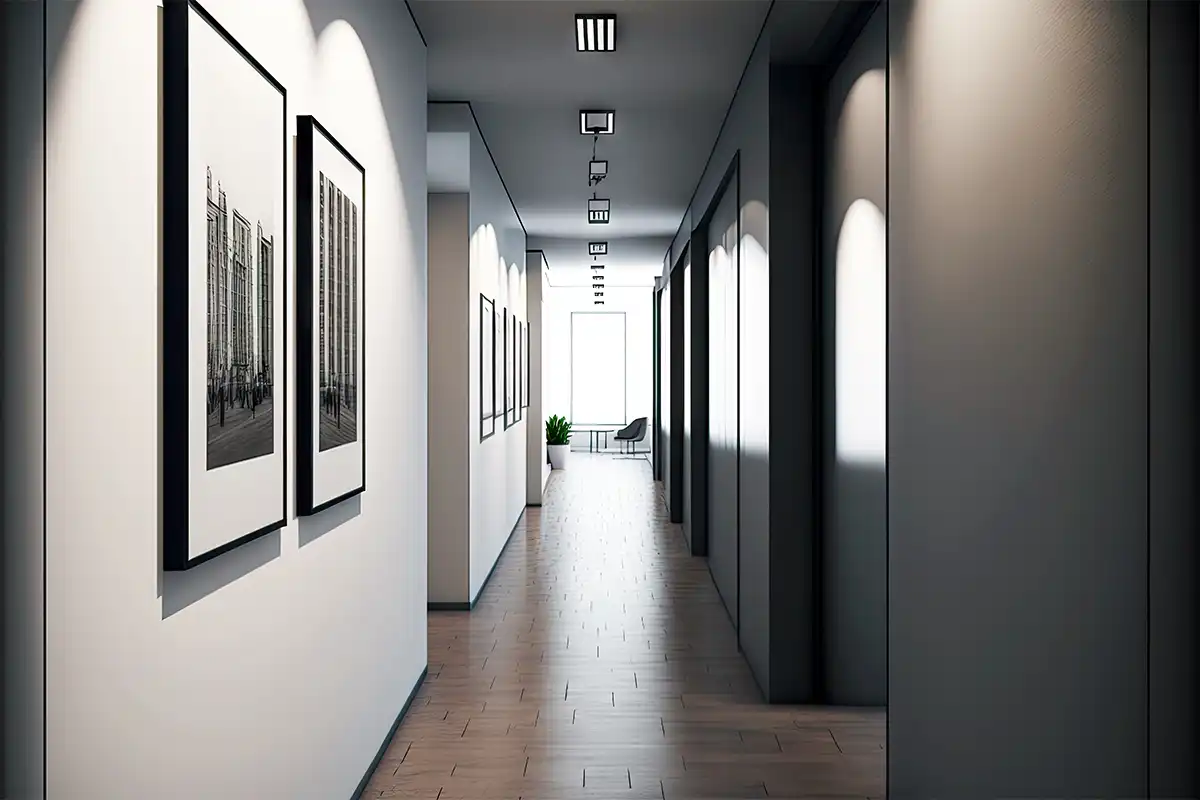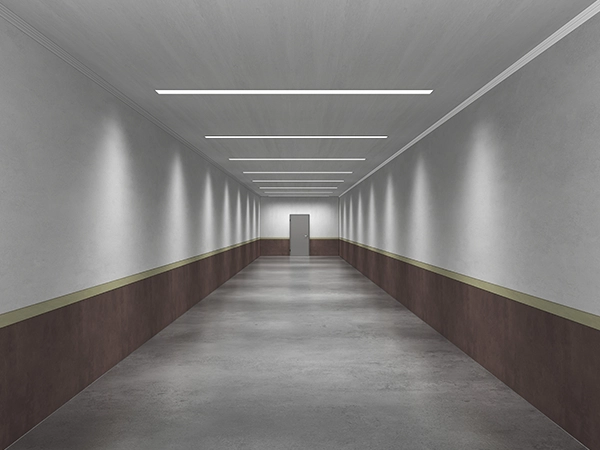
Art Gallery Lighting Design
Art gallery lighting design involves planning, selecting, and installing lighting systems that accurately present artwork while controlling glare, shadows, and color distortion. This service includes design engineering, fixture selection, procurement, and on-site execution. VS Wilson operates as a UAE-based end-to-end execution partner, handling projects across the Middle East, USA, and Europe through full EPC delivery—covering concept planning to final commissioning.


What This Service Covers
Art gallery lighting design is not limited to fixture placement. It includes analyzing artwork materials, wall finishes, ceiling heights, and visitor movement patterns. In actual projects, this usually involves multiple revisions during installation because lighting behaves differently once the space is physically set up. The service ensures that design intent translates correctly into real-world execution without visual compromise.
Unlike surface-level lighting setups, gallery environments demand careful beam control, color accuracy, and adaptability for changing exhibits. From an execution point of view, even minor misalignment in angles or intensity can alter how artwork is perceived, which is why the entire system must be calibrated on-site rather than pre-defined.


What This Service Covers
Artwork-focused beam angle planning
Each fixture is positioned based on artwork size, viewing distance, and wall orientation to avoid uneven highlights.
Lighting system selection based on display type
Different artworks require different fixture types, from track lighting to recessed systems depending on mounting style.
On-site calibration and alignment adjustments
Final lighting positions are adjusted physically after installation to match real viewing conditions inside the gallery.
Integration with control and dimming systems
Lighting levels are controlled dynamically depending on exhibition type, time of day, or curatorial requirements.
Art gallery lighting design is not limited to fixture placement. It includes analyzing artwork materials, wall finishes, ceiling heights, and visitor movement patterns. In actual projects, this usually involves multiple revisions during installation because lighting behaves differently once the space is physically set up. The service ensures that design intent translates correctly into real-world execution without visual compromise.
Types of Lighting Solutions Offered
Track Lighting Systems
Flexible systems allowing repositioning of fixtures as exhibitions change frequently.
Recessed Ceiling Lighting
Used in galleries requiring a clean ceiling finish without visible fixtures.
Wall Washer Lighting
Designed to evenly illuminate large artworks or entire wall sections.
Accent Spot Lighting
Focused beams used to highlight individual artworks or sculptures.
LED Lighting for Art Galleries
Energy-efficient systems with high color rendering to preserve artwork appearance.
Architectural Lighting for Galleries
Integrated lighting within the building structure for permanent installations.
Real-World Applications & Use Cases
In curated galleries, lighting is used to guide visitor attention. For example, in multi-room exhibitions, brightness levels are often adjusted to subtly direct movement without signage. This usually happens when galleries want a controlled viewing flow.
Temporary exhibitions require adaptable lighting setups. Track systems become essential here because artwork sizes and positions change frequently. Without this flexibility, reinstallation costs increase significantly.
Private collectors often face issues where lighting damages sensitive materials over time. This is where controlled LED systems with calibrated intensity are used to reduce exposure while maintaining visibility.
Large-format installations or sculptures introduce another layer of complexity. Lighting must consider three-dimensional viewing angles, not just frontal illumination, otherwise shadows distort the form.
When This Service Becomes Necessary
Art gallery lighting design becomes essential when visual accuracy and presentation quality directly impact viewer perception. This is especially relevant in galleries displaying high-value or sensitive artwork.
It is also required when transitioning from general lighting to curated exhibition spaces. In such cases, standard lighting setups fail to provide the required control over beam direction and intensity.
Another common situation is during gallery renovations. Existing lighting often does not align with updated layouts, requiring a complete redesign and reinstallation.
Environments & Project Conditions This Service Fits
This service is suitable for contemporary art galleries, museums, exhibition halls, private collections, and cultural centers. Each environment presents different constraints.
Low ceiling galleries require compact fixtures with controlled beam spread. High ceiling spaces, on the other hand, need high-output fixtures with precise aiming capability.
In heritage buildings, installation becomes more complex due to structural limitations. Lighting must be integrated without affecting the existing architecture.
Project Execution Process
Art gallery lighting design follows a structured execution process where each stage impacts the final visual outcome. It starts with understanding artwork types, display layout, and gallery dimensions.
The first step involves design planning where lighting layouts are mapped based on artwork positioning and viewing angles. This is not fixed at the drawing stage; adjustments are expected during execution.
Next comes procurement, where fixtures are selected based on beam angles, color rendering index, and mounting requirements. From an execution standpoint, selecting the wrong fixture often leads to rework during installation.
Installation is carried out on-site, where fixtures are mounted, wired, and aligned. This stage requires coordination between design intent and physical conditions such as ceiling structure and wiring pathways.
Final calibration is where most competitors fall short. Each light is adjusted manually to achieve the correct angle, intensity, and spread. Without this step, even well-designed systems fail in real conditions.
To understand how execution capability impacts project outcomes, visit our About Us page.
Technical & Safety Considerations
Lighting in galleries must maintain color accuracy, which is measured through CRI levels. Low CRI lighting alters how artwork appears, especially in paintings and textiles.
Heat emission is another factor. Some lighting systems generate heat that can damage sensitive artwork over time. LED systems are preferred due to lower heat output.
Glare control is critical. Poorly positioned lights create reflections, especially on glass-covered artworks, making them difficult to view.
Electrical load management is also important in large galleries where multiple lighting systems operate simultaneously.
Common Problems & Risks in Lighting Installation
One common issue is over-lighting. When intensity is too high, artwork loses depth and detail. This often happens when lighting is planned without considering viewing distance.
Misaligned fixtures are another frequent problem. Even slight deviations in angle can create shadows or uneven illumination.
Coordination gaps between design and installation teams lead to incorrect execution. This is why a single EPC model is preferred over fragmented services.
In some cases, lighting systems are installed without future flexibility. This becomes a problem when exhibitions change, requiring additional modifications.
How to Choose the Right Lighting Setup
Choosing the right art gallery lighting design depends on artwork type, gallery layout, and usage pattern. Paintings require different lighting compared to sculptures or digital displays.
From a decision point of view, flexibility should be prioritized if exhibitions change frequently. Fixed systems may reduce initial cost but increase long-term modification expenses.
Another factor is control systems. Dimmable and programmable lighting allows adjustments without physical changes.
It is also important to evaluate execution capability. A well-designed plan without proper installation leads to poor results, making end-to-end execution more reliable than separate design and installation services.
Pricing Factors
Pricing depends on multiple variables rather than a fixed rate. The size of the gallery plays a major role, as larger spaces require more fixtures and complex layouts.
Fixture type also impacts cost. High-precision lighting systems with adjustable optics are more expensive than standard fixtures.
Installation complexity is another factor. Projects involving high ceilings or heritage structures require additional effort and specialized equipment.
Control systems add to the cost but provide long-term flexibility. In many cases, investing in adaptable systems reduces future modification expenses.
Why Choose This Service
Art gallery lighting design requires coordination between design intent and physical execution. Without this alignment, even advanced systems fail to deliver expected results.
This service ensures that lighting is not just planned but also executed correctly on-site. It addresses real-world variables such as mounting constraints, wiring limitations, and final calibration.
The EPC approach eliminates coordination gaps between different teams, ensuring a consistent outcome from concept to completion.
Service Coverage
VS Wilson operates from the UAE, executing projects across Dubai, Abu Dhabi, and the wider Middle East.
For international projects in the USA and Europe, teams are deployed on-site to handle complete execution, including installation and final adjustments.
This ensures that lighting systems are implemented according to actual site conditions rather than relying on remote planning.
Common Buyer Concerns Before Hiring
Many buyers are unsure whether design alone is sufficient. In most cases, design without execution leads to mismatched results.
Another concern is whether lighting can be adjusted after installation. Systems with adjustable fixtures and controls allow flexibility.
Project timelines are also a common question. Delays usually occur when design and installation are handled separately.
Cost overruns often result from rework due to poor planning. A structured execution process helps minimize such risks.
FAQs
1. How is art gallery lighting design different from regular lighting?
Art gallery lighting design focuses on accurate artwork presentation rather than general illumination. It involves controlling beam angles, intensity, and color rendering to ensure artwork appears as intended. Regular lighting does not provide this level of precision or adaptability.
2. Can lighting be changed for new exhibitions?
Yes, flexible systems such as track lighting allow repositioning and adjustment. This is essential for galleries with rotating exhibitions where artwork placement changes frequently.
3. Do you handle international projects?
Yes, projects are executed across the Middle East, USA, and Europe through on-site deployment. Teams travel to the project location to handle installation and final calibration.
4. Is LED lighting suitable for all artworks?
LED lighting is widely used due to low heat emission and high color accuracy. However, intensity and exposure levels must still be controlled based on artwork sensitivity.
5. How long does installation take?
Timelines depend on project size and complexity. Smaller galleries may take a few days, while larger or more complex installations require longer due to calibration and adjustments.
6. What happens if lighting is installed incorrectly?
Incorrect installation leads to glare, shadows, and distorted artwork appearance. Fixing such issues often requires repositioning fixtures, which increases cost and time.
7. Do you provide only design or full execution?
The service includes complete execution from design to installation and final commissioning, ensuring alignment between planning and actual results.
Discuss Your Project
If your gallery requires precise lighting aligned with artwork presentation and exhibition flexibility, it’s worth discussing the project at a planning stage. VS Wilson handles complete execution across UAE, Middle East, USA, and Europe, including on-site deployment and calibration. You can outline your gallery layout, artwork type, and project scope through our Contact page to evaluate execution approach and system suitability.
Image Gallery