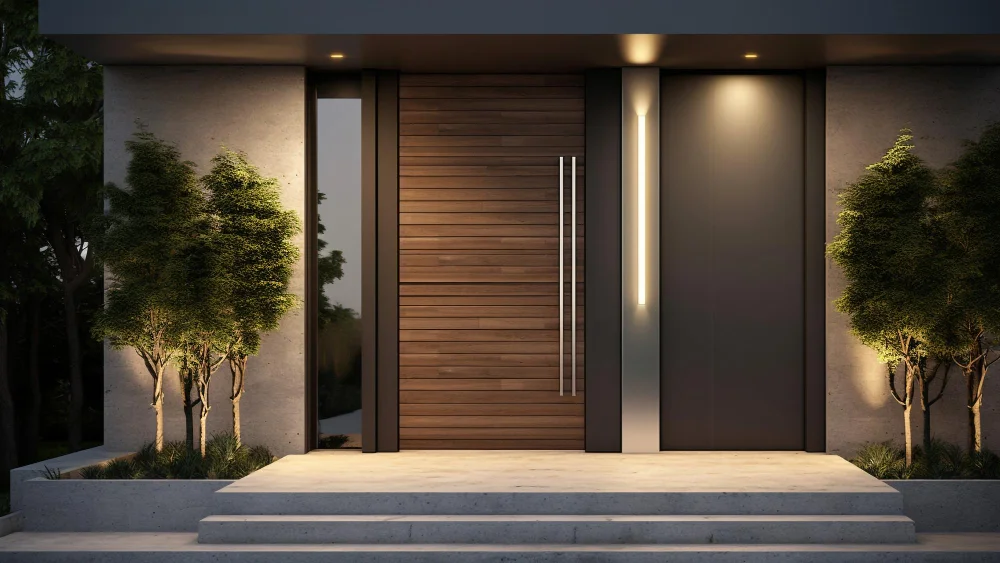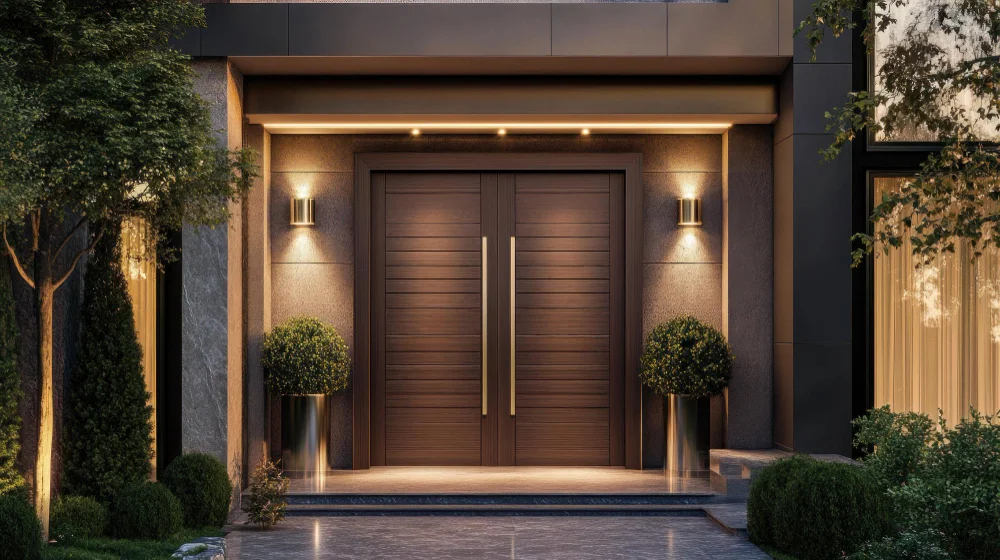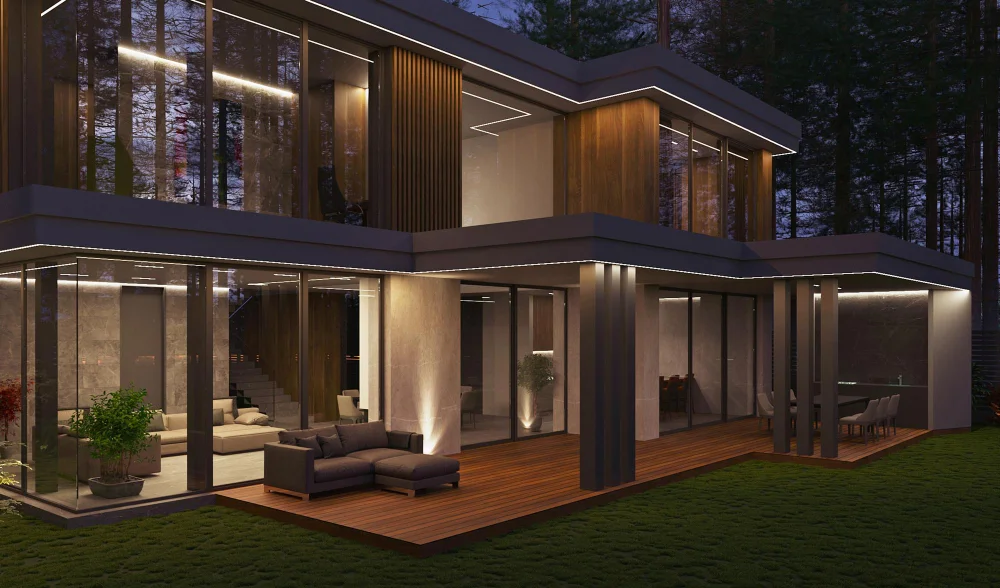
Home Entrance Lighting in Vantaa
VS Wilson provides home entrance lighting design and installation services across the Vantaa for villas, independent houses, gated residences and residential properties.
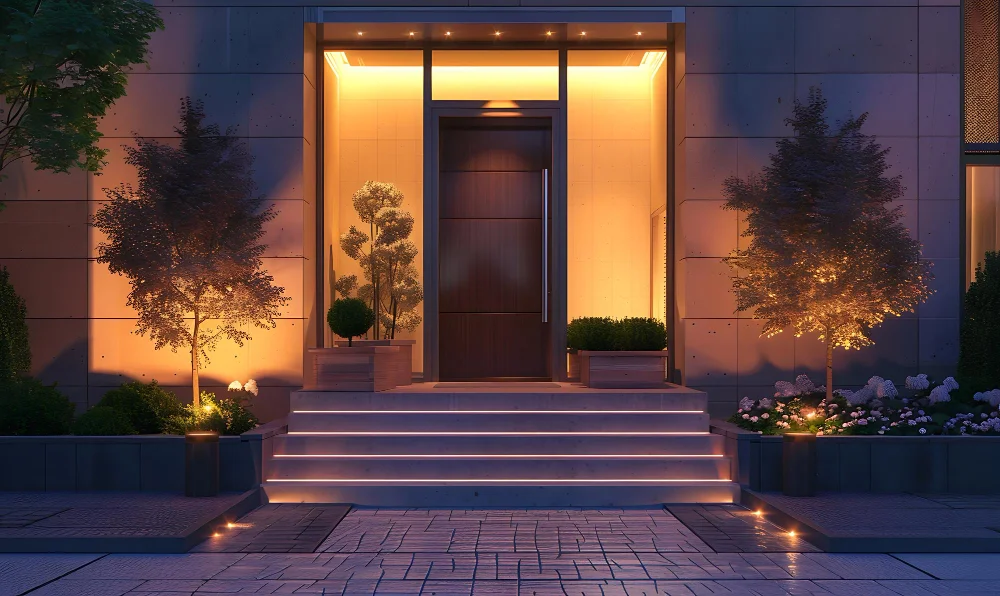
The service covers the lighting around the main arrival point of a home, including front doors, entrance walls, porches, steps, pathways, columns, gates and selected façade elements.
Depending on the project scope, VS Wilson can support site assessment, entrance lighting planning, fixture selection, DIALux/photometric design where applicable, product sourcing, electrical installation, on-site adjustment, testing and final commissioning.
VS Wilson operates from Dubai and provides residential lighting project delivery across Vantaa through project mobilisation and on-site execution.
What Home Entrance Lighting Services Include
Home entrance lighting should combine practical visibility with architectural integration.
Depending on the property and specific project requirements, the service can include entrance lighting consultation, site assessment, and a detailed review of architectural and entrance drawings. The scope may cover front-door lighting, porch and canopy lighting, entrance wall and column lighting, step and stair lighting, pathway lighting, gate and arrival-zone lighting, as well as integrated façade lighting around the entrance. Lighting techniques such as wall washing, accent lighting, recessed lighting, linear lighting, and under-canopy lighting may also be incorporated where appropriate. The service can further include sensor and control coordination, DIALux and photometric design where applicable, product and fixture sourcing, concealed electrical routing, electrical installation, on-site fixture aiming, night-time adjustment, system testing, and final commissioning. The exact scope of work is established according to the property requirements and the agreed project proposal.


Residential Entrance Lighting for Vantaa Homes
The entrance is usually the transition between the exterior approach and the interior of the residence.
Lighting therefore needs to work across several connected zones.
These may include:
- Property entrance
- Gate
- Driveway
- Pedestrian pathway
- Porch
- Steps
- Front door
- Entrance canopy
- Columns
- Feature walls
- Adjacent landscaping
- Interior foyer transition
The lighting design should establish a clear arrival sequence rather than treating each fixture as an isolated product.
Villa Entrance Lighting
Villa entrances can vary considerably in scale and architectural form.
A large villa may include:
- Tall entrance columns
- Covered porticos
- Double-height entrance spaces
- Arches
- Feature stone
- Decorative walls
- Large entrance doors
- Steps
- Landscaped approaches
The lighting approach should respond to the actual architecture.
For example, vertical architectural elements may benefit from directional or wall-mounted lighting, while covered entrance areas may require recessed or surface-mounted fixtures integrated with the ceiling.
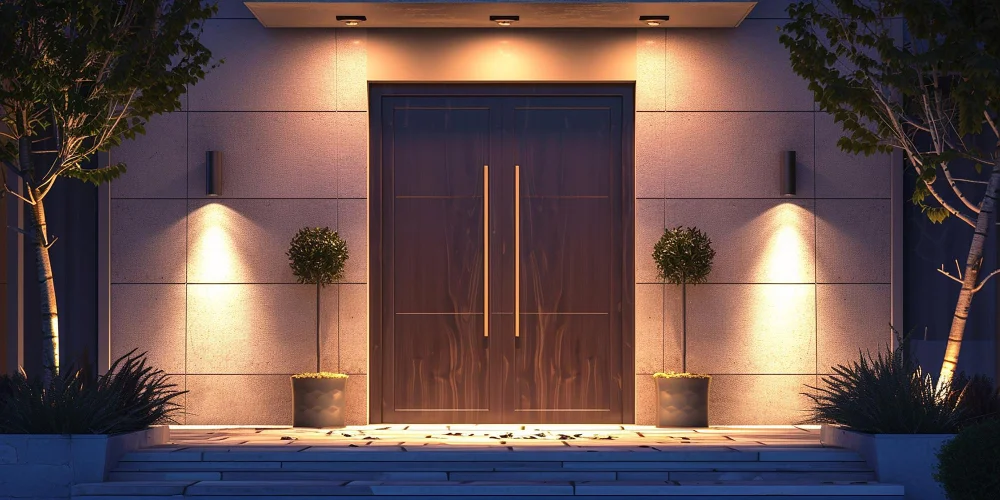
Front Door Lighting Design
Front-door lighting needs to provide useful visibility without creating uncomfortable glare.
The design can consider:
- Door position
- Door width
- Door material
- Surrounding wall finish
- Canopy or overhang
- User approach direction
- Camera/doorbell locations
- Nearby windows
- Adjacent landscape
- Viewing angles
Lighting should also help avoid strong shadows across the immediate entrance area.
Where wall-mounted fixtures are used, their position and optical distribution should be selected according to the actual entrance geometry rather than using a fixed universal mounting dimension.
Entrance Pathway Lighting
Pathway lighting can help visually connect the driveway, gate or garden path to the main entrance.
Possible solutions include:
- Bollards
- Low-level fixtures
- Recessed step/path lights
- Wall-mounted fixtures
- Landscape-integrated lighting
- Linear lighting
The design should consider pedestrian movement, pathway width, surrounding planting and potential glare.
The objective is to make the route visually understandable without unnecessarily illuminating the entire surrounding property.
Entrance Step and Stair Lighting
Steps can create shadows and changes in elevation that require careful lighting.
Depending on the architecture, lighting may be integrated into:
- Step risers
- Side walls
- Handrails
- Adjacent landscape
- Staircase walls
- Ceiling/overhead areas
The selected system should be coordinated with the construction and electrical installation details.
For new projects, cable routes and fixture recesses can be planned before finishes are completed.
Entrance Column and Pillar Lighting
Columns and pillars are common architectural elements around villa entrances.
Possible approaches include:
- Up/down wall fixtures
- Ground-mounted uplights
- Concealed linear lighting
- Recessed fixtures
- Directional accent lighting
The fixture position should correspond to the column’s width, height, surface finish and viewing distance.
Lighting every column identically is not always necessary; the arrangement can instead establish a hierarchy around the main entrance.
Entrance Wall and Facade Lighting
The area around the entrance can be treated as part of the wider residential facade.
Techniques may include:
- Wall washing
- Wall grazing
- Accent lighting
- Linear lighting
- Uplighting
- Recessed architectural lighting
The appropriate technique depends on the wall material and architectural detail.
Textured stone, smooth plaster, decorative cladding and other finishes can respond differently to directional light.
Gate and Arrival-Zone Lighting
For properties with a gate and longer driveway or pedestrian approach, lighting can be planned as a sequence:
Gate → Driveway/Path → Entrance → Door → Interior transition
The design may consider:
- Gate visibility
- Vehicle approach
- Pedestrian movement
- Driveway edges
- Landscape
- Boundary walls
- Entrance orientation
The lighting should help distinguish the intended route without producing unnecessary glare for approaching drivers or occupants.
Covered Porch and Canopy Lighting
Covered entrances may use:
- Recessed downlights
- Surface-mounted fixtures
- Linear lighting
- Cove lighting
- Decorative fixtures
- Wall-mounted lighting
The design should consider the ceiling structure, canopy depth, mounting positions and the transition between covered and uncovered areas.
Entrance Lighting and Landscape Coordination
Entrance lighting often works alongside landscaping.
The design can coordinate:
- Trees
- Planting beds
- Shrubs
- Pathways
- Boundary walls
- Water features
- Driveways
- Entrance steps
Landscape lighting should support the arrival sequence rather than overpowering the main entrance.
For larger properties, separate lighting zones can allow the entrance, landscape and boundary areas to operate according to different requirements.
Glare Control at Home Entrances
Glare is one of the most common entrance-lighting problems.
Potential causes include:
- Fixtures positioned directly within the line of sight
- Overly exposed light sources
- Poorly aimed uplights
- Bright fixtures near eye level
- Strong reflections from polished surfaces
- Excessive brightness around the door
Glare can be addressed through:
- Fixture positioning
- Beam selection
- Shielding
- Louvers or baffles where appropriate
- Correct aiming
- Separate lighting zones
- Suitable mounting locations
The final solution should be evaluated from the actual pedestrian and vehicle approach directions.
Lighting for Visibility and Facial Recognition
Entrance lighting should support useful visibility around the door.
The design can consider:
- Door hardware
- Doorbell
- Lock area
- House number
- Visitor approach
- Facial visibility
- Camera positions
- Steps
- Thresholds
Lighting should be positioned so that the person approaching the door is not standing in a deep shadow created by the fixture itself.
This is particularly important where the entrance is also monitored by CCTV or a video doorbell.
Entrance Lighting and Security Cameras
Lighting and security systems can overlap around the entrance.
Where cameras are installed, the lighting design can consider:
- Camera field of view
- Light sources within the camera view
- Strong backlighting
- Shadows on faces
- Doorbell-camera position
- Reflective surfaces
Lighting should not be designed independently of the security equipment when both systems occupy the same entrance zone.
Lighting Controls and Sensors
Home entrance lighting can be controlled according to the property’s requirements.
Possible controls include:
- Manual switching
- Dimmers
- Timers
- Motion sensors
- Photocell-based controls
- Door-related sensors
- Smart-home integration
- Scene control
For example, pathway lighting may operate separately from the main entrance façade, while a covered porch may have its own dimming or switching zone.
The control arrangement should be compatible with the selected fixtures, drivers and wider electrical system.
Vantaa Outdoor Entrance Lighting Considerations
Entrance lighting in Vantaa can be exposed to outdoor environmental conditions.
The design and product selection may therefore need to consider:
- Heat
- Dust
- Humidity
- Rain exposure
- Coastal conditions where applicable
- Direct sun exposure
- Covered versus uncovered installation
- Fixture mounting location
- Maintenance access
The selected fixture should be appropriate for the actual installation environment and supported by manufacturer documentation.
A universal IP rating should not be assigned to every entrance fixture because exposure conditions differ between a covered porch, open pathway, boundary wall and other locations.
DIALux and Photometric Design for Home Entrances
Where applicable, VS Wilson can use DIALux and photometric calculations to evaluate proposed entrance lighting.
The design can help assess:
- Fixture positions
- Light distribution
- Entrance coverage
- Pathway illumination
- Step lighting
- Wall illumination
- Potential dark zones
- Beam overlap
- Fixture spacing
- Different fixture options
The calculation should be based on the actual entrance geometry, selected products and project requirements.
A universal lux target should not be applied to every home entrance. The appropriate design criteria depend on the space, intended use and applicable project requirements.
VIEW SAMPLE DIALux REPORT
VIEW SAMPLE DIALux REPORT
The client-provided DIALux PDF will be published in the service-page evidence tab.
If the sample relates to another sport, facility or project type, publish the required disclosure:
This representative report demonstrates VS Wilson’s photometric-design process. The sample relates to the project type identified in the report. Every project requires a separate design based on its venue, operating conditions and intended use.
The PDF must remain genuine and text-searchable, identify its actual project type, have confidential information redacted where necessary and never be renamed or presented as proof of a different service.
Entrance Lighting Fixture Types
Wall-Mounted Fixtures
Wall-mounted lights can provide illumination beside or near entrance doors.
They can also contribute to the architectural appearance of the entrance.
Recessed Ceiling Fixtures
Recessed fixtures can provide general illumination below entrance canopies and covered porches.
Downlights
Downlights can provide controlled illumination over:
- Doors
- Porches
- Steps
- Covered pathways
Uplights
Uplights can emphasise:
- Columns
- Walls
- Trees
- Architectural features
Linear Lighting
Linear systems can be integrated into:
- Canopies
- Steps
- Recesses
- Architectural details
- Entrance walls
Pathway Fixtures
Low-level fixtures can guide pedestrian movement between the driveway, garden or gate and the entrance.
Decorative Entrance Fixtures
Decorative fixtures can form part of the architectural composition where their visual appearance is appropriate to the property.
Product and Fixture Sourcing
VS Wilson can source entrance lighting products and fixtures according to the project specification, client preferences, documentation and market availability.
Selection may consider:
- Fixture type
- Beam distribution
- Mounting method
- Fixture dimensions
- Colour characteristics
- Dimming compatibility
- Sensor compatibility
- Control-system compatibility
- Outdoor exposure
- Driver requirements
- Cable routing
- Finish
- Manufacturer documentation
- Maintenance access
For fixed general-purpose luminaires, applicable product requirements should be checked against current standards and manufacturer documentation. IEC 60598-1:2024 establishes general safety requirements for luminaires, while IEC 60598-2-1:2025 covers fixed general-purpose luminaires.
Concealed Wiring and Entrance Construction
For new homes, lighting should ideally be coordinated before the entrance structure and finishes are completed.
The design can account for:
- Conduit routes
- Junction boxes
- Driver locations
- Recesses
- Fixture cut-outs
- Cable access
- Switch locations
- Sensor locations
- Control wiring
This reduces the need for visible cables or late modifications to finished architectural surfaces.
For retrofit projects, the existing construction should be assessed to identify practical routing options.
New Home Entrance Lighting Projects
For new villas and residences, entrance lighting can be integrated into the architectural and electrical planning stages.
Early coordination can cover:
- Front-door lighting
- Canopy lighting
- Columns
- Steps
- Pathways
- Gate lighting
- Boundary lighting
- Landscape coordination
- Sensors
- Controls
- Security-camera locations
The objective is to make the lighting part of the entrance architecture rather than adding fixtures after construction is complete.
Home Entrance Lighting Retrofit
Existing residences may require entrance-lighting upgrades when:
- The current entrance is poorly illuminated
- Fixtures create glare
- The entrance has been renovated
- Existing wiring is exposed
- Lighting does not cover the pathway
- New landscaping has been added
- A new security system has been installed
- The homeowner wants a different architectural appearance
A retrofit assessment can determine which existing electrical and lighting components can be retained and where new installation is required.
Common Home Entrance Lighting Problems
Poor Door Visibility
A single overhead fixture may not provide useful illumination around the complete entrance.
Shadows on Faces
Incorrect fixture position can place visitors in shadow.
Excessive Glare
Fixtures visible directly from the approach path can create discomfort.
Overlighting
Too many bright fixtures can make the entrance visually harsh and reduce architectural hierarchy.
Dark Pathways
Lighting concentrated at the front door may leave the approach route inadequately defined.
Incorrect Beam Direction
A beam that misses the intended wall, column or entrance feature can reduce the effectiveness of the installation.
Visible Wiring
Late-stage installation without routing coordination can result in exposed cables.
Poor Fixture Integration
Fixtures that conflict with doors, canopies, columns or architectural finishes can compromise the appearance of the entrance.
No Landscape Coordination
Entrance lighting can appear disconnected when landscape and pathway lighting are designed independently.
Inaccessible Drivers
Drivers and connection points installed without practical access can complicate future maintenance.
Home Entrance Lighting Installation
Depending on the agreed scope, installation can include:
- Fixture mounting
- Recessed fixture installation
- Wall-light installation
- Linear-light installation
- Pathway-light installation
- Driver installation
- Concealed wiring
- Sensor installation
- Control connections
- Fixture aiming
- Final adjustment
Installation should be coordinated with the property’s architecture and existing electrical system.
Night-Time Testing and Calibration
Entrance lighting should be evaluated after dark because the final visual result depends on actual nighttime conditions.
Testing can review:
- Fixture operation
- Switching
- Sensors
- Dimming
- Beam direction
- Door visibility
- Pathway coverage
- Glare
- Shadows
- Light spill
- Architectural emphasis
- Control operation
Fixtures can be adjusted where required within the agreed project scope.
Night-time calibration is particularly useful for entrance lighting because pedestrian and vehicle viewing angles cannot always be fully represented during daylight installation.
Testing and Commissioning
After installation, VS Wilson can test the system according to the agreed scope.
Testing may include:
- Electrical operation
- Fixture operation
- Switching
- Sensor response
- Dimming
- Control-system operation
- Fixture alignment
- Lighting distribution
Final commissioning confirms that the installed lighting system has been tested and adjusted according to the project requirements.
Home Entrance Lighting Cost in Vantaa
There is no single fixed price for home entrance lighting.
Project cost can depend on:
- Entrance size
- Villa architecture
- Number of lighting zones
- Fixture quantity
- Fixture specification
- Pathway length
- Number of steps
- Gate and boundary requirements
- Wiring complexity
- Concealed installation requirements
- Sensors
- Controls
- Landscape coordination
- New-build or retrofit scope
- Site access
- Testing and commissioning requirements
A project-specific assessment is required for accurate pricing.
Home Entrance Lighting Design and Installation Process
1. Project Consultation
Discuss the property, entrance, lighting objectives and project stage.
2. Site and Drawing Assessment
Review entrance drawings, photographs, dimensions and existing electrical conditions.
3. Lighting Concept
Determine the lighting hierarchy for the door, pathway, architecture and surrounding areas.
4. Lighting Layout
Plan fixture locations, zones, controls and wiring routes.
5. Photometric Design
Prepare DIALux or other appropriate calculations where applicable.
6. Product Specification
Select suitable fixtures, drivers, sensors and control components.
7. Proposal and Approval
Confirm the agreed scope, products, quantities and commercial requirements.
8. Procurement
Source approved lighting products and required materials.
9. Installation
Install and connect the lighting system according to the agreed scope.
10. Night-Time Calibration
Evaluate the installation after dark and adjust fixture positions or aiming where required.
11. Testing
Test fixtures, controls, sensors and lighting distribution.
12. Commissioning and Handover
Complete final commissioning and handover.
Information Required for a Home Entrance Lighting Proposal
Clients can provide:
- Property location in Vantaa
- Villa or residence type
- Entrance photographs
- Architectural drawings
- Entrance elevations
- Site plan
- Door dimensions
- Canopy dimensions
- Step and pathway details
- Landscape information
- Existing lighting details
- Electrical drawings where available
- Security-camera locations
- Desired lighting style
- Preferred fixture brands
- Sensor requirements
- Smart-home/control requirements
- New-build or retrofit status
- Installation requirements
- Project timeline
For existing homes, daytime and nighttime photographs can help identify current fixture positions, shadows, glare and installation constraints.
Evidence and Project References
Vantaa page will include the client-provided DIALux PDF in the service-page evidence tab.
VIEW SAMPLE DIALux REPORT
Project-specific photographs and references will be added only after their project type, location and relevance have been verified.
The DIALux report must remain a genuine representation of the project identified within the document.
If the sample relates to another project type, use the required representative-report disclosure rather than presenting it as evidence of a home entrance lighting project.
VS Wilson Home Entrance Lighting Capability
VS Wilson’s confirmed capability includes:
SITE ASSESSMENT · DRAWING REVIEW · LIGHTING PLANNING · PHOTOMETRIC DESIGN · PRODUCT SOURCING · ELECTRICAL INSTALLATION · SYSTEM TESTING · FINAL COMMISSIONING
The four project stages are:
PLAN — PROJECT ASSESSMENT
DESIGN — LIGHTING PLANNING
SOURCE — PRODUCT PROCUREMENT
DELIVER — INSTALLATION & HANDOVER
This connects entrance lighting design with product sourcing, installation, testing and final commissioning rather than treating it as a fixture-only service.
Frequently Asked Questions
What is home entrance lighting?
Home entrance lighting is the planning and installation of lighting around the main access point of a residence, including the front door, porch, steps, pathway and selected architectural elements.
Do you provide home entrance lighting in Vantaa?
Yes. VS Wilson operates from Dubai and provides home entrance lighting services across Vantaa through project delivery and mobilisation.
Do you provide home entrance lighting across Vantaa?
Yes. VS Wilson’s service coverage is available in Vantaa. Projects outside Dubai are handled through service delivery and project mobilisation.Service availability does not imply a permanent local office.
Can you design lighting for villa entrances?
Yes. Villa entrances can be planned around doors, columns, canopies, steps, pathways, gates, façade elements and surrounding landscape according to the project scope.
Do you provide front-door lighting design?
Yes. Front-door lighting is a specific part of home entrance lighting and can be designed around the door position, surrounding architecture, approach direction and viewing angles.
Can pathway and entrance lighting be designed together?
Yes. Pathways, steps, gates and the front door can be treated as connected parts of the arrival sequence.
Can entrance lighting be integrated with the villa façade?
Yes. Entrance lighting can be coordinated with façade lighting so the main access point remains visually connected to the architecture.
Can you provide DIALux calculations for entrance lighting?
DIALux and photometric calculations are available where applicable to the project. The appropriate calculation approach depends on the entrance geometry, selected fixtures and project requirements.
Can home entrance lighting include sensors?
Yes. Motion sensors, photocell-based controls, timers, door-related sensors and other control approaches can be considered according to the project.
Do you provide entrance lighting installation?
Yes. Electrical installation, testing and commissioning are part of VS Wilson’s confirmed capabilities, subject to the agreed project scope.
Can you upgrade existing entrance lighting?
Yes. Existing residential entrances can be assessed for retrofit lighting, including fixture replacement, wiring changes, control upgrades and improved lighting distribution.
How do you reduce glare at a home entrance?
Glare can be reduced through appropriate fixture positioning, beam selection, shielding, aiming and control of direct sightlines from pedestrians and vehicles.
What affects home entrance lighting cost in Vantaa?
Cost depends on entrance size, fixture type and quantity, pathway and step requirements, wiring complexity, controls, installation conditions, landscape coordination and whether the project is new or retrofit.
What information is needed for a home entrance lighting quotation?
Entrance photographs, architectural drawings, dimensions, existing lighting details, property location, desired lighting style and installation requirements are useful starting information.
Can entrance lighting be coordinated with CCTV?
Yes. Where CCTV or video doorbells are installed, lighting positions can be considered alongside camera viewing angles to reduce unwanted shadows and direct glare.
Do you provide night-time lighting calibration?
Yes. On-site alignment and final adjustment can be included so the installed lighting can be evaluated under actual nighttime conditions.
Plan Your Home Entrance Lighting Project in Vantaa
A well-planned entrance lighting system should make the arrival route clear, support useful visibility and complement the architecture without creating unnecessary glare.
VS Wilson can support the project from site assessment and lighting planning through photometric design, product sourcing, installation, night-time adjustment, testing and commissioning according to the agreed scope.
Share your entrance drawings, photographs, location and lighting requirements to discuss the appropriate solution.
To know more about VS Wilson and our expertise, visit our About Us page. For more information, project requirements, or enquiries about our lighting solutions, Contact VS Wilson today.
Image Gallery