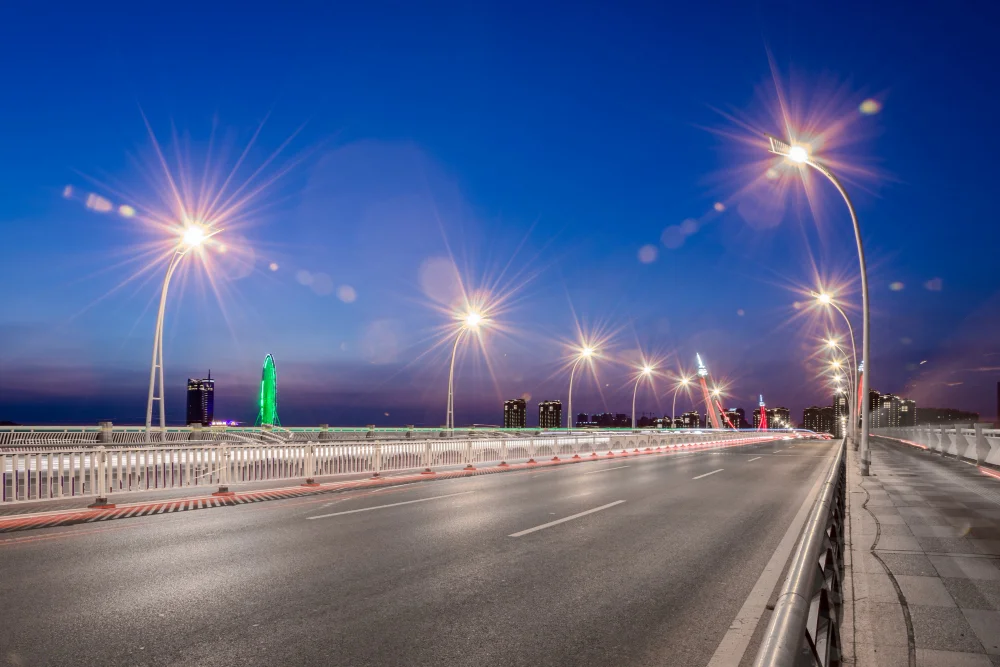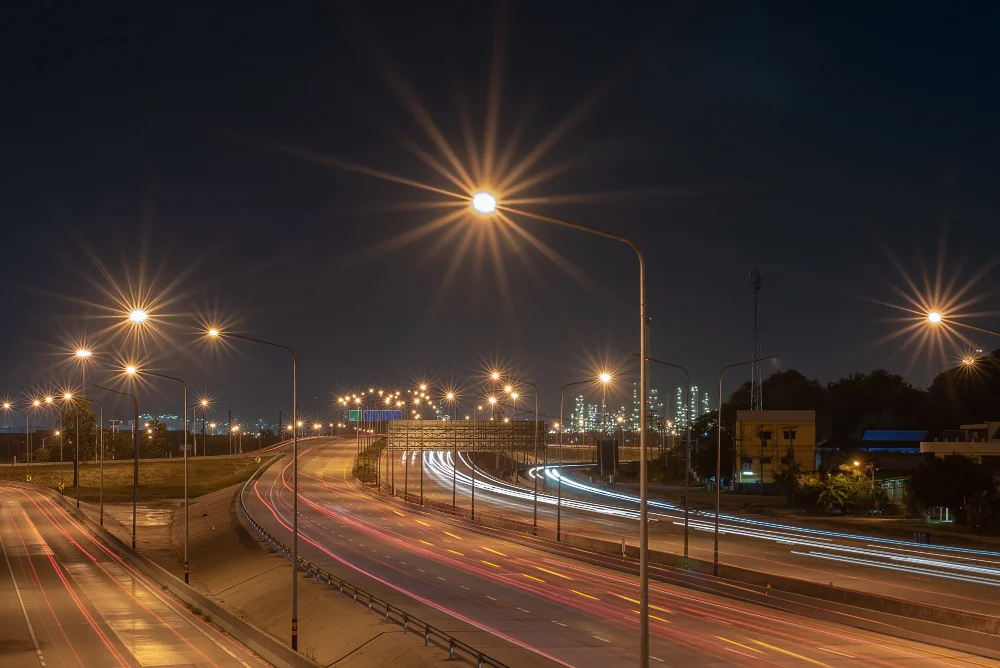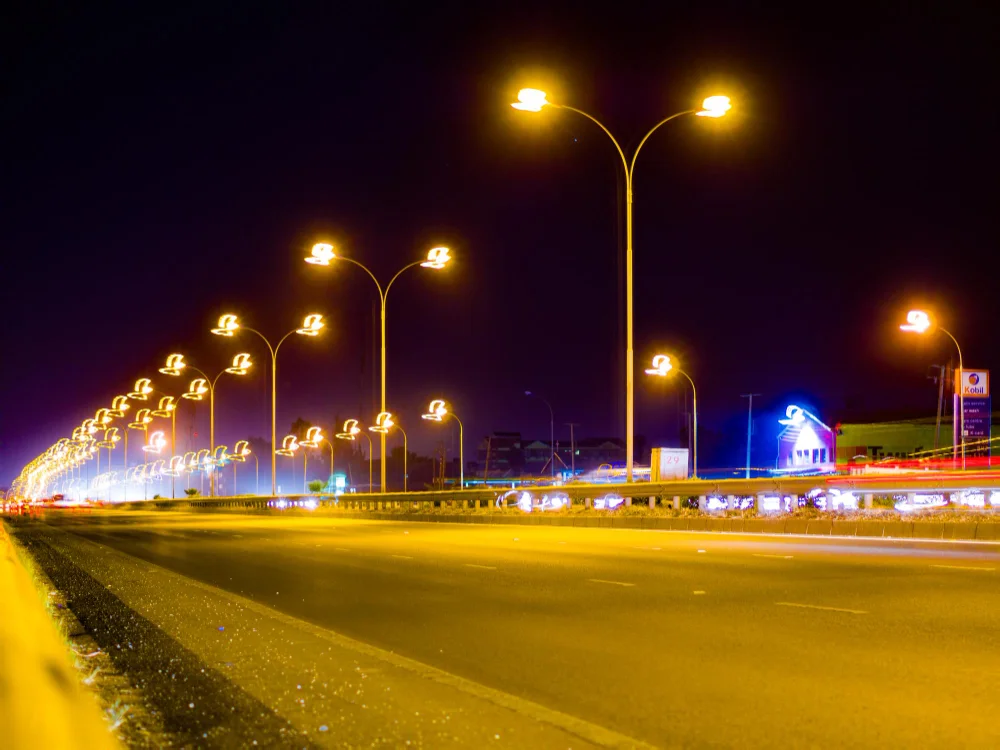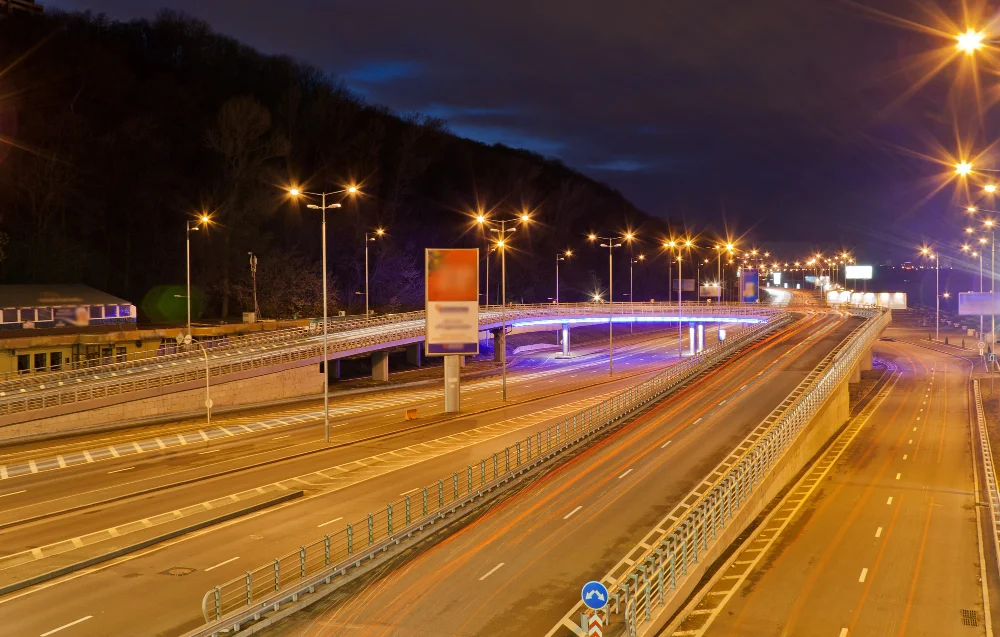
Highway Lighting Design & Installation in Sliema
VS Wilson provides highway lighting design and installation services across the Sliema for highways, expressways, arterial roads, bypasses, intercity routes, industrial corridors and other major road infrastructure.
The service combines site assessment, road-lighting planning, photometric design, pole and luminaire selection, electrical distribution planning, product sourcing, installation, testing and final commissioning.
Highway lighting is planned around the actual road geometry, traffic conditions, lighting requirements, junctions, curves, environmental conditions and project constraints. Depending on the project, DIALux or other photometric calculations can be used to evaluate the proposed lighting layout before installation.
VS Wilson operates from Dubai and provides service delivery and project mobilisation across Sliema.
What Is Highway Lighting Design & Installation?
Highway lighting design is the engineering and planning of lighting systems for roads where vehicle movement, road geometry and visual conditions determine the lighting requirements.
The service can cover highway lighting layouts, expressway and motorway lighting, arterial-road and roadway lighting, bypass and intercity road lighting, industrial-corridor lighting, junction and conflict-area lighting, bridge approach lighting, and road-underpass lighting where applicable. It can also include LED highway lighting, smart highway lighting controls, as well as retrofit and upgrading of existing highway lighting systems. During the installation stage, the approved lighting design is converted into physical infrastructure through pole installation, electrical works, luminaire mounting, cable routing, fixture alignment, system testing, and final commissioning.


Highway Lighting Design Services in Sliema
A highway lighting project should begin with an understanding of the road rather than selecting a fixture first.
VS Wilson can assess:
- Road classification
- Carriageway arrangement
- Number and width of lanes
- Traffic conditions
- Road geometry
- Median configuration
- Shoulder conditions
- Curves
- Intersections
- Entry and exit points
- Bridges
- Underpasses
- Existing lighting infrastructure
- Available electrical supply
- Environmental conditions
- Maintenance access
- Project-specific authority requirements
The resulting design can then determine appropriate fixture characteristics, mounting arrangements, spacing, electrical distribution and control requirements.
Road Geometry & Lighting Layout
Highway lighting layouts need to follow the physical characteristics of the road.
Design considerations can include:
- Pole positioning
- Pole spacing
- Mounting height
- Outreach arrangement
- Luminaire orientation
- Carriageway width
- Median width
- Lane arrangement
- Road curvature
- Intersections
- Ramps
- Merges
- Diverges
- Entry and exit zones
A layout that works on a straight section may not be appropriate for a curve, interchange or junction.
For this reason, highway lighting design should be evaluated by road section rather than assuming that one spacing arrangement applies throughout an entire project.
Photometric Design for Highway Lighting
Photometric calculations help translate the road geometry and selected luminaire characteristics into a proposed lighting arrangement.
Depending on the project, calculations can consider:
- Luminaire photometry
- Pole positions
- Mounting height
- Tilt and orientation
- Road geometry
- Carriageway dimensions
- Road-surface characteristics
- Lighting class or project criteria
- Luminance or illuminance requirements
- Uniformity
- Glare-related criteria
- Conflict areas
- Lighting transitions
CIE 115:2010 provides a structured framework for road lighting for motor and pedestrian traffic and uses parameters relevant to the visual task when selecting appropriate lighting classes. CIE also separately lists CIE 140:2019 for road-lighting calculations.
The project-specific authority requirements and approved design criteria should take precedence. No single lux, luminance or uniformity value should be presented as a universal Sliema requirement.
DIALux Highway Lighting Design
Where applicable, VS Wilson can use DIALux or other photometric software to develop and review highway lighting layouts.
The design may evaluate:
- Roadway geometry
- Pole locations
- Pole spacing
- Luminaire mounting height
- Luminaire orientation
- Light distribution
- Road surface
- Lighting levels
- Uniformity
- Glare-related parameters
- Conflict areas
- Different road sections
- Alternative fixture configurations
The calculation provides a design basis for the proposed installation and can be updated when project conditions or approved equipment change.
Inputs for Highway Lighting Calculations
Depending on the project, useful inputs include:
- Road drawings
- Alignment information
- Cross-sections
- Lane widths
- Median dimensions
- Shoulder dimensions
- Pole locations
- Mounting heights
- Luminaire photometric files
- Road-surface information
- Traffic information
- Junction layouts
- Existing lighting information
- Electrical drawings
- Control requirements
- Authority/project specifications
Highway Lighting & Driver Visibility
Highway lighting is intended to support the visual environment for road users.
The design should consider:
- Road visibility
- Lighting consistency
- Glare
- Bright and dark transitions
- Junction visibility
- Curves
- Merges
- Diverges
- Roadside features
- Visual guidance
Excessive brightness does not automatically produce better highway lighting. Incorrect fixture orientation or unsuitable distribution can introduce glare or create poor transitions between illuminated areas.
CIE 115 considers road-lighting quality and visual-task requirements for motorised traffic, while CIE 194:2011 addresses on-site measurement of photometric properties for road and tunnel lighting.
Highway Glare Control
Glare control is an important part of road-lighting design.
Potential sources include:
- Incorrect luminaire orientation
- Excessive intensity in the driver’s field of view
- Poorly selected beam distribution
- Incorrect mounting arrangement
- Uncontrolled spill light
- Inappropriate lighting at curves or conflict areas
The design can therefore consider:
- Luminaire optics
- Cut-off characteristics
- Mounting height
- Tilt
- Pole arrangement
- Road geometry
- Driver viewing direction
- Adjacent properties and infrastructure
Glare should be assessed using the applicable project criteria rather than relying on a generic fixture description.
Highway Lighting at Junctions & Conflict Areas
Intersections and other conflict areas may require different lighting consideration from uninterrupted road sections.
Examples include:
- Signalised intersections
- Roundabouts
- Merging lanes
- Diverging lanes
- Entry and exit ramps
- Toll approaches
- Pedestrian crossing areas
- Bridge approaches
- Complex interchange areas
Lighting design can assess these areas separately so that the transition from the main carriageway does not create an inappropriate change in visual conditions.
CIE 115 specifically incorporates conflict areas into its road-lighting framework.
Highway Lighting for Curves & Ramps
Curved road sections can require different consideration from straight sections.
The design may review:
- Road curvature
- Pole position
- Luminaire orientation
- Visibility through the curve
- Roadside conditions
- Lane arrangement
- Entry and exit geometry
Ramps and connecting roads may also require separate lighting calculations where their geometry or lighting criteria differ from the main carriageway.
LED Highway Lighting Solutions
LED luminaires are widely used in modern road-lighting projects, but selecting an LED fixture should not be based only on wattage.
The design can evaluate:
- Photometric distribution
- Lumen output
- Mounting height
- Beam characteristics
- Driver compatibility
- Control compatibility
- Environmental suitability
- Thermal characteristics
- Maintenance access
- Product documentation
The correct fixture is the one that works with the road geometry and project criteria.
Current Sliema road-lighting programmes demonstrate the use of LED luminaires as part of major road-lighting infrastructure upgrades.
Highway Lighting Pole Selection
Pole selection forms part of the overall lighting design.
Depending on the project, considerations can include:
- Pole height
- Single-arm or double-arm configuration
- Mounting arrangement
- Median installation
- Roadside installation
- Structural requirements
- Wind exposure
- Foundation requirements
- Access for maintenance
- Luminaire mounting configuration
Pole selection should be coordinated with the lighting calculation because changing pole height or mounting arrangement can alter the photometric result.
Highway Electrical Infrastructure
Long road corridors require electrical infrastructure capable of distributing power across multiple lighting points.
The project can involve planning for:
- Feeder circuits
- Cable routes
- Distribution panels
- Control panels
- Cable chambers
- Pull boxes
- Earthing
- Protection
- Isolation
- Switching
- Control systems
- Load distribution
Electrical design and road-lighting design should remain coordinated so that the physical installation can support the approved lighting layout.
Cable Routing & Underground Infrastructure
Highway lighting installation can involve significant underground infrastructure.
Depending on the project, execution may include:
- Cable trenching
- Conduit installation
- Cable pulling
- Pull boxes
- Cable chambers
- Pole connections
- Distribution connections
- Earthing
- Foundation interfaces
Existing utilities and civil infrastructure should be reviewed before excavation and installation.
The exact civil and electrical scope should follow the approved project drawings and authority requirements.
Highway Lighting Controls
Modern highway lighting systems can incorporate different control approaches.
Depending on the project, these may include:
- Photocells
- Timers
- Centralised controls
- Remote monitoring
- Dimming
- Lighting control units
- Automated schedules
- Smart lighting systems
CIE 115 recognises adaptive lighting as a potential approach where relevant parameters such as traffic volume or other conditions are considered.
Control integration should be considered during design rather than added after the electrical infrastructure has already been installed.
Smart Highway Lighting Systems
Smart highway lighting can combine luminaires with control and monitoring infrastructure.
Possible functions include:
- Remote switching
- Dimming
- Fault monitoring
- Scheduled operation
- Centralised control
- Energy monitoring
- Lighting status monitoring
The exact capabilities depend on the selected equipment and control platform.
Compatibility between luminaires, drivers, control units, communication infrastructure and central management systems should be verified before procurement.
Highway Lighting Installation in Sliema
VS Wilson can provide on-site highway lighting installation according to the approved project scope.
Installation activities can include:
- Site mobilisation
- Setting-out
- Pole foundation coordination
- Pole erection
- Luminaire mounting
- Cable installation
- Electrical connections
- Control-system installation
- Earthing
- Fixture alignment
- System testing
- Final commissioning
For projects on active roads, installation planning may also need to coordinate with traffic-management requirements, work zones, access restrictions and authority-approved procedures.
Installation on Active Roads
Highway lighting installation can involve working close to live traffic.
The execution plan may therefore need to coordinate:
- Work-zone arrangements
- Access routes
- Traffic management
- Installation timing
- Equipment positioning
- Cable works
- Pole erection
- Temporary lighting where required
- Safety procedures
- Authority requirements
The exact traffic-management and permit requirements depend on the road authority, project location and approved construction plan.
Highway Lighting Retrofit & Upgrading
VS Wilson can assess existing highway lighting systems for retrofit or upgrading projects.
Possible scope can include:
- Existing luminaire replacement
- LED conversion
- Pole and fixture assessment
- Lighting-layout review
- Control-system upgrades
- Electrical infrastructure assessment
- Cable and distribution review
- Smart-control integration
- Photometric redesign
- Testing and commissioning
A retrofit should be assessed against the existing pole positions, road geometry, electrical infrastructure and proposed new luminaires.
Replacing fixtures without reviewing the existing photometric arrangement can result in a lighting system that does not perform as intended.
Highway Lighting for Bridges & Underpasses
Road infrastructure may include:
- Bridges
- Flyovers
- Underpasses
- Ramps
- Tunnel approaches
- Interchange structures
These areas can introduce changes in road geometry, visual conditions and lighting requirements.
The lighting design should therefore evaluate transitions between normal roadway sections and special structures.
For tunnel-specific lighting, additional tunnel-lighting requirements may apply and should be treated as a separate technical design consideration rather than assumed to be identical to open-road lighting.
The current municipal road-lighting programme includes lighting infrastructure for streets, bridges and tunnels, illustrating the range of infrastructure involved in Sliema road-lighting systems.
Sliema Environmental Considerations
Highway lighting equipment and electrical infrastructure are installed outdoors and may be exposed to:
- Heat
- Dust
- Moisture
- Wind
- Coastal conditions
- Road contaminants
- Vehicle exhaust
- Sand accumulation
Product selection should therefore consider the actual environmental conditions at the project location.
Do not assume one enclosure rating, material specification or corrosion-protection system is suitable for every Sliema highway project.
The required equipment specification should be determined from the project environment, authority requirements and selected products.
Common Highway Lighting Problems We Solve
Uneven Road Illumination
Incorrect pole spacing or fixture distribution can produce alternating bright and dark areas.
Design response: review the complete photometric layout and road geometry.
Excessive Driver Glare
Poor fixture orientation or unsuitable optical distribution can create uncomfortable brightness.
Design response: review luminaire optics, mounting position, tilt and road-user viewing direction.
Incorrect Pole Spacing
A spacing arrangement may not perform consistently after changes to pole height or luminaire selection.
Design response: recalculate the design using the actual fixture and mounting configuration.
Poor Junction Lighting
Intersections and ramps can require different treatment from uninterrupted road sections.
Design response: identify conflict areas and assess them separately.
Cable & Electrical Problems
Long cable runs can introduce voltage-drop, protection, connection and maintenance considerations.
Design response: coordinate electrical distribution and cable infrastructure during design.
Installation Deviates From Design
Changing pole positions or fixture angles on site can alter the approved photometric result.
Design response: maintain design-to-installation coordination and complete post-installation checks.
Incompatible Control Equipment
Different luminaires, drivers and control systems may not communicate or operate correctly together.
Design response: verify system compatibility before procurement and commissioning.
Highway Lighting Testing & Photometric Verification
Testing should confirm that the installed system corresponds with the approved design and project requirements.
Depending on the project, testing can include:
- Electrical testing
- Luminaire operation
- Control-system testing
- Switching
- Dimming
- Photometric measurements
- Lighting-level checks
- Uniformity checks
- Fixture alignment
- Fault identification
CIE 194:2011 specifically addresses on-site measurement of photometric properties of road and tunnel lighting.
The actual acceptance criteria should follow the approved project specification and applicable authority requirements.
Final Commissioning
Commissioning can include:
- Final fixture alignment
- Electrical system verification
- Control-system checks
- Switching tests
- Dimming tests where applicable
- Photometric verification where required
- Correction of identified installation issues
- Final system handover
The objective is to ensure the completed installation corresponds with the agreed design and project requirements.
What Affects Highway Lighting Cost in Sliema?
Highway lighting costs vary significantly between projects.
Key cost factors include:
- Road length
- Number of lanes
- Road geometry
- Pole quantity
- Pole height
- Pole configuration
- Luminaire type
- Luminaire quantity
- Electrical distribution
- Cable length
- Foundations
- Pull boxes and chambers
- Control systems
- Smart-lighting requirements
- Existing infrastructure
- Retrofit requirements
- Civil works
- Traffic-management requirements
- Site accessibility
- Authority requirements
- Testing and commissioning scope
A project-specific quotation should therefore be prepared after reviewing the road drawings, lighting requirements and execution conditions.
Highway Lighting Design & Installation Process
1. Project Consultation
Review the road infrastructure, project objectives, scope and available documentation.
2. Site Assessment
Assess road conditions, existing infrastructure, traffic environment and installation constraints.
3. Drawing Review
Review alignment plans, cross-sections, road geometry, electrical drawings and relevant civil information.
4. Lighting Classification & Design Criteria
Identify the applicable project and authority criteria for the road section.
5. Photometric Design
Prepare DIALux or other road-lighting calculations where applicable.
6. Pole & Luminaire Selection
Select suitable poles, luminaires, mounting configurations and controls.
7. Electrical Design Coordination
Develop cable routes, distribution arrangements, controls and associated electrical requirements.
8. Product Sourcing
Source approved products according to the project specification.
9. Installation
Execute foundations, poles, cables, luminaires and associated electrical works according to the approved scope.
10. Testing
Test electrical systems, lighting operation, controls and photometric performance where required.
11. Commissioning & Handover
Complete final adjustments, verification and handover according to the approved project requirements.
What We Need to Prepare a Highway Lighting Proposal
For an initial assessment, clients can provide:
- Sliema project location
- Road name or project reference
- Road alignment drawings
- Road cross-sections
- Number of lanes
- Median information
- Road width
- Pole layout, if existing
- Existing lighting information
- Luminaire specifications, if upgrading
- Electrical drawings
- Control-system requirements
- Traffic information where available
- Authority/project specifications
- Site photographs
- Project timeline
- Installation scope
For retrofit projects, existing pole locations, luminaire information and electrical infrastructure details are particularly useful.
Sample DIALux Evidence
VIEW SAMPLE DIALux REPORT
The client-provided DIALux PDF will be published in the service-page evidence tab.
The report must remain identifiable as the actual project/document type and must not be renamed or presented as proof of a different highway project.
Any confidential information should be redacted before publication.
If the representative report relates to another project type, use the required disclosure:
This representative report demonstrates VS Wilson’s photometric-design process. The sample relates to the project type identified in the report. Every project requires a separate design based on its venue, operating conditions and intended use.
The evidence section should include a concise HTML explanation of what the report demonstrates and a direct working link to the PDF.
The SOP requires the universal evidence button to be exactly VIEW SAMPLE DIALux REPORT, with genuine, text-searchable evidence and no misleading project identification.
VS Wilson Highway Lighting Capability
SITE ASSESSMENT
DRAWING REVIEW
LIGHTING PLANNING
PHOTOMETRIC DESIGN
PRODUCT SOURCING
ELECTRICAL INSTALLATION
SYSTEM TESTING
FINAL COMMISSIONING
PLAN — PROJECT ASSESSMENT
DESIGN — LIGHTING PLANNING
SOURCE — PRODUCT PROCUREMENT
DELIVER — INSTALLATION & HANDOVER
Why Use an End-to-End Highway Lighting Service?
Highway lighting connects several engineering and execution stages.
The road layout, photometric design, poles, luminaires, electrical distribution, controls and physical installation all influence the final system.
Handling these stages as a coordinated workflow helps reduce gaps between:
- Road-lighting design
- Photometric calculations
- Pole selection
- Luminaire selection
- Electrical infrastructure
- Product procurement
- Installation
- Testing
- Commissioning
VS Wilson’s confirmed capabilities include lighting consultation, design, DIALux/photometric calculations where applicable, product sourcing, electrical installation, testing, commissioning and both new-project and retrofit scope.
FAQs
What does highway lighting design and installation include?
It can include site assessment, road-lighting planning, photometric calculations, pole and luminaire selection, electrical distribution, product sourcing, installation, testing and final commissioning according to the agreed project scope.
Do you provide highway lighting services in Sliema?
Yes. VS Wilson provides highway lighting design and project execution across Sliema through service delivery and project mobilisation from its Dubai base.
Do you design lighting for expressways and major roads?
Yes. Highway lighting can be planned for expressways, arterial roads, bypasses, intercity routes, industrial corridors and other major road infrastructure, subject to the project requirements.
Do you use DIALux for highway lighting?
DIALux or other suitable photometric software can be used where applicable to evaluate road geometry, pole positions, luminaire distribution and project-specific lighting criteria.
How is highway lighting different from normal street lighting?
Highway lighting is designed around the visual and operational requirements of higher-speed road traffic, larger carriageways and complex road geometry. Pole arrangement, optical distribution, glare control and conflict-area treatment can therefore differ from lower-speed urban streets.
Can you design LED highway lighting?
Yes. LED luminaires can be evaluated and specified according to the road geometry, photometric requirements, environmental conditions, control requirements and project specification.
Can highway lighting include smart controls?
Yes. Depending on the project, controls can include scheduled switching, dimming, centralised control, remote monitoring and other automation functions.
Can you upgrade an existing highway lighting system?
Yes. Retrofit projects can include luminaire replacement, LED conversion, photometric redesign, electrical assessment, control upgrades and testing, depending on the existing infrastructure.
Do you install highway lighting poles?
Pole installation can form part of the agreed project scope, including coordination of foundations, erection, luminaire mounting, electrical connections and final alignment.
Can you handle electrical works for highway lighting?
Electrical installation is part of VS Wilson’s available capabilities. The exact electrical and civil scope is defined in the project proposal.
How do you control glare on highways?
Glare can be addressed through luminaire selection, optical distribution, mounting height, pole arrangement, fixture orientation and project-specific photometric evaluation.
Do highway lighting projects require authority approvals?
Authority requirements depend on the project location, road ownership and scope. Projects may require authority coordination, permits or NOCs. The applicable requirements should be confirmed for the specific project.
How much does highway lighting cost in Sliema?
Cost depends on road length, number of lanes, pole quantity, luminaire specification, electrical infrastructure, civil works, controls, retrofit conditions, site access and testing requirements. A project-specific quotation is required.
Do you provide highway lighting testing and commissioning?
Yes. Testing and commissioning are available within VS Wilson’s project-delivery capability, subject to the agreed scope.
Discuss Your Highway Lighting Project
Planning a new highway lighting system, upgrading an existing road-lighting network or replacing conventional luminaires with a new LED and control system?
Share your road drawings, existing lighting information, project location and scope requirements with VS Wilson for a project-specific assessment and proposal.
To know more about VS Wilson and our expertise, visit our About Us page. For more information, project requirements, or enquiries about our lighting solutions, Contact VS Wilson today.
Image Gallery