Airport Lighting Design in San Francisco
Airport lighting in San Francisco requires coordinated planning, technical design, product selection, installation and commissioning across operational airport environments.
VS Wilson provides airport lighting solutions covering lighting assessment, planning, photometric design, product sourcing, electrical installation, testing and commissioning for new projects and existing facilities.
The scope can include runway, taxiway, apron and ramp areas, perimeter/security zones and other aviation-related lighting requirements, subject to the project’s approved design, operational requirements and applicable authority requirements.
Airport Lighting Services We Provide
VS Wilson supports airport lighting projects through an end-to-end workflow:
Site and project assessment, Drawing and layout review, Lighting planning, Photometric design and DIALux calculations where applicable, Product and fixture sourcing, Electrical installation, System testing, Final commissioning.
The exact scope is established from project drawings, site conditions, operational requirements, specifications and the agreed proposal.
Airport Lighting Design Coordination Framework
Airport lighting design should translate operational requirements, aviation criteria, architectural conditions and electrical interfaces into one coordinated design basis. This coordination helps ensure that terminal, passenger and airside lighting requirements are developed from the approved project information before detailed calculations, product selection and execution planning begin.


Airport Lighting Design in San Francisco
Airport lighting design needs to consider the function of each operational zone rather than treating the airport as one general lighting environment.
Design inputs may include:
- Runway and taxiway configuration
- Aircraft movement areas
- Apron and aircraft stand layouts
- Mounting locations and heights
- Existing structures and infrastructure
- Required light distribution
- Visibility and glare considerations
- Electrical infrastructure
- Control and operational requirements
- Environmental conditions
- Project specifications and applicable aviation requirements
Where applicable, DIALux and photometric calculations can be used to assess proposed lighting layouts before installation.
Lighting design should be coordinated with the project requirements and applicable aviation standards rather than relying on generic illumination values.
Runway Lighting
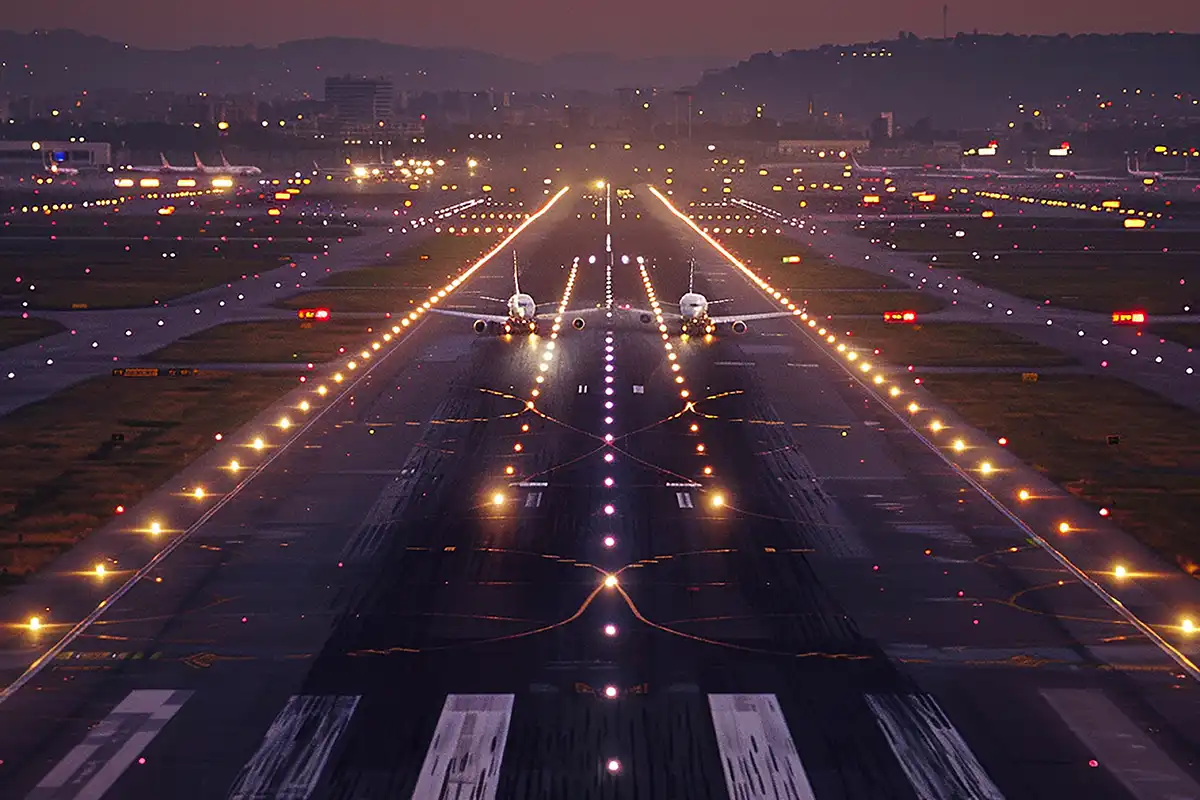
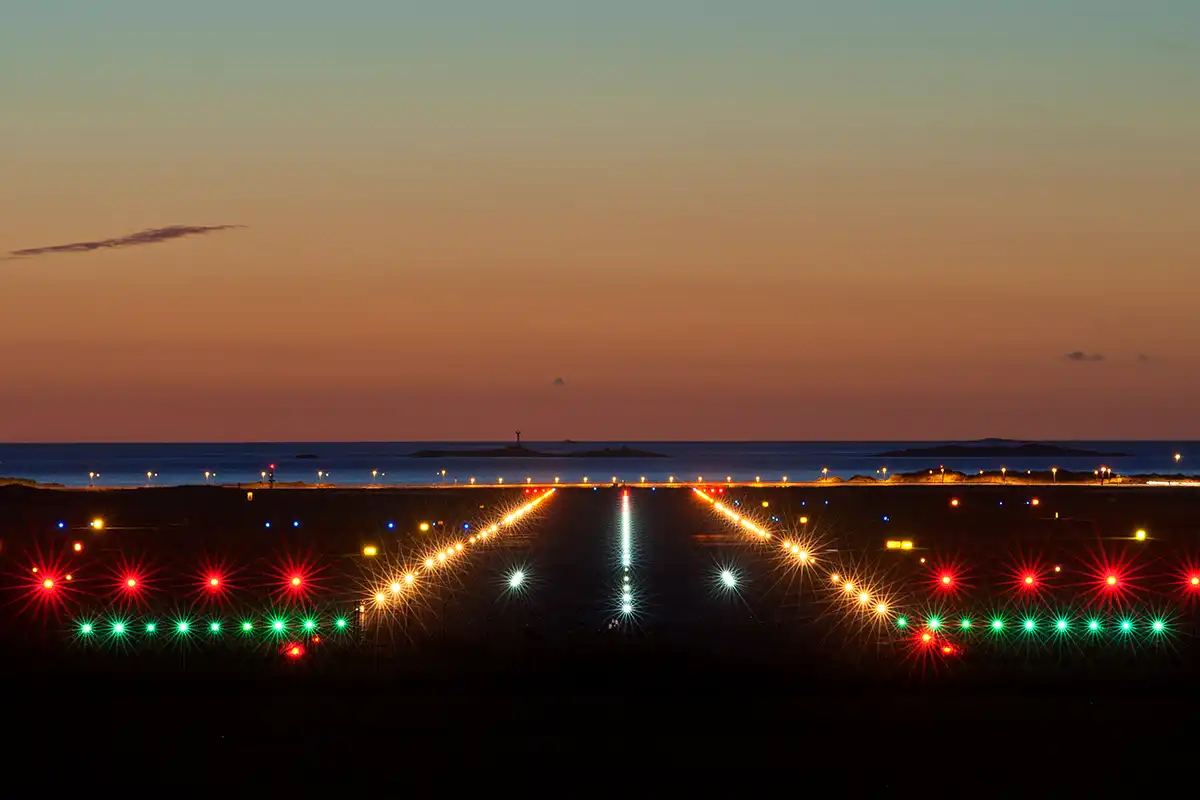
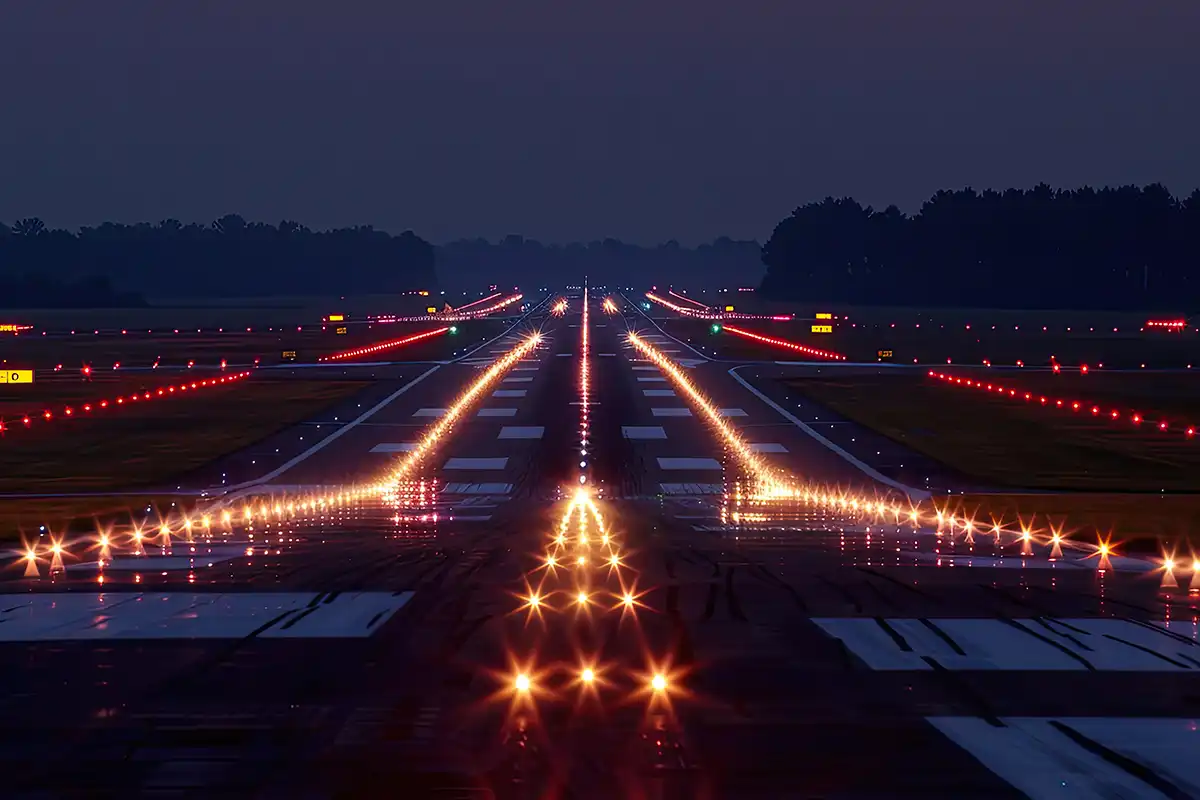
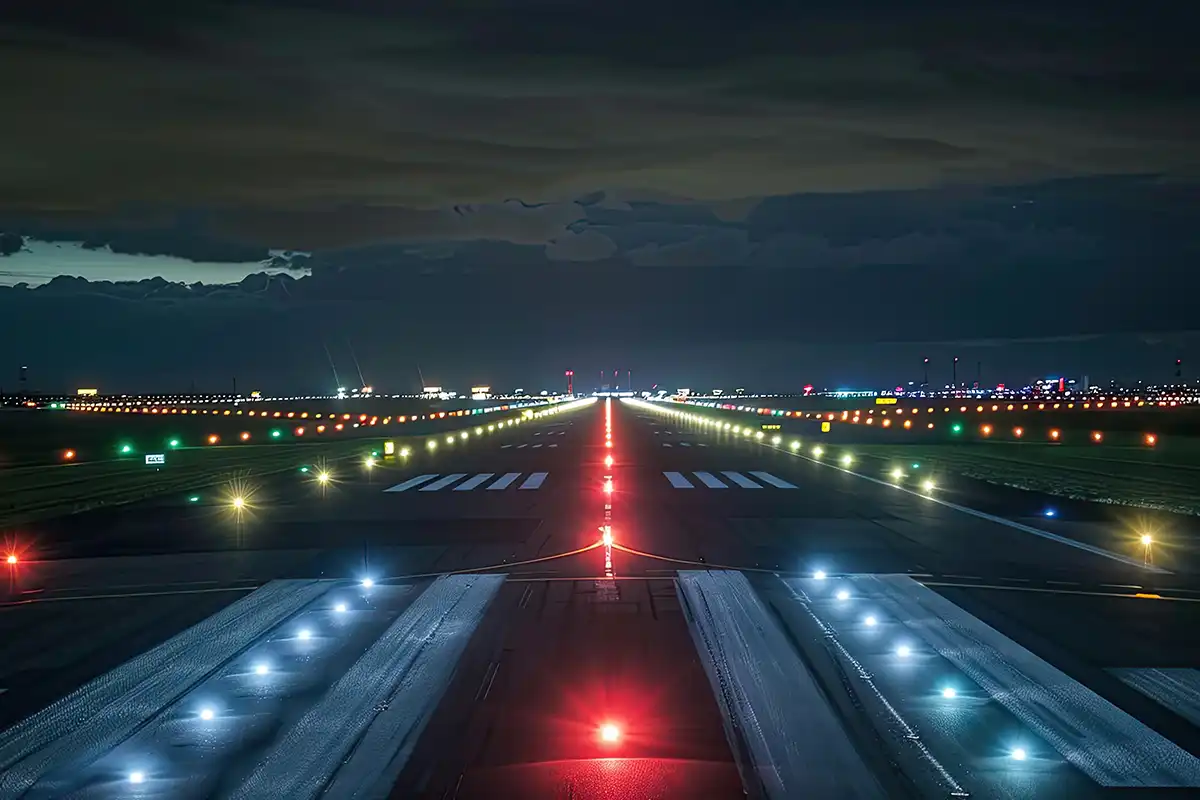
Runway lighting helps provide visual guidance and define runway areas for aircraft operations.
Depending on the project scope, lighting requirements may involve runway edge, approach, threshold, centreline or other aeronautical visual aids. The exact system depends on the runway classification, operating conditions, approved design and applicable aviation requirements.
Fixture type, location, intensity, colour, spacing and control requirements should be established from the project design and relevant authority requirements.
Taxiway Lighting
Taxiways require lighting systems that support aircraft movement between runway, apron and other airport operational areas.
Design and installation may consider:
- Taxiway geometry
- Aircraft movement routes
- Edge and centreline requirements where applicable
- Holding positions
- Stop-bar and associated lighting requirements where specified
- Fixture positioning
- Visibility and glare
- Electrical and control infrastructure
The final configuration should follow the approved project design and applicable aerodrome requirements.
Apron & Ramp Lighting
Apron and ramp areas combine aircraft movement, parking, servicing and ground-handling activities.
Lighting design therefore needs to balance visibility for pilots and ground personnel while controlling glare and avoiding excessive shadows.
Project considerations may include:
- Aircraft stand positions
- Service roads and equipment movement
- High-mast or other area-lighting arrangements
- Mounting height
- Beam distribution
- Glare control
- Uniformity of coverage
- Maintenance access
- Electrical and control requirements
The project must be designed in accordance with the applicable aviation authority, airport-operator requirements, relevant ICAO provisions and project-specific specifications.
Airport Security & Perimeter Lighting
Airport perimeter and restricted-area lighting may be required to support security, monitoring and controlled access.
The lighting design should consider the relationship between illumination and surveillance systems so that excessive contrast or poorly illuminated areas do not compromise monitoring.
Depending on the project, this may include:
- Perimeter lighting
- Access-area lighting
- Security-zone lighting
- Service-road lighting
- Lighting around restricted areas
- Coordination with CCTV and security infrastructure
The final arrangement should be based on the airport’s security and operational requirements.
Airport Lighting for New Projects
For a new airport, terminal, apron, runway extension or other aviation infrastructure project, lighting can be considered from the early design stage.
Early coordination can help align:
- Lighting layouts
- Electrical infrastructure
- Mounting structures
- Fixture locations
- Cable routes
- Control systems
- Access for maintenance
- Testing and commissioning requirements
VS Wilson can coordinate lighting planning, sourcing and installation around the approved project requirements.
Airport Lighting Retrofit & Upgrades
Existing airport facilities may require lighting upgrades, replacement of outdated fixtures or modifications to existing lighting infrastructure.
A retrofit project may involve:
- Reviewing the existing installation
- Understanding operational constraints
- Identifying replacement or upgrade requirements
- Developing the proposed lighting design
- Reviewing electrical and structural interfaces
- Sourcing specified products
- Phased installation where required
- Testing the upgraded system
- Final commissioning
Airport retrofit work should be planned around the operational environment. Phased execution may be considered where the facility must continue operating during the upgrade.
DIALux & Photometric Lighting Design
Where applicable, VS Wilson can use DIALux and photometric calculations during lighting design.
The design process can help evaluate:
- Fixture positioning
- Light distribution
- Mounting arrangements
- Illuminance
- Uniformity
- Potential dark areas
- Potential glare-related issues
- Alternative fixture layouts
The final design remains project-specific. Calculated results should not be presented as guaranteed field performance because actual conditions depend on installation accuracy, product characteristics, surrounding structures and operating conditions.
View Sample DIALux Report
The client-provided DIALux report should be placed in the service-page evidence section as a genuine, text-searchable PDF with any confidential information appropriately redacted.
If the sample report represents a different facility or project type, display the following disclosure beside it:
This representative report demonstrates VS Wilson’s photometric-design process. The sample relates to the project type identified in the report. Every project requires a separate design based on its venue, operating conditions and intended use.
This follows the evidence rules in the VS Wilson SOP.
Product & Fixture Sourcing
Airport lighting products should be selected according to the approved project specification, environmental conditions, operational requirements and applicable documentation.
VS Wilson can support product and fixture sourcing as part of the agreed project scope.
Product selection may consider:
- Fixture application
- Light distribution
- Mounting arrangement
- Electrical characteristics
- Environmental conditions
- Required documentation
- Availability
- Maintenance requirements
- Project specifications
- Client or consultant requirements
Multi-brand sourcing can be considered according to the project specification, client preference, documentation and market availability.
Airport Lighting Installation
Installation requires accurate execution of the approved lighting design.
Depending on project scope, installation activities may include:
- Fixture installation
- Mounting and alignment
- Electrical connections
- Cable and infrastructure coordination
- Control-system integration where applicable
- Installation across operational zones
- Site coordination
- Testing preparation
Airport environments may require additional coordination because installation activities can interact with aircraft movement, ground handling and existing airport operations.
Testing & Commissioning
Testing verifies that the installed system corresponds with the approved project requirements.
Testing and commissioning may include:
- Visual inspection
- Fixture and connection checks
- Electrical testing
- Lighting operation checks
- Alignment verification where applicable
- Control-system checks
- Functional testing
- Rectification of identified issues
- Final commissioning
The exact testing procedure should follow the approved project documentation and applicable requirements.
Technical & Operational Considerations
Airport lighting differs from conventional commercial or industrial lighting because lighting performance interacts directly with aviation operations.
Important considerations include:
Visibility
Lighting should support the intended visual task and operating environment.
Glare Control
Fixture aiming, mounting height and beam distribution should be coordinated to avoid creating unacceptable glare for pilots or other personnel.
Uniform Coverage
Lighting layouts should avoid excessive contrast, deep-shadow areas and inconsistent coverage in relevant operational zones.
Electrical Reliability
Airport lighting systems may require appropriate primary and secondary/emergency power arrangements depending on the system and applicable project requirements.
Environmental Conditions
Environmental conditions, weather exposure, corrosion risk, dust, moisture, temperature variation and maintenance requirements should be assessed for the individual site.
Operational Coordination
Installation and upgrade work should be planned around airport operating conditions, access restrictions and approved work procedures.The project must be designed in accordance with the applicable aviation authority, airport-operator requirements, relevant ICAO provisions and project-specific specifications.
Common Airport Lighting Problems
Airport lighting projects can encounter issues such as:
- Incorrect fixture positioning
- Inadequate light coverage
- Excessive glare
- Deep-shadow areas
- Poor coordination between design and installation
- Inadequate electrical redundancy
- Difficult maintenance access
- Mismatch between existing infrastructure and proposed fixtures
- Installation constraints within operational zones
- Insufficient testing before handover
These issues should be assessed against the specific project design and operational requirements rather than treated as universal conditions.
Our Airport Lighting Project Process
1. Project Assessment
Review the project brief, drawings, site information, operational requirements and existing infrastructure where applicable.
2. Design Planning
Develop the lighting concept and zone-specific requirements based on the available project information.
3. Photometric Design
Prepare lighting calculations and simulations where applicable, including DIALux-based analysis when required.
4. Product Sourcing
Identify suitable products and fixtures according to the approved specification, documentation and project requirements.
5. Installation
Execute the approved lighting installation with coordination across the relevant airport zones.
6. Testing
Check the installed system and identify any adjustments or rectification requirements.
7. Commissioning
Complete final system checks and commissioning according to the agreed project scope.
8. Handover
Provide the agreed project documentation and hand over the completed installation.
What Affects Airport Lighting Cost in San Francisco?
There is no single fixed airport lighting price because project requirements vary considerably.
Key cost factors include:
- Airport size
- Number of lighting zones
- Runway and taxiway requirements
- Apron area
- Number and type of fixtures
- Mounting structures
- Electrical infrastructure
- Control systems
- Cable routes
- Existing infrastructure
- Retrofit or new-build scope
- Access and operational restrictions
- Installation requirements
- Testing and commissioning scope
- Product specifications
- Documentation requirements
A project-specific quotation should therefore be prepared after reviewing the available drawings, scope and site requirements.
What We Need to Prepare a Proposal
To assess an airport lighting project, provide the available information such as:
- Project location
- New construction or retrofit
- Site/layout drawings
- Runway, taxiway or apron plans
- Existing lighting details, where applicable
- Lighting specifications
- Required operating conditions
- Fixture schedules, if already specified
- Electrical drawings where available
- Project timeline
- Required installation and commissioning scope
- Any applicable consultant or authority requirements
If some information is unavailable, the project can still be discussed so the required inputs can be identified.
Why Choose VS Wilson for Airport Lighting in San Francisco?
VS Wilson provides a coordinated lighting workflow covering consultation, planning, design, product sourcing, installation, testing and commissioning.VS Wilson provides airport lighting design project support in San Francisco through project-specific planning, mobilisation and on-site execution, subject to the agreed scope. Service availability does not imply a permanent local office.
Airport Lighting Service Coverage in San Francisco
VS Wilson provides airport lighting design project support in San Francisco through project-specific planning, mobilisation and on-site execution, subject to the agreed scope. Service availability does not imply a permanent local office.
Frequently Asked Questions
What does airport lighting include?
Airport lighting can include runway, taxiway, apron/ramp, perimeter and other aviation-related lighting systems, together with design, product sourcing, installation, testing and commissioning according to project scope.
Do you provide airport lighting design in San Francisco?
Yes. VS Wilson provides lighting planning and design, with DIALux and photometric calculations where applicable to the project.
Can you handle airport lighting installation?
Yes. Electrical installation, testing and commissioning are part of VS Wilson’s confirmed capabilities, subject to the agreed project scope.
Can airport lighting be upgraded while the airport remains operational?
Potentially, depending on the project and operational constraints. Phased or coordinated execution may be considered where continued operation is required.
Do you provide apron and ramp lighting?
Yes. Apron and ramp lighting can be included as part of an airport lighting project, with the design based on aircraft stands, ground operations, visibility, glare and applicable requirements.
How is airport lighting designed?
Airport lighting design begins with project and site information, operational zones, drawings and requirements. Photometric calculations can then be used where applicable to evaluate the proposed lighting layout before installation.
What standards apply to airport lighting in San Francisco?
The project must be designed in accordance with the applicable aviation authority, airport-operator requirements, relevant ICAO provisions and project-specific specifications.
What information is required for an airport lighting quotation?
Useful inputs include project location, drawings, airport zone, new-build or retrofit status, lighting specifications, existing infrastructure, installation requirements and project timeline.
Do you provide a DIALux report?
A sample DIALux report can be provided through the service-page evidence section where the client-approved report is available. Any representative report must clearly identify its actual project type and must not be presented as proof of a different project or facility.
How much does airport lighting cost in San Francisco?
Airport lighting cost depends on the project scale, operational zones, fixture requirements, electrical infrastructure, installation conditions, retrofit/new-build scope and testing requirements. A project-specific quotation is required rather than using a generic price.
Discuss Your Airport Lighting Project
Planning a new airport lighting system or upgrading an existing facility?
To know more about VS Wilson and our expertise,visit our About Us page. For more information, project requirements, or enquiries about our lighting solutions, Contact VS Wilson today.
Share your project location, drawings, lighting requirements and available specifications with VS Wilson. The team can review the project scope and identify the appropriate design, sourcing, installation, testing and commissioning requirements.
Image Gallery