Badminton Court Lighting in Oakland
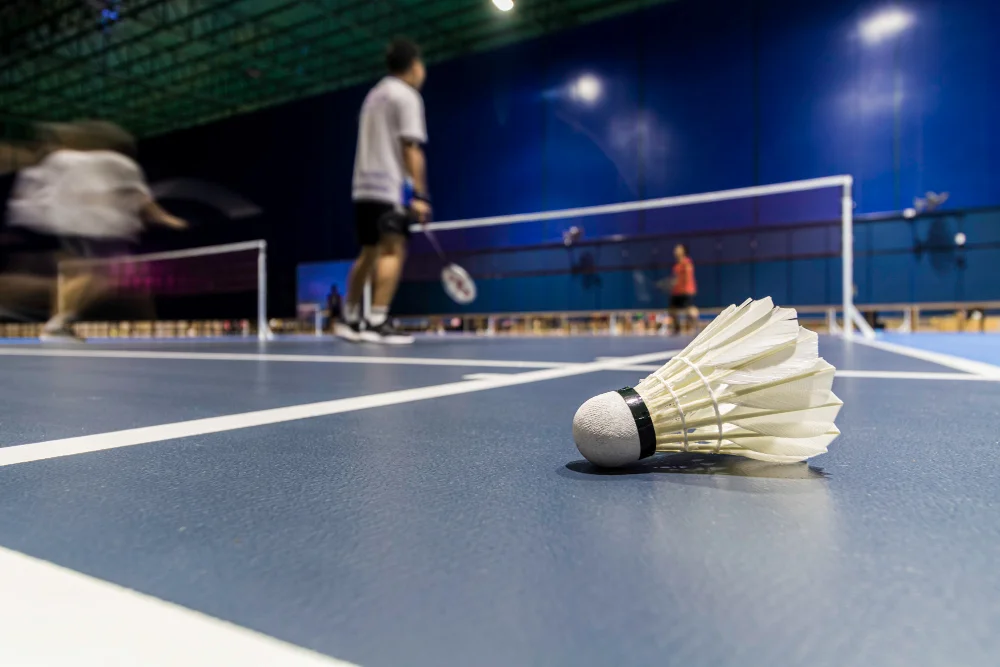
Badminton court lighting needs to do more than make the playing floor bright. Players repeatedly look upward while tracking a small, fast-moving shuttlecock, which means luminaire position, glare control, vertical visibility, uniformity and the visual background can affect play even when a court appears to have sufficient light.
VS Wilson provides badminton court lighting services across Oakland for sports academies, badminton clubs, schools, universities, recreation centres, multi-sport halls and other indoor sports facilities.
Depending on the agreed project scope, our services can include site assessment, drawing review, lighting planning, DIALux and photometric calculations, multi-brand product sourcing, electrical installation, system testing and final commissioning.
The design is developed around the actual court layout, standard of play, ceiling height, luminaire mounting positions, player sightlines, background surfaces, daylight, neighbouring courts and any competition or broadcast requirements rather than selecting fixtures only by wattage or lumen output.
SITE ASSESSMENT → DRAWING REVIEW → LIGHTING PLANNING → PHOTOMETRIC DESIGN → PRODUCT SOURCING → ELECTRICAL INSTALLATION → SYSTEM TESTING → FINAL COMMISSIONING
Why Badminton Court Lighting Needs Sport-Specific Design
Badminton creates a demanding visual task because the shuttle moves quickly in both horizontal and vertical directions.During clears, lifts and smashes, players frequently look toward the ceiling while trying to identify the shuttle against the background of luminaires, roof structure and walls.
A badminton court can achieve the required measured horizontal illuminance and still perform poorly if the luminaires are positioned directly within important player sightlines, bright fittings dominate the ceiling background, or light distribution is uneven across the court. Performance can also be affected when the backcourt is noticeably darker than the centre, adjacent courts create glare, daylight enters behind the shuttle trajectory, or ceiling and wall colours reduce shuttle contrast. Fixture output must also be appropriate for the mounting height, and the lighting system should be designed specifically for badminton rather than adapted from a generic warehouse layout. Specialist badminton-lighting guidance therefore places strong emphasis on glare control, elimination of dark zones, background contrast, fixture positioning, and reliable shuttle visibility.


Badminton Facilities We Can Support
VS Wilson can support lighting projects for single badminton courts, multi-court badminton halls, sports academies, clubs, schools and universities, community facilities, leisure centres, corporate recreation areas and multi-purpose indoor sports halls.
The required lighting criteria should be defined according to how the facility will actually operate.
A recreational training court should not automatically be designed from a television-broadcast requirement, while a competition venue should not be designed using only a basic recreational lighting target.
Start With the Standard of Play
Before selecting luminaires, the project should establish the intended use of the courts.
Possible operating levels can include:
- Recreational play
- Training
- School or university sport
- Club competition
- Regional or national competition
- Professional competition
- BWF-sanctioned event requirements where applicable
- Television or broadcast use
EN 12193:2018 remains a current sports-lighting standard and covers illuminance, uniformity, glare restriction and colour properties for indoor and outdoor sports applications.
However, the selected project criteria should not automatically be described as a Oakland statutory requirement merely because they come from EN 12193.
The facility owner, consultant, sporting body or event organiser may impose a different or additional design basis.
Badminton Court Lux Levels
There is no single badminton court lux value that should be used for every project.
Different levels of play can require different lighting criteria.
EN 12193 uses competition classes, while BWF requirements for major television events can be considerably more demanding.
A recent BWF Major Events bid document specifies a minimum of 1500 lux for TV courts in the context of those major-event requirements.
That figure should not be presented as the universal requirement for every badminton academy, recreational court or club in Oakland.
The correct value needs to be established from:
- Intended standard of play
- Applicable sports-lighting standard
- Competition organiser requirements
- Broadcast requirements
- Consultant specification
- Facility operational requirements
VS Wilson should therefore calculate each project against the approved design criteria instead of marketing one “BWF lux level” for all badminton courts.
Horizontal Illumination
Horizontal illuminance evaluates light reaching the playing surface.
It is important for visibility of:
- Court lines
- Player movement
- Floor conditions
- Net area
- Equipment
- General playing environment
However, badminton should not be evaluated using horizontal illumination alone.
The shuttle often travels well above the playing surface, so players need useful visibility through the air volume above the court.
Vertical Illumination and Shuttle Visibility
Vertical lighting becomes important because the shuttle is seen against walls, ceilings and other vertical or inclined backgrounds throughout play.
VS Wilson can evaluate relevant vertical calculation planes where they are required by the project.
This becomes particularly important for:
- Higher competition levels
- Spectators
- Photography
- Television cameras
- Video recording
- Multi-camera broadcast environments
A design that delivers a good floor average but weak vertical lighting may not meet the visual requirements of higher-level competition or television production.
Glare Control Is Critical in Badminton
Glare deserves greater attention in badminton than in many ordinary indoor environments.
Players routinely look upward.
If the luminaire is directly behind the shuttle trajectory, a bright source can temporarily make the shuttle difficult to distinguish.
Badminton-specific lighting guidance therefore commonly recommends keeping luminaires out of critical playing-area sightlines where the hall geometry allows it.
The design should consider:
- Player upward viewing direction
- Fixture location
- Mounting height
- Beam angle
- Optical control
- Louver or shielding where applicable
- Ceiling brightness
- Background contrast
- Court orientation
- Adjacent-court lighting
Simply specifying an “anti-glare LED light” does not prove that the completed court will have acceptable glare.
Glare performance depends on both the product and the layout.
Avoiding Luminaires Directly Above Critical Playing Zones
Badminton lighting guidance commonly restricts or discourages locating luminaires directly over important playing zones because players repeatedly look upward.
The current EN 12193 framework specifically includes restrictions on luminaire location for applications where glare needs to be limited.
The exact arrangement depends on:
- Court orientation
- Number of courts
- Ceiling height
- Available structural mounting points
- Luminaire photometry
- Hall dimensions
Side-mounted or between-court layouts are often considered, but they should not be applied blindly.
DIALux modelling should determine whether the proposed locations deliver the required distribution.
Background Contrast and Shuttle Tracking
Lighting design alone cannot completely solve poor shuttle visibility if the visual background is unsuitable.
A white shuttle is easier to identify when the background does not create excessive brightness or colour similarity.
Badminton design guidance has therefore historically paid particular attention to darker backgrounds and controlling daylight or other bright areas behind the shuttle.
Relevant surfaces can include:
- End walls
- Side walls
- Curtains
- Ceiling
- Spectator areas
- Advertising panels
- Windows
- Bright architectural features
The lighting consultant and interior design team should therefore coordinate these surfaces where high-level badminton performance is required.
Ceiling Height
Ceiling height directly affects badminton lighting.
Higher halls allow more mounting flexibility but can require luminaires with different optical distributions and outputs.
Lower halls can make direct glare harder to control because the luminaires remain closer to players' upward sightlines.
The design should therefore confirm:
- Clear playing height
- Structural roof height
- Trusses
- Services
- Available suspension positions
- Court layout
- Required luminaire clearance
Major BWF competition environments can have substantially greater clear-height requirements than ordinary recreational halls. That should not be converted into a universal building-height rule for every Oakland badminton facility.
Roof Structure and Luminaire Position
Indoor badminton halls can contain:
- Steel trusses
- Purlins
- HVAC ducts
- Cable trays
- Sprinklers
- Acoustic panels
- Scoreboards
- Suspended ceilings
- Other sports equipment
Lighting positions should be coordinated with these elements before installation.
If a luminaire is moved substantially because a duct or truss blocks the proposed location, the court distribution and glare conditions may change.
The revised position should therefore be checked rather than accepted only as a site adjustment.
Multi-Court Badminton Hall Lighting
A six-court or twelve-court academy is not simply six or twelve copies of one single-court design.
Courts can interact visually.
Lighting from one court may enter the field of view of players on the neighbouring court.
The design should therefore consider:
- Court spacing
- Court orientation
- Shared run-off zones
- Luminaire rows
- Structural bays
- Player sightlines across courts
- Switching groups
- Competition zoning
- Maintenance access
A coordinated multi-court layout can reduce unnecessary fixture duplication and unwanted glare.
Individual Court Control
Multi-court facilities may not use every court at the same time.
Lighting controls can therefore allow courts or groups of courts to operate independently where the electrical and lighting design supports it.
Possible control arrangements can include:
- Individual court zones
- Training scenes
- Competition scenes
- Cleaning mode
- Maintenance mode
- Spectator-lighting control
- Scheduled operation
- Central monitoring
Signify Middle East currently promotes indoor recreational sports systems with scheduling, dimming and dedicated match or training scenes.
These are available control strategies, not mandatory requirements for every project.
Competition and Training Scenes
A sports academy may want one lighting level for regular training and another for competition.
Where dimmable equipment and appropriate controls are selected, lighting scenes can support different operating requirements.
The final scene settings should be verified photometrically.
A percentage dimming command should not be assumed to maintain the required competition or training criteria without checking actual output.
Broadcast Badminton Lighting
Television production introduces additional design requirements.
Camera systems need suitable light on players and the shuttle from the intended camera directions.
Broadcast design can therefore require evaluation of vertical illuminance in addition to horizontal court lighting.
BWF's major-event requirements specifically identify television production and action photography as reasons for more demanding court-lighting provisions.
For a broadcast project, the lighting brief should ideally identify:
- Camera positions
- Main camera direction
- Secondary camera locations
- Replay cameras
- Required broadcast standard
- Slow-motion requirements where relevant
- Competition organiser requirements
VS Wilson should not claim that a normal academy lighting design is automatically television-ready.
Flicker and Camera Use
Modern high-speed and slow-motion cameras can reveal flicker that may not be obvious to the human eye.
If a court will be used for professional video, broadcast or high-frame-rate recording, the selected luminaire and driver should therefore be checked for the applicable flicker or camera requirements.
Manufacturer documentation should support the product's claimed performance.
“Flicker-free” should not be used as a generic claim for every fixture sourced by VS Wilson.
For example, Signify's Bright Star badminton product family publishes flicker-free performance as a specific product feature, along with several other documented specifications.
Those specifications apply to that product family and should not be presented as universal VS Wilson fixture specifications.
DIALux Design for Badminton Courts
VS Wilson can use DIALux and photometric calculations to evaluate a proposed badminton lighting system before installation.
Depending on the project, the calculation can assess:
- Horizontal illuminance
- Minimum illumination
- Uniformity
- Relevant vertical illumination
- Luminaire positions
- Fixture quantity
- Beam distribution
- Ceiling height
- Court zones
- Multi-court interaction
- Player sightlines
- Potential bright and dark areas
- Competition requirements
- Selected calculation planes
The model should use the actual hall geometry and photometric data for the proposed luminaires.
A generic calculation from another badminton facility should not be treated as proof that the same fixture quantity will work in a different hall.
What Should Be Included in a DIALux Report?
A useful badminton-court DIALux submission may include:
- Project geometry
- Court layout
- Luminaire schedule
- Luminaire photometric data
- Mounting positions
- Mounting heights
- Calculation surfaces
- Target criteria
- Average values
- Minimum values
- Uniformity
- Relevant vertical calculations
- False-colour or isolux views
- Fixture quantities
- Input assumptions
The required output should follow the consultant or client submission requirement.
Why Fixture Wattage Is Not a Design Criterion
Badminton-lighting buyers often see products promoted as 100 W, 150 W, 200 W or 250 W.
Wattage describes electrical input, not court performance.
Two fixtures with similar wattage can have different:
- Lumen output
- Optical distribution
- Glare characteristics
- Driver quality
- Physical dimensions
- Mounting options
- Photometric performance
The correct question is not:
“How many watts do I need?”
It is:
“What arrangement achieves the required court performance without creating unacceptable glare?”
DIALux allows that question to be tested using the actual product photometry.
Linear Sports Luminaires
Linear badminton luminaires are commonly used because their geometry and optical treatment can suit side-of-court or suspended arrangements.
Signify's Bright Star range, for example, is specifically marketed for indoor recreational sports and badminton courts and offers louver or micro-prism anti-glare configurations and several mounting arrangements.
These are product-specific characteristics.
They demonstrate available technical approaches but do not establish that this particular fixture is correct for every VS Wilson project.
High-Bay Luminaires
High-bay products can sometimes be used in sports halls, but a warehouse high-bay should not automatically be used over badminton courts.
A fitting developed mainly for warehouse aisles or industrial floor lighting may have:
- Unsuitable glare characteristics
- Inappropriate beam distribution
- Poor placement options
- Excessive direct visibility
- Insufficient control for player sightlines
If a high-bay product is proposed, the actual photometric performance and placement should be assessed against the badminton design.
Floodlights
Floodlights may be useful in certain sports facilities, but the term “badminton court flood light” is too broad to define a suitable product.
Fixture selection should consider:
- Indoor or outdoor use
- Beam angle
- Mounting location
- Glare
- Court dimensions
- Mounting height
- Uniformity
- Relevant vertical illumination
- Product documentation
A high-output stadium floodlight is not automatically suitable for an indoor badminton hall.
Ball-Impact Resistance
Multi-purpose sports halls can expose luminaires to balls from sports other than badminton.
TRILUX's badminton guidance distinguishes dedicated badminton halls from multi-purpose sports halls, where ball-impact protection may become relevant.
The project team should therefore identify which sports will be played in the facility.
Where ball-impact resistance is required, the selected luminaire should provide appropriate supporting test documentation.
Daylight Control
Daylight can create major shuttle-visibility problems if bright windows or rooflights sit behind the shuttle trajectory.
High-level badminton guidance has historically required careful control of external light sources in competition venues.
For ordinary Oakland academies, that does not mean every window must automatically be removed.
Instead, the design should consider:
- Window position
- Solar direction
- Rooflights
- Glazing
- Curtains or blinds
- Playing orientation
- Time of day
Where daylight produces strong glare or an excessively bright background, suitable architectural control may be needed.
Air-Conditioning and Lighting Coordination
Indoor badminton venues in Oakland commonly rely on substantial air-conditioning.
Lighting therefore needs to coordinate with:
- Supply ducts
- Return-air paths
- Diffusers
- Large ductwork
- Roof services
- Suspended services
The luminaire layout should not be compromised unnecessarily after the HVAC layout is finalised.
Conversely, lighting should not block maintenance access to HVAC systems.
Early reflected-ceiling and services coordination is preferable.
Wall Colour and Interior Finishes
Bright white walls are common in industrial buildings converted into badminton academies.
However, an extremely bright background can reduce contrast with a white shuttle.
The lighting team can flag this issue during project assessment.
Final wall colours remain an architectural or interior-design decision, but lighting and surface reflectance should be considered together where shuttle visibility is a priority.
Spectator Lighting
Badminton halls with spectator seating may require separate spectator-area lighting.
For higher-level events, the spectator environment can be intentionally controlled differently from the court.
BWF event guidance has previously required spectator lighting to be separately controllable during competition.
For club and academy projects, separate switching or dimming can likewise be considered where the venue has stands or viewing areas.
Scoreboards and Digital Displays
Sports halls may contain electronic scoreboards, displays or advertising screens.
Lighting should not create excessive reflections or reduce screen visibility.
Display position and brightness also need to be considered where screens sit behind the court and become part of the player's visual background.
Emergency Lighting Coordination
Badminton court lighting is normal sports lighting.
Emergency and escape-route lighting perform separate life-safety functions.
Sports lighting should therefore be coordinated with:
- Emergency luminaires
- Exit signs
- Escape routes
- Required backup supplies
- Fire/life-safety systems
EN 12193 itself refers emergency-lighting requirements to the relevant emergency-lighting standard rather than treating competition lighting as emergency lighting.
The applicable Oakland project requirements should govern the actual emergency system.
New Badminton Court Lighting Projects
For a new badminton facility, lighting should be coordinated while the court layout and building services are still developing.
Early planning allows the team to review:
- Court orientation
- Number of courts
- Ceiling height
- Structural mounting
- Wall colours
- Daylight
- HVAC
- Electrical distribution
- Controls
- Spectator seating
- Competition requirements
- Maintenance access
This reduces the risk that fixture locations are dictated only by whatever roof structure remains available at the end of construction.
Existing Badminton Hall Lighting Retrofit
Existing courts may need upgrading because of:
- Glare
- Uneven lighting
- Dim backcourt areas
- Old fluorescent or discharge lighting
- High electrical load
- Frequent maintenance
- Changed court layouts
- New competition requirements
- Poor shuttle visibility
- Obsolete controls
A retrofit should begin with the existing arrangement.
Useful assessment information can include:
- Fixture type
- Fixture quantity
- Mounting positions
- Mounting heights
- Circuit layout
- Existing controls
- Court layout
- Ceiling structure
- Daylight
- Current measured lighting where available
- User complaints
The proposed replacement can then address the actual problem instead of assuming that every old fitting needs a one-for-one LED substitute.
One-for-One LED Replacement May Not Fix the Problem
If the original fixtures are positioned directly in player sightlines, installing new LED fittings in exactly the same locations can preserve the underlying glare problem.
Likewise, a replacement fixture with a different optical distribution can alter uniformity even when its lumen output appears similar.
A retrofit should therefore evaluate the complete lighting layout.
In some cases the best solution may involve:
- Relocating fixture rows
- Changing optics
- Changing mounting height
- Adding or removing luminaires
- Revising switching zones
- Improving glare control
The correct approach depends on the hall.
Multi-Sport Hall Considerations
A hall may be used for badminton, basketball, volleyball, futsal or other activities.
One luminaire arrangement then needs to serve multiple sports with different player sightlines and lighting requirements.
Possible solutions can include:
- Shared lighting layouts
- Separately controlled fixture groups
- Multiple lighting scenes
- Adjustable output
- Sport-specific operating modes
The design needs to confirm that the badminton mode still protects the critical upward viewing field.
The wider Sports Lighting or Gym Lighting pages should own general multi-sport intent; this page should remain focused on badminton-specific requirements.
Outdoor Badminton Courts
Outdoor recreational badminton can be lit, but it represents a different design case from an indoor competition hall.
Outdoor lighting may involve:
- Pole positions
- Weather exposure
- Wind
- Spill light
- Neighbouring properties
- Different glare geometry
- Day/night operation
Badminton itself is highly sensitive to wind, so outdoor projects should be discussed according to the intended facility use.
BWF indoor competition requirements should not automatically be applied to an outdoor recreational court.
Oakland Environmental Considerations
For indoor courts, the luminaire's environmental requirement depends on the actual building.
Some sports halls are fully conditioned.
Others may experience higher temperatures, dust or semi-open conditions.
The appropriate product should therefore be selected from:
- Operating temperature
- Dust exposure
- Humidity
- Mounting location
- Cleaning conditions
- Building environment
A universal IP65 rating should not be assigned simply because the project is located in Oakland.
Signify's badminton-specific Bright Star range, for example, publishes IP40 for that particular indoor product family, demonstrating why enclosure ratings should follow the application and product rather than a generic sitewide rule.
Colour Rendering
Colour rendering affects the appearance of:
- Court surfaces
- Players
- Shuttle
- Lines
- Spectator environment
- Camera images
EN 12193 includes colour properties among its sports-lighting criteria.
Where the project specifies a particular colour-rendering value, product documentation should support it.
One CRI number should not be presented as automatically correct for every recreational, competition and broadcast court.
Colour Temperature
Badminton lighting products are available in different colour temperatures.
Selection can depend on:
- Competition requirements
- Interior colours
- Camera requirements
- Facility preference
- Product availability
- Existing adjacent lighting
A universal Kelvin value should not be marketed as the only correct badminton solution.
Lighting Controls
Controls can be particularly useful in badminton academies with multiple courts and long operating hours.
Depending on the project, controls may support:
- Individual courts
- Court groups
- Training mode
- Competition mode
- Spectator mode
- Cleaning
- Maintenance
- Scheduling
- Dimming
- Central monitoring
The control system should remain straightforward enough for facility staff to operate reliably.
Energy Use and Operating Cost
LED technology and controls can reduce energy consumption compared with some older systems, but the percentage depends on the existing installation and proposed design.
The calculation should consider:
- Existing wattage
- Existing fixture quantity
- Proposed wattage
- Proposed fixture quantity
- Operating hours
- Dimming
- Court utilisation
- Electricity tariff where applicable
VS Wilson should not promise a universal 80% energy reduction.
A project-specific comparison is more credible.
Maintenance Access
Badminton luminaires can be mounted several metres above the floor.
Maintenance therefore needs to be planned before installation.
Relevant considerations can include:
- Mobile elevated work platform access
- Scaffolding
- Suspension arrangement
- Roof access
- Driver accessibility
- Court downtime
- Fixture cleaning
- Replacement method
A technically suitable luminaire should also be maintainable within the facility's operating constraints.
Multi-Brand Fixture Sourcing
VS Wilson provides multi-brand product sourcing according to specification, required documentation, client preference and market availability.
Depending on the project, products can include:
- Dedicated badminton luminaires
- Linear sports luminaires
- Controlled-glare high bays
- Suitable sports floodlights
- Dimmable fixtures
- Control equipment
- Emergency-compatible products where specified
Product evaluation can consider:
- Photometric distribution
- Glare control
- Mounting options
- Colour quality
- Flicker characteristics
- Electrical requirements
- Dimming
- Control compatibility
- Environmental protection
- Impact protection where required
- Maintenance access
- Product documentation
Current manufacturers offer products specifically developed for badminton courts, which reinforces the importance of evaluating court-specific optics rather than purchasing generic industrial fixtures.
Electrical Installation
VS Wilson's available capabilities include electrical installation.
Depending on the agreed proposal, execution can include the required lighting products, materials, labour and equipment.
Installation can be coordinated with:
- Approved fixture locations
- Structural mounting points
- Electrical circuits
- Distribution panels
- Controls
- Ceiling services
- Emergency systems
- Existing infrastructure
If fixture positions need substantial adjustment on site, the design impact should be reviewed before installation is finalised.
Testing and Commissioning
After installation, the lighting system should be tested and commissioned according to the agreed scope.
Checks can include:
- Luminaire operation
- Switching
- Dimming
- Control zones
- Fixture positions
- Fixture aiming where applicable
- Competition scenes
- Visible glare issues
- Electrical operation
Where project-specific measurements form part of the agreed scope, measured lighting performance should be compared with the approved design criteria.
The measurement grid and method should follow the applicable project standard.
On-Court Verification
Photometric calculations provide the engineering basis, but final assessment should also consider actual court conditions.
A post-installation review can identify issues such as:
- Unexpected direct view of luminaires
- Bright reflections
- Dark backgrounds
- Adjacent-court interference
- Incorrect switching
- Fixture alignment errors
Final adjustments should remain consistent with the approved photometric design rather than changing fixture aiming arbitrarily.
Review a Sample VS Wilson DIALux Report
DIALux modelling can demonstrate how VS Wilson evaluates court geometry, fixture locations, photometric data and defined calculation surfaces before installation.
A client-provided DIALux PDF will be published in the service-page evidence tab.
VIEW SAMPLE DIALux REPORT
This representative report demonstrates VS Wilson's photometric-design process. The sample relates to the project type identified in the report. Every project requires a separate design based on its venue, operating conditions and intended use.
The evidence tab should contain an adjacent HTML summary explaining only what the sample genuinely demonstrates.
The PDF should:
- Remain text-searchable
- Identify its actual project or facility type
- Retain truthful document naming
- Have confidential information redacted where required
- Use a direct working link
Do not present the sample as evidence of a completed VS Wilson badminton project unless the actual project type has been verified accordingly.
Project-specific badminton photographs, venue names, client references and testimonials should only be added after verification and publication approval.
Badminton Court Lighting Across Oakland
VS Wilson provides badminton court lighting project support in Oakland through project-specific planning, mobilisation and on-site execution, subject to the agreed scope. Service availability does not imply a permanent local office..
There is clear demand for dedicated badminton facilities and specialised sports lighting in Oakland.
What Affects Badminton Court Lighting Cost?
Badminton court lighting cost depends on the venue and required performance.
Important cost factors can include:
- Number of courts
- Standard of play
- Recreational or competition use
- Broadcast requirements
- Hall dimensions
- Ceiling height
- Existing structural mounting positions
- Luminaire quantity
- Luminaire specification
- Glare-control requirements
- Dimming
- Court-by-court controls
- Existing versus new electrical infrastructure
- Multi-court configuration
- Retrofit modifications
- Emergency-lighting coordination
- Access equipment
- Testing and commissioning
- Products, materials, labour and equipment included in the agreed proposal
A project-specific quotation should therefore follow review of the court and building information.
Our Badminton Court Lighting Process
1. Project Assessment
VS Wilson reviews the number of courts, standard of play, venue configuration, project stage and required lighting scope.
2. Drawing and Site Review
Available architectural drawings, court layouts, ceiling heights, roof structures, electrical information and existing conditions are reviewed.
3. Lighting Planning
Player sightlines, shuttle trajectory, luminaire positions, background surfaces, neighbouring courts and applicable competition requirements are incorporated into the proposed design.
4. Photometric Design
Where applicable, DIALux calculations are used to evaluate illuminance, uniformity, relevant vertical surfaces and luminaire arrangement against the agreed project criteria.
5. Product Procurement
Suitable badminton or indoor-sports luminaires are sourced according to specification, required documentation, client preference and market availability.
6. Electrical Installation
Approved lighting products, wiring and control systems are installed and coordinated with the building structure and other services.
7. System Testing
Fixtures, circuits, controls and operating scenes are checked according to the agreed project scope.
8. Final Commissioning and Handover
The completed system is commissioned and relevant photometric verification is undertaken where included before final handover.
Information Needed for a Badminton Court Lighting Proposal
Useful project information includes:
- Number of courts
- Project location
- Indoor or outdoor facility
- Recreational, training or competition use
- Required competition level
- Broadcast requirement, if any
- Court layout
- Hall dimensions
- Clear ceiling height
- Structural roof drawings
- Reflected ceiling or MEP information
- Wall and ceiling finishes
- Window and daylight information
- Spectator seating
- Existing fixture positions
- Existing lighting measurements where available
- Electrical drawings
- Control requirements
- Consultant specification
- Applicable sports-lighting standard
- BOQ or tender information
- Project programme
- Site photographs
If complete information is not yet available, VS Wilson can review the existing documentation and identify the additional inputs required to define the design and quotation scope.
Why Work With VS Wilson for Badminton Court Lighting?
Badminton lighting requires coordination between shuttle visibility, glare, fixture position, hall geometry, electrical systems and physical installation.
VS Wilson can support these stages as one coordinated project workflow rather than separating design, product sourcing and site execution.
PLAN — PROJECT ASSESSMENT
Review the court configuration, standard of play, hall conditions and project requirements.
DESIGN — LIGHTING PLANNING
Develop the badminton-specific fixture arrangement and carry out DIALux or photometric calculations where applicable.
SOURCE — PRODUCT PROCUREMENT
Source suitable sports-lighting products according to specification, documentation, client preference and market availability.
DELIVER — INSTALLATION & HANDOVER
Complete agreed electrical installation, testing, commissioning and final project handover.
Frequently Asked Questions
What is badminton court lighting?
Badminton court lighting is a sports-specific lighting system designed to provide useful shuttle and player visibility while controlling glare and maintaining the required illumination and uniformity across the court.
Does VS Wilson provide badminton court lighting in Oakland?
Yes. VS Wilson provides lighting consultation, design, DIALux and photometric calculations where applicable, multi-brand sourcing, electrical installation, testing and commissioning according to the agreed project scope.
What lux level is required for a badminton court?
There is no single lux value that applies to every badminton court. Recreational, training, competition and broadcast venues can require different lighting criteria. The final target should follow the applicable project standard and competition requirements.
Does BWF require 1500 lux for every badminton court?
No. Recent BWF Major Events documentation specifies 1500 lux for TV courts within that major-event context. This should not be applied automatically to recreational academies or ordinary club courts.
What standard is used for badminton court lighting?
EN 12193:2018 is a current sports-lighting standard covering illuminance, uniformity, glare restriction and colour properties. BWF or event-specific requirements may also apply to high-level badminton competitions.
Why is glare especially important in badminton?
Players frequently look upward while tracking the shuttle. A bright luminaire positioned in the same sightline can make the shuttle difficult to see even when the overall court illumination is high.
Should lights be installed directly above the badminton court?
Badminton-specific guidance generally recommends avoiding critical luminaire positions directly above the playing area where they create glare in players' upward viewing directions. The final layout should be developed from the hall geometry and photometric calculation.
Why is vertical illumination important for badminton?
The shuttle travels through the air rather than remaining on the playing surface. Vertical illumination can therefore become important for player visibility and is especially relevant for higher competition levels, spectators and camera coverage.
Can DIALux be used for badminton lighting?
Yes. DIALux can model court geometry, luminaire positions, horizontal illumination, uniformity and relevant vertical calculation planes using the photometric data of the proposed fixtures.
How many lights are needed for a badminton court?
There is no fixed fixture quantity. It depends on luminaire photometry, court configuration, ceiling height, mounting position, required lighting criteria and whether the venue contains one or multiple courts.
Are normal warehouse high-bay lights suitable for badminton?
Not automatically. A fixture that works well in a warehouse can still create excessive glare or unsuitable distribution for badminton. The product and layout should be evaluated for player sightlines and court performance.
What is the best lighting layout for a multi-court badminton hall?
There is no universal layout. The design should consider court spacing, structural bays, ceiling height, neighbouring-player sightlines, shared fixture rows and control zoning before fixture positions are finalised.
Can each badminton court have separate lighting controls?
Yes, where the electrical design supports it. Multi-court facilities can potentially use individual court zones or grouped scenes for training, competition and maintenance.
Is flicker important for badminton court lighting?
It can be, particularly when courts are used for professional video, television or high-frame-rate recording. The selected driver and luminaire should provide documented performance suitable for the intended camera requirement.
Is IP65 required for indoor badminton lights?
No. The required enclosure rating depends on the actual building environment. A fully enclosed conditioned hall can require a different product from a semi-open, dusty or humid facility.
Can existing badminton lighting be upgraded to LED?
Yes. Existing court lighting can be assessed for retrofit, but replacing fixtures one-for-one may not solve glare or layout problems. Existing mounting positions should be reviewed photometrically.
Can VS Wilson provide lighting for competition badminton courts?
Yes, subject to the applicable competition requirements being defined. Higher-level competition or broadcast projects should be designed against the specific governing and event criteria.
Does VS Wilson provide product sourcing and installation?
Yes. VS Wilson provides multi-brand sourcing and electrical installation according to the agreed project scope.
Does VS Wilson provide badminton court lighting outside Dubai?
Yes. VS Wilson operates from Dubai and provides project mobilisation and service delivery worldwide.
Plan Your Badminton Court Lighting Project With VS Wilson
Good badminton lighting should allow players to follow the shuttle without fighting the lighting system itself.
Whether you are planning a new academy, fitting out a multi-court sports hall, preparing a competition venue or upgrading an existing badminton facility, share your court layout, ceiling height, structural drawings, required standard, electrical information, BOQ or available site details with VS Wilson.
Our team can review the project and help define the appropriate badminton lighting layout, DIALux calculation, multi-brand product sourcing, electrical installation, testing and commissioning scope.
To know more about VS Wilson and our expertise, visit our About Us page. For more information, project requirements, or enquiries about our lighting solutions, Contact VS Wilson today.
Image Gallery