Cabinet Lights in Malmö
VS Wilson provides cabinet lighting design and installation services across Malmö for kitchens, wardrobes, display cabinets, storage units, retail displays and other joinery applications.
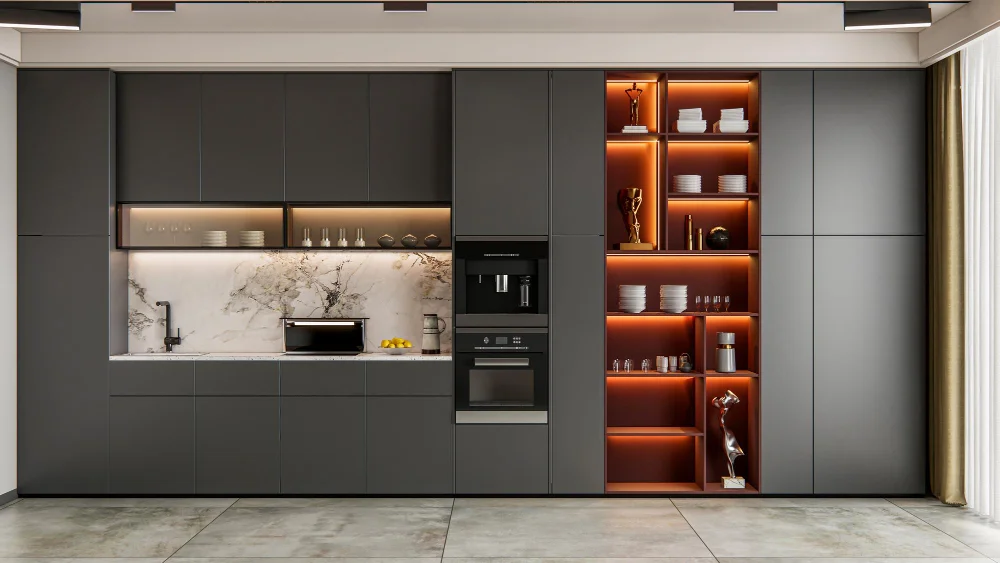
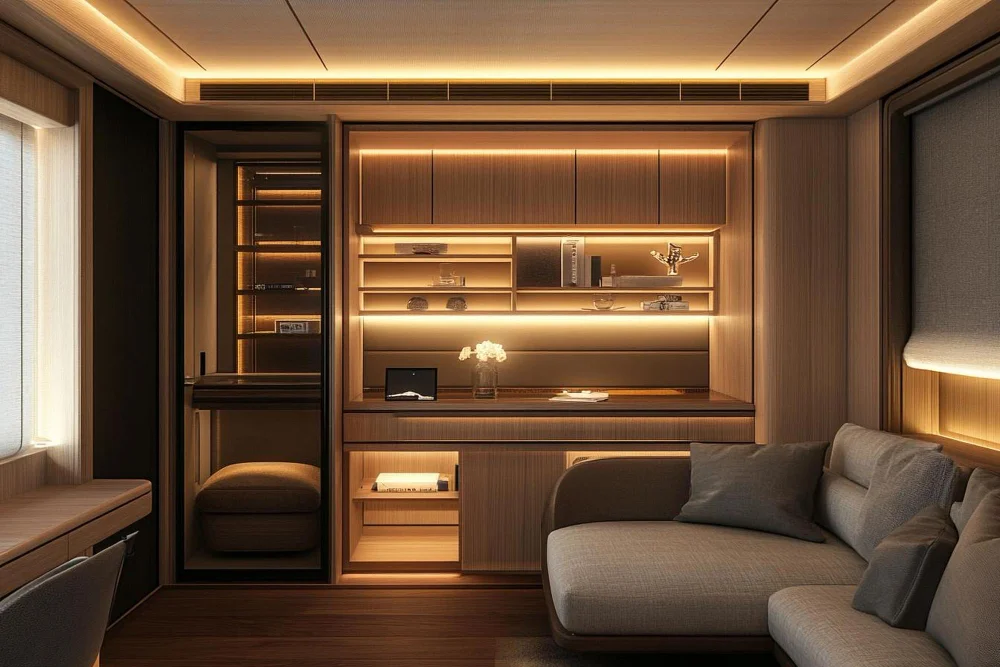
Cabinet lighting can improve visibility inside enclosed spaces, provide task lighting below wall units, highlight displayed items and integrate lighting directly into cabinetry.
The service can include cabinet assessment, lighting layout planning, fixture selection, photometric design where applicable, product sourcing, concealed electrical routing, installation, on-site adjustment, testing and commissioning.
VS Wilson operates from Dubai and provides cabinet lighting project delivery worldwide through project mobilisation and on-site execution.
What Cabinet Lighting Services Include
Cabinet lighting needs to be coordinated with the actual cabinet dimensions, joinery construction, electrical requirements and way the space will be used.
Depending on the project requirements, VS Wilson can provide cabinet lighting consultation, site assessment, and a detailed review of cabinet and joinery drawings to support effective lighting layout planning. The service may include under-cabinet lighting, internal cabinet lighting, wardrobe lighting, shelf lighting, display cabinet lighting, kitchen cabinet lighting, drawer lighting, and accent lighting integrated within joinery. Suitable solutions can include linear LED lighting, LED strip lighting, recessed cabinet fixtures, spot-based cabinet lighting, and sensor-based lighting.


Cabinet Lighting for Malmö Residential and Commercial Projects
Cabinet lighting can serve both functional and visual purposes.
It can be used where overhead lighting does not adequately reach a work surface, cabinet interior, shelf or display area.
Common applications include:
Kitchen Cabinets
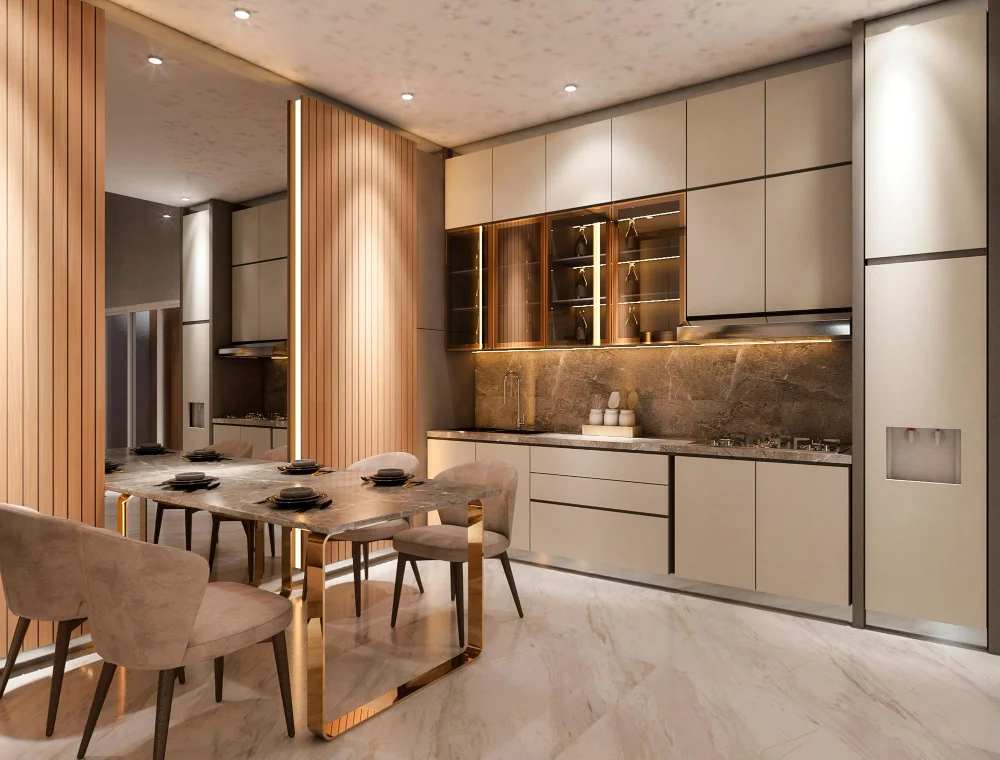
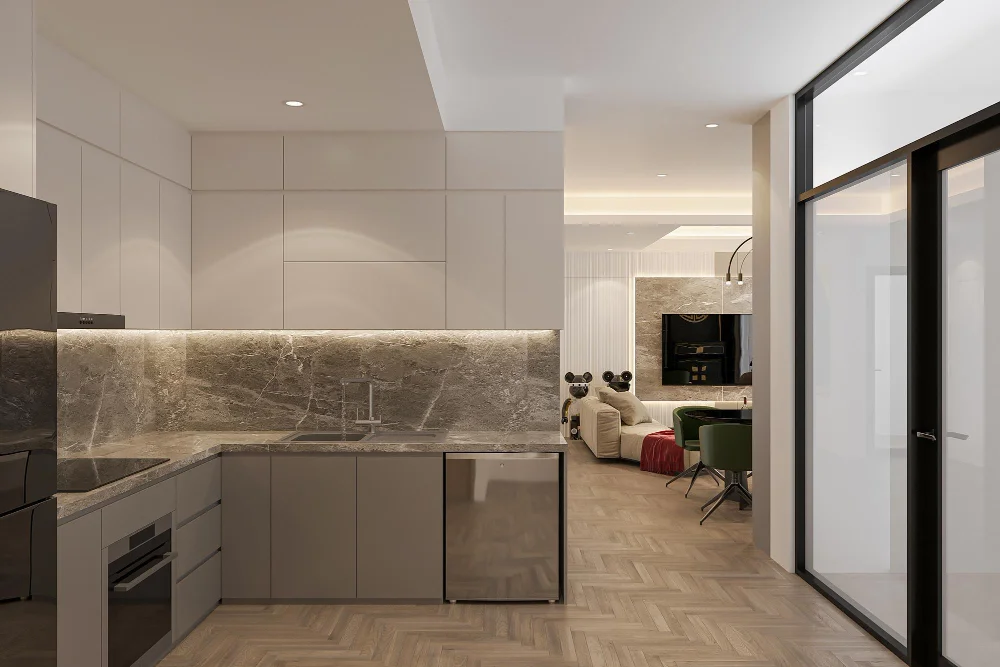
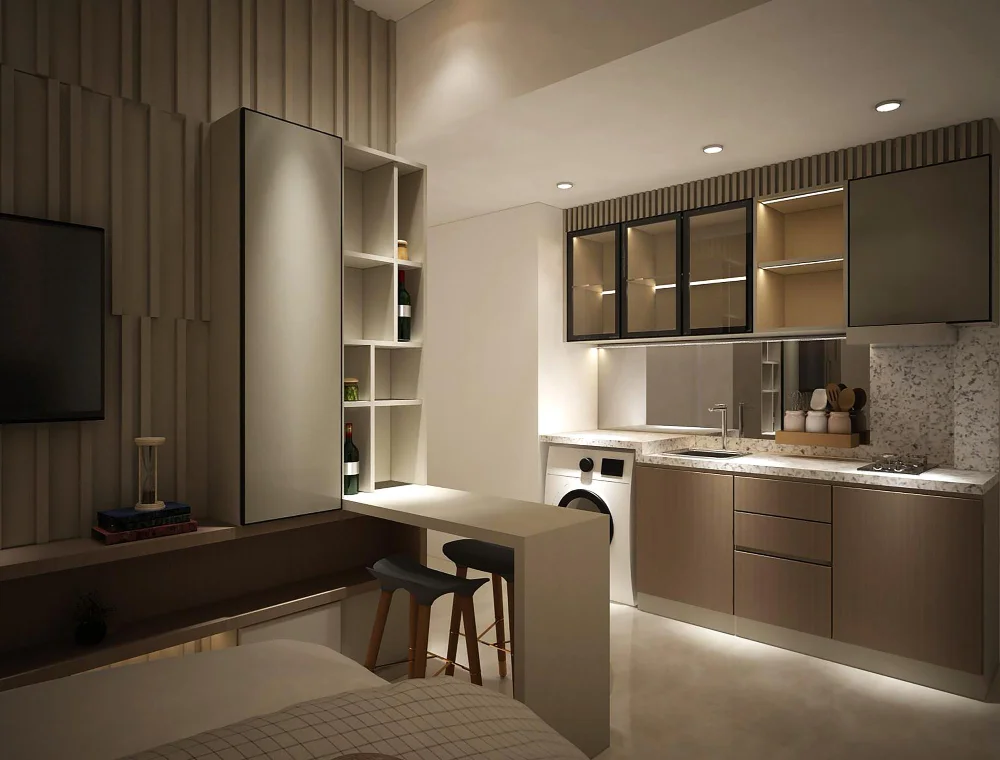
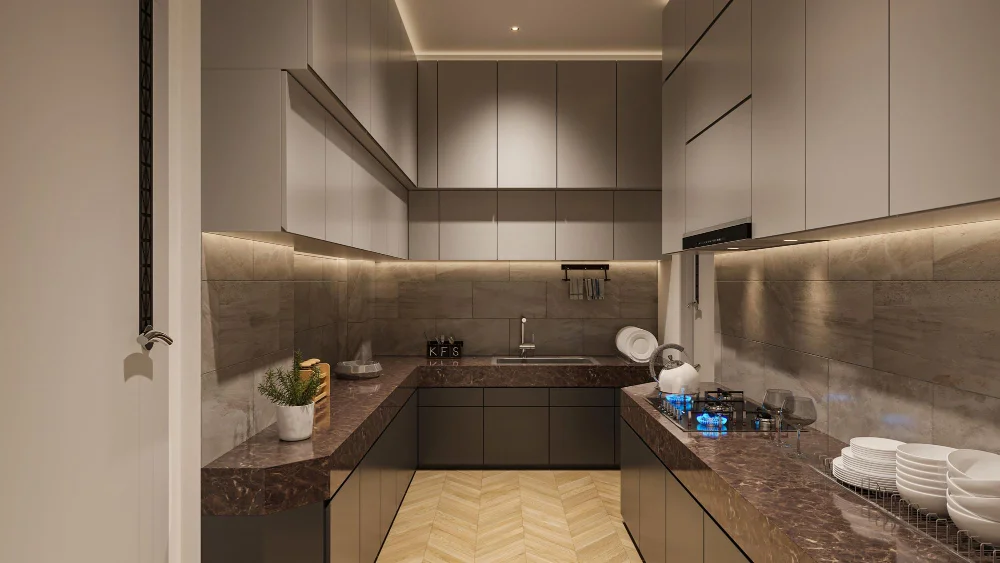
Under-cabinet lighting can illuminate worktops and preparation areas.
The fixture position should be coordinated with cabinet depth and the user’s working position so the light reaches the useful work area rather than primarily illuminating the backsplash.
Wardrobes
Lighting inside wardrobes can improve visibility of clothing, shelves and storage compartments.
Door sensors or other controls can be considered where appropriate.
Dressing Areas
Cabinet-integrated lighting can provide focused illumination around storage and dressing zones.
Display Cabinets
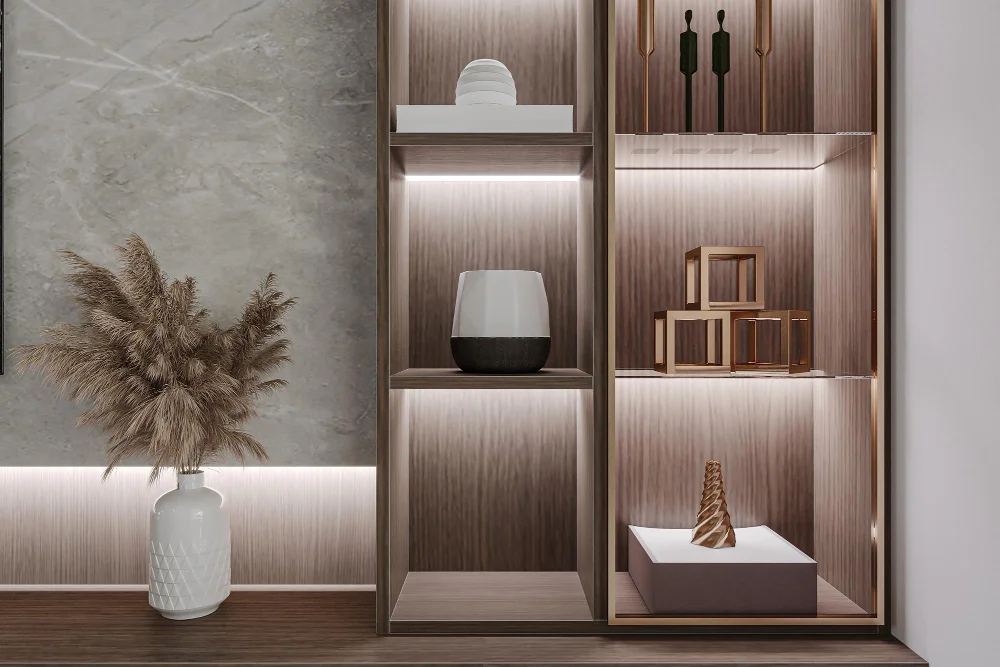
Lighting can highlight decorative objects, collections, merchandise or other displayed items.
Bookshelves and Open Shelving
Linear or spot lighting can provide visual emphasis while also improving visibility.
TV and Media Units
Integrated lighting can be used within selected joinery features to provide accent or ambient illumination.
Retail Cabinets
Display lighting can help highlight products within enclosed or semi-enclosed retail fixtures.
Hospitality Joinery
Cabinet lighting can be incorporated into hotel, restaurant and other hospitality joinery where required.
Office and Study Storage
Integrated lighting can improve visibility within storage units and selected work areas.
Cabinet Lighting Design and Joinery Coordination
One of the most important parts of cabinet lighting is coordination between the lighting system and the cabinet structure.
The design should consider:
- Cabinet dimensions
- Shelf depth
- Door positions
- Drawer positions
- Panel thickness
- Available installation space
- Fixture dimensions
- Driver location
- Cable routes
- Access points
- Hinges and hardware
- Joinery finishes
- User reach zones
- Maintenance access
Lighting installed after cabinetry has already been fabricated can be more difficult to integrate cleanly.
For new joinery, lighting locations and cable routes can therefore be coordinated before cabinet production or closure.
For retrofit projects, the available space and existing construction need to be assessed before selecting the lighting system.
Types of Cabinet Lighting Systems
LED Strip Cabinet Lighting
LED strips can provide continuous illumination along cabinet runs, shelves or selected joinery details.
They may be suitable for:
- Kitchen worktops
- Shelves
- Wardrobes
- Display cabinets
- Decorative joinery
The strip, profile, diffuser, driver and control arrangement should be selected as one system.
Linear Profile Cabinet Lighting
Aluminium or other appropriate profiles can help integrate linear lighting into cabinetry.
The profile can provide a defined mounting location and help protect the lighting component while supporting a cleaner finished appearance.
Recessed Cabinet Lighting
Recessed fixtures can be integrated into cabinet panels or shelves where the construction allows.
They can provide a less visible lighting source than surface-mounted alternatives.
Cabinet Spotlights
Small directional fixtures can be used to highlight selected shelves, objects or display areas.
Sensor-Based Cabinet Lighting
Door or motion sensors can be used where automatic operation is useful.
Typical applications include:
- Wardrobes
- Drawers
- Storage cabinets
- Display units
The sensor arrangement should be selected according to the cabinet construction and control requirements.
Under-Cabinet Lighting
Under-cabinet systems are particularly relevant to kitchen worktops and other work surfaces.
The national VS Wilson service page already identifies under-cabinet lighting as a specific cabinet-lighting application, including kitchen and wardrobe use.
Under-Cabinet Lighting Design
Under-cabinet lighting is intended to bring useful illumination closer to the work surface.
A common design problem occurs when a fixture is positioned too far towards the rear of a cabinet. The resulting light may primarily illuminate the backsplash while leaving the front portion of the worktop relatively less useful.
Current Malmö cabinet-lighting guidance specifically highlights front-edge positioning as an important consideration for worktop illumination.
The final position should nevertheless be determined according to:
- Cabinet depth
- Worktop depth
- Fixture profile
- Diffuser
- User position
- Wall finish
- Splashback material
- Beam distribution
- Glare considerations
Kitchen Cabinet Lighting
Kitchen cabinet lighting can serve both task and ambient functions.
The design may include:
- Under-cabinet worktop lighting
- Internal cabinet lighting
- Drawer lighting
- Shelf lighting
- Display lighting
- Plinth/toe-kick lighting
- Accent lighting
Lighting should be coordinated with:
- Countertops
- Backsplashes
- Wall cabinets
- Base cabinets
- Appliances
- Handles
- Open shelves
- Ceiling lighting
- Kitchen controls
VS Wilson also provides smart kitchen lighting design and installation, including under-cabinet lighting and sensor-based systems where specified.
Wardrobe and Cupboard Lighting
Wardrobe lighting can improve visibility inside deep or enclosed storage.
Possible solutions include:
- Vertical LED strips
- Shelf lighting
- Internal linear lighting
- Recessed fixtures
- Door-activated sensors
- Motion sensors
- Dimmable systems
Sensor-controlled lighting is particularly useful where the cabinet door itself can provide a convenient trigger for operation.
The lighting system should also be positioned so that clothing or stored objects do not unnecessarily block the light distribution.
Display Cabinet Lighting
Display cabinet lighting requires a different approach from task lighting.
The objective may be to draw attention to:
- Decorative objects
- Art pieces
- Collectibles
- Retail products
- Glassware
- Architectural details
Possible solutions include:
- Miniature spotlights
- Linear LED systems
- Shelf-integrated lighting
- Vertical lighting
- Recessed fixtures
Fixture placement should be planned around the actual display position and viewing direction.
Cabinet Lighting for Retail Displays
Retail cabinet lighting can be used to improve product visibility and create visual emphasis within display furniture.
The design may consider:
- Product height
- Shelf spacing
- Glass reflections
- Customer viewing angles
- Product colours
- Display density
- Fixture visibility
- Heat and ventilation
- Access for product changes
Lighting should support the merchandise rather than creating distracting bright spots within the display.
Glare, Shadows and Light Distribution
Cabinet lighting can create uncomfortable glare when the LED source is directly visible from a user’s normal viewing position.
Potential problems include:
- Visible LED points
- Bright spots on countertops
- Reflections from polished surfaces
- Dark sections between fixtures
- Shadows created by cabinet depth
- Light concentrated at the rear of a worktop
- Excessive brightness inside display cabinets
The fixture position, optical distribution, diffuser, profile and mounting location should be evaluated together.
For linear systems, a suitable diffuser can help create a more visually consistent appearance and reduce direct visibility of individual LED points, depending on the selected product.
Colour Quality and Cabinet Lighting
Cabinet lighting is often viewed alongside the room’s main lighting.
A mismatch between the cabinet lighting and surrounding fixtures can make the installation appear inconsistent.
Product selection may therefore consider:
- Colour temperature
- Colour rendering
- Colour consistency
- Dimming capability
- Light distribution
For wardrobes and dressing areas, colour quality can be particularly relevant because users may need to distinguish clothing colours accurately.
For kitchens, the lighting should also be coordinated with the colour and finish of countertops, backsplashes and cabinetry.
The appropriate specification should be determined from the actual project and selected product documentation rather than applying one universal colour temperature or CRI value.
Cabinet Lighting Controls
Cabinet lighting can be integrated with different control approaches depending on the application.
Possible options include:
- Manual switching
- Door sensors
- Motion sensors
- Dimming
- Separate cabinet zones
- Smart-home controls
- Scene control
- Centralised lighting control
For example, a wardrobe may use door-activated lighting, while kitchen under-cabinet lighting may be connected to a dedicated switch or dimming system.
The control method should be compatible with the selected fixtures, drivers and wider electrical system.
DIALux and Photometric Design for Cabinet Lighting
Where applicable, VS Wilson can use DIALux and photometric calculations to assess cabinet and integrated lighting layouts.
The design can help evaluate:
- Fixture position
- Light distribution
- Work-surface illumination
- Shelf illumination
- Beam coverage
- Potential dark areas
- Fixture spacing
- Different fixture options
- Lighting interaction between cabinet and surrounding areas
For smaller integrated cabinet systems, product photometric data and physical testing may also be more appropriate depending on the project.
The final design method should reflect the cabinet geometry, lighting system and project requirements.
VIEW SAMPLE DIALux REPORT
VIEW SAMPLE DIALux REPORT
The client-provided DIALux PDF will be published in the service-page evidence tab.
If the sample relates to another sport, facility or project type, use the required disclosure:
This representative report demonstrates VS Wilson’s photometric-design process. The sample relates to the project type identified in the report. Every project requires a separate design based on its venue, operating conditions and intended use.
The PDF must remain genuine and text-searchable, identify its actual project type, have confidential information redacted where necessary and never be renamed or presented as evidence of a different service.
Driver Placement and Electrical Routing
Drivers, connectors and wiring require careful coordination because cabinet spaces can be limited.
The design should consider:
- Driver dimensions
- Driver accessibility
- Cable length
- Connection points
- Heat considerations
- Concealed routing
- Junction locations
- Service access
- Cabinet construction
For new cabinetry, cable routes can be coordinated with the joinery manufacturer or carpenter before fabrication.
For retrofit installations, routing options may be more restricted and should be assessed on site.
Cabinet Lighting and Heat Management
Cabinet lighting components are installed in relatively confined spaces.
The selected system should therefore be evaluated according to the manufacturer’s installation requirements and the available space around the fixture, driver and other components.
This is particularly relevant where:
- Lighting is recessed
- Drivers are inside cabinets
- Long LED runs are installed
- Lighting is near heat-producing appliances
- Components are enclosed within joinery
Do not assume that every cabinet lighting product has identical thermal requirements.
Product and Fixture Sourcing
VS Wilson can source cabinet lighting products and fixtures according to the project specification, client preferences, documentation and market availability.
Product selection may consider:
- Fixture dimensions
- LED strip or linear profile
- Beam distribution
- Diffuser
- Colour characteristics
- Dimming compatibility
- Sensor compatibility
- Driver requirements
- Cabinet integration
- Installation method
- Environmental conditions
- Manufacturer documentation
- Maintenance access
The selected product should be matched to the actual application rather than choosing a fixture only from its appearance or nominal wattage.
New Cabinetry and New-Project Lighting
Cabinet lighting is easiest to integrate when it is considered during the joinery design stage.
Early coordination can address:
- Fixture positions
- Recesses
- Profiles
- Cable channels
- Driver locations
- Sensors
- Switches
- Control wiring
- Access panels
- Cabinet dimensions
This can help prevent exposed wiring, unsuitable fixture positions and modifications after cabinetry has been completed.
Cabinet Lighting Retrofit
Existing cabinetry can also be upgraded with integrated lighting.
A retrofit assessment can review:
- Cabinet construction
- Available depth
- Existing electrical points
- Existing wiring
- Fixture mounting options
- Driver locations
- Sensor installation
- Access for routing cables
- Existing switches
- Cabinet finishes
The final retrofit approach depends on the physical construction and available installation routes.
Common Cabinet Lighting Problems
Poor Worktop Illumination
Under-cabinet fixtures positioned incorrectly can leave the main working area in shadow.
Visible LED Points
A bare LED strip or poorly selected profile can make individual light points visible.
Uneven Illumination
Incorrect spacing, unsuitable diffuser selection or inconsistent fixture placement can create bright and dark areas.
Glare
Fixtures positioned within the normal viewing angle can create direct glare.
Visible Wiring
Retrofitting without a routing plan can result in cables becoming visible around the cabinetry.
Inaccessible Drivers
Drivers installed without adequate access can complicate future maintenance or replacement.
Cabinet Hardware Conflicts
Fixtures can interfere with hinges, drawers, handles or other joinery components when positions are not coordinated.
Sensor Problems
Incorrect sensor placement can cause unwanted activation or failure to detect door movement.
Colour Mismatch
Cabinet lighting that differs significantly from surrounding lighting can create an inconsistent appearance.
Heat and Enclosure Issues
Lighting and drivers installed in confined spaces need to follow the selected manufacturer’s installation requirements.
Cabinet Lighting Installation
Depending on the agreed scope, installation can include:
- Fixture mounting
- LED profile installation
- Recessed fixture installation
- Driver installation
- Concealed cable routing
- Sensor installation
- Switch and control connections
- Fixture alignment
- System configuration
- Final adjustments
Installation should be coordinated with the cabinet structure and other electrical works.
Testing and Commissioning
After installation, the system can be tested under actual usage conditions.
Testing can include:
- Fixture operation
- Switching
- Sensors
- Dimming
- Control response
- Light distribution
- Glare
- Dark areas
- Visible wiring
- Fixture alignment
- Driver operation
For under-cabinet lighting, testing should consider the actual work surface and user’s position.
For wardrobes and cupboards, testing should consider door operation and sensor response.
For display cabinets, testing should consider product position and viewing angles.
Final commissioning confirms that the installed system has been tested and adjusted according to the agreed project scope.
Cabinet Lighting Design Cost in Malmö
There is no single fixed price for cabinet lighting.
Project cost can depend on:
- Cabinet dimensions
- Number of cabinets
- Number of shelves
- Lighting type
- LED strip or linear system
- Fixture quantity
- Driver quantity
- Wiring complexity
- Sensor requirements
- Control system
- New-build or retrofit scope
- Cabinet accessibility
- Installation complexity
- Product specification
- Testing and commissioning requirements
A project-specific assessment is therefore required for accurate pricing.
Cabinet Lighting Design and Installation Process
1. Project Consultation
Understand the cabinet type, location, intended use and desired lighting outcome.
2. Cabinet and Site Assessment
Review cabinet drawings, dimensions, photographs and existing site conditions.
3. Lighting Planning
Determine fixture positions, lighting zones, control requirements and wiring routes.
4. Photometric Design
Prepare DIALux or other appropriate calculations where applicable.
5. Product Selection
Select suitable fixtures, profiles, drivers, sensors and controls.
6. Proposal and Approval
Confirm the scope, products, quantities and commercial requirements.
7. Procurement
Source approved products and required materials.
8. Installation
Install the lighting system and coordinate wiring with the cabinetry.
9. Calibration and Adjustment
Check fixture positions, light distribution and control operation.
10. Testing
Test the installed lighting under actual usage conditions.
11. Commissioning and Handover
Complete final commissioning and handover.
Information Required for a Cabinet Lighting Proposal
Clients can provide:
- Project location in Malmö
- Cabinet type
- Kitchen or wardrobe drawings
- Cabinet dimensions
- Shelf dimensions
- Cabinet elevations
- Joinery drawings
- Site photographs
- Existing electrical information
- Existing lighting details
- Desired lighting effect
- Preferred fixture brands
- Sensor requirements
- Smart-home/control requirements
- New-build or retrofit status
- Required installation scope
- Project timeline
For new cabinetry, providing the joinery drawings before fabrication can make lighting integration significantly easier.
Evidence and Project References
Malmö page will include the client-provided DIALux PDF in the evidence tab.
VIEW SAMPLE DIALux REPORT
Project-specific photographs and references will be added only after their project type, location and relevance have been verified.
The DIALux report must remain a genuine representation of the project identified in the document.
If the sample relates to another project type, the required representative-report disclosure must be displayed rather than presenting the document as evidence of a cabinet-lighting project.
VS Wilson Cabinet Lighting Capability
VS Wilson’s confirmed project capability includes:
SITE ASSESSMENT · DRAWING REVIEW · LIGHTING PLANNING · PHOTOMETRIC DESIGN · PRODUCT SOURCING · ELECTRICAL INSTALLATION · SYSTEM TESTING · FINAL COMMISSIONING
The four project stages are:
PLAN — PROJECT ASSESSMENT
DESIGN — LIGHTING PLANNING
SOURCE — PRODUCT PROCUREMENT
DELIVER — INSTALLATION & HANDOVER
This connects cabinet-lighting design with procurement, electrical installation and final commissioning rather than treating the service as a product-only supply.
Frequently Asked Questions
What are cabinet lights?
Cabinet lights are lighting systems installed within, beneath or around cabinets and joinery to improve visibility, support tasks or highlight displayed items.
Do you provide cabinet lighting design in Malmö?
Yes. VS Wilson operates from Dubai and provides cabinet lighting services across Malmö through project delivery and mobilisation.
Do you provide cabinet lighting across Malmö?
VS Wilson provides cabinet lights project support in Malmö through project-specific planning, mobilisation and on-site execution, subject to the agreed scope.Service availability does not imply a permanent local office.
Can cabinet lighting be used in kitchens?
Yes. Under-cabinet lighting can illuminate kitchen worktops, while internal, shelf and display lighting can be incorporated into other kitchen cabinetry.
Can you install lighting inside wardrobes?
Yes. Wardrobe and cupboard lighting can include internal linear fixtures, LED strips, recessed systems and sensor-based solutions depending on the cabinet construction.
Can cabinet lighting be used for display cabinets?
Yes. Cabinet spotlights, linear lighting and other integrated systems can be used to highlight products, decorative objects and displays.
Do you provide under-cabinet lighting?
Yes. Under-cabinet lighting is included within the broader cabinet-lighting service and can be designed for kitchens, workspaces and other applications.
Can cabinet lights be sensor controlled?
Yes. Door sensors, motion sensors and other control methods can be considered depending on the application and selected system.
Do you provide DIALux calculations for cabinet lighting?
DIALux and photometric calculations are available where applicable to the project. The appropriate design method depends on the cabinet system, geometry, fixture selection and project requirements.
Can existing cabinets be fitted with lighting?
Yes. Existing cabinets can be assessed for retrofit lighting, subject to available space, electrical access, cabinet construction and routing requirements.
Can cabinet lighting be integrated during new joinery work?
Yes. New cabinet projects can be coordinated with the joinery design so fixture positions, profiles, wiring, drivers and sensors are considered before fabrication.
Do you provide cabinet lighting installation?
Yes. Electrical installation, testing and commissioning are part of VS Wilson’s confirmed capabilities, subject to the agreed project scope.
What affects cabinet lighting cost in Malmö?
Cost depends on cabinet dimensions, lighting type, fixture quantity, wiring complexity, sensors, controls, product specification, installation conditions and whether the project is new or retrofit.
How do you avoid shadows with under-cabinet lighting?
Fixture position, cabinet depth, worktop depth, beam distribution and mounting location should be considered together. In many kitchen applications, positioning the light appropriately toward the front portion of the cabinet can improve illumination of the working surface.
How do you hide cabinet-lighting wiring?
Wiring can be coordinated through cabinet panels, profiles, concealed channels and suitable access points where the cabinet construction permits. The routing should be planned before installation rather than treated as an afterthought.
Plan Your Cabinet Lighting Project in Malmö
Cabinet lighting works best when the lighting system is planned together with the joinery.
Whether the requirement is kitchen under-cabinet lighting, wardrobe lighting, display lighting, shelf illumination or custom cabinet-integrated lighting, VS Wilson can support the process from planning and product sourcing through installation, testing and commissioning according to the agreed scope.
Share your cabinet drawings, photographs, dimensions and project requirements to discuss the appropriate cabinet lighting solution.
To know more about VS Wilson and our expertise, visit our About Us page. For more information, project requirements, or enquiries about our lighting solutions, Contact VS Wilson today.
Image Gallery