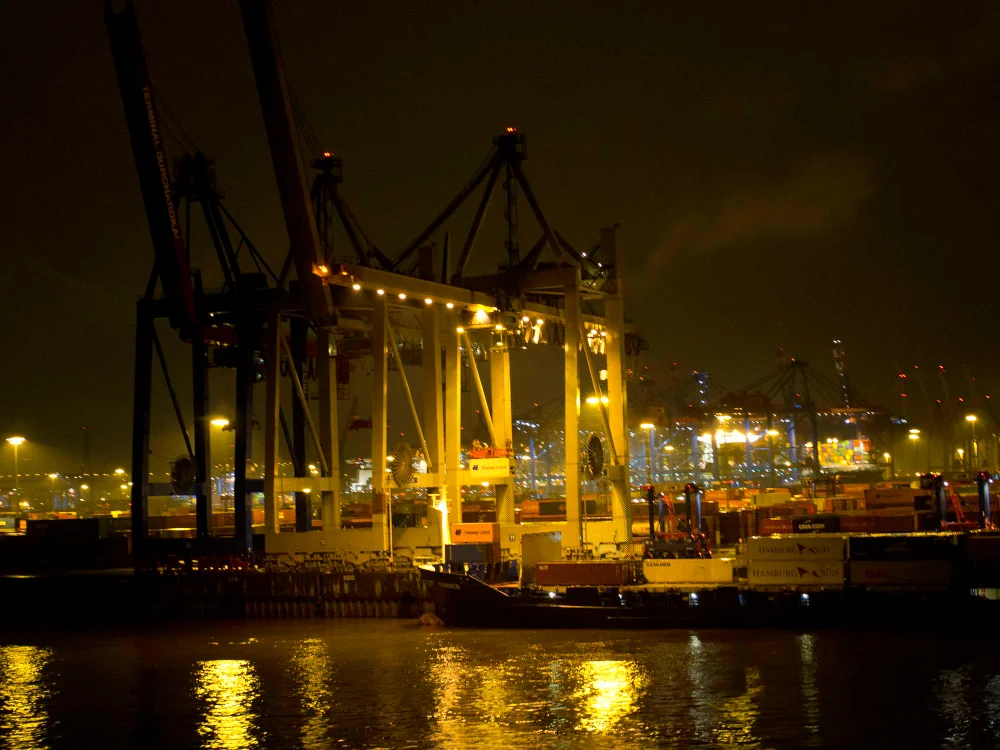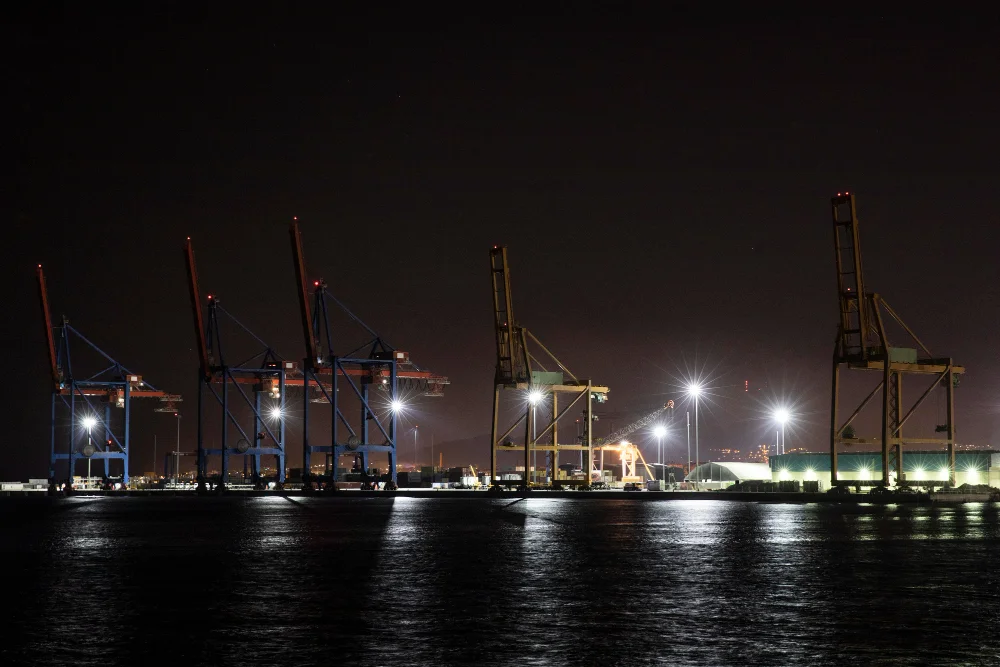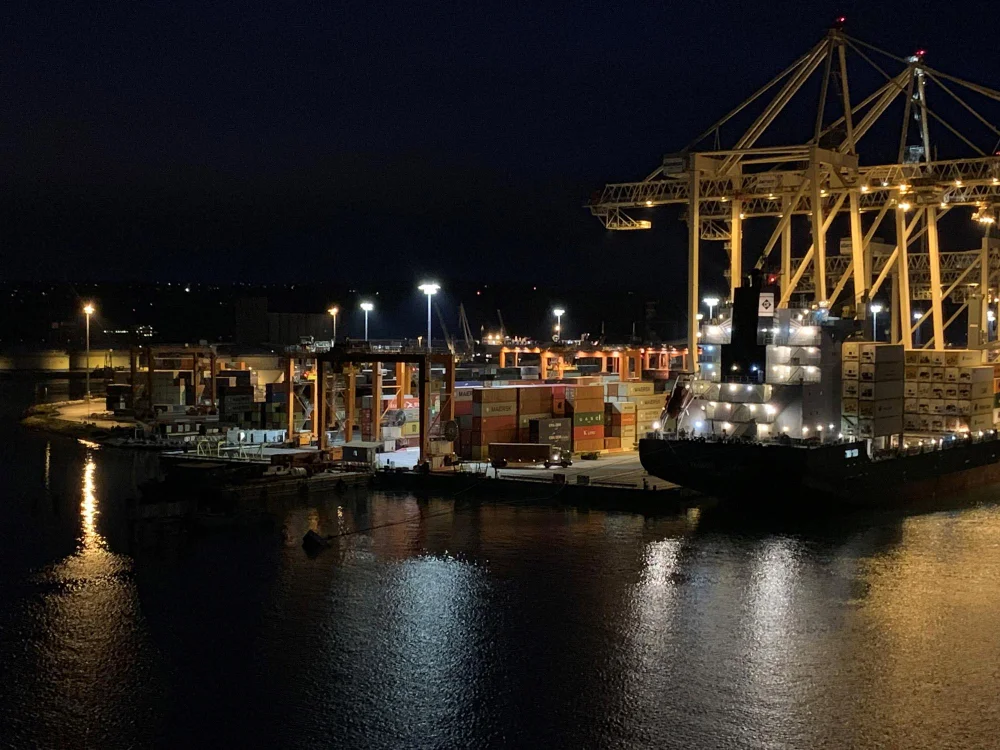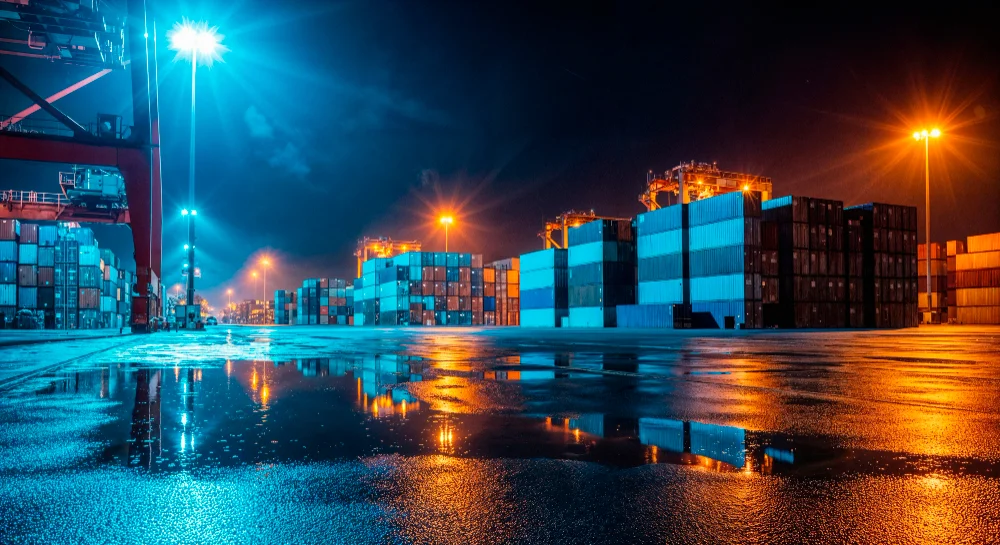
Loading Area Lighting in Irvine
Loading areas are transition zones where vehicles, workers, forklifts, cargo, dock equipment and adjoining indoor or outdoor spaces meet. Poorly planned lighting can leave the apron bright while the trailer interior remains dark, create shadows behind cargo, produce glare for reversing drivers or leave dock edges and pedestrian routes difficult to see.
VS Wilson provides Loading Area Lighting services across Irvine for ports, cargo terminals, logistics facilities, transit sheds and related loading and unloading environments.
Depending on the agreed project scope, our services can include site assessment, drawing review, lighting planning, DIALux and photometric calculations, multi-brand product sourcing, electrical installation, system testing and final commissioning.
The lighting arrangement is developed around the actual loading process, vehicle movement, cargo-handling equipment, dock geometry, operating hours, mounting positions and environmental conditions rather than selecting high-output fixtures before the operational layout is understood.
SITE ASSESSMENT → DRAWING REVIEW → LIGHTING PLANNING → PHOTOMETRIC DESIGN → PRODUCT SOURCING → ELECTRICAL INSTALLATION → SYSTEM TESTING → FINAL COMMISSIONING
Loading Area Lighting Is More Than General Yard Lighting
A loading area is usually a concentrated operational zone inside a much larger facility
Depending on the site, loading-dock lighting may need to cover the truck approach, reversing and manoeuvring areas, exterior loading apron, dock face, dock leveller, vehicle threshold, trailer or container interior, cargo staging areas, forklift and pedestrian routes, inspection zones, loading canopies, and the connection to the warehouse or transit shed. These zones should be evaluated as part of one continuous operational transition, ensuring that lighting conditions remain suitable as vehicles, workers, and cargo move between outdoor and indoor areas, rather than treating each fixture or illuminated zone as an isolated element.


What “Loading Area” Can Mean in Port and Logistics Projects
The term is used differently across projects.
At a logistics building, it may mean a raised truck loading dock and the vehicle apron immediately outside it.
At a port terminal, it may refer to cargo-transfer points, quay-side operational areas, transit-shed loading interfaces or areas where trucks, terminal equipment and cargo interact.
At a warehouse, it may describe the transition between the yard, dock door, dock leveller and internal staging area.
The project brief should therefore identify the actual operating zone before the lighting calculation begins.
A generic phrase such as “dock light” is not enough to define the complete scope.
Truck Loading Bay Lighting
Truck loading bays create a difficult visual transition because the vehicle itself becomes an obstruction.
When a truck reverses into position, the trailer or container can block exterior or overhead lighting.
The result can be reasonable illumination on the apron while the trailer interior, dock edge or threshold remains comparatively dark.
Lighting planning can therefore consider:
- Truck height
- Trailer dimensions
- Dock height
- Door opening
- Dock leveller
- Driver approach
- Worker position
- Forklift movement
- Cargo height
- Canopy geometry
- Adjacent dock bays
Fixture positions should be assessed with a vehicle in place, not only when the bay is empty.
Trailer and Container Interior Lighting
General loading-bay lighting may not illuminate deep enough into a vehicle body.
Dedicated dock-arm or directional loading lights can be used where workers need greater visibility inside trailers.
Loading Systems' dock-light range, for example, is specifically intended to illuminate the length of truck trailers during loading and unloading and can be integrated with dock-control equipment. This is a product-specific example rather than a universal requirement for every project.
Where trailer lighting is needed, product selection can consider:
- Required reach
- Adjustment
- Beam distribution
- Vehicle dimensions
- Mounting position
- Impact risk
- Electrical supply
- Operator access
- Integration with dock equipment
A dedicated trailer light should be treated as one component of the total loading-area system.
Loading Apron Lighting
The apron is the external operating area immediately around the loading positions.
It may contain reversing trucks, forklifts, workers, temporary pallets and other cargo-handling activities.
The lighting design should consider the actual movement paths rather than modelling only parking-style vehicle lanes.
Important locations can include:
- Reversing zones
- Dock approach
- Trailer sides
- Wheel areas
- Pedestrian crossings
- Loading-equipment positions
- Temporary cargo locations
- Dock doors
The layout should also account for how vehicles can block or reflect light.
Dock Edge and Level Changes
Loading areas frequently contain changes in level.
These may include the dock edge, leveller, ramp, kerb or transitions between internal and external surfaces.
Adequate visual definition is important because cargo and equipment can further obscure these features during operation.
Lighting should therefore support recognition of the physical working environment without being described as a substitute for guardrails, barriers, markings or other safety systems.
The project must follow the applicable local road, infrastructure, port, electrical and authority-approval requirements..
The lighting should coordinate with those physical features rather than interfere with them.
Vehicle Reversing and Driver Glare
Drivers approaching or reversing toward a loading position need to see the dock and surrounding movement clearly.
Poorly aimed floodlights can create direct glare in the driver's line of sight.
The problem can become worse when bright fittings are mounted close to a dock door or directly opposite an approaching vehicle.
Lighting planning should therefore consider:
- Vehicle approach direction
- Reverse movement
- Mirror sightlines
- Turning angles
- Mounting height
- Beam direction
- Surrounding brightness
- Headlight interaction
The objective is useful visibility without relying on uncontrolled brightness.
Forklift and Material-Handling Routes
Forklifts may repeatedly move between indoor staging areas, trailers and exterior aprons.
That creates another important lighting transition.
A driver can move from a brightly illuminated warehouse into a darker trailer or from a dark exterior environment into a brighter building.
Whitecroft's current industrial guidance specifically notes that loading bays require careful transition between inside and outside lighting and that service-yard and loading-bay design should consider moving people and vehicles as well as unnecessary outdoor light.
Where forklift traffic forms part of the operating model, the lighting design should therefore evaluate the complete route rather than only the dock face.
Pedestrian and Vehicle Interaction
Loading zones often contain people working close to moving trucks and handling equipment.
Lighting can support recognition of workers and paths, but it should not be described as guaranteeing safe vehicle operations.
The design may consider pedestrian routes, crossing points, doorways, supervision positions and high-conflict locations.
Where vertical visibility is important, the project may also evaluate relevant vertical surfaces rather than relying exclusively on horizontal illuminance.
Cargo Inspection and Identification Areas
Some loading and unloading operations include inspection, counting, label checking or documentation.
These activities can require different visual conditions from general vehicle movement.
Relevant tasks may involve:
- Reading labels
- Checking packaging
- Counting goods
- Identifying damage
- Comparing documents
- Scanning barcodes
- Checking seals
Where inspection takes place regularly, it should be identified as a specific task area in the design.
The required lighting criteria should come from the project specification and the nature of the visual task rather than assuming that general apron lighting is automatically sufficient.
DIALux and Photometric Design for Loading Areas
Where applicable, VS Wilson can use DIALux and photometric calculations to evaluate the proposed loading-area lighting arrangement before installation.
The model can help assess:
- Loading apron illumination
- Dock-face areas
- Manoeuvring zones
- Pedestrian routes
- Relevant minimum values
- Uniformity
- Fixture positioning
- Mounting heights
- Beam distributions
- Bright and dark zones
- Relevant vertical surfaces
- Glare-related considerations
- Outdoor-to-indoor transitions
- Light reaching surrounding areas
The design should model the actual loading geometry where sufficient information is available.
A calculation based on an empty rectangular yard may not reflect the real conditions once trucks, containers, canopies or cargo are introduced.
Why One Average Lux Value Is Not Enough
Loading areas contain different tasks.
A reversing zone, dock leveller, pedestrian route, trailer interior and inspection location do not necessarily require identical lighting conditions.
A favourable site-wide average can also hide significantly darker local areas.
The current BS EN 12464-2:2024 standard addresses outdoor workplaces in terms of both quantity and quality of illumination, visual comfort, performance and obtrusive light rather than relying on one universal brightness number.
Earlier editions contained separate criteria for pedestrian passages, vehicle traffic and loading/unloading points, which also demonstrates why operational areas should be classified by task.
For a current Irvine project, however, VS Wilson should confirm the consultant specification, authority requirements and adopted design standard rather than copying an older reference value into every service page.
Lighting Standards and Design Criteria
Loading-area projects can reference workplace-lighting standards where required by the project consultant or client.
BS EN 12464-2:2024 is currently listed as the active British adoption of the outdoor workplace lighting standard and covers visual comfort, performance and avoidance of obtrusive light.
It should not automatically be described as Irvine statutory law.
The project design basis may instead combine:
- Consultant requirements
- Client operating standards
- Port or terminal requirements
- Irvine building and electrical requirements
- Free-zone requirements
- Workplace-lighting standards
- Environmental requirements
- Project HSE requirements
The applicable criteria should be established for each project.
Port Loading and Dock Environments
For seaport and harbour loading areas, marine exposure may be particularly relevant where the loading area is inside a seaport or harbour environment.
Signify Middle East's current dock-lighting guidance identifies humidity, salt exposure and vibration as key operational conditions in marine docks and notes the need to support cargo handling while controlling glare and dark zones.
Sammode similarly identifies marine corrosion, vibration, humidity and sea spray as important dock-lighting conditions.
These are valid environmental considerations, but they do not justify applying one universal product rating to every loading area.
Product requirements should follow the actual exposure.
Corrosion and Coastal Exposure
A port luminaire can be exposed to more than rain.
Coastal atmosphere can affect:
- Luminaire housings
- Brackets
- Fasteners
- Cable glands
- Control gear
- Junction boxes
- Mounting structures
- Poles
Where marine exposure is significant, corrosion resistance and materials should be evaluated across the installation rather than checking only the luminaire's headline IP rating.
Manufacturer documentation should support the proposed product characteristics.
IP and IK Ratings
Outdoor and industrial loading areas may require documented environmental or impact protection.
However, a universal IP65 or IK rating should not be applied to every loading-area fixture.
The required protection depends on:
- Indoor or outdoor location
- Direct weather exposure
- Wash-down
- Dust
- Salt
- Moisture
- Mechanical impact risk
- Mounting height
- Cleaning and maintenance environment
Where the consultant specifies a particular IP or IK classification, the selected product should provide supporting documentation.
Canopy-Mounted Loading Bay Lighting
Canopies can provide useful mounting positions above loading bays, but their geometry affects lighting performance.
Structural beams, signage, dock shelters and vehicles can create obstructions.
The design may need to coordinate:
- Canopy height
- Bay spacing
- Truck height
- Fixture setback
- Beam direction
- Structural members
- Dock doors
- Sprinklers or other systems where present
A centrally mounted fitting does not automatically provide good visibility inside the vehicle.
Directional or supplementary loading lights may still be necessary depending on the operating requirement.
Wall-Mounted Dock Lighting
Wall-mounted luminaires can provide angled lighting toward loading areas where ceiling or canopy positions are limited.
Their effectiveness depends on mounting height, wall location and beam distribution.
Poor aiming can create a bright wall-side zone while leaving the trailer threshold or apron comparatively dark.
The actual photometric file should therefore be evaluated before the fitting is approved.
High-Mast Lighting Near Loading Areas
Large port and logistics yards may use high-mast lighting for broad area coverage.
Portlight notes that container-terminal and harbour-yard masts can exceed 40 metres and can be spaced far apart, illustrating the scale of some port-yard applications.
High-mast lighting can support the wider operating environment, but loading interfaces may still require supplementary local lighting where vehicles, canopies or cargo create shadows.
This page should therefore not imply that high-mast lighting alone is the correct loading-area solution.
High-mast and yard-wide commercial intent should remain primarily owned by the Port Yard Lighting Solutions page.
Controls and Operating Schedules
Ports and logistics facilities can operate continuously, intermittently or according to vessel and vehicle schedules.
Lighting controls may therefore be useful where operational patterns permit them.
Possible strategies include:
- Zone switching
- Scheduling
- Dimming
- Occupancy-responsive operation in suitable locations
- Remote monitoring
- Scene management
- Integration with an approved lighting-management platform
Signify Middle East's current port/dock systems use connected controls for asset monitoring, scene management and adjustment according to vessel presence and operating conditions.
These are examples of available control capabilities rather than mandatory features.
The project should define which loading zones must remain active and which can reduce output when operations stop.
Trailer Detection and Dock Equipment Integration
Certain loading-dock products can integrate lighting with dock-leveller or door control systems.
For example, Loading Systems offers dock lights that can connect with sequential loading-bay control panels.
Where similar integration is proposed, the project should confirm:
- Equipment compatibility
- Control logic
- Electrical interface
- Manual override
- Maintenance responsibility
- Commissioning requirements
VS Wilson should not imply compatibility with every loading-bay system without checking the selected equipment.
New Loading Area Lighting Projects
For new terminals, warehouses and logistics facilities, lighting should be coordinated while the loading layout and supporting infrastructure are still being developed.
Early review can align:
- Dock positions
- Truck movement
- Canopies
- Cargo equipment
- Pedestrian routes
- Pole or wall mounting
- Electrical circuits
- Controls
- Dock equipment
- Underground services
- Drainage
- Structural elements
Early lighting coordination can therefore reduce conflicts once the facility reaches the installation stage.
Existing Loading Area Lighting Retrofit
Existing loading areas may require lighting upgrades because of ageing luminaires, changed dock layouts, new cargo equipment, increased night operations, glare, dark trailer interiors, weak uniformity or maintenance problems.
A retrofit should begin with an assessment.
VS Wilson can review:
- Existing luminaires
- Fixture positions
- Pole or wall mounts
- Current dock equipment
- Truck dimensions
- Electrical circuits
- Controls
- Existing photometric performance where available
- Changed operating patterns
- Environmental exposure
- Maintenance access
The project can then determine what should be retained, modified or replaced.
One-for-One LED Replacement Is Not Automatically a Lighting Design
Replacing an existing discharge or fluorescent luminaire with an LED fitting at the same location may simplify installation, but the light distribution can change significantly.
A fixture with lower wattage can potentially perform well where its optics suit the task, while a higher-output fixture can still create poor uniformity or glare if its distribution is unsuitable.
Fixture approval should therefore consider photometric data rather than wattage alone.
Where existing loading positions create difficult shadows, the retrofit may need changes to fixture location or supplementary local lighting rather than simple replacement.
Indoor-to-Outdoor Lighting Transition
Loading areas often connect a warehouse or transit shed directly to an exterior apron.
During daylight, the exterior can be much brighter than the interior.
At night, the relationship can reverse.
Whitecroft's loading-bay guidance specifically identifies the need to consider visual transition between interior and exterior spaces.
Lighting design can therefore review the threshold and adjoining areas instead of allowing a sudden brightness change directly at the dock door.
Trailer Interior Versus Warehouse Interior
Another transition occurs when a forklift moves from the warehouse into an enclosed trailer.
The trailer interior can become one of the darkest areas in the loading process because the vehicle shell blocks the building and exterior lighting.
Where regular vehicle entry occurs, dedicated dock lights or another suitable local-lighting solution can be considered.
The requirement should depend on actual operating conditions.
Cold-Storage Loading Areas
Loading areas connected to cold storage can introduce different environmental conditions.
Fixture and driver suitability may need review for:
- Low temperatures
- Condensation
- Repeated door opening
- Moisture
- Temperature transitions
- Cleaning requirements
A product appropriate for an open coastal dock should not automatically be assumed suitable for a refrigerated dock or vice versa.
Manufacturer operating limits and relevant environmental ratings should be checked for the selected products.
Dusty or Harsh Industrial Loading Areas
Bulk cargo, manufacturing and industrial logistics can introduce dust, vibration or other harsh conditions.
Product selection may therefore need to account for:
- Dust exposure
- Mechanical vibration
- Cleaning method
- Local temperature
- Chemical atmosphere where relevant
- Impact risk
- Maintenance accessibility
No single industrial-grade fixture specification should be presented as suitable for every cargo type.
Obstructions From Loading Equipment
Dock equipment can interfere with both light distribution and fixture installation.
Potential obstructions include:
- Dock shelters
- Levellers
- Doors
- Conveyor systems
- Loading arms
- Cranes
- Pipes
- Structural beams
- Vehicle bodies
- Temporary cargo stacks
These should be identified before fixture positions are finalised.
If major equipment is added after the original lighting design, the photometric impact may need to be reviewed.
Light Spill and Environmental Impact
Outdoor loading facilities can sit close to roads, neighbouring sites, water, offices or other operational areas.
Uncontrolled floodlighting can send light beyond the intended working area.
The current outdoor-workplace standard includes avoidance of obtrusive light within its scope, and Whitecroft's industrial loading-area guidance also emphasises limiting unnecessary outdoor light.
Where relevant, project design can evaluate fixture aiming, shielding, beam control and boundary conditions.
Applicable limits should come from the actual project criteria.
CCTV and Security Coordination
Loading areas frequently contain security cameras because cargo, vehicles and access points need monitoring.
Lighting can support the available visual environment but does not guarantee CCTV identification or recognition performance.
Where security requirements are important, the design can coordinate:
- Camera direction
- Gate locations
- Dock doors
- Driver positions
- Vehicle plates
- Pedestrian areas
- Bright backdrops
- Potential direct glare
The security-system designer should define the actual camera-performance requirement.
Emergency and Egress Lighting
Loading areas may include personnel escape routes, exits or external evacuation paths.
Normal loading-area lighting should not automatically be described as emergency lighting.
Where emergency illumination is required, the design needs separate consideration of:
- Emergency luminaires
- Escape routes
- Exit points
- Backup power
- Control interfaces
- Testing
- Required documentation
The exact requirements should follow the approved fire/life-safety and electrical design.
Maintenance Access
Fixtures in loading environments may be mounted above active docks, canopies, poles or high structures.
Maintenance access should therefore be considered during design.
Relevant issues can include:
- Boom-lift access
- Safe isolation
- Dock shutdown
- Traffic management
- Fixture reach
- Replaceable components
- Access around loading equipment
A fixture should not be selected only for photometric performance if it creates unreasonable maintenance constraints for the actual facility.
Multi-Brand Fixture and Product Sourcing
VS Wilson provides multi-brand product sourcing according to specification, client preference, required documentation and market availability.
Depending on the project, suitable products may include:
- Industrial floodlights
- Canopy luminaires
- Wall-mounted luminaires
- Dedicated dock lights
- Adjustable dock-arm luminaires
- Pole-mounted fixtures
- High-mast luminaires
- Linear industrial fixtures
- Control components
- Emergency-compatible products where specified
Product selection can consider:
- Photometric distribution
- Mounting arrangement
- Glare
- Environmental exposure
- Corrosion resistance
- IP/IK requirements
- Controls
- Electrical characteristics
- Operating temperature
- Maintenance access
- Product documentation
The operating requirement should drive product selection.
Electrical Installation
VS Wilson's available capabilities include electrical installation.
Depending on the agreed proposal, procurement and execution can include the required lighting products, materials, labour and equipment associated with the works.
Installation can be coordinated with:
- Approved lighting layouts
- Electrical drawings
- Dock structures
- Loading equipment
- Poles and canopies
- Cable routes
- Lighting controls
- Existing infrastructure
- Operational restrictions
Any material relocation of fixtures should be reviewed where it changes the approved lighting distribution.
Installation in an Operational Port or Logistics Facility
Loading zones are often difficult to remove from operation for long periods.
Installation planning may therefore need to account for:
- Phased dock closures
- Traffic management
- Vehicle movements
- Forklift routes
- Temporary barriers
- Night or low-activity work
- Electrical isolation
- Port access procedures
- Work permits
- Elevated access
- Cargo operations
The exact methodology depends on the facility.
VS Wilson should not promise zero disruption because terminal operators and facility management determine the permitted working conditions.
Testing and Final Commissioning
Installation should be followed by testing and commissioning within the agreed project scope.
Checks may include:
- Luminaire operation
- Electrical circuits
- Switching
- Dimming
- Control zones
- Dock-light operation
- Fixture orientation
- Final aiming
- Installed positions
- Visible dark areas
- Applicable system interfaces
Where project-specific photometric measurements are included, results should be assessed against the approved project criteria.
Final night-time review can also be useful because some glare, shadow and aiming issues become easier to identify under real operating conditions.
VS Wilson does not guarantee universal lux, uniformity, energy savings, lifetime, payback or other performance outcomes before the individual design and products are confirmed.
Review a Sample VS Wilson DIALux Report
DIALux and photometric modelling can demonstrate how VS Wilson evaluates an operational lighting layout before installation.
The client-provided DIALux PDF will be published in the service-page evidence tab.
VIEW SAMPLE DIALux REPORT
This representative report demonstrates VS Wilson's photometric-design process. The sample relates to the project type identified in the report. Every project requires a separate design based on its venue, operating conditions and intended use.
The evidence tab should include an adjacent HTML summary explaining only what the report genuinely demonstrates.
The PDF should:
- Remain text-searchable
- Identify its actual facility or project type
- Retain truthful naming
- Have confidential information redacted where required
- Be provided through a direct working link
Do not present the sample as evidence of a completed Loading Area Lighting project unless that project type has been verified.
Project photographs, terminal names, client references or testimonials should only be added after verification and publication approval.
Loading Area Lighting Across Irvine
VS Wilson operates from Dubai and provides loading-area lighting project services in Irvine.
Project delivery and mobilisation can be supported in Irvine. Service availability does not imply a permanent local office.
What Affects Loading Area Lighting Cost?
Loading-area lighting cost depends on the operating environment and actual execution scope.
Important factors can include:
- Number of loading bays
- Size of loading apron
- Indoor or outdoor conditions
- Port or marine exposure
- Trailer-lighting requirements
- Fixture type and quantity
- Mounting heights
- Existing versus new poles or structures
- Dock-light requirements
- Electrical circuits
- Control systems
- Existing infrastructure
- Environmental protection requirements
- Elevated access
- New-build or retrofit conditions
- Phased installation
- Operational shutdown restrictions
- Testing and commissioning
- Products, materials, labour and equipment included in the proposal
A project-specific quotation should therefore be developed after sufficient site and operating information has been reviewed.
Our Loading Area Lighting Process
Project Assessment
VS Wilson reviews the facility, loading operation, project stage, operational conditions and requested lighting scope.
Drawing and Site Review
Available layouts, loading bays, vehicle routes, dock details, structures, equipment and electrical information are assessed.
Lighting Planning
Dock faces, aprons, vehicle approaches, pedestrian routes, trailer interfaces and relevant task areas are incorporated into the design.
Photometric Design
Where applicable, DIALux and photometric calculations are used to evaluate the proposed lighting arrangement against the selected project criteria.
Product Procurement
Suitable multi-brand lighting products are sourced according to specification, required documentation, client preference and market availability.
Electrical Installation
Approved lighting works are installed and coordinated with dock structures, equipment, electrical systems and actual site conditions.
System Testing
Fixtures, circuits, controls and relevant interfaces are checked within the agreed project scope.
Final Commissioning and Handover
The completed lighting system is commissioned, including relevant final aiming and adjustments, before handover.
Information Needed for a Loading Area Lighting Proposal
Useful project inputs include:
- Facility type
- Irvine project location
- Loading and unloading layout
- Number of loading bays
- Truck or container types
- Dock dimensions
- Loading apron layout
- Warehouse or transit-shed interface
- Pedestrian routes
- Forklift routes
- Loading equipment
- Canopy and structural drawings
- Existing or proposed mounting positions
- Electrical drawings
- Existing lighting details
- Controls requirements
- Environmental exposure
- Consultant lighting specification
- Applicable project standards
- BOQ or tender documents
- Project schedule
- Site photographs
- Operational and shutdown restrictions
Where complete information is not yet available, VS Wilson can review the material provided and identify additional inputs required to define the lighting scope.
Why Work with VS Wilson for Loading Area Lighting?
Loading areas combine vehicle movement, workers, cargo, dock structures, changing obstructions and demanding operating conditions.
VS Wilson can support these requirements through one connected workflow rather than treating design, fixture procurement and site installation as disconnected activities.
PLAN — PROJECT ASSESSMENT
Review the loading operation, site layout, traffic, equipment and project requirements.
DESIGN — LIGHTING PLANNING
Develop the loading-area lighting arrangement and carry out DIALux or photometric calculations where applicable.
SOURCE — PRODUCT PROCUREMENT
Source suitable products according to specification, required documentation, client preference and market availability.
DELIVER — INSTALLATION & HANDOVER
Complete agreed electrical installation, testing, commissioning and final project handover.
Frequently Asked Questions
What is loading area lighting?
Loading area lighting covers lighting for operational loading and unloading zones such as truck approaches, loading aprons, dock faces, dock levellers, trailer interfaces, pedestrian areas and associated cargo-handling locations.
Does VS Wilson provide loading area lighting design in Irvine?
Yes. VS Wilson provides lighting consultation and design and can carry out DIALux and photometric calculations where applicable to the project.
Is loading area lighting different from port yard lighting?
Yes. Port yard lighting generally covers large open container, storage and cargo-handling zones. Loading area lighting focuses more closely on the transfer point where vehicles, workers, dock equipment and cargo interact.
Is loading area lighting different from warehouse lighting?
Yes, although the systems need to coordinate. Warehouse Lighting covers the wider internal storage and operational environment, while Loading Area Lighting focuses on loading bays, thresholds, aprons and related loading/unloading interfaces.
What lux level is required for a loading area?
There is no single number that should be presented as universally correct for every Irvine loading area. Loading points, vehicle areas, pedestrian routes and inspection tasks can have different requirements. The applicable criteria should be established from the current project specification, authority requirements and selected lighting standard.
Can DIALux be used for loading bay lighting?
Yes. DIALux can be used to evaluate loading aprons, dock areas, movement zones, minimum illumination, uniformity, fixture positions and other relevant calculation areas using the actual project geometry.
Why are loading bays difficult to illuminate?
Trucks, containers, cargo, canopies and dock equipment can block light. This can leave the apron reasonably bright while the trailer interior or dock threshold remains comparatively dark.
How can the inside of a truck or trailer be illuminated?
Where general dock lighting does not provide sufficient visibility, dedicated adjustable dock lights can be considered to direct light farther into the trailer. The exact product and configuration depend on the loading operation.
Is glare important for loading-area lighting?
Yes. Poorly positioned or aimed fixtures can create glare for reversing drivers, forklift operators or workers. Luminaire position, mounting height and optical distribution should therefore be reviewed together.
Are high-mast lights enough for loading zones?
Not always. High-mast systems can provide broad yard coverage, but trucks, canopies or cargo can create local shadows around loading interfaces. Additional local lighting may be required depending on the project.
Can loading lights be integrated with dock levellers or doors?
Some dock-lighting products support integration with loading-bay control systems. Compatibility and control logic must be checked for the selected equipment rather than assumed universally.
Is IP65 required for every loading-area light?
No. Environmental protection should follow the actual indoor, outdoor, dust, moisture, wash-down, coastal or industrial exposure. Any required rating should be supported by the selected product documentation.
Can existing loading-area lighting be upgraded to LED?
Yes. Existing systems can be assessed for retrofit. Fixture positions, dock geometry, electrical circuits, environmental conditions and current lighting problems should be reviewed before replacement products are selected.
Can loading-area lighting be upgraded without closing the complete facility?
Potentially. Work may be phased around loading bays or low-activity periods. The exact execution plan depends on vehicle movements, terminal rules, electrical shutdown requirements and site access.
Does VS Wilson provide fixture sourcing and electrical installation?
Yes. VS Wilson's confirmed capabilities include multi-brand product sourcing and electrical installation according to the agreed project scope.
Does VS Wilson provide loading-area lighting outside Dubai?
Yes. VS Wilson operates from Dubai and provides project services outside Dubai through project-specific planning, mobilisation and on-site execution, subject to the agreed scope. Service availability does not imply a permanent local office.
Plan Your Loading Area Lighting Project with VS Wilson
Loading-area lighting should be planned around the actual transfer process—from vehicle approach and dock alignment to cargo handling, trailer access and movement into the adjoining facility.
Whether you are developing a new port or logistics facility, adding loading bays or upgrading an existing dock area, share your loading layout, vehicle information, structural drawings, electrical plans, specifications, BOQ or available site details with VS Wilson.
Our team can review the requirement and help define the appropriate site assessment, lighting planning, DIALux calculation, multi-brand fixture sourcing, electrical installation, testing and commissioning scope.
To know more about VS Wilson and our expertise, visit our About Us page. For more information, project requirements, or enquiries about our lighting solutions, Contact VS Wilson today.
Image Gallery