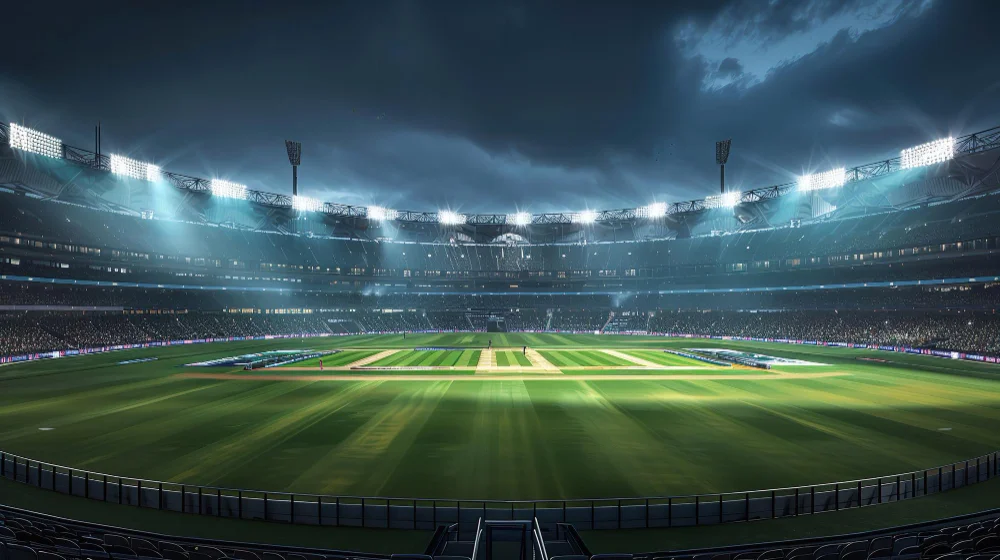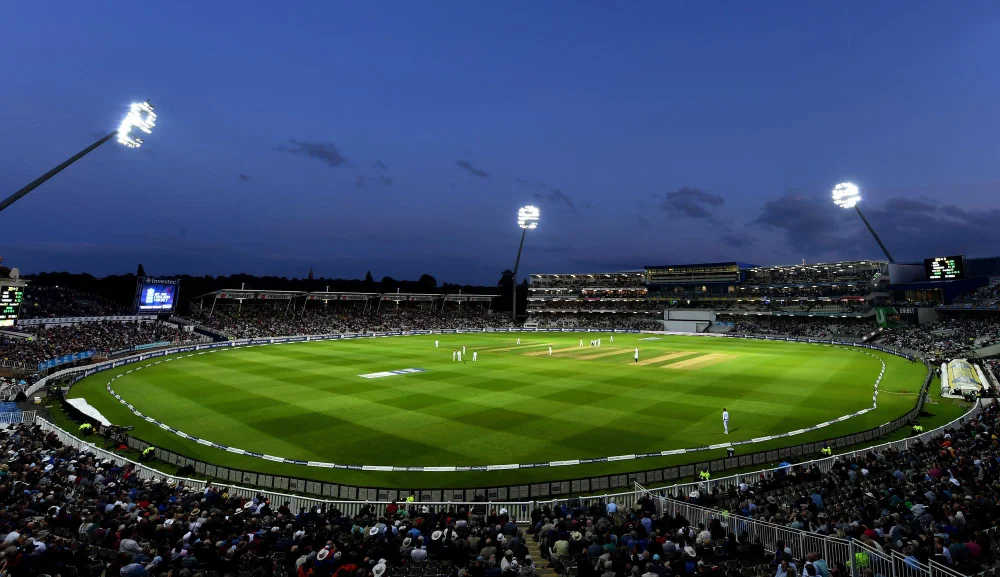
Cricket Stadium Lighting in Ibri
VS Wilson provides cricket stadium and cricket ground lighting services across the Ibri for training grounds, cricket clubs, academies, competition venues, stadiums and other applicable cricket facilities.
Our scope can include site assessment, drawing review, lighting planning, DIALux and photometric calculations where applicable, multi-brand floodlight sourcing, mast or structural coordination, electrical installation, aiming, testing and final commissioning.
Cricket Stadium lighting needs to support more than visibility across a large field.
Players and officials need to see a small, fast-moving ball travelling close to the pitch, across the outfield and high against the night sky.
The central wicket, infield, boundary, outfield, player sightlines, broadcast-camera positions, shadows, glare, mast geometry and spill light therefore all influence the final lighting system.
PLAN — PROJECT ASSESSMENT
DESIGN — LIGHTING PLANNING
SOURCE — PRODUCT PROCUREMENT
DELIVER — INSTALLATION & HANDOVER
Cricket Lighting Designed Around the Level of Play
The required lighting system depends on how the cricket venue will be used.
Cricket lighting projects may involve practice and academy facilities, club cricket, school or community competitions, domestic competitions, international-level venues, televised matches, and multi-use stadiums. A training ground should not automatically be designed to the same criteria as an international broadcast venue, as lighting requirements vary according to the level and purpose of play. The intended competition level, project specification, applicable governing-body requirements, and broadcaster criteria should therefore be established before final lighting targets are defined.


Cricket Ground Assessment
Lighting planning may need to consider:
- overall boundary geometry
- central pitch square
- wicket orientation
- infield and outfield
- practice wickets
- sight screens
- pavilion
- spectator seating
- camera platforms
- scoreboard
- existing masts or roof structures
- nearby roads and properties
- electrical infrastructure.
For an existing ground, current mast locations and existing illumination should also be assessed.
Central Pitch and Wicket Visibility
The wicket is the most visually demanding area of a cricket ground.
It involves:
- high-speed bowling
- batting
- close catching
- wicketkeeping
- umpiring.
Lighting should allow players and officials to follow the ball clearly through these fast movements.
The wicket area should therefore be considered separately within the overall field analysis rather than relying only on a ground-wide average.
Infield Lighting
The infield contains fast reactions, catches, throws and run-out situations.
Lighting should support:
- ball visibility
- player recognition
- pitch-to-infield transition
- field markings and crease areas where relevant.
Large bright-dark changes between the wicket and nearby fielding areas can reduce visual consistency.
Outfield Lighting
The cricket outfield covers a much larger area than the central wicket.
Lighting needs to support:
- ground-fielding
- catches
- long throws
- ball tracking toward the boundary.
Outfield design can require long-distance beam control and appropriate mast geometry.
Simply increasing floodlight output does not guarantee adequate coverage.
High-Ball Tracking
One of the most important cricket-lighting tasks is tracking a ball high against the night sky.
Fielders may need to follow:
- lofted shots
- high catches
- long boundary hits
- aerial throws.
The visual task therefore extends well above the horizontal playing plane.
Ground illuminance alone cannot fully describe this requirement.
Lighting geometry should support the ball's aerial path while avoiding excessive glare in a fielder's upward viewing direction.
Ibri Example : Ring-of-Fire Concept
Dubai International Stadium is a useful international reference example of how stadium geometry can influence cricket visibility. This is an international reference example only. The Ibri design must be developed around its own site conditions, authority requirements and operational needs.
The ICC describes the venue's “Ring of Fire” lighting system as more than 300 floodlights positioned around the stadium circumference, helping reduce visible shadows during night cricket.
Fielder Sightlines
Fielders frequently look directly upward or across long distances.
Potential glare should therefore be reviewed from:
- slips
- wicketkeeper area
- inner ring
- boundary positions
- deep outfield positions
A floodlight that performs well photometrically can still cause discomfort if it falls directly into a normal catching sightline.
Batter Sightlines
Batsmen need rapid visual recognition of the ball from the bowler's release through impact.
Lighting should therefore avoid avoidable glare within important batting directions.
The relationship between:
- wicket orientation
- mast positions
- sight screens
- background brightness
can all influence the visual environment.
Bowler and Umpire Visibility
Lighting should also support:
- bowler approach
- crease areas
- umpire visibility
- wicketkeeper position.
These areas involve concentrated activity around the central square and should be evaluated within the complete pitch lighting design.
Pitch and Outfield Balance
The central wicket and wider outfield may have different visual priorities.
However, excessively abrupt changes in brightness can make ball tracking difficult as play moves between zones.
Lighting design should therefore consider the relationship between:
- central pitch
- inner field
- outfield
- boundary.
The required values should follow the actual competition or project criteria.
Horizontal Illuminance
Horizontal illuminance describes the amount of light reaching the field surface.
It is important for:
- pitch visibility
- ground-fielding
- boundary visibility
- player movement.
However, horizontal illuminance alone does not fully describe ball and player visibility.
Vertical Illuminance
Vertical illuminance becomes increasingly important for:
- player recognition
- high-ball tracking
- cameras
- televised matches.
Broadcast cameras observe players and the ball from different directions.
Where television coverage is required, the design should therefore evaluate suitable vertical planes related to the planned camera positions.
Uniformity
Uniformity influences how consistently the playing area appears illuminated.
Poor uniformity can produce:
- dark patches
- over-bright areas
- inconsistent ball visibility
- undesirable broadcast images.
Average lux alone is therefore not enough.
The applicable uniformity criteria should come from the actual project and competition requirements.
Shadows
Cricket contains small-ball tracking and rapid fielding movements, making shadows particularly important.
Poor directional balance can create:
- multiple player shadows
- dark zones around the wicket
- loss of ball contrast
- distracting outfield patterns.
Lighting from multiple appropriate directions can help manage shadows while maintaining glare control.
Dubai International Stadium's circumference-based system is a real example of a design developed specifically to minimise prominent shadows. This is an international reference example only. The Ibri design must be developed around its own site conditions, authority requirements and operational needs.
Glare Control
Cricket players regularly look:
- high into the sky
- toward the bowler
- across the outfield
- toward boundary areas.
High-output floodlights can therefore create glare if their positions or aiming angles intersect important viewing directions.
Glare control may involve:
- mast positions
- mounting height
- optics
- fixture tilt
- shielding
- aiming.
More light does not automatically improve ball visibility.
Mast Positioning
Cricket grounds often use high-mast floodlighting.
Mast placement influences:
- pitch coverage
- outfield coverage
- shadows
- glare
- structural feasibility
- spectator views
- maintenance access.
There is no universal number or arrangement of masts suitable for every cricket ground.
The design should follow actual ground geometry and required performance.
Mast Height
Mast height affects:
- beam coverage
- aiming angles
- uniformity
- glare
- structural loading.
Shorter masts with steeper aiming and taller masts with different distributions can produce very different visual conditions.
Final height should therefore be established through photometric and structural coordination.
Roof-Mounted or Distributed Lighting
Some cricket stadiums may use:
- mast systems
- roof-mounted fixtures
- distributed stadium-edge lighting
- a combination of systems.
The available architecture determines what mounting geometry is practical.
A roof-based system cannot automatically be replaced with a four-mast concept, or vice versa, without recalculating the lighting.
DIALux and Photometric Design
VS Wilson can use DIALux and photometric calculations to evaluate cricket-ground lighting.
Depending on project requirements, analysis may include:
- central pitch
- infield
- outfield
- horizontal illuminance
- vertical illuminance
- uniformity
- mast positions
- fixture optics
- aiming
- relevant glare
- surrounding spill.
The model should use actual ground dimensions, mounting geometry and selected luminaire photometric data.
Sample DIALux Report
A client-provided DIALux PDF will be published in the service-page evidence tab.
VIEW SAMPLE DIALux REPORT
This representative report demonstrates VS Wilson's photometric-design process. The sample relates to the project type identified in the report. Every project requires a separate design based on its venue, operating conditions and intended use.
The report must retain its genuine project type and must not be presented as completed Cricket Stadium Lighting evidence unless it genuinely relates to that project.
What Lux Level Does a Cricket Stadium Need?
There is no single universal lux value for every cricket ground or stadium.
The required performance depends on:
- training or match use
- competition level
- broadcast requirements
- ground configuration
- governing or consultant criteria.
A practice field and an international televised stadium can require very different lighting performance.
VS Wilson therefore establishes project-specific criteria rather than publishing one universal cricket lux number.
Broadcast Cricket Lighting
Televised cricket can require additional performance beyond normal player visibility.
Relevant considerations may include:
- horizontal illuminance
- vertical illuminance
- uniformity
- colour quality
- player modelling
- shadow control
- flicker
- high-speed replay
- camera positions
- spectator/background lighting.
Signify's Ahmedabad cricket-stadium project, for example, specifically described the installation as designed to satisfy ICC broadcast requirements.
Any VS Wilson project should only be described as broadcast compliant after the applicable broadcaster or event criteria are confirmed and tested.
Camera Position Planning
Cricket broadcasts can use cameras from:
- main pavilion positions
- opposite ends
- square-leg areas
- boundary positions
- elevated positions
- mobile positions.
The required vertical lighting should therefore be evaluated according to the actual broadcast plan where available.
Flicker and Slow-Motion Replay
Cricket broadcasting uses high-frame-rate slow-motion extensively.
An LED floodlight can appear visually steady while still producing visible banding or modulation on high-speed footage.
Where broadcast use is required, luminaire and driver flicker performance should therefore be verified against the actual production requirements.
Flicker performance should not be assumed solely because a product is LED.
Colour Rendering
Broadcast and player visibility can depend on accurate differentiation of:
- ball
- kits
- pitch
- turf
- skin tones
- advertising.
The required colour-rendering specification should follow the relevant competition or broadcast requirements and selected product data.
Colour Temperature
Colour temperature affects the visual appearance of:
- turf
- players
- ball
- broadcast footage.
No single CCT should automatically be applied to every cricket stadium.
The final specification should follow project requirements.
Training Ground Lighting
Training cricket facilities can have different requirements from full broadcast stadiums.
The primary focus may be:
- safe play
- ball visibility
- practice wickets
- outfield activity
- glare
- uniformity.
Broadcast-camera requirements may not apply.
Practice-Net Lighting
Practice nets can require a more concentrated lighting strategy than the main ground.
Lighting may need to support:
- bowler run-up
- wicket
- batsman
- ball flight within the net
- coaching visibility.
Fixture positions should avoid glare along the batting and bowling axis.
Practice-net lighting should therefore not simply copy the main-field mast arrangement.
Match Lighting
Competition lighting may need higher or more controlled performance than ordinary training operation.
Requirements depend on:
- match level
- governing authority
- spectator use
- television coverage.
The project criteria should be confirmed before design.
Multi-Mode Cricket Lighting
Where compatible controls and fixtures are specified, operating modes may include:
- maintenance
- training
- club match
- competition
- broadcast
- event operation.
The exact modes and outputs should follow actual venue requirements.
Stadium Lighting Controls
Controls may provide:
- grouped switching
- dimming
- scheduling
- operating modes
- monitoring where applicable.
Compatibility depends on the selected luminaires, drivers and control architecture.
VS Wilson should not claim universal support for any proprietary platform unless verified.
Power Continuity
Higher-level cricket venues may require lighting continuity to support matches or broadcasts.
Project requirements can therefore include:
- backup power
- generator integration
- redundant supply
- defined restoration sequence.
The exact requirement should follow the venue's operational and competition criteria.
No universal backup configuration should be claimed.
Emergency Lighting Is Separate
Cricket floodlighting and emergency lighting have different functions.
Emergency or life-safety systems may cover:
- spectator exits
- stairs
- concourses
- emergency routes
- signage.
Normal stadium floodlighting should be coordinated with but should not be presented as a substitute for required emergency lighting.
Spectator and Boundary Areas
A cricket venue may also require lighting for:
- spectator stands
- boundary circulation
- player access
- dugouts or pavilion approaches
- hospitality areas.
These zones should be considered separately from the cricket field because their lighting requirements differ.
Spill Light Beyond the Ground
Cricket stadium floodlighting can affect:
- nearby residences
- roads
- hotels
- adjacent sports facilities
- the night sky.
Lighting design can use:
- controlled optics
- appropriate mast height
- shielding
- careful aiming
to reduce unnecessary spill outside the required area.
The exact spill limits should follow the applicable authority or project requirements.
Ibri Outdoor Conditions
Cricket floodlighting equipment in Ibri may be exposed to:
- high ambient temperatures
- direct solar exposure
- dust
- humidity
- coastal saline conditions in some locations
- wind.
Floodlights, drivers, brackets and structures should therefore be selected according to actual manufacturer documentation and project conditions.
VS Wilson should not apply one universal IP rating, corrosion class, lifetime or warranty to every cricket-lighting project.
New Cricket Stadium Projects
New stadium projects allow early coordination between:
- cricket layout
- mast foundations
- structural systems
- spectator seating
- camera positions
- electrical rooms
- control systems
- backup power
- access routes.
Early lighting planning can reduce major changes later in construction.
Existing Cricket Ground Retrofit
Existing venues can also be upgraded.
Retrofit assessment may include:
- current floodlights
- existing masts
- mast heights
- structural condition
- electrical capacity
- current uniformity
- glare
- shadows
- controls
- broadcast requirements.
A retrofit should not simply replace old fixtures watt-for-watt.
Existing Mast Reuse
Existing masts may be reused where suitable, but the assessment may need to consider:
- structural condition
- wind loading
- mast height
- bracket capacity
- new luminaire weight
- aiming range
- photometric performance.
Structural acceptance remains project-specific.
LED Cricket Stadium Retrofit
An LED upgrade should still be checked for:
- central pitch lighting
- outfield coverage
- uniformity
- glare
- shadows
- ball tracking
- vertical illumination
- broadcast flicker where applicable
- spill light.
No fixed energy-saving percentage should be guaranteed.
Multi-Brand Floodlight Sourcing
VS Wilson can source cricket-stadium lighting products according to specification, client preference, documentation and market availability.
Products may include:
- sports floodlights
- drivers
- brackets
- masts or associated mounting equipment
- compatible control systems
- electrical materials.
Selection may consider:
- photometric distribution
- beam angle
- aiming capability
- colour characteristics
- flicker performance
- thermal suitability
- control compatibility
- environmental exposure.
Actual performance, lifetime and warranty remain product-specific.
Electrical Installation
VS Wilson can undertake electrical installation according to the agreed cricket-lighting scope.
Depending on the project, work may include:
- cabling
- floodlight installation
- mast connections
- electrical distribution
- compatible controls
- fixture aiming.
Execution should follow approved project drawings and stadium-access requirements.
Fixture Aiming
Aiming is critical in cricket lighting.
Incorrect aiming can create:
- wicket glare
- dark outfield zones
- excessive shadows
- poor vertical illumination
- spill beyond the ground.
Final fixture orientation should follow the approved photometric model as closely as practical.
Testing and Photometric Verification
Commissioning may include checking:
- luminaire operation
- electrical circuits
- control modes
- fixture aiming
- representative field measurements.
Where performance verification is required, the measurement grid and acceptance criteria should follow the applicable competition, consultant or project requirement.
A few random lux readings should not be presented as complete stadium-performance verification.
Final Commissioning
Final commissioning connects the photometric design to the installed stadium.
Depending on scope, adjustments may include:
- fixture aiming
- control settings
- operating modes
- output balancing
- glare correction
- spill correction.
Project acceptance should be assessed against the approved design criteria.
Common Cricket Stadium Lighting Problems We Assess
The Pitch Is Bright but the Outfield Is Uneven
The system has been designed around the wicket without sufficient wider-field coordination.
High Balls Disappear Against the Night Sky
Ground lighting is acceptable but aerial visibility has not been considered adequately.
Fielders Experience Glare During High Catches
Floodlight aiming intersects normal upward viewing directions.
Multiple Player Shadows Appear Around the Wicket
Light reaches the playing area from poorly balanced directions.
Average Lux Is Acceptable but Dark Patches Remain
Uniformity has not been assessed adequately.
Cameras Show Players Unevenly
Vertical illumination toward relevant camera directions is insufficient.
Slow-Motion Replay Shows Flicker
Driver/floodlight performance is not suitable for the required high-frame-rate production.
Existing Masts Restrict the New Design
Old locations or heights prevent the intended distribution.
Too Much Light Leaves the Stadium
Optics, fixture tilt or aiming generate unnecessary spill.
Practice Nets Use the Wrong Lighting Geometry
Main-field lighting principles have been copied into a narrower batting/bowling environment.
Installation Does Not Match the Photometric Model
Mast, bracket or aiming conditions have changed during execution.
No Final Field Verification
The system is assumed successful because every floodlight switches on.
What Determines Cricket Stadium Lighting Cost in Ibri?
Cricket-stadium lighting cost depends on the actual venue and required performance level.
Factors may include:
- ground dimensions
- competition level
- training versus broadcast use
- number and height of masts
- roof or distributed mounting
- floodlight quantities
- fixture specification
- broadcast requirements
- control system
- electrical infrastructure
- backup-power requirements
- existing mast reuse
- retrofit conditions
- access equipment
- testing and commissioning.
A project-specific quotation should follow review of the cricket ground and applicable performance criteria.
Information Helpful for a Cricket Stadium Lighting Proposal
Where available, provide:
- Ibri project location
- cricket-ground dimensions
- boundary layout
- wicket orientation
- pitch-square location
- practice-net information
- spectator layout
- competition level
- federation or broadcaster criteria
- camera positions
- existing or proposed mast locations
- mast heights
- structural drawings
- electrical drawings
- available electrical capacity
- backup-power requirements
- surrounding-property information
- current lighting report for retrofit projects
- control requirements
- project programme.
VS Wilson Cricket Stadium Lighting Project Process
1. SITE ASSESSMENT
Review ground geometry, level of play, surroundings and existing infrastructure.
2. DRAWING REVIEW
Review pitch, boundary, mast, structural, electrical and camera information.
3. LIGHTING PLANNING
Define field zones, performance criteria, mounting positions and operating modes.
4. PHOTOMETRIC DESIGN
Carry out DIALux or applicable cricket-ground lighting calculations.
5. PRODUCT SOURCING
Source suitable floodlights and associated project materials.
6. ELECTRICAL INSTALLATION
Execute approved stadium-lighting and related electrical works.
7. SYSTEM TESTING
Test fixtures, electrical systems, controls and operating modes.
8. FINAL COMMISSIONING
Complete aiming, applicable field verification and handover.
Why Cricket Lighting Design and Installation Need to Stay Connected?
Cricket-lighting calculations rely on actual:
- mast positions
- mast heights
- fixture optics
- aiming angles
- wicket orientation
- field dimensions.
If these conditions change during installation, the completed system can differ substantially from the design.
VS Wilson can coordinate planning, sourcing, installation, testing and commissioning within one agreed project scope.
Cricket Stadium Lighting Across Ibri
VS Wilson provides cricket stadium lighting project support in Ibri through project-specific planning, mobilisation and on-site execution, subject to the agreed scope. Service availability does not imply a permanent local office.
Project Evidence
Only verified first-party evidence should be presented here.
Sample DIALux Report
A client-provided DIALux PDF can demonstrate VS Wilson's photometric-design process.
VIEW SAMPLE DIALux REPORT
The report must retain its genuine project type and must not be presented as completed Cricket Stadium Lighting evidence unless it genuinely relates to that project.
Verified Project Photographs and References
Ground names, stadium names, photographs, locations, client identities and references should be added only after verification and publication approval.
Until then, representative cricket imagery must not be labelled as completed VS Wilson project work.
Frequently Asked Questions
What is cricket stadium lighting?
Cricket stadium lighting is the planned illumination of the wicket, infield, outfield, boundary and associated stadium areas to support player, umpire, spectator and—where applicable—broadcast visibility.
Does VS Wilson provide cricket stadium lighting across Ibri?
Yes. VS Wilson provides lighting consultation, design, multi-brand sourcing, electrical installation, testing and commissioning across Ibri according to the agreed project scope.
What lux level does a cricket stadium need?
There is no single universal lux level. Requirements depend on training, competition, federation, broadcast and project criteria.
Why is high-ball visibility important in cricket?
Fielders frequently track a small ball high against the night sky. Lighting therefore needs to support aerial visibility as well as ground illumination.
Why is vertical illuminance important?
Vertical lighting helps players and the ball remain visible from camera and spectator viewing directions, particularly in televised cricket.
Why is uniformity important?
Uniformity reduces large bright-dark variations across the wicket, infield and outfield and helps maintain consistent ball visibility.
How can player shadows be reduced?
Balanced lighting from appropriate directions, combined with suitable mast positions and aiming, can reduce prominent shadows.
How is glare reduced in cricket lighting?
Glare can be managed through mast position, mounting height, fixture optics, shielding and aiming based on actual player sightlines.
Does VS Wilson use DIALux for cricket stadium lighting?
Yes. DIALux and photometric calculations are available where applicable and where sufficient stadium and luminaire information is available.
Can cricket lighting be designed for broadcast?
Yes, where the project provides the applicable broadcast criteria. The installation should only be described as broadcast compliant after relevant requirements have been verified.
Why does flicker matter in cricket broadcasts?
High-speed and slow-motion cameras can reveal light-output modulation that may not be visible to the human eye.
Can existing cricket stadium masts be reused?
Potentially. Structural condition, height, mounting capacity, aiming and photometric suitability need to be reviewed first.
Can a cricket ground have separate training and match modes?
Yes, where compatible luminaires and controls are selected and the venue requires different operating conditions.
Does LED cricket lighting guarantee energy savings?
No fixed saving should be guaranteed. Actual consumption depends on the existing system, replacement load, control modes and operating hours.
How much does cricket stadium lighting cost in Ibri?
Pricing depends on venue size, competition level, masts, floodlight quantities, electrical infrastructure, controls, broadcast requirements and testing scope.
Discuss Your Cricket Stadium Lighting Project
Planning a cricket ground, training facility, international stadium or floodlighting upgrade in Ibri?
Share your ground dimensions, wicket orientation, mast details, level of play, broadcast requirements and electrical information with VS Wilson.
Our team can review the project and establish the appropriate scope for cricket-lighting planning, DIALux or photometric design, floodlight sourcing, electrical installation, aiming, testing and commissioning.
To know more about VS Wilson and our expertise, visit our About Us page. For more information, project requirements, or enquiries about our lighting solutions, Contact VS Wilson today.
Image Gallery