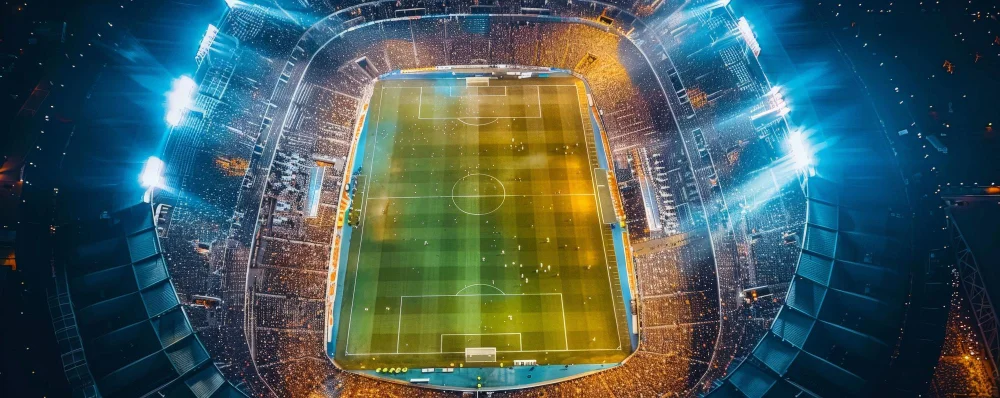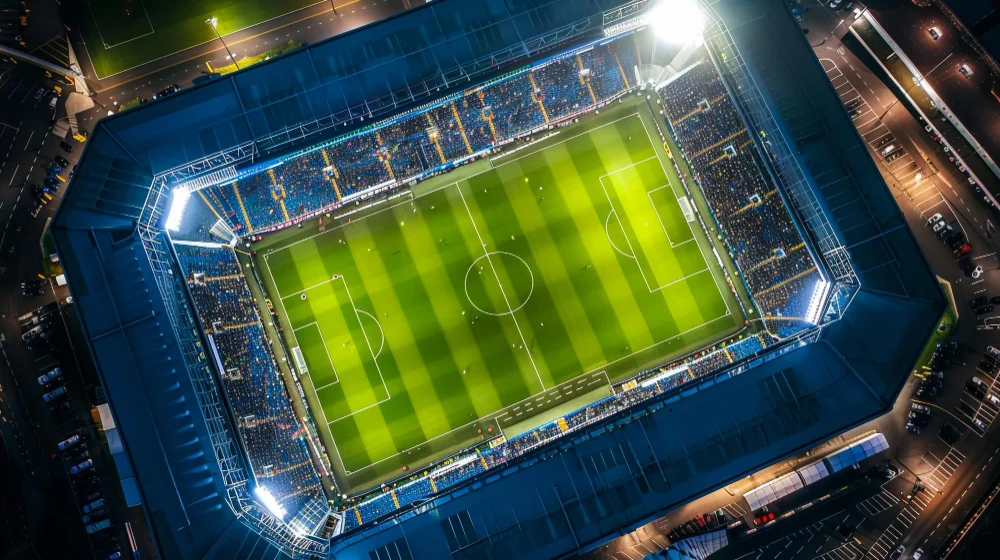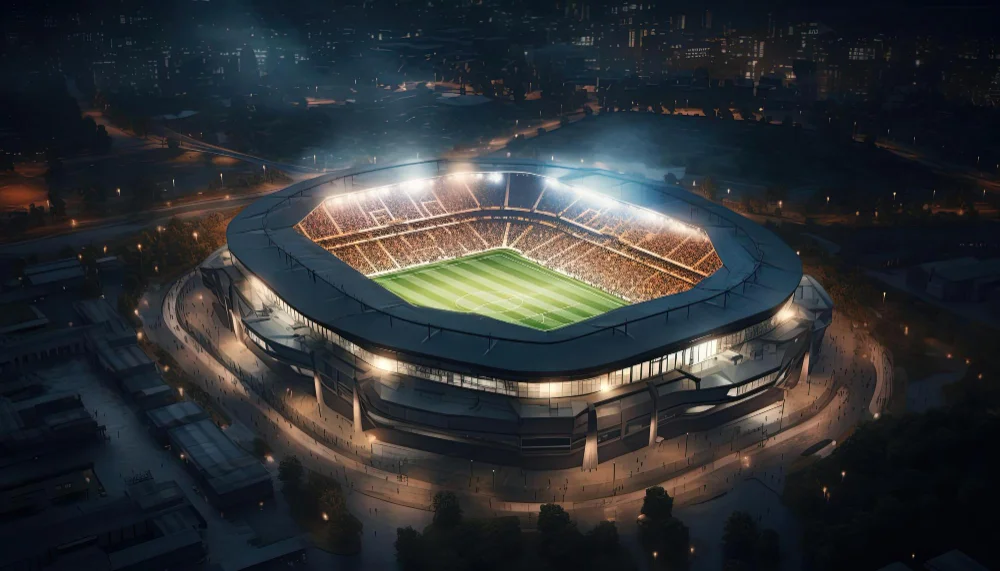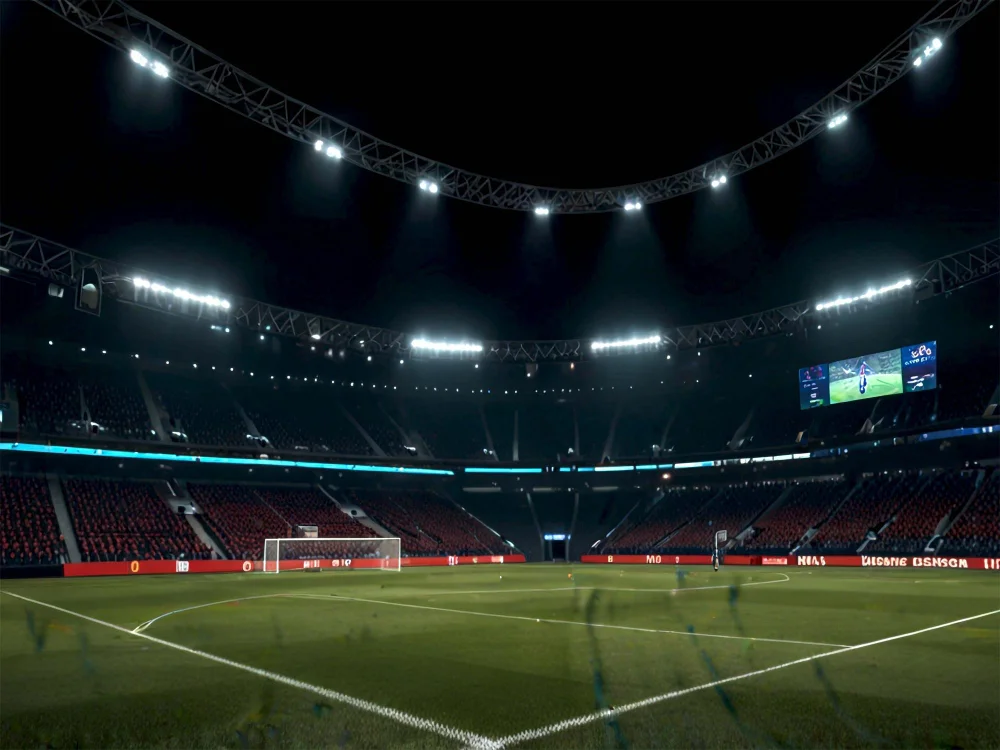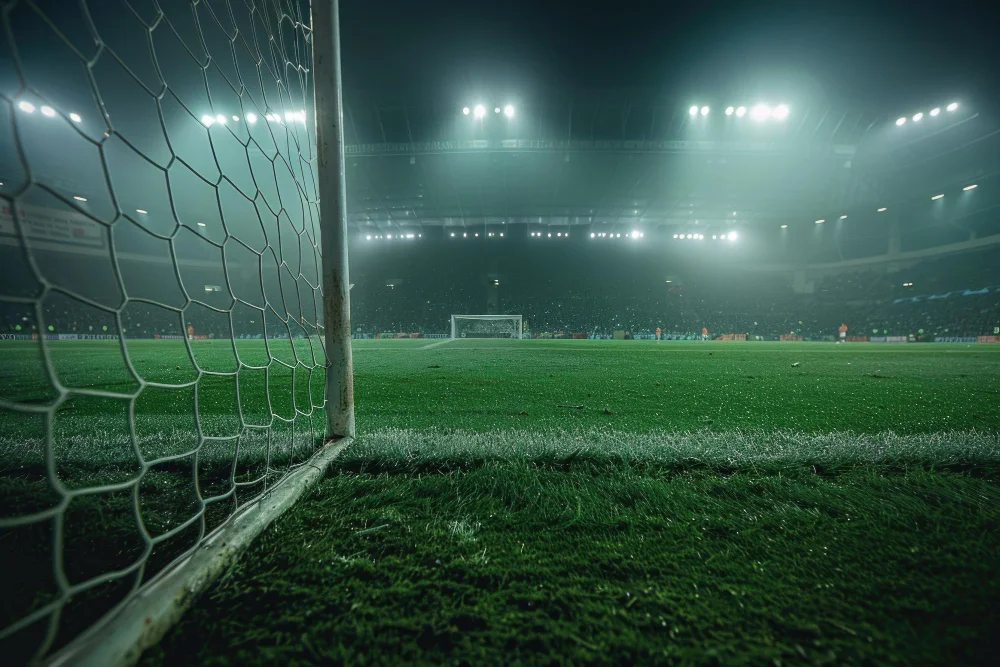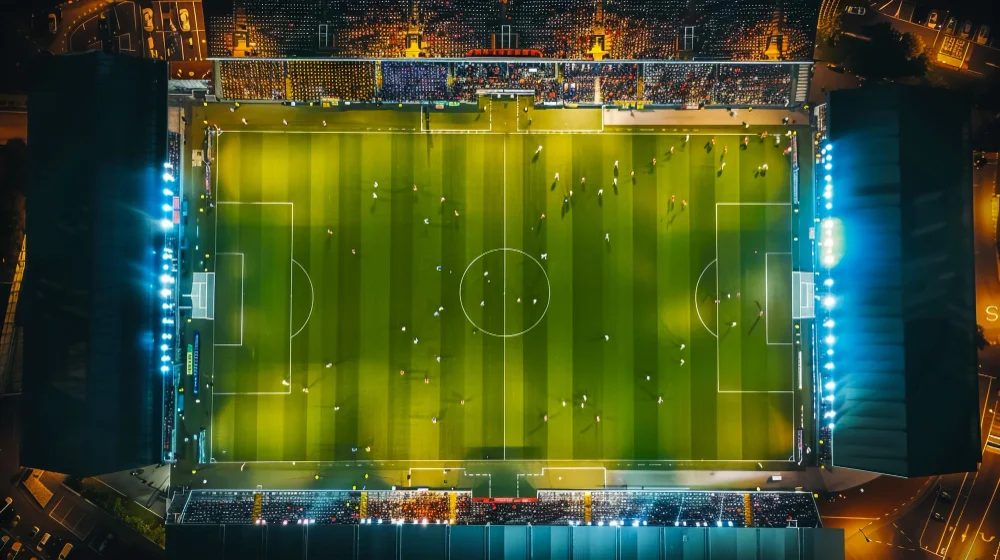
Football Stadium Lighting in Heraklion
VS Wilson provides football stadium and football-pitch lighting services across Heraklion for training grounds, football clubs, competition venues, stadiums and other applicable football facilities.
Our scope can include site assessment, drawing review, lighting planning, DIALux and photometric calculations, multi-brand floodlight sourcing, mast or roof-mount coordination, electrical installation, aiming, testing and final commissioning.
Football stadium lighting needs to support players, referees, spectators and where applicable broadcast cameras.
A successful design therefore depends on more than achieving an average lux value.
Pitch uniformity, vertical visibility, glare, player sightlines, camera positions, shadows, colour quality, flicker, mounting geometry and unwanted spill all influence the final system.
PLAN — PROJECT ASSESSMENT
DESIGN — LIGHTING PLANNING
SOURCE — PRODUCT PROCUREMENT
DELIVER — INSTALLATION & HANDOVER
Football Lighting Designed Around the Level of Play
The required lighting system depends strongly on how the football venue will be used.
Football lighting projects may involve recreational football fields, training grounds, academies, club competitions, professional competitions, stadium events, and televised matches. The lighting criteria should be matched to the intended level and use of the facility, as a community training field should not automatically be designed to the same requirements as an elite or broadcast stadium. Before final lighting targets are established, the intended competition level and any applicable federation, broadcaster, consultant, and local authority requirements should therefore be identified and incorporated into the lighting design.


Pitch Assessment
Football-lighting planning may consider:
- pitch dimensions
- playing orientation
- touchlines
- goal lines
- goalkeeper areas
- technical areas
- spectator stands
- camera platforms
- scoreboard locations
- existing masts
- stadium roof
- neighbouring properties
- access roads
- electrical infrastructure.
For existing venues, current lighting conditions and available mounting positions should also be reviewed.
Horizontal Illuminance
Horizontal illuminance describes the light reaching the pitch surface.
It supports visibility of:
- pitch markings
- player movement
- the ball on the ground
- officials
- general play.
It remains an important football-lighting criterion, but it does not fully describe player or broadcast visibility.
A pitch can have adequate horizontal illumination while still performing poorly in other areas.
Vertical Illuminance
Vertical illuminance becomes particularly important where players, the airborne ball and other action need to be seen from different directions.
It is especially relevant for:
- broadcast cameras
- player recognition
- goalkeeper visibility
- aerial ball tracking.
Professional football-lighting guidance evaluates vertical illumination in multiple directions because cameras and spectators observe play from different positions.
For broadcast venues, the design should therefore consider identified camera planes rather than relying only on horizontal pitch calculations.
Pitch Uniformity
Uniformity describes how consistently lighting is distributed across the playing surface.
Poor uniformity can create:
- dark patches
- excessively bright zones
- repeated brightness changes
- inconsistent television pictures.
Average illuminance alone is therefore insufficient.
The applicable uniformity requirements should follow the actual competition or project criteria.
Adjacent Uniformity
High-level stadium specifications may also consider how rapidly illumination changes between neighbouring calculation points.
This helps prevent visible local brightness jumps across the playing area.
Where required by the governing specification, adjacent uniformity should be checked as part of the photometric design.
Player Visibility
Players need to detect:
- teammates
- opponents
- officials
- the ball
- field markings.
Lighting should provide appropriate modelling so that players do not appear visually flat against the background.
Light reaching the player from multiple suitable directions can help maintain useful facial and body modelling.
Goalkeeper Sightlines
Goalkeepers frequently look:
- across the pitch
- upward toward high balls
- toward floodlighting structures.
Floodlight positions and aiming should therefore be reviewed from goalkeeper positions as well as general field locations.
A lighting system that appears acceptable from the stands may still create distracting glare in a goalkeeper's normal line of sight.
Aerial Ball Tracking
Football involves frequent high balls, crosses, long passes and goal kicks.
Players need to follow the ball against both:
- the illuminated stadium environment
- the darker sky.
The system should therefore support visibility throughout the ball's flight rather than only when it is close to the playing surface.
Glare Control
High-output stadium floodlights can create disability or discomfort glare if poorly positioned or aimed.
Glare may affect:
- players
- goalkeepers
- referees
- spectators
- television cameras.
Relevant design factors include:
- mounting height
- mast position
- roof position
- aiming angle
- beam distribution
- shielding
- player sightlines.
More floodlight output does not automatically improve football visibility.
Mast Lighting
Football venues may use dedicated floodlighting masts.
Mast design can influence:
- mounting height
- aiming geometry
- field coverage
- glare
- electrical routing
- maintenance access.
The final number, height and location of masts should be based on the pitch geometry and required performance.
No universal four-mast, six-mast or eight-mast arrangement should be assumed for every stadium.
Roof-Mounted Stadium Lighting
Larger stadiums may use luminaires mounted on:
- roof edges
- roof undersides
- structural catwalks
- dedicated roof lighting structures.
Roof geometry affects the available aiming angles and light direction.
Lighting should therefore be coordinated with structural engineering and stadium architecture early in the project.
Installation Geometry
Football-lighting performance depends heavily on:
- fixture location
- mounting height
- aiming angle
- beam shape
- distance to the pitch.
FIFA stadium guidance specifically notes that lighting geometry, mast or structural position, equipment selection, aiming angles and beams need careful assessment.
Even small installation changes can alter the approved photometric result.
Broadcast Football Lighting
Televised football has additional requirements beyond player visibility.
Broadcast design may need to consider:
- horizontal illuminance
- vertical illumination toward camera positions
- uniformity
- player modelling
- colour rendering
- correlated colour temperature
- flicker
- slow-motion/high-frame-rate cameras
- spectator background lighting
- power continuity.
The exact values depend on the applicable competition and broadcast category.
VS Wilson should not describe a project as “broadcast compliant” until those specific criteria have been established and verified.
Camera Position Planning
Broadcast lighting should be coordinated with anticipated camera locations.
Possible positions may include:
- main camera
- reverse camera
- goal-line cameras
- penalty-area cameras
- handheld positions
- elevated cameras.
Each position views players and the ball from a different direction.
Vertical illuminance should therefore be evaluated against the relevant camera geometry.
Flicker and Slow-Motion Recording
LED systems can appear steady to the human eye while producing visible modulation in high-frame-rate video.
For broadcast stadiums, flicker performance therefore needs particular attention.
FIFA and UEFA lighting guidance treats flicker as an important broadcast criterion.
High-speed replay requirements should be established before fixture selection.
Spectator-Area Flicker
Broadcast cameras may also capture spectator stands in the background.
UEFA guidance notes that a pitch can appear flicker-free while lighting on spectator areas still produces flicker in high-frame-rate footage.
Where broadcast coverage includes the stands, spectator-area lighting may therefore also need review.
Colour Rendering
Football broadcasters, spectators and officials need natural visual differentiation between:
- players
- team kits
- pitch
- ball
- officials
- advertising.
Colour-rendering requirements become more demanding at higher broadcast levels.
The exact specification should follow the applicable competition or broadcaster criteria and selected product documentation.
Correlated Colour Temperature
Colour temperature can affect the visual appearance of the pitch and broadcast image.
High-level football specifications may define a permitted range.
However, VS Wilson should not apply one CCT value to every training ground and stadium.
The project requirement should determine the final specification.
Player Modelling and Shadows
Football players move continuously and are viewed from different directions.
Poor lighting direction can create:
- hard facial shadows
- strong body shadows
- poor depth perception
- visually flat broadcast images.
A balanced distribution of light from multiple suitable directions can improve modelling.
This needs to be considered alongside glare and vertical illuminance.
DIALux and Photometric Design
VS Wilson can use DIALux and photometric calculations to evaluate football-lighting systems.
Depending on project requirements, calculations may assess:
- horizontal illuminance
- vertical illuminance
- uniformity
- adjacent uniformity
- goalkeeper areas
- camera planes
- glare
- mast positions
- mounting height
- fixture aiming
- spill light.
The calculation model should use actual pitch dimensions, mounting geometry and selected luminaire photometric files.
Sample DIALux Report
A client-provided DIALux PDF will be published in the service-page evidence tab.
VIEW SAMPLE DIALux REPORT
This representative report demonstrates VS Wilson's photometric-design process. The sample relates to the project type identified in the report. Every project requires a separate design based on its venue, operating conditions and intended use.
The sample must retain its genuine project type and must not be presented as completed Football Stadium Lighting evidence unless it genuinely relates to that project.
What Lux Level Does a Football Stadium Need?
There is no single universal football-stadium lux requirement.
Required performance depends on:
- level of competition
- training versus match use
- stadium category
- broadcaster requirements
- federation requirements
- camera coverage
- project specification.
Elite televised football can require substantially more demanding horizontal and vertical illumination than training or recreational football.
The required values should therefore be established from the actual competition and venue requirements.
FIFA and UEFA Lighting Requirements
FIFA's Quality Programme for Floodlights provides testing standards for football stadiums and training sites and considers light intensity, uniformity, colour temperature and other performance factors.
UEFA also defines different floodlighting levels and stadium categories.
These standards demonstrate why football lighting should be designed against the actual level of play rather than one universal target.
VS Wilson should only claim FIFA, UEFA or competition compliance when the specific project has been designed, tested and accepted against the applicable requirements.
Training Ground Lighting
Training facilities often have different requirements from broadcast stadiums.
The design may focus primarily on:
- player visibility
- ball tracking
- uniformity
- glare
- safe movement
- coaching activity.
Broadcast-specific camera requirements may not be necessary unless the facility is intended for televised use.
Competition Stadium Lighting
Competition venues may require more demanding performance because of:
- larger spectator areas
- match regulations
- officials
- competition certification
- television coverage.
The exact target should be confirmed before lighting design begins.
Multi-Mode Stadium Lighting
Where compatible controls and equipment are specified, the stadium may operate different lighting modes such as:
- maintenance
- training
- non-broadcast match
- competition
- broadcast
- event mode.
Each mode should be defined by project requirements rather than assumed.
Lighting Control System
A stadium lighting-control system may support:
- grouped circuits
- switching
- dimming
- operating modes
- monitoring
- scheduled operation.
Compatibility depends on the selected luminaires, drivers and control platform.
VS Wilson should not claim universal support for a proprietary system or protocol unless specifically verified.
Match Continuity and Power Supply
Professional football venues may require continuity of floodlighting after a power disturbance.
FIFA stadium guidance states that power systems should be designed around the venue's match and broadcast needs and should consider resilience and redundancy.
High-level competition criteria can therefore require:
- backup power
- redundant supply
- controlled restoration
- defined match-continuity modes.
These requirements must be established from the applicable stadium category.
Emergency Lighting Is Separate
Floodlighting for football play is not the same as emergency or life-safety lighting.
Stadium emergency systems may include:
- spectator escape routes
- concourses
- stairs
- exits
- emergency signage.
These systems should remain coordinated with but independent from normal sports-lighting modes according to applicable regulations.
Spectator Seating Lighting
Spectator areas require sufficient orientation and visibility for:
- seating
- aisles
- stairs
- entry and exit.
Lighting should avoid excessive spill onto the pitch or unwanted effects in broadcast backgrounds.
For televised venues, colour and flicker performance may also become relevant.
Spill Light Beyond the Stadium
Football floodlighting can affect:
- nearby residences
- roads
- adjacent sports facilities
- surrounding landscape
- the night sky.
FIFA identifies reducing environmental impact and unwanted spill as a key consideration for modern football floodlighting.
Optics, shielding, fixture position and aiming should therefore be developed to control unnecessary light outside the required areas.
Specific environmental limits should follow the actual authority or project requirements.
Heraklion Outdoor Conditions
Football floodlighting equipment in Heraklion may experience:
- high ambient temperatures
- direct solar exposure
- dust
- humidity
- coastal saline conditions in some locations
- wind.
Floodlights, drivers, brackets and supporting structures should therefore be selected according to actual manufacturer documentation and installation conditions.
VS Wilson does not apply one universal IP rating, lifetime or warranty to every stadium fixture.
New Football Stadium Projects
New stadium projects allow lighting to be coordinated early with:
- stadium architecture
- roof structures
- mast foundations
- seating
- camera positions
- electrical rooms
- broadcast infrastructure
- control systems
- emergency power.
This can avoid expensive structural changes after stadium construction has progressed.
Existing Stadium Lighting Retrofit
Existing football venues can be assessed for LED or floodlighting upgrades.
Retrofit review may include:
- existing mast positions
- mast height
- roof locations
- electrical capacity
- existing wiring
- current photometric performance
- glare
- controls
- broadcast requirements.
The existing geometry should not automatically be retained if it prevents the required performance.
Existing Mast Reuse
Existing masts may be reusable where structurally and photometrically suitable.
Review may need to include:
- structural condition
- wind loading
- fixture quantity and weight
- mounting brackets
- mast height
- aiming range.
Structural acceptance remains project-specific.
LED Football Stadium Retrofit
LED replacement should not be based only on wattage comparison.
The new design should be checked for:
- horizontal illuminance
- vertical illuminance
- pitch uniformity
- player modelling
- glare
- flicker
- spill
- controls.
No fixed energy-saving percentage should be guaranteed.
Multi-Brand Floodlight Sourcing
VS Wilson can source football-stadium lighting products according to specification, client preference, documentation and market availability.
Products may include:
- sports floodlights
- drivers
- brackets
- masts or associated mounting components
- control equipment
- electrical materials.
Selection may consider:
- photometric distribution
- colour properties
- flicker performance
- thermal suitability
- aiming capability
- environmental exposure
- control compatibility.
Actual specifications remain manufacturer-specific.
Electrical Installation
VS Wilson can undertake electrical installation according to the agreed football-lighting scope.
Work may include:
- cabling
- floodlight installation
- mast connections
- control circuits
- distribution connections
- aiming.
Execution should follow the approved project drawings and stadium-access requirements.
Fixture Aiming
Aiming is critical in stadium lighting.
Incorrect aiming can create:
- dark pitch areas
- excessive glare
- weak vertical illumination
- unnecessary spill
- poor camera performance.
Final fixture aiming should reproduce the approved photometric design as closely as practical.
Testing and Photometric Verification
Commissioning may include:
- fixture operation
- electrical circuits
- controls
- operating modes
- aiming
- representative pitch measurements.
For competition venues, measured verification may need to follow the relevant federation or project measurement grid.
High-level football standards use structured measurement locations and multiple vertical orientations rather than a few random lux readings.
Final Commissioning
Final commissioning connects the design model with the installed stadium.
Depending on scope, adjustments may include:
- aiming
- dimming
- lighting modes
- control settings
- glare correction
- output balancing.
Where performance acceptance testing is required, results should be assessed against the approved project criteria.
Common Football Stadium Lighting Problems We Assess
Average Lux Is Acceptable but Uniformity Is Poor
The pitch contains visually dark and bright zones.
Horizontal Lighting Is Good but Players Look Dark on Camera
Vertical illumination toward camera positions has not been adequately considered.
Goalkeepers Experience Glare
Floodlights intersect important goalkeeper sightlines.
High Balls Become Difficult to Track
Lighting geometry does not adequately support aerial visibility.
Slow-Motion Video Shows Flicker
Fixture and driver performance does not match broadcast camera requirements.
Player Shadows Are Excessive
Lighting reaches players primarily from one direction.
Existing Masts Restrict the New Design
Retaining old mounting positions limits required coverage or vertical lighting.
Too Much Light Leaves the Stadium
Optics or aiming create unnecessary spill.
Stadium Modes Are Not Properly Defined
Training, competition and broadcast conditions use unnecessarily identical settings.
Installation Does Not Match the Photometric Model
Fixture positions or aiming angles changed during construction.
No Measured Commissioning
The installed system is assumed compliant because the lights operate electrically.
What Determines Football Stadium Lighting Cost in Heraklion?
Football-stadium lighting cost depends on the actual venue and required performance level.
Factors may include:
- pitch count
- stadium size
- level of play
- broadcast requirements
- mast quantity and height
- roof-mounted versus mast-mounted system
- fixture quantity
- floodlight specification
- electrical infrastructure
- backup-power requirements
- control system
- existing mast reuse
- retrofit conditions
- access equipment
- testing and commissioning.
A project-specific quotation should follow review of the venue and applicable football-lighting requirements.
Information Helpful for a Football Stadium Lighting Proposal
Where available, provide:
- Heraklion project location
- pitch dimensions
- stadium layout
- competition level
- federation or league requirements
- broadcast requirements
- camera-position plan
- existing/proposed mast locations
- mast heights
- stadium roof drawings
- electrical drawings
- available electrical capacity
- backup-power requirements
- spectator-seating layout
- neighbouring-property information
- control requirements
- existing lighting report for retrofit
- project programme.
VS Wilson Football Stadium Lighting Project Process
1. SITE ASSESSMENT
Review pitch, stadium geometry, existing infrastructure and venue requirements.
2. DRAWING REVIEW
Review field, roof, mast, electrical, spectator and camera information.
3. LIGHTING PLANNING
Define competition level, performance criteria, fixture positions and operating modes.
4. PHOTOMETRIC DESIGN
Carry out DIALux or applicable football-stadium lighting calculations.
5. PRODUCT SOURCING
Source suitable floodlights and associated project materials.
6. ELECTRICAL INSTALLATION
Execute approved stadium lighting and related electrical work.
7. SYSTEM TESTING
Test fixtures, electrical systems, controls and operating modes.
8. FINAL COMMISSIONING
Complete aiming, applicable photometric verification and handover.
Why Football Lighting Design and Installation Need to Stay Connected
Football-stadium calculations rely on actual:
- mast positions
- roof geometry
- mounting height
- luminaire optics
- aiming angles
- camera positions.
If these conditions change during installation, real lighting performance can differ from the approved model.
VS Wilson can coordinate planning, sourcing, installation, testing and commissioning within one agreed project scope.
Football Stadium Lighting Across Heraklion
VS Wilson provides football stadium lighting project support in Heraklion through project-specific planning, mobilisation and on-site execution, subject to the agreed scope. Service availability does not imply a permanent local office.
Project Evidence
Only verified first-party evidence should be presented here.
Sample DIALux Report
A client-provided DIALux PDF can demonstrate VS Wilson's photometric-design process.
VIEW SAMPLE DIALux REPORT
The report must retain its genuine project type and must not be presented as completed Football Stadium Lighting evidence unless it genuinely relates to that project.
Verified Project Photographs and References
Stadium names, club names, photographs, locations, client identities and project references should be added only after verification and publication approval.
Until then, representative football imagery must not be labelled as completed VS Wilson project work.
Frequently Asked Questions
What is football stadium lighting?
Football stadium lighting is the planned illumination of a football pitch and associated stadium areas to support player, official, spectator and—where applicable—broadcast visibility.
Does VS Wilson provide football stadium lighting across Heraklion?
Yes. VS Wilson provides lighting consultation, design, multi-brand sourcing, electrical installation, testing and commissioning across Heraklion according to the agreed project scope.
What lux level does a football stadium need?
There is no single universal lux level. Requirements depend on training, competition, stadium category, federation and broadcast requirements.
Why is vertical illuminance important?
Vertical lighting helps players, the ball and action remain visible from camera and spectator viewing directions, especially in televised football.
Why is uniformity important on a football pitch?
Uniformity reduces large differences between bright and dark areas and supports consistent player and camera visibility across the field.
What is flicker in stadium lighting?
Flicker is light-output modulation that can become visible in video, especially during high-frame-rate or slow-motion recording.
Does VS Wilson design broadcast football lighting?
VS Wilson can plan lighting according to specified project and broadcast requirements. A venue should only be described as broadcast compliant after the relevant criteria have been verified.
Does VS Wilson use DIALux for football stadium lighting?
Yes. DIALux and photometric calculations are available where applicable and where sufficient stadium and luminaire information is available.
Can floodlights be mounted on the stadium roof?
Yes, where the stadium structure and lighting design permit. Other venues may use dedicated masts or a combination of mounting arrangements.
Can existing stadium masts be reused?
Potentially. Structural condition, mast height, fixture weight, mounting and photometric suitability must be reviewed.
Can a stadium have separate training and match lighting modes?
Yes, where compatible fixtures and controls are selected and the project requires different operating modes.
How is glare reduced for football players?
Glare can be managed through mast/roof position, mounting height, luminaire optics, shielding and aiming based on actual player sightlines.
How can stadium lighting reduce spill toward nearby properties?
Controlled optics, appropriate mounting positions and careful aiming can reduce unnecessary light outside the required sports area.
Does LED stadium lighting guarantee energy savings?
No fixed saving should be guaranteed. Actual consumption depends on the existing system, new connected load, lighting modes and operating hours.
How much does football stadium lighting cost in Heraklion?
Pricing depends on venue size, competition and broadcast requirements, mounting structures, floodlight quantities, electrical infrastructure, controls and testing requirements.
Discuss Your Football Stadium Lighting Project
Planning a football stadium, training facility or floodlighting upgrade in Heraklion?
Share your pitch dimensions, stadium drawings, competition level, mast or roof details, camera requirements and electrical information with VS Wilson.
Our team can review the project and establish the appropriate scope for football-lighting planning, DIALux or photometric design, floodlight sourcing, electrical installation, aiming, testing and commissioning.
To know more about VS Wilson and our expertise, visit our About Us page. For more information, project requirements, or enquiries about our lighting solutions, Contact VS Wilson today.
Image Gallery