Playground Lighting Design & Installation Services in Heidelberg
VS Wilson provides playground lighting design and installation services across Heidelberg for residential communities, public parks, schools, hotels, resorts, commercial recreation areas and other play environments.
The service covers project assessment, lighting layout planning, photometric design where applicable, fixture and material sourcing, electrical coordination, installation, control integration, testing and final commissioning.
Playground lighting is planned around the actual play environment rather than treating the area as a simple open-space lighting installation. Activity zones, children’s movement, supervision sightlines, access routes, surrounding landscaping, equipment positions, terrain, nearby buildings and operating hours can all influence the lighting arrangement.
The service supports both new playground developments and existing playground lighting upgrades.
Playground Lighting Planning Priorities
Playground lighting should be planned around activity zones, children’s movement, supervision sightlines, access routes and surrounding site conditions rather than fixture spacing alone. Coordinating these factors early helps create a lighting layout that supports visibility, movement and site integration while reducing conflicts with play equipment, landscaping and electrical infrastructure.
What Playground Lighting Design & Installation Includes
The complete lighting scope can include site assessment, playground layout review, activity-zone lighting planning, circulation and access lighting, perimeter lighting, fixture selection, pole and mounting-position planning, photometric design and DIALux calculations where applicable. It can also cover product sourcing, electrical planning, cable and containment coordination, lighting controls, installation, testing, night-time adjustment where required, and final commissioning.
The exact scope depends on the playground layout, project requirements, authority requirements and agreed proposal.


Playground Lighting for Heidelberg Residential Communities
Residential-community playgrounds are often located beside landscaped areas, pedestrian routes, residential buildings and shared amenities.
Lighting design can consider:
- Main play equipment
- Toddler play zones
- Active play zones
- Seating areas
- Pedestrian approaches
- Playground entrances
- Perimeter boundaries
- Adjacent landscape
- Residential building interfaces
- Nearby roads and parking
- Community pathways
The lighting arrangement should provide appropriate visibility while controlling glare and unwanted light toward nearby residences.
For residential developments, the playground lighting system can also be coordinated with the wider community lighting and control strategy where included in the project scope.
Playground Lighting for Public Parks
Public parks can contain multiple activity areas rather than a single playground.
A lighting plan may therefore need to coordinate:
- Children’s playgrounds
- Walking paths
- Seating
- Park entrances
- Open recreation areas
- Landscape features
- Nearby sports areas
- Service routes
- Public amenities
The design and installation must follow the applicable local building, electrical, fire-safety and project-authority requirements.
For larger public-realm projects, playground lighting should be coordinated with the broader landscape and public-space lighting strategy.
Playground Lighting for Schools
School playground lighting can support outdoor areas used beyond daylight hours or during scheduled activities.
The assessment can consider:
- Age groups
- Activity areas
- Circulation routes
- Supervision positions
- Building entrances
- Sports or multipurpose areas
- Boundary conditions
- Existing school lighting
- Operating schedules
Lighting should be designed around the actual school layout and usage rather than applying the same fixture arrangement to every outdoor play area.
Playground Lighting for Hotels and Resorts
Hotels and resorts may have children’s play areas within larger landscaped environments.
Lighting can be coordinated with:
- Pool surroundings
- Garden areas
- Walkways
- Seating
- Family recreation zones
- Building entrances
- Resort pathways
- Landscape features
The design can separate the functional lighting required around the playground from decorative landscape lighting so that feature lighting does not interfere with visibility or create unnecessary glare.
Playground Lighting for Commercial Recreation Areas
Commercial recreation environments can include:
- Indoor play centres
- Outdoor play areas
- Family entertainment areas
- Community recreation facilities
- Mixed-use developments
- Leisure destinations
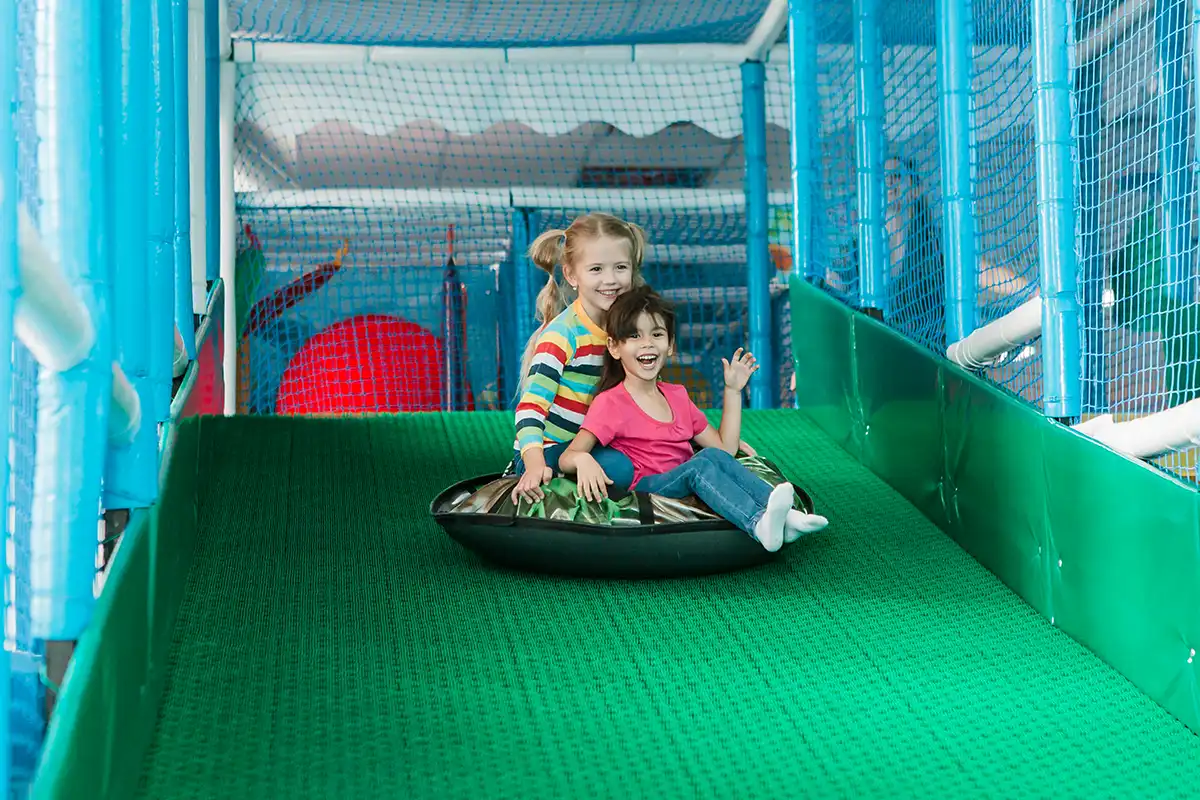
Indoor and outdoor playgrounds have different design constraints.
Indoor facilities are influenced by ceiling height, structural elements, HVAC systems, suspended services and existing electrical infrastructure.
Outdoor facilities require additional consideration of weather exposure, terrain, mounting arrangements, cable routing and surrounding landscape.
Outdoor Playground Lighting Design
Outdoor playground lighting requires planning around the complete site.
Important inputs can include:
- Playground dimensions
- Equipment locations
- Safety surfacing
- Paths
- Seating
- Fencing
- Landscape
- Trees and planting
- Nearby buildings
- Roads
- Parking
- Utility locations
- Existing lighting columns
- Electrical infrastructure
Fixture positions should be selected so that the lighting covers the required areas without creating unnecessary glare or poorly illuminated pockets.
Playground Activity-Zone Lighting
Different playground areas can have different lighting requirements.
The design can separate:
Active Play Areas
These are areas where children move, climb, slide, run or interact with equipment.
Lighting should be planned around the actual equipment arrangement and expected movement.
Toddler Areas
Smaller play areas may have different equipment layouts and supervision requirements.
Seating and Supervision Areas
Parents, guardians, teachers or supervisors may need clear sightlines toward play areas.
Lighting should therefore avoid creating strong contrast or dark zones that interfere with observation.
Access Routes
Paths leading toward and away from the playground can be incorporated into the overall lighting plan.
Perimeter Zones
Boundary lighting can help establish visual definition between the playground and surrounding landscape or public areas.
The final arrangement should be based on the site layout and project-specific requirements.
Playground Lighting and Supervision Sightlines
Lighting affects more than the ground surface.
The position and optical distribution of fixtures can influence how easily supervisors can observe children and identify activity across the play area.
Potential design issues include:
- Fixtures directly in the line of sight
- Strong contrast between play equipment and background
- Dark areas behind structures
- Shadows from playground equipment
- Excessive brightness near viewing positions
- Poorly illuminated access points
Photometric planning and fixture positioning can be used to evaluate these conditions before installation where applicable.
Playground Lighting and Glare Control
Glare is particularly important in recreational environments because users may look toward luminaires while moving through the playground.
Potential sources include:
- Poorly aimed floodlights
- Exposed high-output luminaires
- Incorrect pole positioning
- Excessive contrast
- Reflective surfaces
- Fixtures directed toward nearby homes
- Fixtures visible from adjacent roads or pedestrian paths
Glare can be addressed through:
- Fixture orientation
- Optical distribution
- Shielding
- Mounting height
- Pole position
- Dimming
- Zoning
- Appropriate lighting levels
- Selection of suitable luminaires
The final approach should be based on the selected products and site conditions.
Playground Lighting and Dark Zones
Uneven lighting can occur when fixture spacing is determined without considering the actual playground equipment and surrounding structures.
Structures can create shadows across:
- Slides
- Climbing frames
- Playhouses
- Swings
- Seating
- Access paths
- Perimeter areas
A lighting layout should therefore be evaluated against the complete playground arrangement rather than only the site boundary.
Playground Lighting Around Play Equipment
Fixture positioning should account for the physical form and height of playground equipment.
The design can review:
- Equipment height
- Slides
- Climbing structures
- Roofs
- Canopies
- Swings
- Nets
- Towers
- Playhouses
- Decorative structures
The aim is to avoid creating unnecessary obstruction, glare or shadow conditions.
Fixtures should not be installed in positions that introduce avoidable hazards or interfere with playground operation.
Playground Lighting and Landscaping
Many Heidelberg playgrounds form part of larger landscaped developments.
Landscape elements can affect light distribution through:
- Trees
- Palms
- Shrubs
- Planting beds
- Berms
- Decorative structures
- Walls
- Water features
Lighting plans should account for existing and proposed landscaping.
Plant growth can also change the lighting environment over time, so fixture positioning and access for maintenance should be considered during design.
Playground Lighting and Pathways
Playground access routes can be incorporated into the lighting plan.
This may include:
- Pedestrian paths
- Entry routes
- Connecting walkways
- Ramps
- Steps
- Seating approaches
- Routes to nearby community facilities
The lighting treatment for these areas does not necessarily need to match the play zone itself.
Different zones can be planned separately while maintaining visual continuity.
Playground Lighting and Entrances & Exits
Playground entrances should be identifiable and appropriately illuminated.
The design can consider:
- Main entrances
- Secondary access points
- Gates
- Accessible routes
- Exit routes
- Nearby signage
- Boundary conditions
The design and installation must follow the applicable local building, electrical, fire-safety and project-authority requirements.
Lighting does not replace the broader safety requirements of the playground, but it forms part of the environment in which those requirements must operate.
Playground Electrical Safety
Outdoor playground lighting requires careful electrical coordination because electrical infrastructure may be located close to areas used by children.
The design and installation scope can consider:
- Cable routing
- Protective containment
- Connection points
- Distribution equipment
- Circuit protection
- Fixture mounting
- Accessible electrical components
- Underground services
- Existing infrastructure
The design and installation must follow the applicable local building, electrical, fire-safety and project-authority requirements.
VS Wilson’s electrical installation scope is implemented according to the agreed project requirements and applicable regulations.
Playground Lighting Pole and Mounting Planning
Outdoor playgrounds may use different mounting arrangements depending on site geometry.
Possible approaches include:
- Pole-mounted luminaires
- Building-mounted fixtures
- Landscape-mounted fixtures
- Low-level fixtures
- Bollards for surrounding pathways
- Recessed fixtures where suitable
- Integrated architectural lighting
Pole locations should be coordinated with:
- Playground equipment
- Safety zones
- Paths
- Fencing
- Trees
- Maintenance access
- Underground services
- Nearby buildings
- Viewing directions
A pole position that works for illumination may still be unsuitable if it conflicts with access, maintenance or the physical playground layout.
Indoor Playground Lighting
Indoor playground lighting has different constraints from outdoor installations.
The design can consider:
- Ceiling height
- Roof structure
- Suspended ceilings
- HVAC
- Fire protection systems
- Existing electrical infrastructure
- Play equipment height
- Observation areas
- Reflective finishes
- Maintenance access
Fixtures should be positioned and selected to suit the indoor environment and the actual play layout.
The design and installation must follow the applicable local building, electrical, fire-safety and project-authority requirements. Lighting should therefore be coordinated with the wider building-services design rather than treated as an isolated installation.
Playground Lighting Controls
Playground lighting can use different control strategies depending on operating hours and project requirements.
Potential options include:
- Manual switching
- Timed operation
- Occupancy-based control
- Photocell/daylight-responsive control where applicable
- Dimming
- Zone-based switching
- Centralised controls
- Building-management integration where specified
Large or community playgrounds may benefit from separate control zones so that surrounding paths, play areas and decorative lighting do not necessarily operate in exactly the same way.
Control settings should also account for the intended operating schedule and any required safety lighting.
Smart Playground Lighting
For residential communities and larger developments, playground lighting may be integrated into a wider smart-building or community lighting system.
Possible functions include:
- Scheduled switching
- Zone control
- Remote monitoring
- Dimming
- Automated operation
- Centralised control
- Integration with wider lighting-management systems
The actual automation architecture depends on the project’s electrical and control infrastructure.
VS Wilson does not represent any specific smart-control protocol as universally included. The required system and integration scope should be confirmed during project design.
DIALux and Photometric Design for Playgrounds
Where applicable, VS Wilson can use DIALux and photometric calculations to evaluate a proposed playground lighting layout before installation.
The model can incorporate:
- Playground dimensions
- Activity zones
- Equipment positions
- Fixture locations
- Luminaire photometric data
- Mounting heights
- Surrounding surfaces
- Paths
- Seating
- Perimeter areas
- Nearby structures
Photometric design can help identify potential dark areas, excessive concentration of light and other layout issues before the installation stage.
Playground Lighting Design Inputs
Useful information includes:
- Site plan
- Playground layout
- Equipment layout
- Dimensions
- Equipment heights
- Landscape plan
- Pathway layout
- Seating locations
- Boundary/fencing layout
- Existing lighting
- Electrical drawings
- Fixture specifications
- Operating schedule
- Control requirements
- Applicable project criteria
No universal lux level is applied to every playground. Lighting targets should be established from the specific facility, applicable requirements and intended use.
Product and Fixture Sourcing
VS Wilson can source lighting products and associated materials according to the approved project specification, client preference, documentation and market availability.
Potential products include:
- Floodlights
- Area luminaires
- Pole-mounted fixtures
- Linear fixtures
- Bollards
- Pathway fixtures
- Wall-mounted fixtures
- Low-level lighting
- Landscape fixtures
- Sensors
- Dimmers
- Control equipment
- Drivers
- Emergency lighting where included in the agreed scope
Product selection can consider:
- Optical distribution
- Mounting requirements
- Environmental exposure
- Mechanical suitability
- Electrical characteristics
- Control compatibility
- Maintenance access
- Manufacturer documentation
Product-specific IP ratings, warranties, impact ratings and lifespan claims should be verified from the selected manufacturer’s documentation.
Playground Lighting Installation
Installation may include:
- Fixture mounting
- Pole installation where required
- Cable routing
- Conduit or suitable containment
- Electrical connections
- Drivers
- Control equipment
- Sensors
- Circuit connections
- Fixture aiming
- System configuration
Outdoor installations may also require coordination with:
- Landscape works
- Irrigation
- Drainage
- Hardscape
- Playground surfacing
- Existing underground utilities
- Fencing
- Shade structures
Installation sequencing is important because completed landscape and playground surfaces can make later cable routing and fixture relocation more disruptive.
New Playground Lighting Projects
For new developments, lighting should be considered early enough to coordinate with the playground, landscape and electrical design.
Early planning can allow:
- Pole positions to be coordinated
- Underground routes to be established
- Fixtures to be integrated into landscape drawings
- Electrical circuits to be planned
- Controls to be defined
- Equipment and access zones to be respected
- Maintenance access to be considered
- Photometric design to be completed before procurement
This reduces the likelihood of late changes after playground and landscape construction.
Playground Lighting Retrofit and Upgrades
Existing playgrounds can be assessed for lighting upgrades.
A retrofit assessment may review:
- Existing luminaires
- Existing poles
- Electrical circuits
- Cable routes
- Control systems
- Fixture aiming
- Dark areas
- Glare
- Landscape growth
- Playground modifications
- Existing underground services
Potential retrofit work may include:
- Fixture replacement
- Additional luminaires
- Repositioning
- Control upgrades
- Sensor installation
- Dimming
- Circuit modifications
- Pole adjustments
- New cable routes
The appropriate retrofit solution depends on the existing infrastructure and site condition.
Common Playground Lighting Problems
Uneven Illumination
Incorrect fixture spacing or poor consideration of equipment geometry can create dark patches.
Glare
Poorly aimed or exposed luminaires can create discomfort for children, parents, supervisors and nearby pedestrians.
Equipment Shadows
Tall playground structures can block light and create poorly illuminated areas.
Poor Supervision Visibility
Strong contrast or poorly positioned fixtures can make it harder to observe activity across the play area.
Light Spill
Uncontrolled outdoor lighting can affect nearby residences, roads, pedestrian routes or other facilities.
Electrical Coordination Problems
Unplanned cable routes can conflict with landscaping, irrigation, playground foundations or other underground services.
Maintenance Access
Fixtures that are difficult to reach can make future inspection and replacement more complicated.
Control Problems
Poorly configured timers or sensors can result in lighting operating at unsuitable times or switching inconsistently between zones.
Playground Lighting and Night-Time Use
Playground lighting is generally considered when the facility is intended to remain usable after daylight hours.
The design can consider:
- Operating hours
- Seasonal usage
- Peak visitor periods
- Community schedules
- School schedules
- Security requirements
- Cleaning and maintenance periods
- Nearby residential occupancy
Lighting controls can be configured around the approved operating schedule.
The final operating times should be determined by the facility owner, authority requirements and project controls.
Playground Lighting Cost Factors in Heidelberg
There is no fixed playground lighting price because project requirements vary considerably.
Cost can depend on:
- Playground size
- Number of activity zones
- Fixture quantity
- Fixture type
- Mounting arrangement
- Pole requirements
- Cable length
- Underground routing
- Existing electrical infrastructure
- Landscape conditions
- Control requirements
- Sensor requirements
- Dimming
- Photometric design
- New-build or retrofit scope
- Access conditions
- Installation complexity
- Testing and commissioning
A project-specific quotation should therefore be prepared after reviewing the available drawings, site conditions and lighting requirements.
Our Playground Lighting Design & Installation Process
1. Site Assessment
Review the playground location, activity areas, access, surrounding landscape, existing infrastructure and operating conditions.
2. Drawing Review
Review site plans, playground layouts, landscape drawings, electrical drawings and relevant MEP information where available.
3. Lighting Planning
Define lighting zones for play areas, paths, entrances, perimeter areas and other relevant spaces.
4. Photometric Design
Where applicable, prepare DIALux or other photometric calculations using project geometry and proposed luminaires.
5. Fixture Selection
Select suitable luminaires, mounting arrangements, drivers, controls and related materials.
6. Product Procurement
Source approved products, materials, labour and equipment according to the agreed proposal.
7. Electrical Coordination
Coordinate cable routes, circuits, controls, poles and interfaces with landscape and playground infrastructure.
8. Installation
Install the lighting fixtures, electrical infrastructure, controls and associated equipment according to the approved scope.
9. Testing and Adjustment
Test circuits, fixtures, controls and sensors included in the agreed scope and make appropriate adjustments.
10. Final Commissioning
Complete final aiming, control configuration, system testing and handover according to the project requirements.
What to Provide for a Playground Lighting Proposal
For an initial assessment, provide where available:
- Heidelberg project location
- Playground site plan
- Playground equipment layout
- Playground dimensions
- Equipment heights
- Landscape plan
- Pathway plan
- Seating arrangement
- Boundary/fencing plan
- Existing lighting layout
- Electrical drawings
- Existing poles
- Existing control system
- Operating hours
- New-build or retrofit requirement
- Project photographs
- Site videos where available
- Authority or consultant requirements
- Project timeline
These inputs help establish the appropriate design, product and installation scope before quotation.
DIALux Evidence
A client-provided DIALux PDF will be published in the service-page evidence section.
VIEW SAMPLE DIALux REPORT
The report should remain the genuine project document, with its actual project type clearly identified and confidential information redacted where necessary.
If the representative report relates to another sport, facility or project type, display the following disclosure beside the evidence:
This representative report demonstrates VS Wilson’s photometric-design process. The sample relates to the project type identified in the report. Every project requires a separate design based on its venue, operating conditions and intended use.
VS Wilson Playground Lighting Capability
SITE ASSESSMENT
DRAWING REVIEW
LIGHTING PLANNING
PHOTOMETRIC DESIGN
PRODUCT SOURCING
ELECTRICAL INSTALLATION
SYSTEM TESTING
FINAL COMMISSIONING
PLAN — PROJECT ASSESSMENT
DESIGN — LIGHTING PLANNING
SOURCE — PRODUCT PROCUREMENT
DELIVER — INSTALLATION & HANDOVER
Playground Lighting Services Across Heidelberg
VS Wilson operates from Dubai and provides playground lighting design & installation services project support in Heidelberg through project-specific planning, mobilisation and on-site execution, subject to the agreed scope. Service availability does not imply a permanent local office.
Frequently Asked Questions
What does playground lighting design and installation include?
It can include site assessment, lighting layout planning, photometric design, fixture selection, product sourcing, electrical coordination, installation, controls, testing and commissioning according to the agreed project scope.
What types of playgrounds can you provide lighting for?
The service can be applied to outdoor playgrounds, residential-community play areas, public parks, school playgrounds, hotel and resort play areas, commercial recreation spaces and indoor play environments.
How is playground lighting designed?
The design considers the playground layout, activity zones, equipment positions, circulation, supervision sightlines, mounting positions, surrounding structures, landscape, operating conditions and project-specific lighting criteria.
Can DIALux be used for playground lighting design?
Yes. Where applicable, VS Wilson can use DIALux and photometric calculations to evaluate proposed fixture positions and lighting distribution before installation.
Can playground lighting use motion sensors?
Yes, where appropriate. Sensors and other control methods can be incorporated according to the facility’s operating pattern and required control strategy.
How do you reduce glare in playground lighting?
Glare can be addressed through fixture positioning, optical distribution, aiming, shielding, mounting arrangements, zoning and appropriate lighting levels.
Can playground lighting be integrated with landscape lighting?
Yes. Playground lighting can be coordinated with surrounding landscape lighting, pathways, entrances, planting and other public-realm lighting where included in the project scope.
Can you upgrade existing playground lighting?
Yes. Existing playgrounds can be assessed for fixture replacement, additional lighting, repositioning, control upgrades, sensor installation and other retrofit requirements.
Does playground lighting include electrical installation?
VS Wilson’s confirmed capability includes electrical installation. The exact electrical scope is defined according to the approved project proposal.
What affects playground lighting cost in Heidelberg?
Cost depends on playground size, activity zones, fixture types, mounting arrangements, pole and cable requirements, electrical infrastructure, controls, landscape conditions, new-build or retrofit requirements and installation complexity.
Does playground lighting include testing and commissioning?
Yes. Testing and commissioning are available within the agreed project scope, including relevant fixture, circuit and control-system checks.
Discuss Your Playground Lighting Project
Every playground has different activity zones, equipment, surroundings, operating hours and infrastructure.
VS Wilson can assess the available site information, develop the lighting approach, source suitable products and coordinate installation, testing and commissioning according to the agreed project requirements.
To know more about VS Wilson and our expertise, visit our About Us page. For more information, project requirements, or enquiries about our lighting solutions, Contact VS Wilson today.
Image Gallery