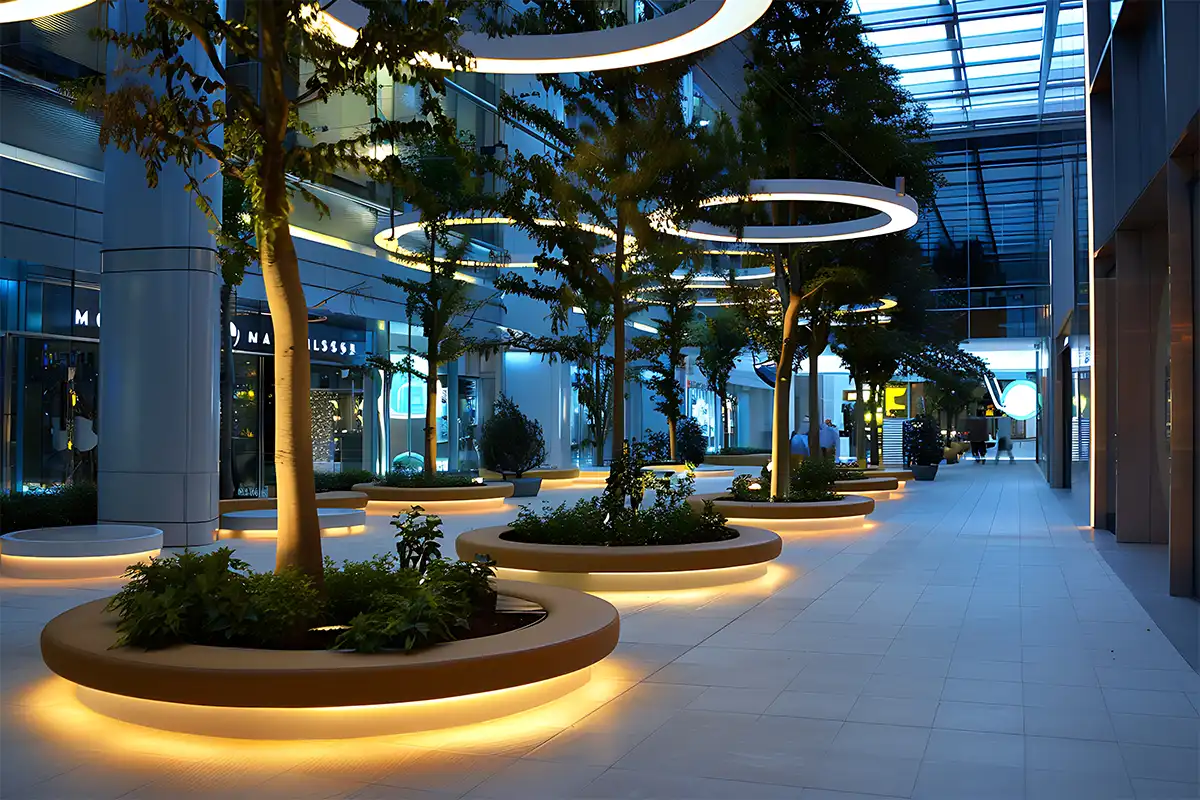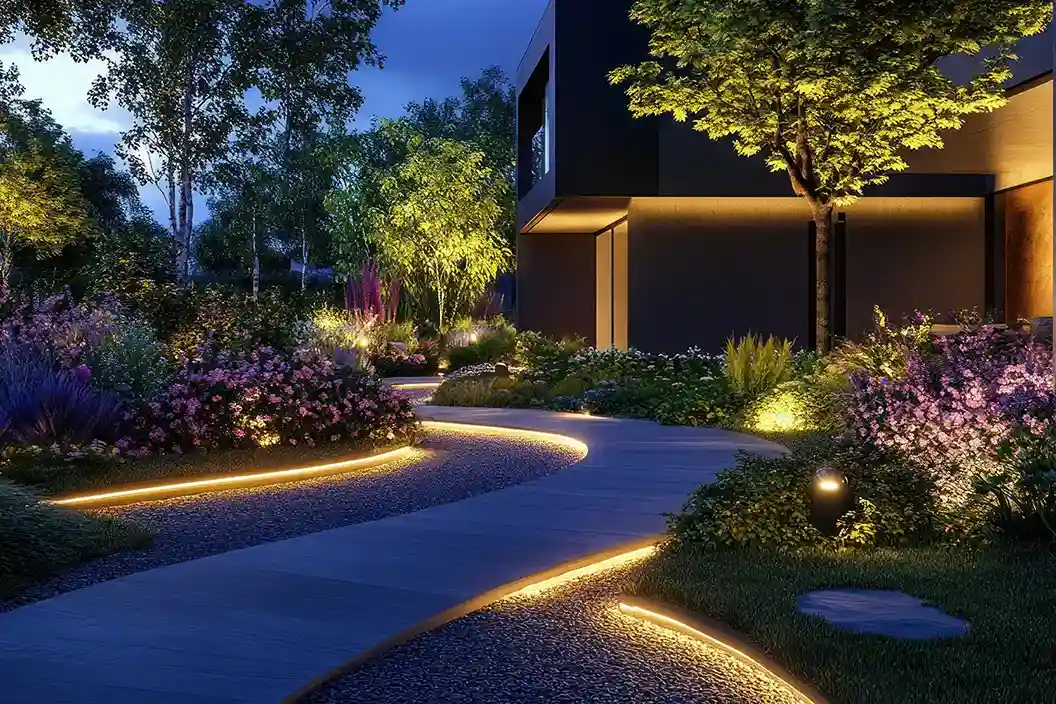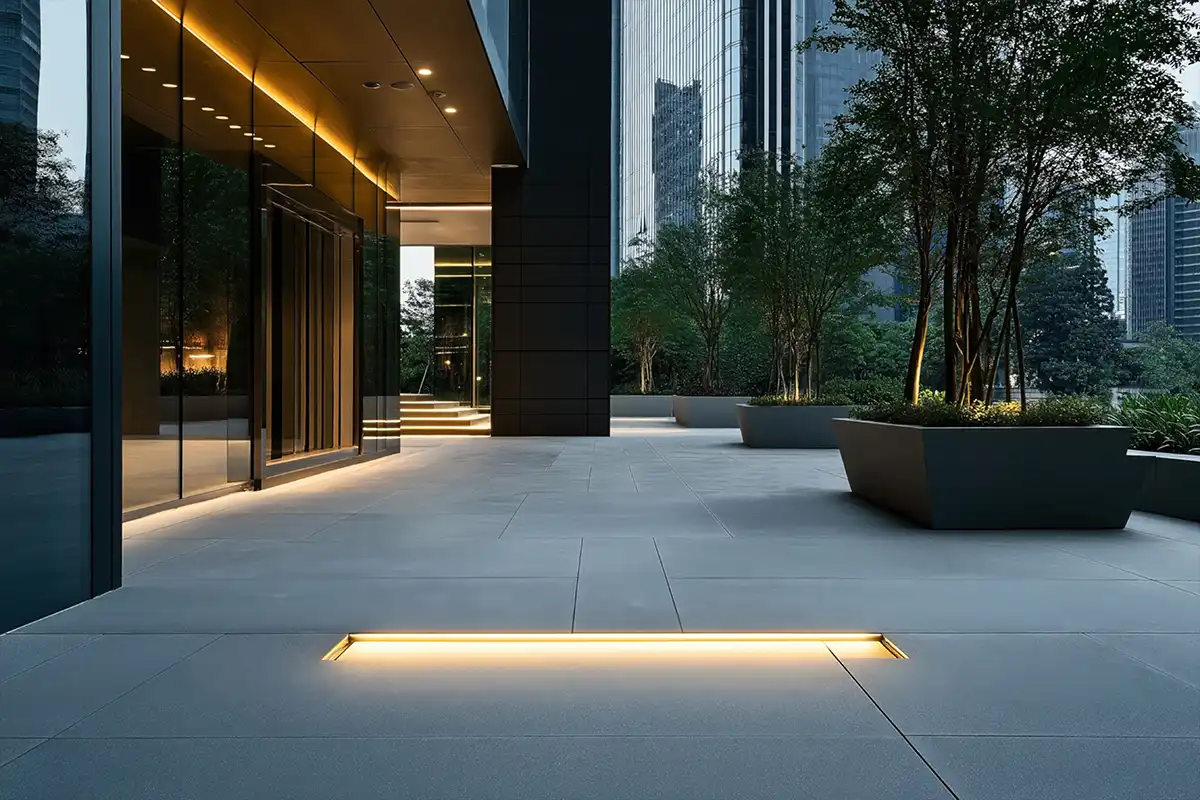
Pathway Lighting in Glyfada
Pathway lighting is the planning and installation of lighting along pedestrian routes and outdoor circulation areas so that the route, changes in direction and surrounding conditions remain visually understandable after dark.
VS Wilson provides Pathway Lighting services across Glyfada for commercial and retail properties, landscaped access routes, outdoor walkways and other applicable pedestrian circulation areas. Available project scope can include site assessment, drawing review, lighting planning, DIALux and photometric calculations where applicable, fixture and product sourcing, electrical installation, system testing and final commissioning.
The lighting arrangement is developed around the actual route, surface, surrounding landscape, environmental exposure and electrical infrastructure rather than a fixed fixture-spacing rule.
PLAN — PROJECT ASSESSMENT
DESIGN — LIGHTING PLANNING
SOURCE — PRODUCT PROCUREMENT
DELIVER — INSTALLATION & HANDOVER
SITE ASSESSMENT • DRAWING REVIEW • LIGHTING PLANNING • PHOTOMETRIC DESIGN • PRODUCT SOURCING • ELECTRICAL INSTALLATION • SYSTEM TESTING • FINAL COMMISSIONING
Pathway Lighting Designed Around the Route
A straight paved walkway, landscaped pedestrian path, commercial entrance route and wider shared access path do not necessarily require the same lighting arrangement.
Path width, bends, junctions, changes in level, adjacent walls, planting and approach direction can all influence where luminaires should be positioned.
The design therefore begins with the complete circulation route rather than simply placing identical fixtures at fixed distances.


Where This Service Can Be Applied
Pathway Lighting can be considered for outdoor and semi-outdoor pedestrian circulation around commercial buildings, retail developments, shopping and supermarket properties, hospitality facilities, mixed-use developments and other project environments included in the agreed scope.
Typical applications may include external walkways, links between buildings, approaches from parking areas, pedestrian routes around landscaped zones, entrance paths, courtyards, terraces and circulation paths adjoining commercial facilities.
Pure garden-feature lighting and indoor corridors may require different lighting strategies and should be assessed according to the relevant project scope.
What We Review Before Designing Pathway Lighting
Useful design inputs can include the pathway plan, length and width, walking direction, intersections, steps, ramps, changes of level, surface materials, surrounding walls, landscaping, trees and planting, entrance points and adjacent roads or parking areas.
The review can also consider mounting opportunities, soil and ground conditions, drainage, irrigation, underground utilities, cable routes, nearby water features, environmental exposure, available electrical infrastructure and required lighting controls.
Where architectural, landscape, civil or MEP drawings are available, these should be reviewed before fixture positions and cable routes are finalised.
For an existing pathway, the assessment can also include installed luminaires, wiring, distribution boards, controls, paving and the specific problems the upgrade is intended to address.
Common Pathway Lighting Problems
Dark Areas Between Lighting Points
Fixture spacing alone does not determine whether a pathway is appropriately illuminated.
Light distribution is affected by the luminaire optics, mounting height, pathway width, surface properties, surrounding structures and route geometry.
The proposed arrangement should therefore be evaluated using the selected luminaires and actual project conditions.
Excessive Glare
A bright source positioned close to eye level can become uncomfortable or distracting along a pedestrian route.
Bollards and other low-level fixtures should therefore be evaluated for shielding, beam direction and source visibility from the direction of travel.
Lighting Only the Ground
People using a pathway do not look exclusively at the paving beneath their feet.
Depending on the project, the lighting strategy may also need to support recognition of route edges, changes in direction, steps, entrances, surrounding objects and other users.
The appropriate balance depends on the environment and required function.
Unclear Steps and Changes of Level
Steps, ramps, kerbs and transitions between different surfaces can require separate consideration rather than simply extending the same fixture spacing through the entire route.
Where applicable, these locations should be identified during the planning stage.
Excessive Light Spill
Outdoor pathway lighting can affect neighbouring areas, windows, landscape zones and the night-time appearance of the wider property.
Fixture distribution, shielding, aiming and output should therefore be considered in relation to the intended pathway and surrounding environment.
Landscape Growth Blocking the Lighting
Plants and trees change after installation.
Where luminaires are located beside planting, the design should consider the proposed landscape arrangement, expected growth and maintenance access so that vegetation does not unnecessarily obstruct the intended light distribution.
Pathway Lighting and Landscape Coordination
Outdoor pathway lighting often shares the same construction zone as planting, irrigation, drainage, paving and other landscape infrastructure.
Fixture bases and underground cable routes should therefore be coordinated with the landscape and civil design before installation where possible.
This is particularly important where irrigation pipes, drains, tree roots, planter structures or buried utilities could conflict with the proposed electrical route.
Early coordination can reduce avoidable conflicts once paving and landscape finishes are complete.
DIALux and Photometric Pathway Lighting Design
Where applicable to the project, VS Wilson can use DIALux and photometric calculations to evaluate the proposed outdoor lighting arrangement before procurement and installation.
Depending on the project, a calculation study may consider luminaire positions, illumination across relevant pathway areas, distribution, uniformity, glare-related criteria, surrounding surfaces and different lighting zones.
Outdoor visualisations and false-colour results can also help communicate how the proposed system distributes light across the route and neighbouring areas.
The required design criteria are established for the individual pathway.
VS Wilson does not apply one universal lux level, uniformity value, glare criterion, luminaire spacing or energy-saving percentage to every project.
Normal Pathway Lighting and Emergency Egress
Normal pathway lighting supports everyday circulation around the property.
A pathway that also forms part of an approved escape or egress route may have additional emergency-lighting requirements that need to function under defined emergency conditions.
Where that applies, the emergency-lighting system, emergency power, required calculations, exit guidance and testing should be coordinated with the approved fire and life-safety design.
Normal decorative or landscape pathway lighting should not automatically be represented as emergency lighting.
Evidence: Sample DIALux Report
A sample DIALux report will be available in the evidence tab to demonstrate VS Wilson's photometric-design process and the type of calculation documentation that can form part of a lighting project.
The report should be interpreted according to the actual facility and project type identified in the document.
VIEW SAMPLE DIALux REPORT
This representative report demonstrates VS Wilson's photometric-design process. The sample relates to the project type identified in the report. Every project requires a separate design based on its venue, operating conditions and intended use.
Choosing Pathway Luminaires
No single fixture type is appropriate for every pathway.
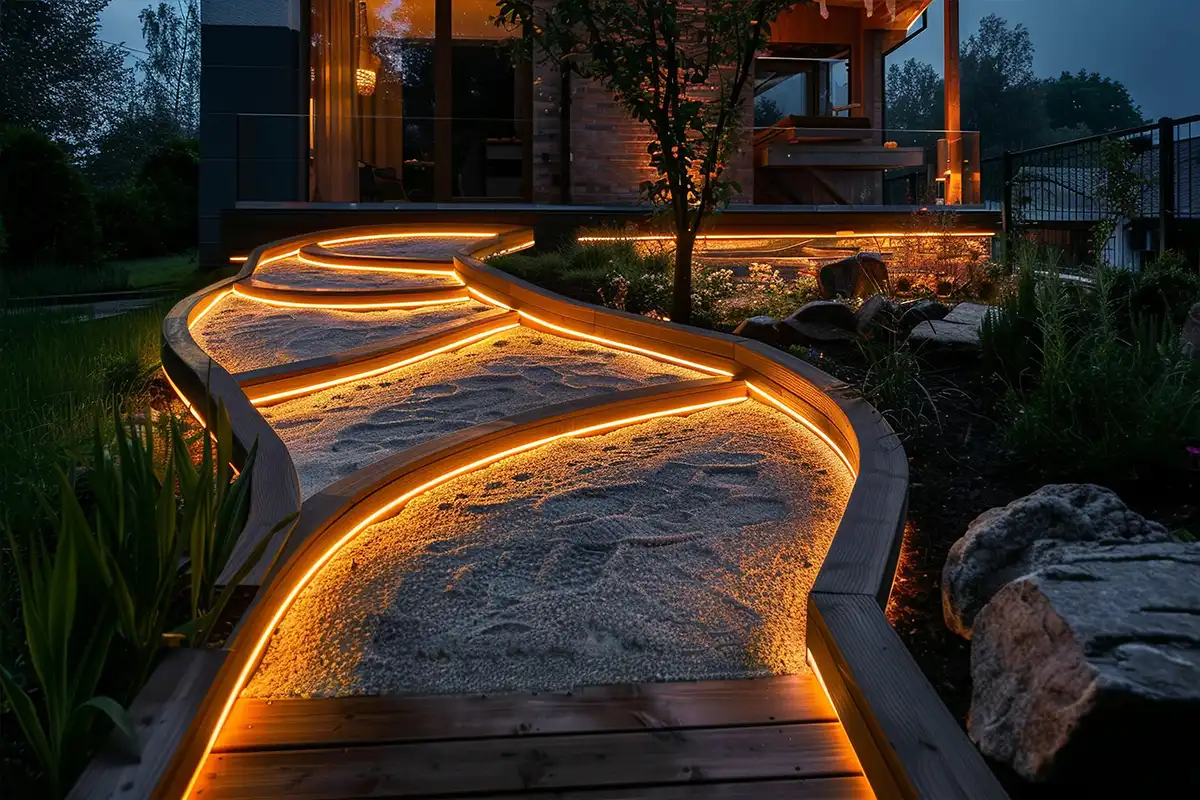
Depending on the route and project requirements, the design may consider bollards, low-level wall lights, recessed step lights, integrated linear lighting, ground markers, suitable pole-mounted luminaires or other outdoor fixtures.
Product selection can consider optical distribution, source shielding, mounting method, physical dimensions, electrical characteristics, environmental exposure, control compatibility, maintenance access and supporting photometric documentation.
Outdoor ratings and material specifications should be confirmed for the actual product and installation conditions.
VS Wilson does not apply one universal IP rating, lifetime or warranty period across all pathway luminaires.
Bollard Lighting for Pathways
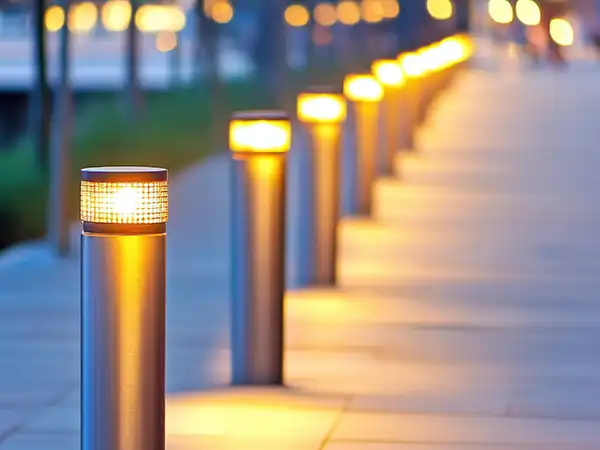
Bollards are commonly considered where low-level lighting is appropriate and sufficient mounting space exists beside the pathway.
Their effectiveness depends on more than height or wattage.
Optical distribution, shielding, spacing, position relative to the pathway edge and visibility of the source can influence both route illumination and glare.
Bollards should therefore be selected from the required lighting effect and site conditions rather than treated as the default fixture for every outdoor path.
Solar and Wired Pathway Lighting
Both solar and wired systems can be considered where they suit the project.
A solar system should be evaluated according to available solar exposure, battery capacity, expected operating period, luminaire load, control strategy and maintenance requirements.
A wired system introduces different considerations including cable routing, electrical distribution, trenching and connection to the available infrastructure.
The preferred approach should be determined from the actual project requirements rather than assuming one technology is universally more suitable.
Pathway Lighting Controls
Controls may be included where they support how the site operates.
Depending on the project, the system can consider astronomical timers, scheduled operation, dimming, occupancy detection, daylight-responsive control or integration with compatible building or landscape controls.
The required behaviour should be defined before equipment selection.
Where emergency lighting forms part of the route, normal lighting controls must not compromise the operation required from the emergency system.
Electrical Design and Underground Cable Routing
Outdoor pathway lighting frequently requires cabling to cross or run alongside landscape and hardscape areas.
The electrical design should consider cable length, load, circuit arrangement, protection, routing, connection points and maintenance access according to the applicable project requirements.
Longer routes may require additional electrical assessment so that the proposed distribution remains suitable for the selected system.
Cable installation should also be coordinated with the relevant civil, drainage, landscape and underground-services information.
Installation Around Paving and Landscape Works
Where possible, pathway-lighting infrastructure should be coordinated before final paving, planting and landscape finishes are completed.
The agreed installation scope may involve cable routing, trenching, mounting bases, electrical connections, fixture installation, controls and other related work.
VS Wilson's available capability includes electrical installation, while procurement can include the products, materials, labour and equipment defined in the agreed proposal.
Installation requirements vary considerably between soft landscape, concrete, stone paving, raised decks and existing finished sites.
New Pathway Lighting Projects
For new developments, lighting planning can begin while the landscape, civil and electrical layouts are still being coordinated.
This allows proposed fixtures, cable routes, control points and mounting requirements to be reviewed before finishing works make changes more difficult.
Changes to pathways, planting, walls, stairs or access points should be communicated because they may affect the lighting arrangement.
Existing Pathway Lighting Retrofits
An existing pathway can often be upgraded, but the installation conditions should be assessed before the new layout is finalised.
Existing paving, planted areas, underground services, electrical connections, luminaires and cable routes can influence what work is practical.
The proposal can then identify what may reasonably be retained, modified, repositioned or replaced and where new cable routing or surface work may be required.
Retrofit complexity should not be assumed solely from pathway length.
Testing and Final Commissioning
Installation should be followed by testing and commissioning according to the agreed project scope.
Normal pathway lighting can be checked for operation, controls, fixture direction and the installed arrangement.
Where project-specific lighting measurements are required, the required test areas and documentation should be identified in the proposal.
Emergency-lighting testing, where applicable, should follow the requirements of the approved emergency system and should be treated separately from normal landscape-lighting commissioning.
What Determines Pathway Lighting Cost in Glyfada?
There is no responsible single price for Pathway Lighting without understanding the route and installation conditions.
Cost can be influenced by total pathway length, route geometry, fixture quantities and types, ground and paving conditions, electrical infrastructure, trenching requirements, controls, landscaping, irrigation and drainage interfaces, environmental exposure, retrofit work and the required project programme.
A straightforward fixture replacement will have a different scope from a new system involving photometric design, underground electrical distribution, civil coordination, controls and commissioning.
The proposal should therefore identify the actual design, sourcing and execution responsibilities.
Our Pathway Lighting Project Process
1. Project Assessment
Review the pathway use, site conditions, drawings and required project scope.
2. Drawing and Route Review
Assess pathway geometry, levels, landscape, civil conditions and available electrical information.
3. Lighting Planning
Develop the proposed fixture positions, lighting zones and control approach.
4. Photometric Design
Carry out DIALux or other relevant calculations where applicable to the project.
5. Product Selection and Procurement
Select and source suitable luminaires, controls and related project materials according to the agreed specification.
6. Installation Coordination
Coordinate lighting bases, cable routes and electrical requirements with the landscape, civil and relevant site works.
7. Electrical Installation and Testing
Complete the agreed installation and applicable system testing.
8. Final Commissioning and Handover
Complete the required control setup, fixture checks and project handover according to the agreed scope.
Information to Send for a Pathway Lighting Proposal
Useful initial information includes Glyfada project location, pathway layout and approximate dimensions, surface type, landscaping plan if available, steps or level changes, adjacent buildings or roads, electrical drawings, new-project or retrofit status, proposed operating hours, control requirements and project programme.
For an existing site, photographs and information about installed fixtures, available electrical connections and underground services are also useful.
Where the pathway forms part of an approved emergency or egress route, provide the relevant fire and life-safety information where available.
If some information is not yet available, send the current drawings and project brief so the missing inputs can be identified.
Pathway Lighting Services Across Glyfada
VS Wilson's operational base and public office are in Dubai, United Arab Emirates, with project support in Glyfada through project-specific planning, mobilisation and on-site execution, subject to the agreed scope. Service availability does not imply a permanent local office.
What does Pathway Lighting in Glyfada include?
Available scope can include site assessment, drawing review, lighting planning, DIALux and photometric calculations where applicable, product sourcing, electrical installation, system testing and final commissioning. The exact scope is confirmed for each project.
Does VS Wilson provide DIALux calculations for pathway lighting?
Yes. DIALux and photometric calculations are available where applicable to the project. The design criteria are established from the pathway geometry, use, surrounding environment and applicable project requirements rather than one universal target.
What lighting level should an outdoor pathway have?
There is no single lighting value that should automatically be applied to every pathway. The appropriate criteria depend on the route type, users, surrounding conditions, project specification, applicable standards and whether the route has an emergency or egress function.
How far apart should pathway lights be installed?
Spacing should be determined from the selected luminaire, mounting height, optical distribution, pathway width, geometry and required lighting performance. A fixed spacing should not be assumed for every project.
Are bollard lights required for every pathway?
No. Bollards are one possible pathway-lighting solution. Depending on the project, wall-mounted, recessed, step, low-level, pole-mounted or other suitable luminaires may be considered.
Can solar pathway lights be used?
They can be considered where their available solar exposure, battery capacity, required operating period, maintenance requirements and lighting performance suit the project. Wired and solar options should be assessed against the actual application.
Can pathway lighting use timers or motion sensors?
Yes, where suitable for the project. Timers, occupancy detection, dimming or other controls can be considered according to usage patterns, electrical infrastructure and applicable safety requirements.
Is normal pathway lighting the same as emergency escape-route lighting?
No. Normal pathway lighting supports everyday circulation. Where a route forms part of an approved emergency or egress path, the applicable emergency-lighting requirements should be addressed separately through the project's approved life-safety design.
Can an existing pathway be retrofitted with new lighting?
Yes, subject to site assessment. Existing paving, landscaping, underground services, wiring and fixture locations should be reviewed so the required trenching, routing and installation work can be defined.
What information is needed for a pathway lighting quotation?
Useful inputs include Glyfada project location, pathway plan and dimensions, surface and landscape information, available electrical drawings, new-project or retrofit status, environmental conditions, control requirements and project programme.
Does VS Wilson provide Pathway Lighting services throughout Glyfada?
Yes. VS Wilson operates from Dubai and provides project services across Glyfada through project-specific service delivery and mobilisation.
Discuss Your Pathway Lighting Project
A useful Pathway Lighting proposal begins with the route, site conditions, ground construction, electrical infrastructure and required operation rather than an assumed fixture count or spacing.
Send VS Wilson the available pathway drawings, Glyfada project location, landscape or civil information and required design, supply and installation responsibilities.
The lighting, product sourcing, electrical installation, controls, testing and commissioning scope can then be defined for the actual site.
To know more about VS Wilson and our expertise, visit our About Us page. For more information, project requirements, or enquiries about our lighting solutions, Contact VS Wilson today.
Image Gallery