OPD Examination Lights for Clinics & Hospitals in Dubrovnik
OPD examination lighting needs to support two different functions within the same clinical room: comfortable general illumination for consultation and movement, and focused examination lighting when a doctor needs a clearer view of a specific area of the patient.
VS Wilson provides OPD examination lighting services across Dubrovnik for hospitals, outpatient departments, clinics, medical centres and healthcare facilities. Depending on the agreed project scope, our services can include site assessment, drawing review, room-lighting planning, DIALux and photometric calculations where applicable, multi-brand examination-light sourcing, electrical installation, system testing and final commissioning.
The lighting approach is developed around the actual examination room, patient position, clinician workflow, examination couch or chair, medical equipment, ceiling conditions and applicable healthcare requirements rather than selecting a lamp only by wattage or headline lux output.
SITE ASSESSMENT → DRAWING REVIEW → LIGHTING PLANNING → PHOTOMETRIC DESIGN → PRODUCT SOURCING → ELECTRICAL INSTALLATION → SYSTEM TESTING → FINAL COMMISSIONING
Examination Lights and General Room Lighting are not the same
A clinic examination room normally requires general architectural lighting so doctors, nurses and patients can move, communicate, work at a desk and use the room comfortably.
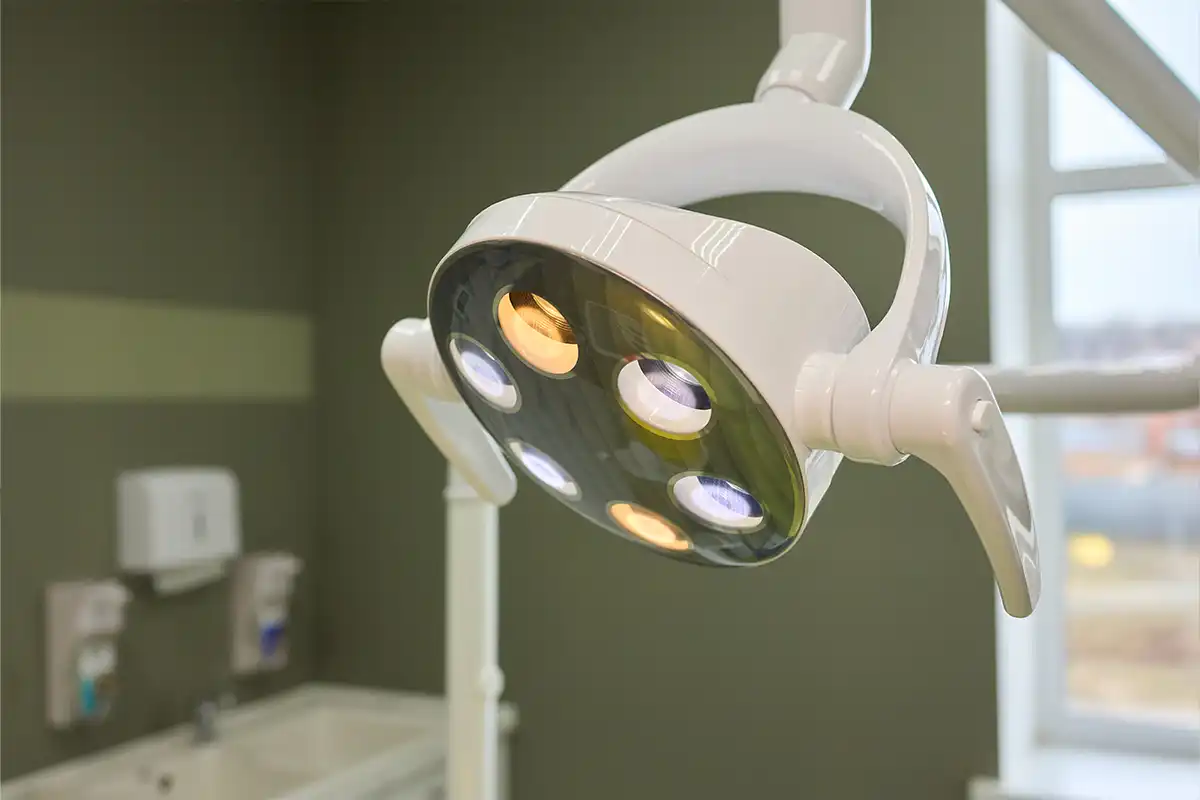
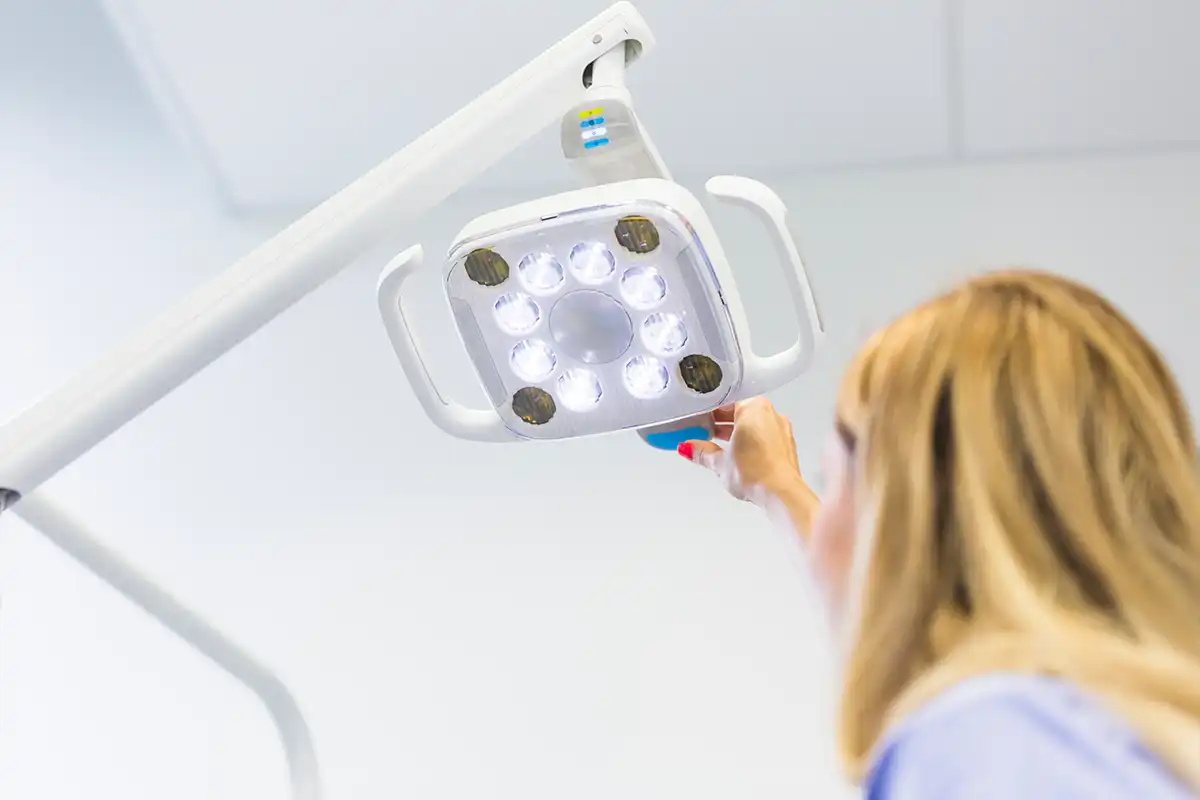
A medical examination luminaire serves a different purpose. It directs concentrated light onto the patient for local clinical examination or treatment.That distinction is technically important.
IEC 60601-2-41:2021 applies specifically to surgical luminaires and luminaires for diagnosis and identifies them as medical devices rather than general-purpose lighting equipment. General room luminaires fall outside that medical-device standard.
VS Wilson therefore treats the room-lighting design and the examination-light product evaluation as related but separate parts of the project. A DIALux room calculation cannot be presented as certification that a diagnostic examination light meets its applicable medical-device performance requirements.


OPD and Clinic Environments We Can Support
OPD examination lighting may be required in hospital outpatient departments, general consultation and examination rooms, specialist clinics, medical centres, health centres, diagnostic facilities and existing clinics undergoing refurbishment.
The design must be coordinated with the applicable healthcare authority, accessibility, infection-control, medical-device and project-specific requirements.
A multifunctional GP examination room, for example, may need a flexible examination light that can support changing patient positions. A specialist room may have fixed equipment that determines where an examination luminaire can be installed and how it needs to move.
Lighting Design Starts with the Examination Workflow
The position of the examination light should be determined from the clinical workflow rather than from the centre of the ceiling.
The review may consider the examination couch or chair, patient's likely position, clinician working side, nurse or assistant position, examination-light movement, privacy curtains, handwashing basin, medical trolley, diagnostic equipment, computer workstation, doors and other room services.
The design must be coordinated with the applicable healthcare authority, accessibility, infection-control, medical-device and project-specific requirements.
These details directly influence whether a ceiling-mounted, wall-mounted or mobile examination light is practical.
Ceiling-Mounted Examination Lights
Ceiling-mounted examination lights can keep floor space clear and provide a defined working position for rooms with a relatively fixed examination layout.
They may suit clinics where the examination couch or chair remains in a consistent location and where sufficient ceiling structure and movement space are available.
The design needs to consider mounting position, arm reach, vertical and horizontal movement, clinician access, interference with ceiling services and the actual structural support required by the selected equipment.
The mounting point should therefore be coordinated with structural and reflected-ceiling information before installation.
A ceiling grid alone should not be assumed to provide suitable support for medical examination equipment.
Wall-Mounted Examination Lights
Wall-mounted examination lights can be useful where ceiling mounting is impractical or where the examination couch is positioned close to a suitable wall.
Their usability depends heavily on arm reach and movement.
The mounting point should allow the light head to reach the intended examination area without forcing the clinician into an awkward working position.
Wall construction, internal reinforcement, electrical supply and nearby equipment also need to be considered before installation.
Mobile Examination Lights
Mobile examination lights offer flexibility for rooms that serve different clinicians, changing procedures or multiple patient positions.
Mobile LED examination lamps are available in different configurations for clinics and hospitals, reflecting strong local product demand for this configuration.
However, mobility introduces its own design considerations.
The product should be evaluated for base stability, manoeuvrability, adjustment range, cable management, working distance and whether the unit can be positioned without obstructing staff or patient movement.
A mobile light should not be selected only because it avoids permanent installation.
The room still needs adequate space to store and reposition it safely.
Selecting an Examination Light for Clinical Use
Medical examination lights vary substantially in their performance and configuration.
Depending on the clinical requirement, VS Wilson can compare products based on their intended use, illumination characteristics, working distance, light-field characteristics, colour performance, adjustability, arm movement, mounting configuration, cleaning requirements, power supply, manufacturer documentation and applicable medical-device compliance information.
Actual numerical specifications should come from the selected product datasheet.
A figure such as 16,000 lux, 50,000 lux or 100,000 lux belongs to a particular product at a specified measurement distance. It should not be converted into a universal requirement for every clinic examination room.
Available examination lights have widely different published performance specifications, examination lights with widely different published performance specifications, reinforcing why selection should be based on the intended clinical task rather than a generic number.
Medical-Device Compliance and Documentation
An examination luminaire intended to support diagnosis is not simply an architectural light fitting.
IEC 60601-2-41:2021 establishes requirements for the basic safety and essential performance of surgical luminaires and luminaires for diagnosis. The current edition also addresses matters including photobiological hazards, lighthead movement and fluid-ingress protection.
For equipment procurement, the selected product's applicable documentation should therefore be reviewed rather than relying on a seller's marketing description.
Depending on the project and product, documentation may include manufacturer technical data, declaration or certification information, instructions for use and applicable Dubrovnik regulatory documentation.
The design must be coordinated with the applicable healthcare authority, accessibility, infection-control, medical-device and project-specific requirements. The required status and documents should be confirmed for the actual product being procured.
VS Wilson should not claim that every examination light available internationally is automatically acceptable for a Dubrovnik healthcare project.
Colour Quality for Clinical Observation
Clinical examination can involve visual observation of skin, wounds and other physical characteristics.
Colour quality may therefore be an important product-selection consideration.
The correct requirement should come from the applicable healthcare-lighting guidance, clinical application and project specification.
CIBSE's current Lighting Guide 2 contains dedicated sections for examination lighting and examination rooms as part of its healthcare-lighting recommendations.
Where a particular colour-rendering criterion is required, the selected medical examination light and general room luminaires should provide supporting manufacturer documentation.
One CRI value should not be invented as universally mandatory for every OPD speciality.
Light Field and Working Distance
The published output of an examination light is meaningful only together with the conditions under which it is measured.
The working distance between the light head and patient affects both the illuminated area and available illumination.
Product selection should therefore consider how the doctor will actually use the light.
A light that performs well at one distance may not provide the required field or working flexibility in another room configuration.
Relevant product information can include working distance, light-field diameter, central illumination and adjustment range where the manufacturer provides these values.
Shadow Management
Clinicians, their hands and instruments can partially obstruct the light during an examination.
The suitability of the examination light should therefore consider how the product distributes light and how easily the head can be repositioned.
The term “shadowless” should not be treated as an absolute performance guarantee.
Instead, use the manufacturer's verified performance information and applicable test documentation to understand the actual characteristics of the selected device.
Adjustment and Position Stability
An examination lamp is frequently repositioned during clinical use.
Its arm and light head therefore need to move to useful positions and remain there once adjusted.
IEC 60601-2-41:2021 includes specific consideration of lighthead drift when the luminaire is attached to its suspension system.
For practical procurement, clinicians may therefore need to consider reach, articulation, adjustment effort and positional stability in addition to maximum light output.
General Examination Room Lighting
Focused examination lighting does not eliminate the need for suitable room lighting.
General OPD lighting supports consultation, movement, handwashing, documentation, computer work, patient preparation and cleaning.
The design must be coordinated with the applicable healthcare authority, accessibility, infection-control, medical-device and project-specific requirements.
The ambient system should therefore be designed around the complete room rather than assuming the examination lamp will provide all required illumination.
DIALux and Photometric Design for OPD Rooms
Where applicable, VS Wilson can use DIALux and photometric calculations to evaluate the room-level lighting arrangement.
The model can assess the distribution of general lighting, relevant work planes, minimum illumination, uniformity, luminaire positions, glare-related design considerations and interaction with the examination zone.
It can also help identify whether the architectural lighting creates overly bright or comparatively dark areas around the couch, desk or circulation zone.
What the DIALux Calculation Does Not Prove
The DIALux model evaluates the room-lighting design using the photometric data provided for the luminaires being modelled.
It should not be presented as proof that a medical examination luminaire complies with IEC 60601-2-41 or with Dubrovnik medical-device regulatory requirements.
Medical-device compliance remains tied to the actual examination-light product and its supporting documentation.
This distinction should be kept clear in both the service-page copy and the evidence section.
Examination Room, Couch and Desk Lighting
An outpatient examination room can contain several visual zones even within a relatively small floor area.
The doctor may use a computer or desk during consultation, then move to the examination couch for clinical assessment.
Lighting should support that transition.
The desk should not create strong screen reflections, while the examination area should allow the focused medical light to be positioned effectively.
The general room lighting can also help limit excessive contrast between the bright local examination field and the surrounding space.
Natural Light and Examination Rooms
The design must be coordinated with the applicable healthcare authority, accessibility, infection-control, medical-device and project-specific requirements.
Where windows are present, the artificial lighting design should consider daylight, direct sunlight, glare, patient privacy and screen orientation.
Daylight is useful, but it should not be relied upon as the only dependable illumination for clinical examination because conditions change throughout the day.
Specialist OPD Rooms
Not every speciality should automatically use the same examination lamp.
The design must be coordinated with the applicable healthcare authority, accessibility, infection-control, medical-device and project-specific requirements.
Some specialised examination devices are also outside the scope of IEC 60601-2-41. The current IEC standard specifically excludes equipment such as ophthalmic slit lamps, dermatological UV diagnosis lights and certain other dedicated special-purpose systems.
A general OPD examination light should therefore not be marketed as a replacement for speciality diagnostic equipment.
Where a specialist clinic requires dedicated equipment, the lighting and equipment requirements should be coordinated separately.
Cleaning and Infection-Control Considerations
Examination rooms are regularly cleaned and may have healthcare-specific infection-control requirements.
The selected examination light should therefore be reviewed for appropriate surface construction, access for cleaning, handles, joints and manufacturer cleaning instructions.
For ceiling- and wall-mounted systems, the interface with the mounting surface also matters.
General room luminaires should likewise be selected according to the room environment and applicable healthcare specification.
A universal IP65 requirement should not be assumed for every OPD examination room.
Where a particular ingress-protection rating is required, it should be supported by the selected product's technical documentation.
Heat, Irradiance and Patient Comfort
Modern LED examination lights are often promoted as producing less perceived heat than older technologies, but exact thermal characteristics vary between products.
IEC 60601-2-41:2021 includes updated provisions addressing photobiological hazards, while product manufacturers may publish their own irradiance and thermal-performance information.
VS Wilson should therefore compare actual product documentation rather than publish a universal claim such as “no heat emission.”
Patient and clinician comfort remain relevant selection factors, but they need to be evaluated product by product.
Ceiling and Building-Service Coordination
An OPD examination-room ceiling can also contain HVAC diffusers, sprinklers, smoke detectors, speakers, access panels and other MEP services.
A ceiling-mounted examination light can require both structural support and sufficient movement clearance.
Its location should therefore be coordinated before ceilings and services are finalised.
Moving the mounting point after installation begins can reduce arm reach or place the light in conflict with the examination couch.
Electrical Requirements
The power requirements of the selected examination light should be verified from manufacturer documentation.
For permanently mounted lights, the installation may involve dedicated wiring, switching, earthing and other electrical requirements according to the selected product and project design.
Mobile units may use plug-connected power and introduce cable-management considerations.
VS Wilson can coordinate examination-light electrical requirements with the approved project electrical system within the agreed installation scope.
Emergency and Essential Power Coordination
Some healthcare areas may have electrical continuity or standby-power requirements defined by the healthcare engineering design.
Whether an examination light is required on an essential, emergency or normal supply should be taken from the approved project documentation rather than assumed.
General emergency lighting and a medical examination luminaire also perform different functions.
Emergency-lighting requirements should remain coordinated with the facility's approved life-safety system.
New OPD and Clinic Projects
For new clinics and hospital outpatient departments, examination-light planning should happen before the reflected ceiling plan and electrical points are frozen.
Early coordination allows the project team to review the examination couch, doctor position, equipment, ceiling structure, fixture movement, electrical supply and general room lighting together.
VS Wilson can support the project from assessment and lighting planning through product sourcing, electrical installation, testing and commissioning according to the agreed scope.
Existing Clinic Examination-Light Upgrades
Existing facilities may need examination-light upgrades because the current equipment no longer supports the clinical workflow, has limited adjustment, creates unwanted shadows or conflicts with a renovated room layout.
A retrofit review can consider the existing lamp, mounting position, room geometry, examination couch, electrical supply, ceiling or wall construction, clinical speciality and general room lighting.
The existing mounting location should not automatically be reused without checking the geometry of the replacement product.
Different examination lights can have different arm lengths, working ranges and mounting requirements.
Installation in an Operational Clinic or Hospital
OPD departments can remain busy while renovation or equipment replacement takes place.
Installation therefore needs to be coordinated with clinical schedules and healthcare-facility procedures.
Depending on the project, work may require phased room closures, approved working hours, electrical isolation, dust control, infection-control measures, protection of medical equipment and coordination with facility staff.
The actual method depends on the healthcare facility.
VS Wilson should not promise zero disruption because access and shutdown requirements are project-specific.
Multi-Brand Examination Light Sourcing
VS Wilson provides multi-brand sourcing according to project specification, client preference, required documentation and market availability.
Current Dubrovnik suppliers offer examination lights across mobile, wall-mounted and ceiling-mounted configurations, demonstrating that there is no single format suited to every clinic.
The project requirement should determine the product configuration.
Selection should focus on intended clinical use, documented performance, adjustment, mounting, electrical requirements, cleanability, applicable compliance documentation and practical availability.
Electrical Installation and Mounting
VS Wilson's confirmed capabilities include electrical installation.
For permanently mounted systems, execution may include the electrical work and mounting coordination included in the agreed proposal.
Ceiling or wall support must be appropriate for the selected device and should follow the manufacturer's installation requirements and approved structural details.
For mobile systems, commissioning may instead focus on safe assembly, function, positioning and electrical operation according to the manufacturer's instructions.
Testing and Commissioning
Testing and commissioning should confirm that the installed system operates according to the agreed scope.
For general room lighting, checks can include luminaire operation, switching, controls and installed positions.
For the examination light, checks may include electrical operation, control functions, adjustment, movement, positioning and other manufacturer-defined commissioning requirements applicable to the selected product.
Where specialised medical-device testing or acceptance procedures are required, these should follow the selected manufacturer's instructions and applicable project requirements.
A room-level lux measurement should not be used as a substitute for medical-device performance verification.
Review a Sample VS Wilson DIALux Report
DIALux and photometric calculations demonstrate how VS Wilson evaluates room geometry, luminaire placement and defined calculation areas before installation.
A client-provided DIALux PDF will be published in the service-page evidence tab.
VIEW SAMPLE DIALux REPORT
This representative report demonstrates VS Wilson's photometric-design process. The sample relates to the project type identified in the report. Every project requires a separate design based on its venue, operating conditions and intended use.
The evidence tab should include an adjacent HTML summary explaining only what the report actually demonstrates.
The PDF should remain text-searchable, identify its true project or facility type, retain truthful document naming, have confidential information redacted where required and be available through a direct working link.
The sample should not be described as proof of an OPD examination-light project unless that project type has been independently verified.
Likewise, project-specific clinic photographs, customer names, locations and references should only be published after verification.
OPD Examination Lighting Services Across Dubrovnik
VS Wilson operates from Dubai and provides OPD examination lights for clinics & hospitals project support in Dubrovnik through project-specific planning, mobilisation and on-site execution, subject to the agreed scope. Service availability does not imply a permanent local office.
What Affects OPD Examination Lighting Cost?
The cost of an OPD examination-light project depends on the actual equipment and installation scope rather than on room size alone.
Important factors include the number of examination rooms, medical-light model, mobile versus fixed configuration, ceiling or wall mounting, structural requirements, arm configuration, product documentation, electrical modifications, general room-lighting work, control requirements, new-build or retrofit conditions, operational-clinic restrictions, testing and commissioning requirements, and the materials, labour and equipment included in the agreed proposal.
A project-specific quotation should therefore be prepared after the room layout and equipment requirements have been reviewed.
Our OPD Examination Lighting Process
1. Project Assessment
We review the healthcare facility, examination-room type, clinical use, room configuration and requested scope.
2. Drawing and Site Review
Available architectural, reflected-ceiling, structural, electrical and medical-equipment information is reviewed.
3. Lighting Planning
The examination couch or chair, clinician position, general lighting and proposed examination-light configuration are coordinated.
4. Photometric Design
Where applicable, DIALux calculations are used to evaluate the room-level architectural lighting against the agreed design criteria.
5. Product Procurement
Suitable examination lights and related lighting products are sourced according to specification, required documentation, client preference and market availability.
6. Electrical Installation
Approved electrical and mounting works within VS Wilson's scope are completed according to the selected equipment and site requirements.
7. System Testing
Lighting circuits, general luminaires, controls and examination-light functions included in the project are checked according to the agreed scope.
8. Final Commissioning and Handover
The completed lighting system is commissioned and prepared for handover with the relevant product and project documentation.
Information Needed for an OPD Examination Lighting Proposal
For an initial assessment, share the clinic or hospital type, project location, number and type of examination rooms, room layouts, examination-couch or chair positions, reflected ceiling plans, ceiling heights, preferred mobile/wall/ceiling configuration if already specified, specialist clinical use, electrical drawings, existing equipment details for retrofit projects, consultant requirements, BOQ or tender documents, required product approvals and any operational restrictions affecting installation.
If complete information is not yet available, VS Wilson can first review the existing project documents and identify what additional information is required to define the lighting scope.
Why Work with VS Wilson for OPD Examination Lights?
An examination light should not be selected in isolation from the room in which it will be used.
VS Wilson can coordinate the examination-light requirement with the room layout, general lighting, product documentation, mounting conditions, electrical installation and final commissioning.
PLAN — PROJECT ASSESSMENT
Review the clinical environment, examination workflow, room layout and project requirements.
DESIGN — LIGHTING PLANNING
Coordinate general room lighting, examination-light positioning and DIALux calculations where applicable.
SOURCE — PRODUCT PROCUREMENT
Source suitable products according to specification, medical-device documentation, client preference and market availability.
DELIVER — INSTALLATION & HANDOVER
Complete the agreed installation, system testing, commissioning and project handover.
Frequently Asked Questions
What is an OPD examination light?
An OPD examination light is a focused medical luminaire used to illuminate part of a patient's body during examination or treatment. It is different from the general architectural lighting used to illuminate the complete examination room.
Are medical examination lights considered medical devices?
IEC 60601-2-41:2021 identifies luminaires for diagnosis as medical electrical equipment and distinguishes them from general-purpose luminaires. The applicable compliance and Dubrovnik regulatory documentation should therefore be checked for the actual product being supplied.
Does VS Wilson provide OPD examination lights in Dubrovnik?
Yes. VS Wilson can support examination-light projects with lighting consultation, product sourcing, electrical installation, testing and commissioning according to the agreed project scope.
Does VS Wilson provide DIALux design for examination rooms?
Yes, where applicable. DIALux can be used to assess the general room-lighting arrangement and relevant calculation areas. It should not be presented as medical-device certification of the examination lamp.
What lux output should an examination light have?
There is no single output that should be presented as correct for every OPD examination. Product performance varies by intended clinical use, working distance and light-field characteristics. The required examination light should be selected according to the clinical requirement and verified manufacturer specifications.
What is the difference between examination lighting and general clinic lighting?
General clinic lighting provides illumination throughout the room for consultation, movement and routine tasks. An examination light provides concentrated, adjustable illumination on a patient during a clinical examination.
Which is better: mobile, wall-mounted or ceiling-mounted examination lights?
There is no universally better configuration. Mobile lights provide flexibility, wall-mounted systems can suit rooms with an appropriate fixed examination position, and ceiling-mounted lights can keep floor space clear. Room geometry and clinical workflow should determine the selection.
Can a ceiling-mounted examination light be fixed to any suspended ceiling?
No. The equipment requires an appropriate mounting and support arrangement according to the selected manufacturer's requirements and approved structural design. A suspended ceiling grid alone should not automatically be assumed suitable.
Is colour rendering important for examination lights?
Colour quality can be important for clinical visual assessment. The required performance should be defined according to the examination task and verified from the selected product documentation.
Are examination lights completely shadow-free?
“Shadowless” should not be treated as an absolute guarantee. Clinicians and instruments can obstruct light, and actual shadow performance depends on the product's optical design and positioning. Manufacturer performance documentation should be reviewed.
Can examination lights be used for minor procedures?
Some products may be intended for examinations and certain treatment applications, but intended use varies. The selected device should be matched to the actual procedure and its manufacturer's stated intended use rather than assuming every examination lamp is appropriate for minor surgery.
Can the same examination light be used for ENT, ophthalmology and dermatology?
Not necessarily. Specialist clinics may require dedicated diagnostic equipment. IEC 60601-2-41 also excludes certain specialised devices such as ophthalmic slit lamps and UV lights used specifically for dermatological diagnosis.
Is IP65 required for all OPD examination lights?
No. The required ingress protection depends on the actual product, intended use, cleaning requirements and applicable project specification. Product-specific documentation should support the selected requirement.
Can existing examination lights be replaced during clinic operation?
Potentially, yes. Replacement work can be planned around available room closures, clinical schedules and healthcare-facility procedures. The exact installation method depends on site access and operational restrictions.
Does VS Wilson provide examination lighting outside Dubai?
Yes. VS Wilson operates from Dubai and provides OPD examination lights for clinics & hospitals project support in Dubrovnik through project-specific planning, mobilisation and on-site execution, subject to the agreed scope. Service availability does not imply a permanent local office.
Plan Your OPD Examination Lighting Project with VS Wilson
The right examination-lighting solution starts with understanding the clinical task, patient position and room layout—not by choosing the highest-output lamp from a catalogue.
Whether you are developing a new outpatient department, fitting out a clinic or replacing existing examination lights, share your room layouts, medical-equipment information, reflected ceiling plans, specifications, BOQ or available site details with VS Wilson.
Our team can review the requirements and help define the appropriate room-lighting design, DIALux scope, medical examination-light sourcing, electrical installation, testing and commissioning requirements for your project.
To know more about VS Wilson and our expertise, visit our About Us page. For more information, project requirements, or enquiries about our lighting solutions, Contact VS Wilson today.
Image Gallery