Tennis Court Lighting in Czech Republic
VS Wilson provides Tennis Court Lighting services in Czech Republic for residential courts, clubs, hotels and resorts, academies, schools, private facilities and competition venues.
The service can cover site assessment, court and drawing review, lighting planning, photometric design, fixture sourcing, electrical installation, testing and final commissioning.
Tennis Court lighting must be designed around court geometry, run-off areas, player movement, ball trajectory, pole or mounting positions, glare-sensitive sightlines and the intended level of play.
A fixture quantity or wattage should not be selected in isolation; the final arrangement should be verified through project-specific photometric planning.
How Tennis Court Lighting Requirements Are Defined
Each tennis court requires a lighting approach based on how the facility will be used, the court arrangement, surrounding site conditions and the expected level of play.
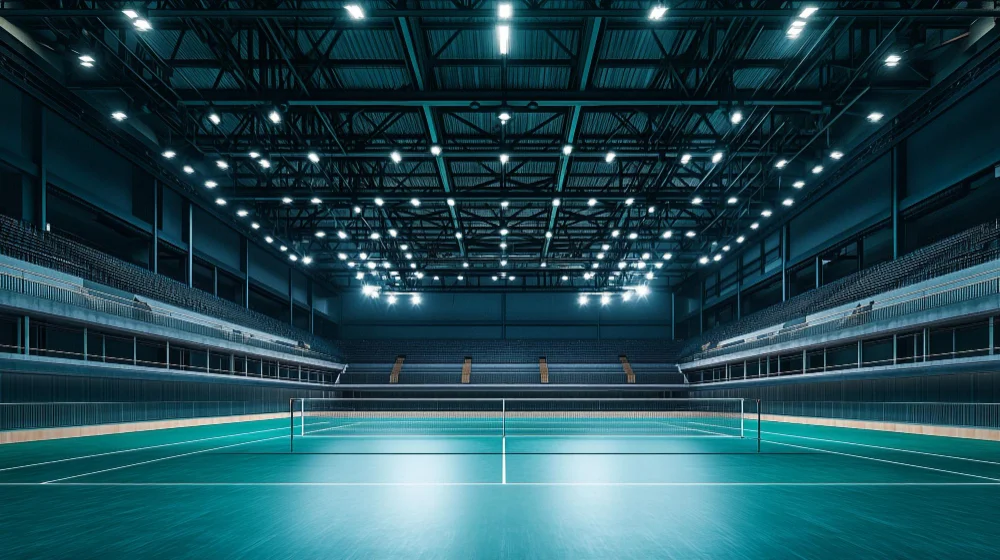
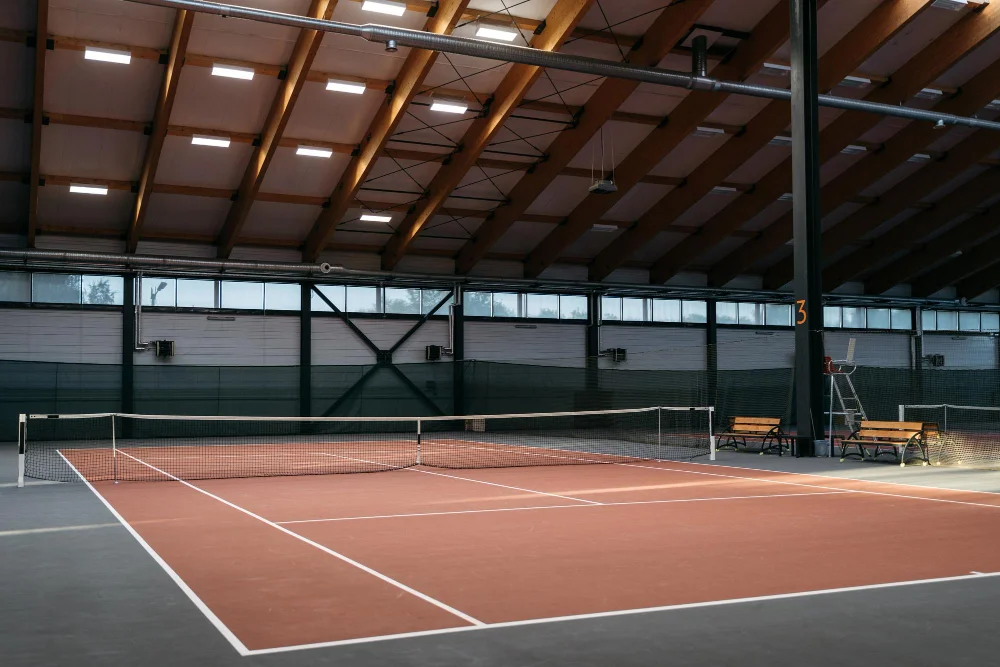
The planning process also considers player movement, ball visibility, run-off areas and the relationship between the court and nearby surroundings. For outdoor courts, mounting locations and spill-light control can influence the final arrangement, while indoor courts require careful coordination with the roof structure, ceiling height and available mounting points.


Buyer & Use-Case Framing
- Residential and villa courts requiring controlled evening lighting.
- Private clubs, hotels and resorts with recreational tennis courts.
- Tennis academies and training facilities with extended operating hours.
- Schools and universities with tennis facilities.
- Club and regional competition venues requiring defined lighting criteria.
- Professional or tournament facilities where stricter performance and potential broadcast requirements apply.
- Owners, developers, consultants and contractors seeking coordinated design, supply and installation.
- Existing courts where glare, uneven illumination, ageing fixtures or changed operating requirements require an upgrade.
What This Tennis Court Lighting Service Covers
Site Assessment & Court Review
- Review court dimensions, orientation, run-off areas and surrounding site conditions.
- Map fences, trees, buildings, spectator areas and other potential obstructions.
- Review existing poles, luminaires, cabling and electrical infrastructure for retrofit projects.
- Identify suitable mounting positions and maintenance access.
- Review light-sensitive neighbouring areas where spill-light control may be relevant.
Lighting Planning & Photometric Design
- Develop fixture positions around the court and playing area.
- Evaluate beam distribution, aiming direction and mounting height.
- Use DIALux and photometric calculations where applicable to the project.
- Assess horizontal illuminance and uniformity against the approved project criteria.
- Consider glare and player sightlines, especially when players look upward during serves, volleys and high balls.
- Consider vertical illuminance and camera-direction requirements where broadcast or professional event specifications apply.
- Include the relevant playing area/run-off criteria in the calculation as required by the project brief.
Fixture & Product Sourcing
- Source luminaires and associated products according to the approved specification, client preference, documentation and market availability.
- Review optical distribution, mounting method, environmental conditions, maintenance access and electrical compatibility.
- Select products based on the actual court design rather than a universal wattage or fixture count.
- Do not assume a universal IP rating, warranty, lifetime or energy-saving percentage.
Electrical Installation & Execution
- Coordinate fixture mounting, cabling, electrical integration and installation according to the agreed scope.
- Coordinate pole, bracket and foundation requirements where included.
- Install and aim fixtures according to the approved lighting design.
- Coordinate installation with fencing, civil works, electrical infrastructure and venue access.
- Use phased execution where an operating venue requires restricted work windows.
Testing, Adjustment & Commissioning
- Test the installed lighting system after completion.
- Verify fixture positions and aiming against the approved design.
- Review illuminance, uniformity and glare-related observations against the project criteria.
- Make project-approved aiming or installation adjustments where required.
- Complete commissioning and agreed handover documentation.
Tennis Court Lighting Design Criteria
EN 12193:2018 is a current sports-lighting standard covering indoor and outdoor sports lighting and addresses illuminance, uniformity, glare restriction, colour properties and measurement methods.
Tennis-specific guidance based on EN 12193 commonly distinguishes lighting by level of play. One current technical reference lists outdoor tennis Class I at 500 lux with 0.70 uniformity, Class II at 300 lux with 0.70 uniformity and Class III at 200 lux with 0.60 uniformity. Another official sports-facility guidance source lists 750/0.70 for international and national competition, 500/0.70 for regional competition and high-level training, and 300/0.50 for training, school and recreational use. These figures demonstrate that the target varies with the adopted standard and facility category; they are not a single universal Czech Republic requirement.
For Czech Republic projects, the final target should be confirmed from the client/consultant brief, intended level of play, applicable adopted standard, venue requirements and any federation/event specification before the DIALux model is finalised.
For broadcast or professional events, additional vertical illuminance, camera-direction, glare and colour-performance requirements may apply. These should be defined from the actual event specification rather than assumed.
Service-Specific Technical Problems
Glare in Player Sightlines
Tennis players frequently look upward to track serves, lobs and high balls. Poorly positioned or incorrectly aimed luminaires can create distracting bright sources within these sightlines. Pole position, beam distribution and aiming should therefore be evaluated together.
Uneven Illumination Across the Court
A court can have acceptable average illuminance while still containing darker baselines, corners or run-off areas. Photometric design should evaluate the relevant calculation area and uniformity rather than relying only on average lux.
Net, Baseline & Corner Shadowing
Court geometry, fixture position and nearby structures can create localised shadow or contrast differences. The design should account for the actual mounting arrangement and surrounding conditions.
Overspill & Neighbouring Properties
Outdoor courts can be close to residences, roads or other facilities. Beam control and aiming should be reviewed to reduce unnecessary spill light while maintaining the required court performance.
Pole Placement & Run-Off Constraints
Pole positions must work with court fencing, run-off zones, access and maintenance requirements. Moving a pole after the photometric design can materially change the lighting result.
Indoor Reflections & Ceiling Conditions
Indoor courts require coordination with ceiling height, structural mounting points and surrounding surface reflectance. Fixture selection and layout should minimise glare and unwanted reflections.
Design-to-Installation Mismatch
The final result can differ from the calculated design if mounting heights, fixture positions or aiming angles change during installation. Verification and final adjustment are therefore important parts of the execution process.
Indoor vs Outdoor Tennis Court Lighting
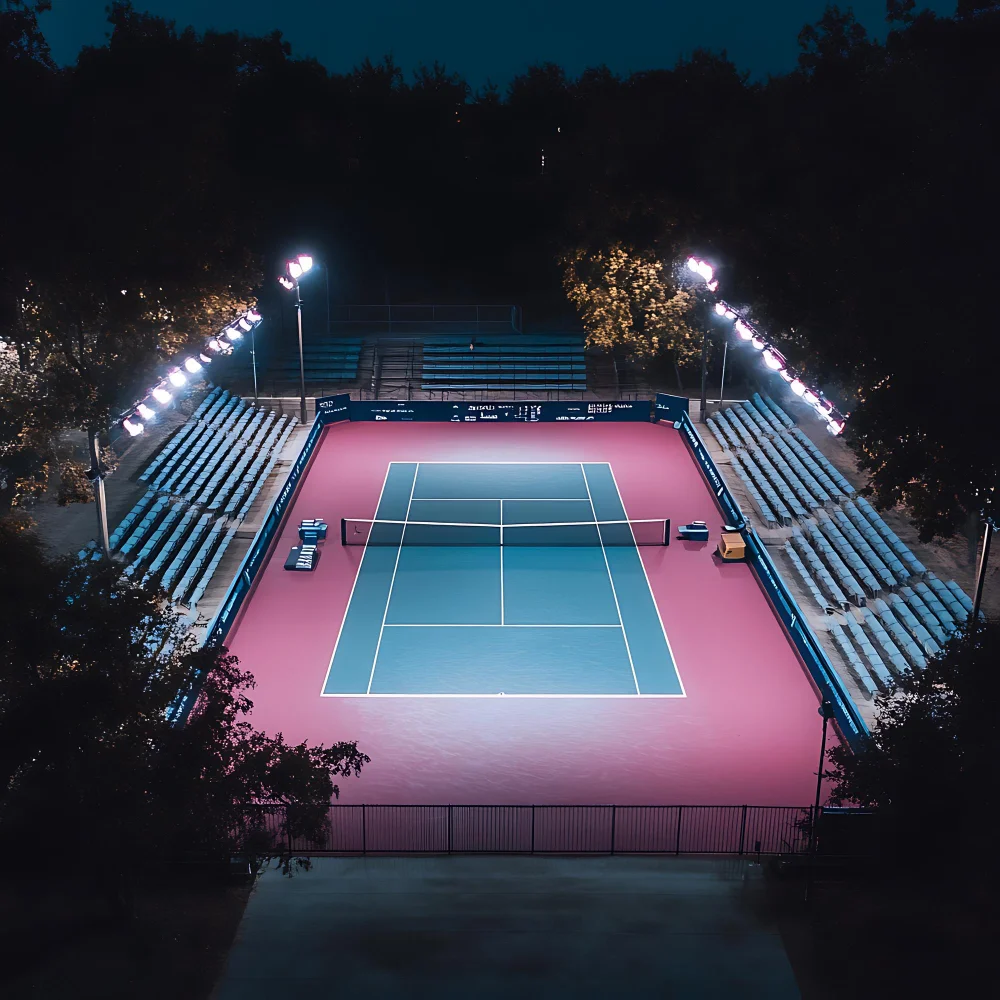
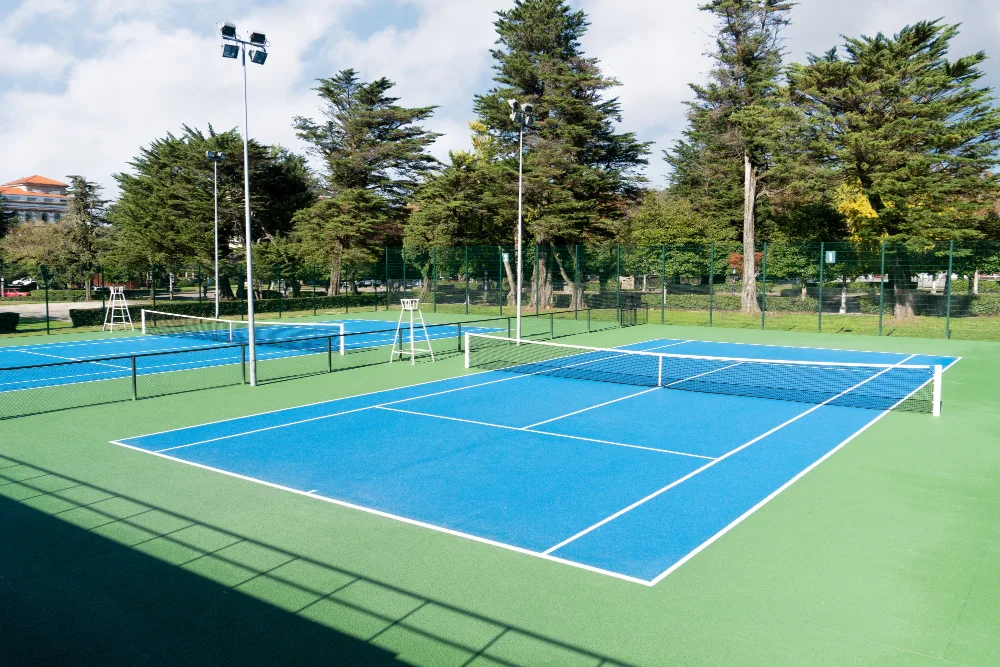
Outdoor Tennis Courts
- Review court orientation, fencing, run-off areas and surrounding structures.
- Coordinate pole positions with the court layout and player sightlines.
- Consider heat, dust, humidity and other environmental conditions when selecting products.
- Evaluate spill light toward neighbouring properties and sensitive areas.
- Provide maintenance access to poles and fixtures.
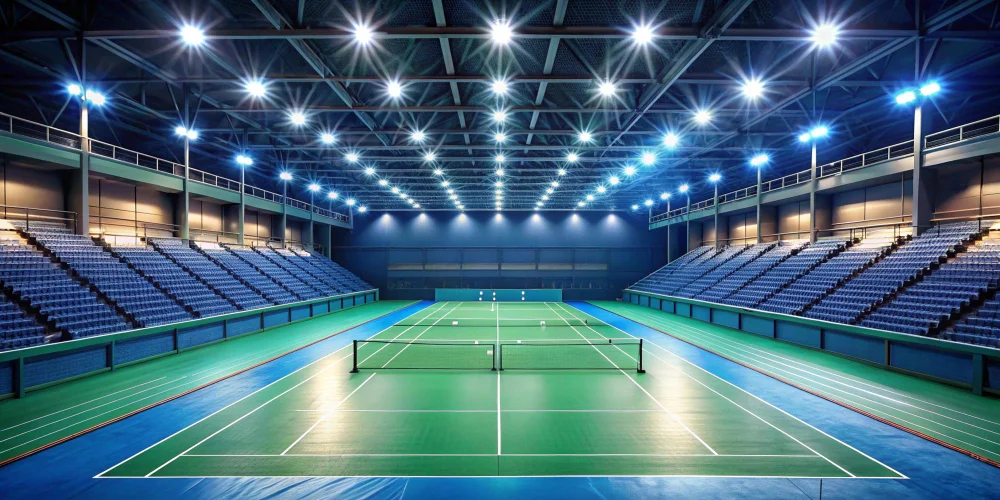
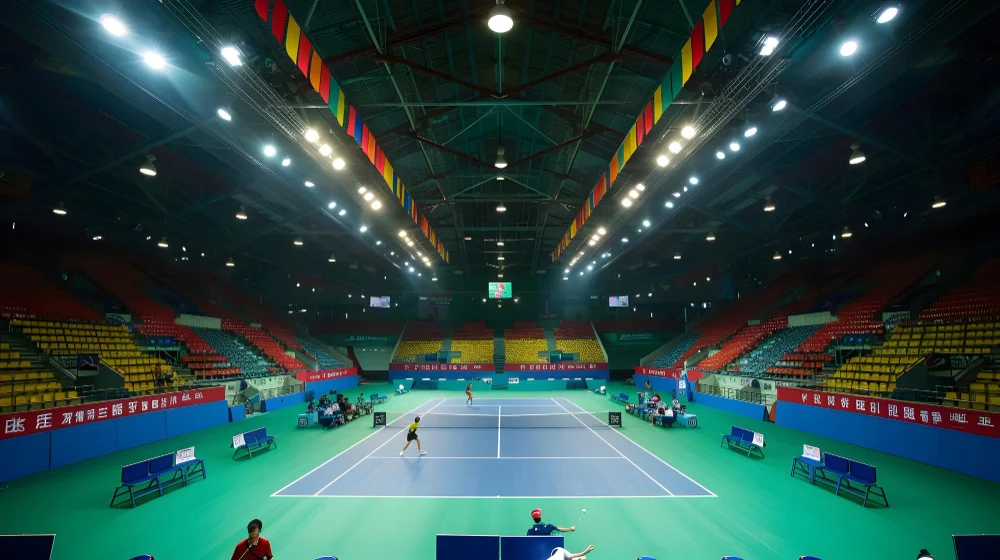
Indoor Tennis Courts
- Review ceiling height and structural mounting locations.
- Coordinate fixtures with the full court and run-off area.
- Control glare and reflections from the ceiling, walls and other surfaces.
- Review emergency/backup requirements separately if required by the facility brief.
- Coordinate electrical installation with existing building services.
Tennis Court Lighting Solutions
- Outdoor tennis court floodlighting
- Indoor tennis court lighting
- LED tennis court lighting systems
- Pole-mounted tennis court lighting
- Club and academy court lighting
- Residential and villa tennis court lighting
- Tournament and competition court lighting
- Tennis court lighting retrofit and replacement
- Multi-court tennis facility lighting
Applications & Use Cases
- Residential communities and villa courts
- Private tennis clubs
- Hotels and resorts
- Tennis academies
- Schools and universities
- Sports complexes
- Regional competition venues
- Professional and tournament facilities
- Existing courts undergoing lighting upgrades
Match, Training & Recreational Lighting
Recreational / Residential Courts
Private and recreational courts may have different performance requirements from competition facilities. The lighting target should be established from the intended use and client requirements rather than applying a tournament-level specification automatically.
Club & Training Courts
Club and training facilities can require higher and more consistent lighting than basic recreational use, particularly where courts operate for extended periods. The final criteria should be confirmed from the facility's adopted standard and operating programme.
Competition Courts
Competition venues require clearly defined performance criteria, including the relevant illuminance, uniformity, glare and colour requirements. The applicable competition category should be established before design.
Broadcast / Professional Events
Broadcast projects can require additional vertical illuminance and camera-direction criteria. Camera positions and event production requirements should be included in the design brief before fixture selection.
When Tennis Court Lighting Becomes Necessary
- When courts are used beyond available daylight.
- When players experience glare, dark areas or inconsistent ball visibility.
- When an existing lighting system has ageing fixtures or unsuitable pole positions.
- When a venue is changing from recreational to higher-level training or competition use.
- When a new court is being developed and lighting must be coordinated with civil and electrical works.
- When additional courts are being added to an existing facility.
- When surrounding development creates new light-spill or neighbour-sensitivity considerations.
DIALux / Photometric Design Evidence
Evidence tab: publish the genuine client-provided DIALux PDF after document verification and appropriate redaction.
VIEW SAMPLE DIALux REPORT
If the supplied report relates to another sport or facility, use this required disclosure:
This representative report demonstrates VS Wilson's photometric-design process. The sample relates to the project type identified in the report. Every project requires a separate design based on its venue, operating conditions and intended use.
- PDF must be genuine and text-searchable.
- Actual project/facility type must be identified.
- Confidential information must be redacted where required.
- Do not rename or present a report for another sport/service as proof of Tennis Court Lighting.
- Place a concise HTML summary beside the evidence button.
- Provide a direct working link to the PDF.
- If the report is specifically for tennis lighting, it may be described as service-specific evidence only after verification.
New Project Scope
- Review court layout, dimensions, run-off, orientation and surrounding conditions.
- Confirm recreational, training, competition or broadcast requirements.
- Develop pole positions, fixture locations and photometric calculations where applicable.
- Coordinate structural, civil and electrical interfaces.
- Select and source approved luminaires and associated products.
- Install, aim and adjust fixtures according to the approved design.
- Test, commission and hand over the completed lighting system.
Retrofit & Existing Tennis Court Scope
- Survey existing luminaires, poles, brackets and electrical infrastructure where accessible.
- Identify uneven illumination, glare, ageing equipment and unsuitable fixture positioning.
- Assess whether existing poles and mounting structures can be reused.
- Recalculate the lighting layout when new fixtures or changed optics affect the design.
- Plan phased installation where courts must remain operational.
- Coordinate replacement work with existing fencing, foundations and electrical infrastructure.
- Test and commission the upgraded system.
Project Execution Process
1. Enquiry & scope definition — confirm court count, venue type, location, intended use and required service scope.
2. Site & drawing review — review court geometry, run-off, fencing, structures, existing poles and electrical infrastructure.
3. Design criteria confirmation — confirm level of play, applicable standard, client requirements and broadcast needs where relevant.
4. Photometric planning — develop fixture positions, beam distribution, aiming directions and lighting calculations.
5. Product selection & procurement — source approved luminaires and associated materials against the final specification.
6. Installation planning — coordinate civil, structural, electrical, access and operating-hour requirements.
7. Installation & aiming — install fixtures and align them with the approved layout.
8. Testing & adjustment — test the installation and correct approved aiming/position deviations.
9. Commissioning & handover — complete agreed commissioning checks and provide relevant documentation.
Technical & Safety Considerations
- Pole and foundation stability where outdoor mounting structures are used.
- Electrical protection, cabling and safe isolation during installation.
- Fixture mounting security and correct aiming.
- Glare control for players, spectators and camera positions.
- Maintenance access for high-mounted equipment.
- Light spill toward neighbouring properties and sensitive areas.
- Coordination with fencing, trees, buildings, roofs and other obstructions.
- Indoor ceiling and structural conditions where applicable.
- Any emergency or backup-lighting requirements should be confirmed separately rather than assumed.
Cost Factors
- Number of courts
- Indoor or outdoor installation
- Court and run-off dimensions
- Competition, training or recreational use
- Fixture quantity, optical distribution and specification
- Pole/bracket height and structural requirements
- Electrical infrastructure and cabling
- Foundation/civil work where applicable
- Broadcast requirements, if applicable
- Existing versus new installation
- Site access and installation conditions
- Testing, commissioning and documentation requirements
No fixed price should be published. A project-specific quotation should follow review of the court layout, lighting criteria, mounting strategy, product requirements and installation conditions.
Proposal Inputs Required From the Buyer
- Czech Republic project location and venue name
- Number of courts
- New installation, expansion, replacement or retrofit
- Court dimensions and site layout
- Run-off and fencing information
- Existing pole/fixture details, if applicable
- Electrical drawings or available load information
- Indoor/outdoor designation
- Recreational, training, club, competition or broadcast use
- Applicable client/consultant/federation lighting specification
- Camera positions and broadcast requirements, if applicable
- Operating hours and planned schedule
- Site photographs and survey information
- Existing DIALux/photometric files, if available
- Access, maintenance and installation constraints
FAQs
What does Tennis Court Lighting include?
It can include site assessment, lighting planning, photometric design, fixture sourcing, electrical installation, testing and final commissioning for tennis courts and facilities.
What lux level is required for tennis court lighting?
The target depends on the intended level of play and applicable project standard. Current EN 12193-based references distinguish Class I, II and III requirements, so the final Czech Republic target should be confirmed from the project brief and adopted criteria rather than using one universal value.
Can DIALux be used for tennis court lighting?
Yes. DIALux and photometric calculation are available where applicable to the project and can be used to evaluate fixture positions, illuminance, uniformity and glare-related design factors.
What type of lights are used for tennis courts?
LED luminaires are commonly considered for tennis facilities because optical distribution and control can be selected around the court layout. The final product should be based on the project specification rather than a generic fixture type alone.
Can VS Wilson design and install tennis court lighting in Czech Republic?
Yes. VS Wilson's confirmed capability includes lighting consultation, design, DIALux/photometric calculation where applicable, product sourcing, electrical installation, testing and commissioning across Czech Republic.
Can existing tennis court lighting be upgraded?
Yes. Existing-facility and retrofit scope is available. The upgrade approach depends on existing fixtures, poles, electrical infrastructure, court geometry and the required performance criteria.
Where should tennis court light poles be positioned?
Pole locations should be developed around the court, run-off, fencing, player sightlines, glare control and maintenance access. The final positions should be verified through project-specific photometric design.
Is tennis court lighting different from other sports lighting?
Yes. Tennis involves frequent upward viewing while tracking a fast ball, so glare control, uniformity and appropriate sightline management are particularly important.
Does indoor tennis lighting require a different design?
Yes. Indoor courts require coordination with ceiling height, structural mounting, reflections, background surfaces and building electrical services in addition to court lighting criteria.
Does tournament or broadcast tennis need different lighting?
Potentially. Competition and broadcast venues can require higher or more specific performance criteria, including vertical illuminance and camera-direction requirements. These should be confirmed from the event specification.
What affects tennis court lighting cost in Czech Republic?
Major factors include court count, indoor/outdoor conditions, fixture specification and quantity, pole strategy, electrical infrastructure, civil work, access, installation complexity and testing/commissioning.
How long does tennis court lighting installation take?
There is no universal duration. Timing depends on court count, foundations, pole work, electrical installation, access, venue operations and project complexity.
Planning a new tennis court, academy, club facility or lighting upgrade in Czech Republic?
Share the court layout, intended level of play and existing lighting information with VS Wilson for a project-specific lighting review covering design, sourcing, installation, testing and commissioning.
To know more about VS Wilson and our expertise, visit our About Us page. For more information, project requirements, or enquiries about our lighting solutions, Contact VS Wilson today.
Image Gallery