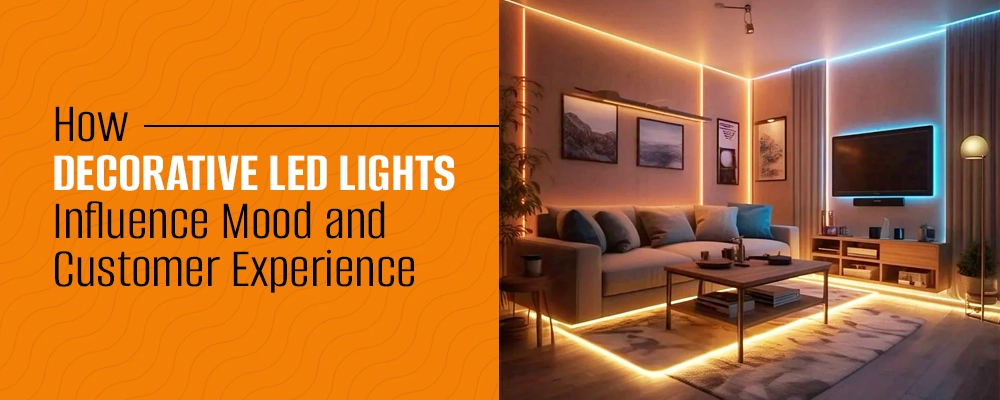
How Decorative LED Lights Influence Mood and Customer Experience
In commercial interiors, hospitality spaces, retail environments, and modern residential projects, lighting is rarely treated as a purely functional utility anymore. Decorative lighting has gradually moved into a more strategic role — shaping perception, influencing emotional response, and even affecting how long people remain within a space.
This shift is particularly visible in the growing adoption of Decorative LED Lights across the hospitality, retail, and architectural sectors. Buyers are no longer evaluating lighting only through lumen output or energy consumption. They are assessing atmosphere, visual comfort, installation adaptability, maintenance cycles, and long-term operational consistency.
In many projects, lighting decisions now sit somewhere between engineering and psychology.
For manufacturers and procurement teams, this creates a different evaluation framework altogether.
Industry Context and Market Positioning
The decorative lighting market has evolved beyond ornamental fixtures. Today, Decorative LED Lights are expected to balance aesthetics with thermal efficiency, optical performance, durability, and integration flexibility.
Architectural designers increasingly specify layered lighting systems where ambient, accent, and decorative illumination work together. This is especially common in:
- Retail showrooms
- Hotels and resorts
- Restaurants and cafés
- Premium residential interiors
- Corporate reception spaces
- Experience-driven commercial environments
One recurring industry observation is that poorly selected lighting often becomes noticeable only after occupancy. Spaces may technically meet illumination requirements, yet still feel uncomfortable, visually flat, or emotionally cold.
This is why lighting manufacturers and project consultants now pay closer attention to:
- Color rendering performance
- Beam distribution
- Driver stability
- Glare management
- Material finish consistency
- Long operational lifespan
Across export-oriented supply markets such as the USA, Europe, and the Middle East, specification alignment has also become more detailed. Buyers increasingly expect consistency in fixture finish, LED binning quality, and thermal management performance.
Companies such as VS Willson, operating from the UAE with international supply capability, reflect this broader market movement where decorative lighting products are expected to support both design intent and operational reliability.
What Are Decorative LED Lights?
Decorative LED Lights are lighting fixtures designed to combine illumination with visual aesthetics. They use LED technology to provide energy-efficient lighting while enhancing the ambiance, mood, and architectural character of residential, commercial, or hospitality spaces.
Unlike purely functional fixtures, decorative LED systems are selected based on design appeal, color temperature, light distribution, and their ability to influence user experience within an environment.
How Lighting Influences Mood and Customer Experience
Decorative lighting influences mood by affecting visual comfort, emotional perception, spatial warmth, and behavioral response. Factors such as color temperature, brightness levels, glare control, and fixture placement can shape how customers feel, interact, and spend time within a space.
Warm lighting often creates relaxation and intimacy, while cooler lighting tends to support alertness, visibility, and task-oriented environments.
Technical Specifications and Key Features
When evaluating Decorative LED Lights, procurement teams often focus first on appearance. Yet long-term performance usually depends on technical fundamentals hidden beneath the fixture design.
Important Technical Factors
Specification |
Why It Matters |
|
Color Temperature (CCT) |
Influences mood and spatial perception |
|
CRI (Color Rendering Index) |
Determines how accurately colors appear |
|
Lumen Efficiency |
Impacts energy performance |
|
Beam Angle |
Affects focus and ambient spread |
|
Driver Quality |
Influences flicker stability and lifespan |
|
IP Rating |
Important for moisture or outdoor exposure |
|
Heat Dissipation |
Protects LED longevity |
Mood-Oriented Lighting Temperatures
- 2700K–3000K: Warm and intimate atmosphere
- 3500K–4000K: Balanced commercial ambiance
- 5000K+: High-visibility, task-focused environments
A common misunderstanding in decorative lighting procurement is assuming brighter lighting automatically improves customer experience. In reality, excessive brightness can increase visual fatigue and reduce environmental comfort, especially in hospitality and premium retail settings.
Balanced illumination tends to perform better than maximum illumination.
Materials and Production Methodology
The performance of Decorative LED Lights depends significantly on material quality and manufacturing precision.
Common Materials Used
Aluminum Housing
Widely used for thermal conductivity and structural durability. Aluminum helps dissipate heat from LED chips, improving operational lifespan.
Acrylic Diffusers
Used to soften light output and reduce glare. Diffuser clarity and consistency directly influence visual comfort.
Powder-Coated Steel
Often used in decorative architectural fixtures where finish durability is important.
Glass Components
Applied in premium decorative systems for aesthetic depth and light diffusion.
Manufacturing Considerations
In large-scale production facilities, consistency becomes more important than isolated product appearance.
Reliable manufacturers typically focus on:
- LED chip binning consistency
- Precision driver integration
- Surface finish uniformity
- Thermal testing
- Vibration resistance
- Wiring integrity checks
One operational reality often overlooked in procurement is that decorative fixtures are exposed to continuous thermal cycles. Poor heat management can gradually reduce lumen output and color consistency over time.
This is why heat sink engineering matters even in visually decorative applications.
Performance and Durability Insights
Decorative lighting is frequently installed in environments where operational hours are high and maintenance access is limited.
This changes the importance of durability.
Key Performance Indicators
Thermal Stability
Excessive heat remains one of the leading causes of LED degradation.
High-quality thermal management systems help maintain:
- Color consistency
- Lumen retention
- Driver reliability
Flicker Control
Poor-quality drivers may produce invisible flicker, contributing to eye strain and discomfort in commercial spaces.
Corrosion Resistance
In coastal or humid regions, fixture coatings and housing materials become increasingly important.
Maintenance Cycles
Longer operational lifespan reduces disruption in:
- Hotels
- Shopping centers
- Airports
- Commercial lobbies
An interesting industry trend is that buyers increasingly calculate lighting decisions through lifecycle cost rather than initial purchase cost alone.
This reflects a broader maturation in the lighting sector.
Applications and Use Environments
Decorative LED Lights are now used across highly varied operational environments.
Hospitality Environments
Hotels and restaurants often prioritize:
- Warm ambiance
- Layered illumination
- Accent-focused layouts
- Guest comfort
Lighting here influences emotional response more directly than many realize.
Retail Spaces
Retail lighting frequently aims to:
- Highlight products
- Guide customer movement
- Extend dwell time
- Enhance material textures
Inconsistent lighting can distort product appearance and negatively affect purchasing confidence.
Residential Interiors
Modern homes increasingly use decorative LED systems for:
- Mood lighting
- Feature walls
- Dining areas
- Smart lighting integration
Corporate and Commercial Spaces
Reception zones and collaboration spaces now incorporate decorative fixtures to create:
- Brand perception
- Visual warmth
- Architectural identity
Outdoor and Semi-Outdoor Areas
Weather-resistant decorative fixtures are commonly used in:
- Resorts
- Façades
- Landscape lighting
- Terrace environments
Environmental exposure requires careful attention to IP ratings and corrosion resistance.
Decorative LED Light Variants: A Neutral Comparison
Different decorative lighting formats serve different operational and aesthetic purposes.
Type |
Typical Use |
Strengths |
Limitations |
|
Pendant Lights |
Dining, hospitality |
Strong visual focus |
Requires ceiling planning |
|
Wall Lights |
Accent illumination |
Space-efficient |
Lower light spread |
|
Chandeliers |
Premium interiors |
Decorative impact |
Higher maintenance |
|
Cove Lighting |
Ambient applications |
Soft visual comfort |
Indirect illumination only |
|
Linear Decorative LEDs |
Commercial interiors |
Modern appearance |
Installation precision needed |
There is rarely a universally “best” option. Suitability depends on:
- Ceiling height
- Lighting layers
- Maintenance access
- User experience goals
- Operational hours
The most successful projects usually integrate multiple lighting layers rather than relying on a single decorative fixture type.
Buyer Evaluation Checklist
Before selecting Decorative LED Lights, buyers often benefit from reviewing both visual and technical factors together.
Evaluation Checklist
- Verify LED driver quality
- Review thermal management design
- Confirm CRI ratings
- Assess glare control capability
- Evaluate fixture material durability
- Check lumen maintenance expectations
- Review installation compatibility
- Assess maintenance accessibility
- Confirm environmental suitability
- Review supply consistency for future expansion
Another practical consideration is replacement continuity.
Large projects sometimes face challenges when decorative collections are discontinued within short product cycles. Stable manufacturing support becomes important for phased developments and long-term facility maintenance.
You can review decorative lighting categories and product alignment through the Decorative Lighting collection for broader specification comparison and application context.
Frequently Asked Questions
How do Decorative LED Lights affect customer behavior?
Decorative LED Lights can influence customer comfort, attention span, spatial perception, and emotional response. Warm, balanced lighting often encourages longer engagement in hospitality and retail environments.
Are Decorative LED Lights suitable for commercial spaces?
Yes. Many commercial projects use decorative LED systems for ambiance, branding, and architectural enhancement while maintaining energy efficiency and operational durability.
What material is commonly used in decorative LED fixtures?
Aluminum is widely used because of its heat dissipation capability and structural durability. Acrylic diffusers and powder-coated steel are also common.
Why is CRI important in decorative lighting?
CRI determines how accurately colors appear under lighting. Higher CRI values are important in retail, hospitality, and interior environments where visual presentation matters.
What should buyers evaluate before procurement?
Buyers should review thermal management, driver quality, material durability, lighting consistency, maintenance requirements, and environmental suitability before finalizing procurement.
Supply and Distribution Capability
The decorative lighting sector increasingly operates through international specification alignment.
Manufacturers supplying multiple regions often need to accommodate:
- Voltage variations
- Regional design preferences
- Logistics timelines
- Installation standards
- Environmental operating conditions
With manufacturing and supply coordination based in the UAE, companies such as VS Willson participate in broader export-oriented lighting supply networks serving the USA, Europe, and Middle Eastern markets.
For commercial buyers, distributor networks and regional supply capability often matter as much as fixture design itself — particularly in phased hospitality and retail projects where continuity becomes operationally important.
Conclusion
Decorative lighting has gradually evolved from a finishing element into a strategic component of environmental design.
The influence of Decorative LED Lights extends beyond visibility. They shape emotional perception, customer comfort, spatial identity, and operational experience. In many commercial settings, lighting quietly affects how people feel long before they consciously notice the fixture itself.
At the same time, successful decorative lighting selection depends on far more than aesthetics alone. Thermal management, material quality, driver stability, glare control, and long-term consistency all contribute to overall performance.
For buyers and project teams, thoughtful evaluation usually produces better long-term outcomes than trend-driven selection.
If you are evaluating decorative lighting solutions for an upcoming project, reviewing technical specifications, environmental conditions, and operational expectations carefully can help reduce procurement risk. For further technical guidance or product information, you can contact the team at VS Willson Contact Page.