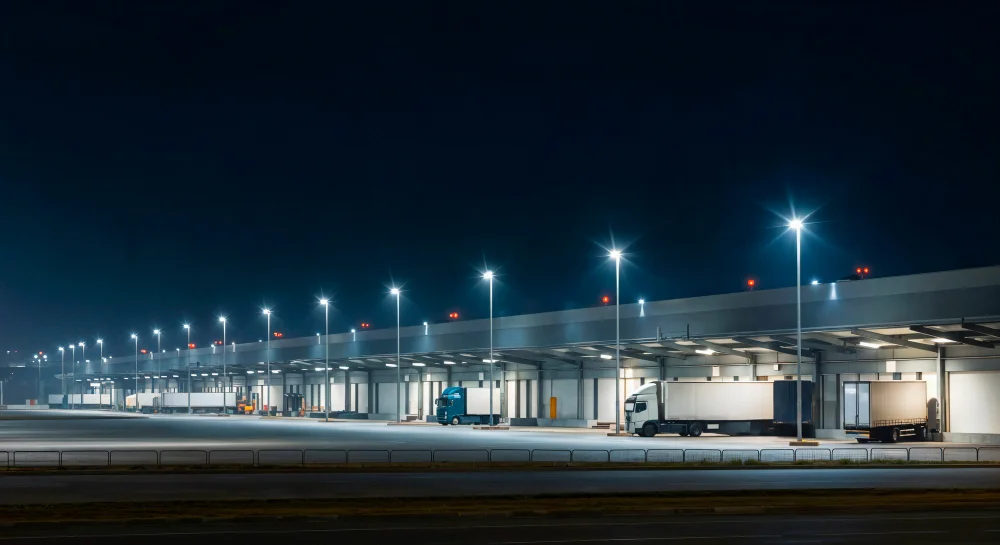
Airport Security Lighting
Airport Security Lighting refers to a complete EPC-based solution that covers planning, procurement, installation, and commissioning of lighting systems designed for safety-critical airport environments. VS Wilson handles this as a full project execution partner, managing engineering layouts, sourcing fixtures, installing systems on-site, and delivering operational readiness.
Scope of Airport Security Lighting
Airport terminal security lighting systems include the design of illumination layouts for surveillance effectiveness, selection of fixtures suited to terminal architecture, integration with control systems, and complete on-site execution. The service ensures lighting works in coordination with CCTV coverage, security checkpoints, and operational zones without creating visual blind spots or glare issues.
Projects are executed from UAE with deployment across the Middle East, USA, and Europe, involving site coordination, compliance alignment, and integration with existing airport infrastructure. The scope extends from surveillance-focused illumination to controlled lighting systems that support terminal security operations without disrupting passenger flow.
Scope of Airport Security Lighting
Lighting layout planning aligned with terminal surveillance zones
Each project begins with mapping visibility zones based on camera coverage and passenger movement patterns
Fixture selection based on glare control and mounting constraints
Lighting equipment is chosen considering mounting height, beam spread, and visual comfort requirements
Electrical routing and infrastructure integration planning
Cable routing and control panel placement are planned alongside existing airport systems
On-site installation and commissioning under operational constraints
Execution is scheduled around terminal activity to avoid disruption to passenger and security operations
Airport terminal security lighting systems include the design of illumination layouts for surveillance effectiveness, selection of fixtures suited to terminal architecture, integration with control systems, and complete on-site execution. The service ensures lighting works in coordination with CCTV coverage, security checkpoints, and operational zones without creating visual blind spots or glare issues.
Airport Terminal Security Lighting Systems
This variation reflects how users search for integrated systems rather than isolated fixtures. Airport terminal security lighting systems combine illumination, control infrastructure, and operational coordination within one execution scope. The requirement remains the same—ensuring visibility, safety, and compliance across terminal zones.
In actual projects, this involves linking lighting layouts with surveillance systems, ensuring no overlap conflicts with camera angles. It also includes backup systems for power reliability and zoning strategies for different terminal areas. The execution covers installation, control calibration, and testing under real operating conditions.
Aviation Security Lighting Design
This keyword focuses on the planning aspect, but in real scenarios, design cannot be separated from execution. Aviation security lighting design defines how illumination supports monitoring, movement control, and risk reduction within airport environments, while remaining part of a complete EPC delivery.
From an execution point of view, design includes beam angle calculations, uniformity ratios, and glare control to avoid interference with surveillance systems. It also considers terminal architecture, reflective surfaces, and passenger density. The final layout is directly linked to installation feasibility and operational performance.
Terminal Lighting Installation Services
Users searching this term are typically looking for execution capability. Terminal lighting installation services involve physical deployment of lighting infrastructure within operational airport environments, including mounting, wiring, and system integration.
Installation in terminals is rarely straightforward. Work often happens during restricted hours, with coordination required between airport authorities and security teams. The process includes fixture mounting at varying heights, cable management within existing structures, and integration with control systems without disrupting ongoing operations.
Airport Perimeter and Terminal Lighting
This variation highlights the overlap between terminal security zones and adjacent perimeter areas. Airport perimeter and terminal lighting ensures continuity of visibility from outer security boundaries to internal terminal zones.
In real conditions, poor coordination between these zones creates blind spots. This service ensures lighting transitions are smooth, maintaining visibility without excessive brightness variation. The execution includes aligning fixture positioning, intensity levels, and control zones across both areas as part of one integrated system.
LED Airport Security Lighting Systems
This keyword reflects preference for energy-efficient and long-life lighting solutions within airport security environments. LED airport security lighting systems are used to maintain consistent illumination while reducing maintenance interruptions.
From an execution standpoint, LEDs are selected not just for efficiency but for their performance in large-scale installations. Factors such as heat dissipation, beam consistency, and long operational cycles are considered. Installation also includes driver integration and compatibility with control systems to maintain reliability.
Airport Security Lighting Control Systems
Users searching this term are focused on automation and operational control. Airport security lighting control systems manage how lighting behaves across different zones and time conditions within terminals.
In practice, this includes zoning controls, dimming strategies, and integration with central monitoring systems. For example, lighting intensity can be adjusted based on activity levels or emergency requirements. The execution ensures seamless coordination between lighting and security operations.
Real-World Applications & Use Cases
Airport terminal security lighting is applied across multiple operational zones. Passenger entry areas require balanced illumination to support surveillance without causing discomfort. Security checkpoints demand focused lighting that avoids shadow zones where visibility drops.
Baggage handling zones often need consistent lighting across moving systems, where shadows can interfere with monitoring. In boarding gates, lighting must support both visibility and passenger comfort. In actual projects, each zone is treated differently, but executed under a unified system to maintain operational consistency.
Project Execution Process for Airport Terminal Security Lighting
Airport terminal security lighting is executed through a structured EPC process covering planning, procurement, installation, and commissioning. Each stage is connected, ensuring no disconnect between design intent and on-site performance.
The process begins with site evaluation, where terminal layouts, security zones, and infrastructure constraints are studied. Engineering design follows, defining lighting positions, control systems, and electrical routing.
Material procurement is handled with attention to compatibility and compliance requirements. Fixtures, control systems, and cabling are selected based on project conditions.
Installation is carried out on-site, often during controlled time windows to avoid operational disruption. This includes mounting, wiring, and integration with existing systems.
Testing and commissioning ensure lighting performs as intended, with adjustments made based on real-time conditions. This stage often reveals issues not visible during planning, which are resolved before final handover.
Technical & Safety Considerations
Lighting in terminal security zones must avoid glare that can interfere with surveillance cameras. This usually happens when fixtures are installed without considering camera angles or reflective surfaces.
Uniformity is another factor. Uneven lighting creates areas where visibility drops, which can compromise monitoring. Electrical reliability is also critical, requiring backup systems to maintain operation during power disruptions.
Installation must comply with aviation safety requirements, including mounting stability and environmental resistance. These considerations are handled during both design and execution stages.
Common Problems & Risks in Lighting Installation
One common issue is mismatch between design and installation. Plans may look accurate on paper, but real-world constraints such as structural limitations or existing systems create challenges.
Another risk comes from poor coordination between lighting and surveillance systems. If not aligned, lighting can create glare or shadows that reduce monitoring effectiveness.
Delays often occur when procurement is not synchronized with installation schedules. This leads to incomplete execution phases, affecting overall project timelines.
How to Choose the Right Airport Terminal Security Lighting Setup
Selecting the right airport terminal security lighting setup involves evaluating operational zones, surveillance requirements, and infrastructure constraints. The decision is not about fixture selection alone but about system coordination.
From a decision perspective, buyers should assess whether the provider can handle full execution rather than isolated tasks. Lighting must align with security systems, not operate independently.
Another factor is adaptability. Terminal environments change over time, so lighting systems must allow adjustments without major rework.
Visit our About Us page to understand how execution capability and project coordination impact final outcomes.
Pricing Factors
Pricing for airport terminal security lighting depends on project scale, installation complexity, and system integration requirements. Larger terminals with multiple zones require more detailed planning and coordination.
Cost variations often come from installation challenges rather than fixture prices. For example, working within operational terminals increases execution complexity and timelines.
Another factor is control system integration. Advanced control setups require additional planning and testing.
Choosing a lower-cost approach without considering execution risks often leads to higher long-term costs due to rework or performance issues.
Why Choose This Service
Airport terminal security lighting requires coordination across multiple systems, not just lighting fixtures. This service brings design, procurement, and execution into one workflow.
Projects are handled with attention to site-specific constraints, ensuring that lighting performs as intended in real conditions. The approach focuses on aligning lighting with operational requirements rather than treating it as a standalone component.
Service Coverage
VS Wilson operates from the UAE, executing airport terminal security lighting projects across Dubai, Abu Dhabi, and wider regions.
Projects are also carried out across the Middle East, USA, and Europe through on-site deployment. Teams travel to project locations, handling installation, coordination, and execution directly at the site.
This model allows consistent project delivery without relying on remote-only planning.
Common Buyer Concerns Before Hiring
Buyers often question whether lighting will interfere with surveillance systems. This concern is valid, as improper installation can reduce visibility instead of improving it.
Another concern is execution disruption. Terminal operations cannot stop, so installation must be carefully scheduled.
There is also uncertainty around long-term reliability. Systems must perform consistently without frequent maintenance interruptions.
FAQs
1. What is Airport Terminal Security Lighting?
Airport Terminal Security Lighting is a system designed to provide controlled illumination for surveillance, passenger movement, and safety within terminal environments. It includes design, installation, and control integration to ensure consistent visibility without affecting operations.
2. How is airport security lighting different from general lighting?
Security lighting focuses on visibility for monitoring rather than aesthetics. It considers camera angles, shadow reduction, and controlled intensity, ensuring surveillance effectiveness across all zones.
3. Can lighting systems be integrated with existing airport infrastructure?
Yes, integration is part of the execution process. Systems are aligned with existing electrical setups and control systems, ensuring compatibility without major structural changes.
4. Do you handle international airport projects?
Projects are executed from UAE with on-site deployment across the Middle East, USA, and Europe. Teams travel to the project location to manage installation and execution.
5. What type of lighting is used in terminal security zones?
LED-based systems are commonly used due to their reliability and consistent output. Selection depends on mounting conditions, required intensity, and control compatibility.
6. How long does installation typically take?
Timelines depend on project size and operational constraints. Installations in active terminals require phased execution, which can extend timelines compared to non-operational environments.
7. Are control systems necessary for airport lighting?
Control systems allow zoning, intensity adjustment, and integration with security operations. They are essential for managing lighting across different terminal zones.
Discuss Your Project
Airport terminal environments demand careful planning before execution begins. If you are evaluating lighting upgrades or planning a new terminal setup, it helps to assess layout constraints, security requirements, and installation feasibility early.
You can discuss your project scope, site conditions, and execution planning through our Contact page. This allows alignment on design approach, deployment strategy, and coordination for projects across UAE, Middle East, USA, and Europe.
Image Gallery
Related Services